We drive out of Karatu to reach the gates to Ngororongoro Conservation Area that’s home to the spectacular crater and the endless plains of the Serengeti – a fitting name borrowed from the Maa word, Siringit.
Dawn is breaking and the idea is to catch sunrise in the crater. At the gate, the baboons stir from the night trees, stretch and yawn to reveal massive jaws.
The gate keepers to the heavenly abode scrutinise our tickets, especially the Kenyan IDs. My Dad’s Kenyan ID states place of birth as India. For the Tanzania National Park’s (TANAPA = Kenya’s KWS) he must provide his passport to prove he is Kenyan or else he will not be allowed out of the NCA. Bizarre.
To cut a long story short, we do miss sunrise over the rim – but the view is surreal, for no one seeing this for the first time would believe there’s a crater below the opaque white-mist blanket
And as the ethereal orb in fiery hues of gold rises to chase away the mist, it’s jaw-dropping to watch the ancient crater reveal itself.
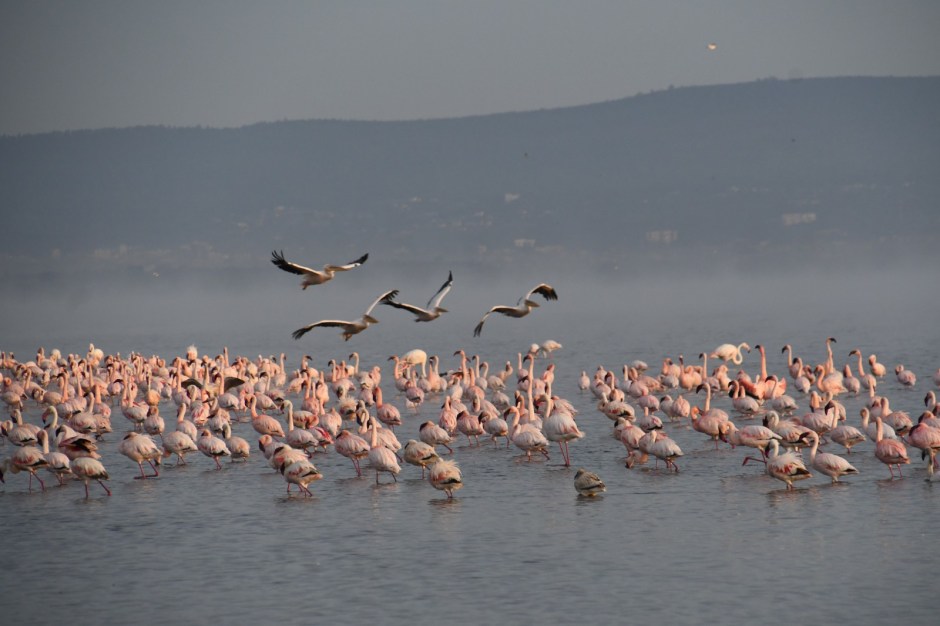
Above image: Lesser flamingoes and Great white pelicans fying overhead in Lake Nakuru National Park. Credit Inderjit Singh Mangat
Published: Saturday Nation magazine 17 Feb 2024
The lake is white-laced as we drive into the 100-year old farm house that morphed into Lake Nakuru Lodge. It sets the stage for the following events on a two-night stay.
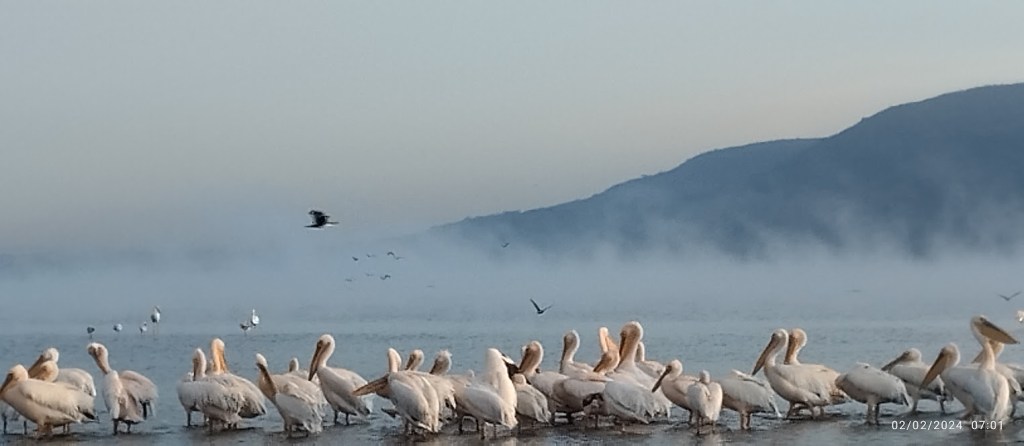
Great white pelicans at dawn with water vapor rising Lake Nakuru national park. Picture R.Mangat Feb 2024
Checked in, we’re looking the iconic lake best known for its pretty pink flamingos, the acacia woodland and the grass plains – a perfect world for all the wildlife we are about to see over a two night stay. The lake edge is laced with the Great white pelicans taking supreme advantage of the alkaline lake now turned fresh since the phenomenal rise of the Great Rift Valley lakes since 2012.
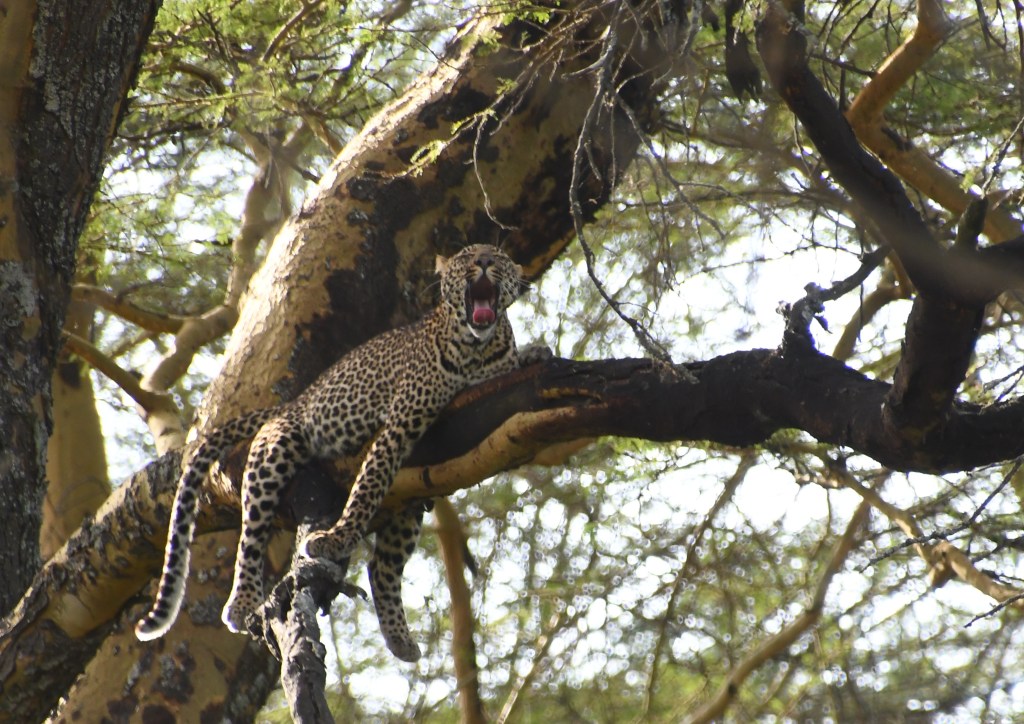
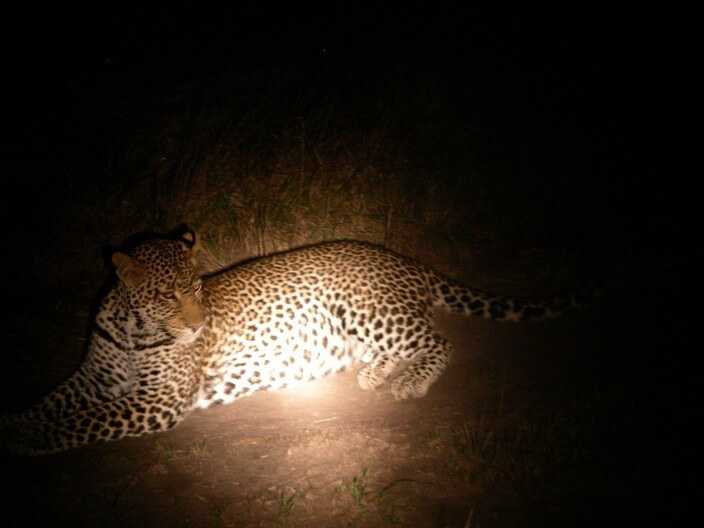
Scene one: The leopard in the tree. “You will see everything,” states Mr Muya of Lake Nakuru Lodge, who has grown up around it. The ‘everything’ includes four of the Big 5 except the elephant that is not found in the park.
Leopard lounging on acacaia in Lake Nakuru National Park Feb 2024. Credit Inderjit Mangat
Ten minutes from the lodge of day one, the leopard lounges on a thick branch of a yellow-bark acacia tree in a forested grove. The feline holds us spell-bound, stretching, yawning, turning, sitting, lying with all four limbs dangling and after an hour of suspense – will it or will it not climb down, it’s time to leave.
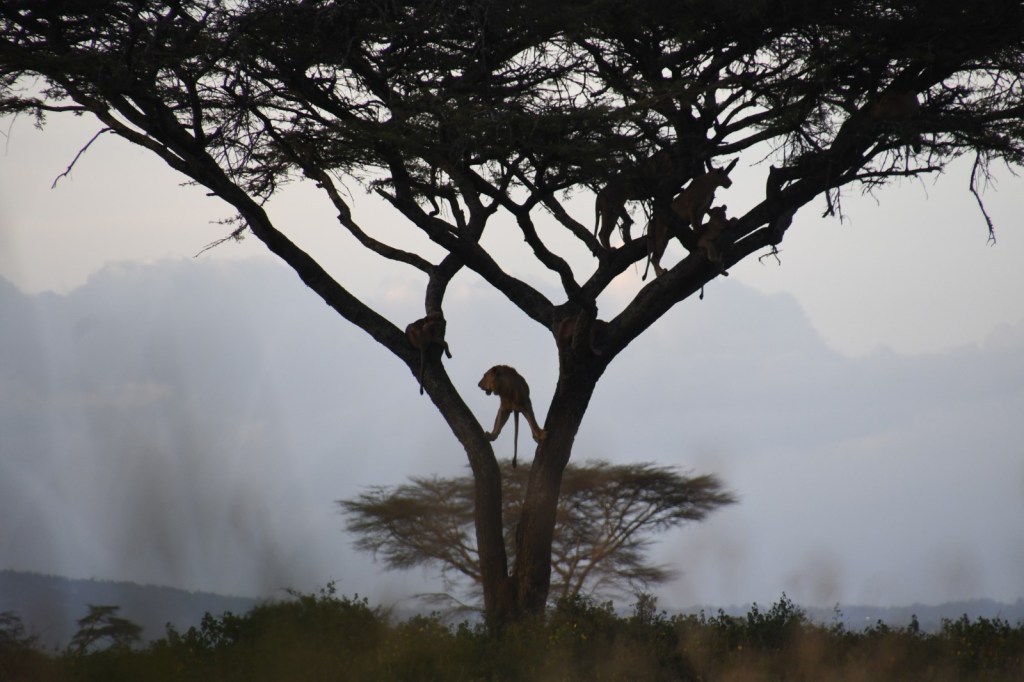
Scene two: After the leopard, same day, driving into the plains, it’s the strangest scene – a lion stuck in the tree! It’s spread-eagle with four legs apart and the tail dangling in the fork of the tree. Above it, on the higher branches are five other lions watching their mate – and on the ground, another waiting for this one to climb higher. But the poor lion can’t go any higher because the forked branches are too far apart. Is it a young dare-devil modern kid trying out new moves?
Comedy in the making – lion stuck in the fork of an acacia tree in Lake Nakuru National Park Feb 2024. Credit Inderjit Mangat
It’s straining, muscles taut. Finally some thirty minutes later, with the greatest of effort it manages to leap down safely to everyone’s relief. “The lions of Lake Nakuru climb the trees to see the best hunting ground,” tells Mr Muya. “And this pride is resident here.”
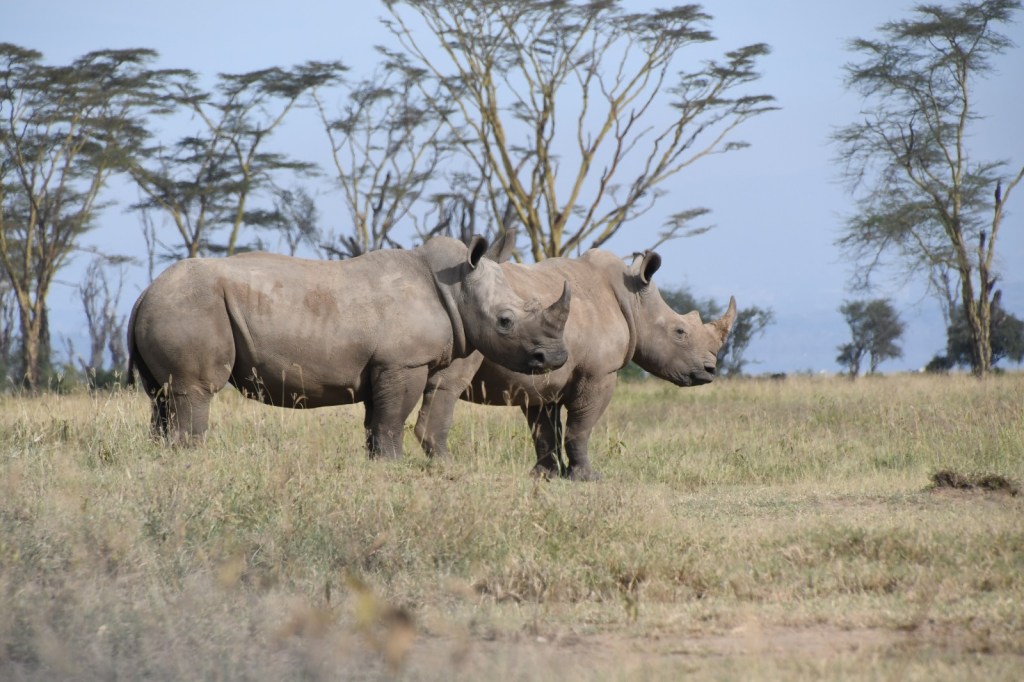
Scene three: At day break, with the piercing signature call of the African fish eagle, the family of five white rhino (the southern white which is the most common subspecies of rhino unlike the northern white that is now extinct in the wild with the last two females at Ol Pejeta Conservancy). It’s the two big females and two calves with the big male still snoozing on the ground. It’s the funniest scene. The calf decides dad has to get up. The miniature rhino bounds against the giant boulder. Dad doesn’t budge. He runs again to nudge dad up again – no luck and again – but still nothing.
White rhino family in L.Nakuru National Park. Feb 2024. Picture by Inderjit Mangat
All this would be ideal for another episode of Lion King – the real life comedy of life in the wild.
With all the drama on land, there’s more in the iconic lake that is home to over a million lesser flamingos when there is enough algae – their favourite food in the alkaline lake.
However, at this point the lake is almost fresh. Driving across Muya’s Causeway, the golden light of the morning sun fires the crimson hues of the Lesser flamingos by the salt-crusted shores, their stalky pink legs moving like ballerinas tiptoeing, busy dipping their long necks in the water to siphon the microscopic algae and plankton. It’s an engineering feat. The head in the water is upside-down, the water is sucked in, with the bird swallowing only the algae and plankton and siphoning out the salty water. For their fresh water drink, the flamingos fly a short distance to Lake Naivasha or Lake Baringo that are strung along the Great Rift.
Its colour-scope is fascinating – the pink of the flamingos the white of the pelicans, the Yellow-billed storks and African spoon bills and so many more waders while the Long-crested eagle once so common in the country finds space in the wide open plains .
Driving through the glades, herds of buffalo move like soft black waves, the gazelles and impalas gambolling, the giraffes gracefully browsing on the acacias while the baboons add more comic relief with their antics.
Lake Nakuru and its water, grasslands and open skies are home to this fascinating life on earth but for only as long as we can offer the space for the wildlife to live in and move along the migratory corridors to find new mates and breed for the next generation of healthy offspring’s.
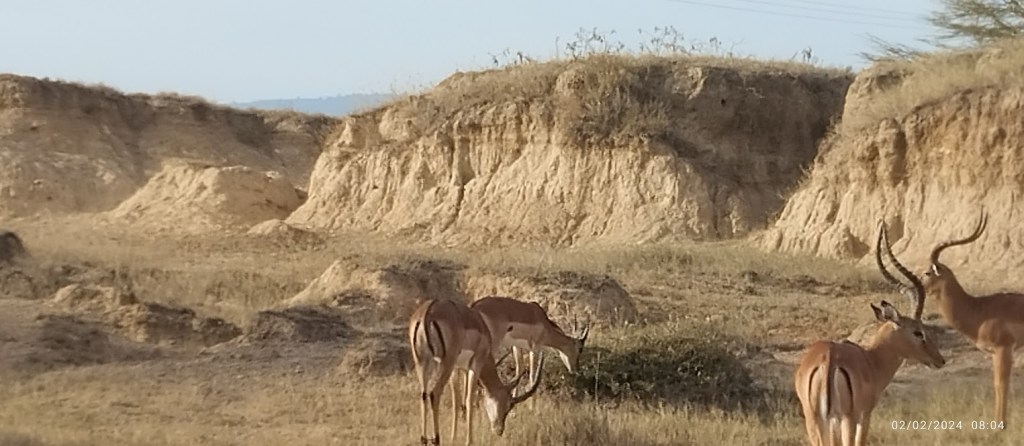
Bachelor herd of impalas at a salt lick in Lake Nakuru National Park. Pic Rupi Mangat
For now, back at the lodge, it’s time to dust off and enjoy the aromatherapy massage to rejuvenate the body and soul.
More on Lake Nakuru
Pay by e-Citizen. It can be cumbersome – it took an hour. The system needs to be more user-friendly. Once done, it’s a breeze into the parks.
Lake Nakuru Lodge and the park. Image: Rupi Mangat
Trekking Rhinos, Chimpanzees & Mountain gorillas plus Lions & The Nile on a Wildlife Safari
14 -24 OCTOBER 2027
Duration: 10 nights, 11 days
Group size: Minimum 7 & Maximum 10 women
Overview:
A safari in Uganda takes you to her Mountain gorillas and the Nile, meeting her people and lavishing in the richness of landscapes that makes Uganda, the Pearl of Africa.
Curated by Rupi Mangat and accompanied by Lilian Kamusiime. Rupi is a third generation local and a leading Kenyan travel writer. Lilian is an acclaimed Ugandan birder and naturalist whose home borders Bwindi Impenetrable Forest.
You will meet the gorilla guardians working with the dynamic Dr Gladys Kalema-Zikusoma founder of the award-winning Conservation Through Public Health who will amaze you with the success story of Uganda’s Mountain gorillas and the local people living there.
October is an exciting month to be on safari. Typically mornings and evenings are cool interspersed with hours of sunshine for the wildlife (and us) to soak in.
You will be enchanted.
->Want to see Mountain gorillas, then you got to safari in Uganda!
Lilian is passionate about wildlife and a founder member of Uganda Woman Birders (UWB). She is also the vice-chair of Uganda Safari Guides Association. A veteran tour guide, her home is in Bwindi which started her on her path to wildlife conservation. In addition to this, Kamusiime is known for her advocacy for women’s empowerment in the tourism sector, particularly in birding and guiding.
Your safari with her will be even more enriching as she shares all about Uganda’s wildlife with you.
Day 1 Thursday 14th October
Fly into Entebbe the lakeshore city of Uganda. You will be met at the airport by our representative who will guide you through arrival. You will then be driven by your driver-guide to your hotel, Papyrus Guest House.
Named after the swamp plant that was used in antiquity by the pharaohs, the hotel is one of Entebbe’s finest near the shores of Lake Victoria, the source of the Nile, the world’s longest river.
The day is at leisure. The hotel is a few minutes’ drive to the central business district. Entebbe works at a leisurely pace. The core of the city boasts early colonial architecture. See the activities (own cost) offered at Papyrus Guest House which includes the Entebbe zoo and the century old botanical gardens.
6 p.m: Meet for dinner to meet the group and Lilian (at own cost).
It’s a grand way to end the day.
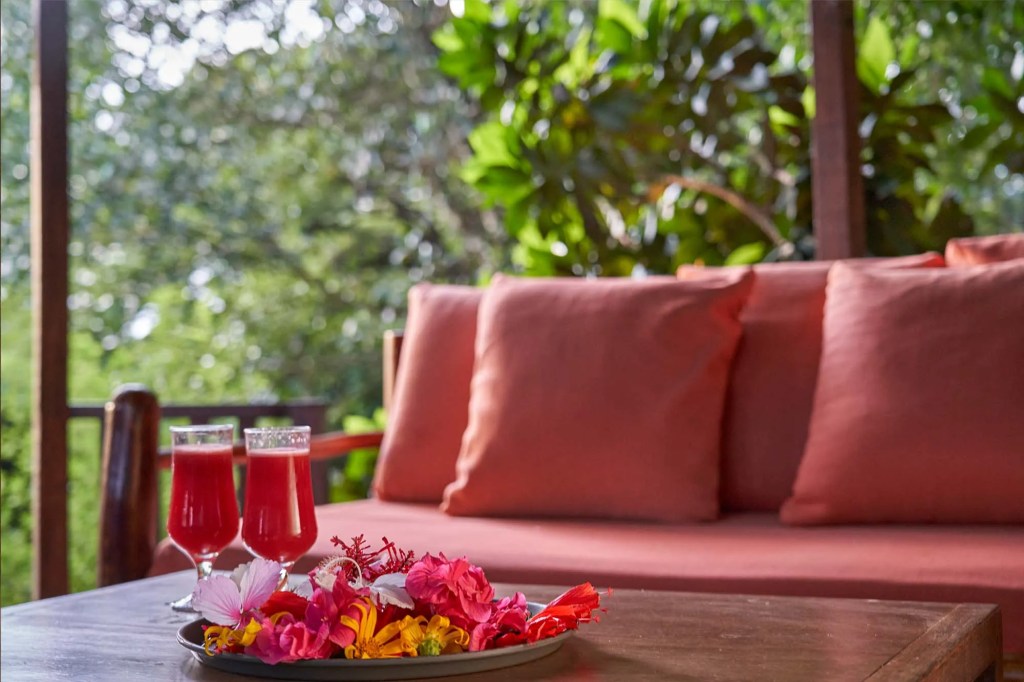
Relaxing at the Papyrus Guest House with refreshing drinks and vibrant flowers, a perfect start to your wildlife safari in Uganda.
It’s an early start to the day. After a hearty breakfast, your driver will be ready to drive you in custom designed safari-cruiser to Murchison Falls National Park 350 kms northwest of Entebbe, home of the world’s most powerful waterfall, Murchison Falls. The Nile flows from its source Lake Victoria, that is Africa’s largest lake and the world’s second largest freshwater lake that the world knew nothing about till the British explorer John Hanning Speke saw it and correctly identified it as the source of the Nile on 30 July 1858 – and so solving the greatest mystery that even perplexed the pharaohs.
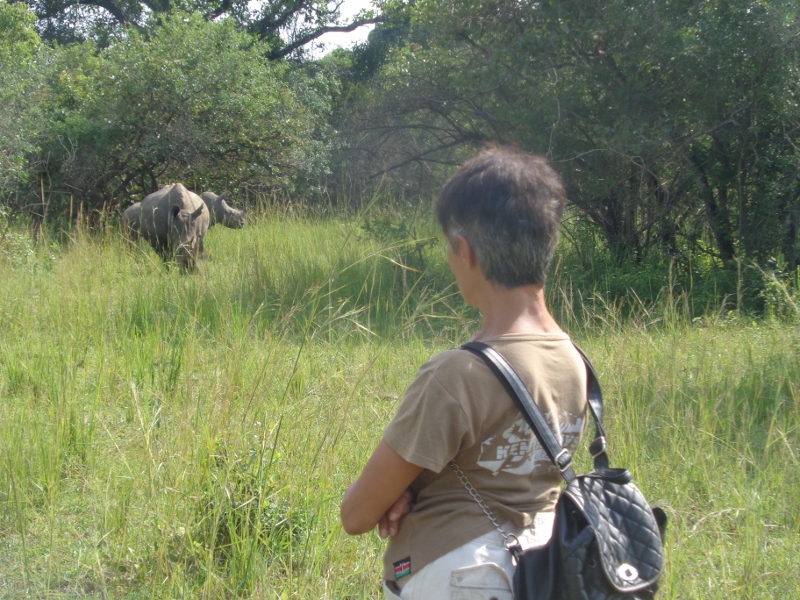
A close encounter with a white rhino during a trek in Uganda’s Ziwa Rhino Sanctuary.
En route, you will stop at Ziwa Rhino Sanctuary (205 km / 4 hours from Entebbe), the only place to see white rhinos is Uganda. Enjoy a rhino trek followed by lunch.
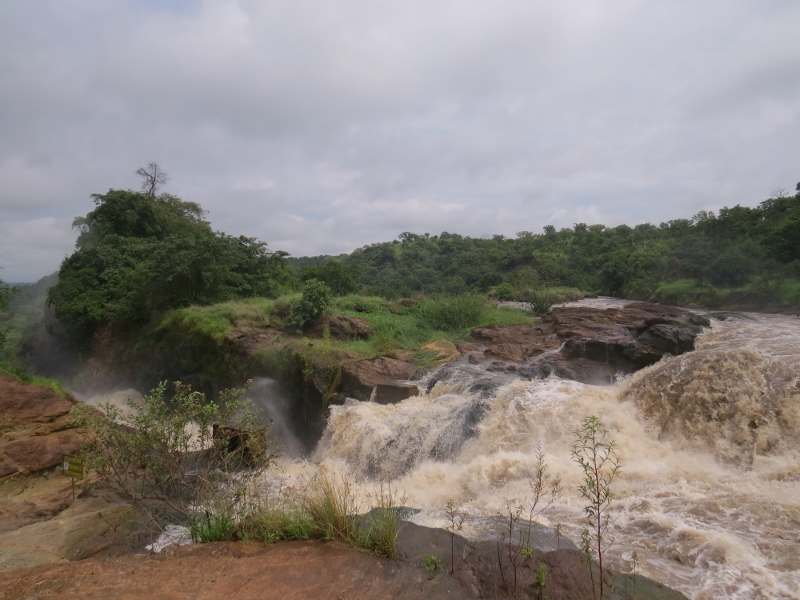
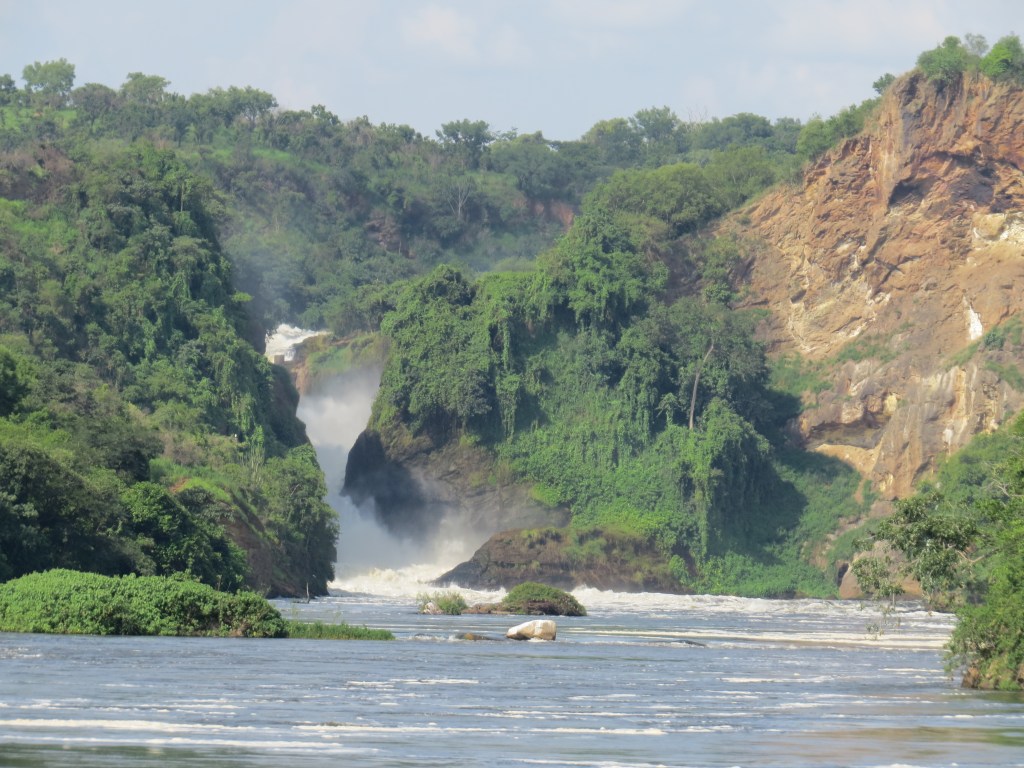
2:00 pm – Depart for Murchison Falls National Park and proceed to the top of the falls (115 km / 2 hours) to see the Nile gush through a 7-metre chasm to fall 43 metres down and continue to the land of the pharoahs.
View of Murchison Falls, where the Nile river dramatically cascades through rocky terrain, surrounded by lush greenery.
Afterwards, continue to Pakuba Safari Lodge (23 km / 40 mins) for dinner and overnight.
The 3,840-square-kilometer park spans the savanna between Lake Albert and Karuma Fall. The park is spectacular for its wildlife and tapestry of grassland, and swamps along the Nile, which at 6,000 kilometres is the world’s longest waterway. Murchison named after the Scottish geologist in 1864 by the 19th century explorer Samuel Baker who trekked the continent accompanied by his wife Florence, was also the first to document Lake Albert straddling the Uganda-Congo border in the Great Rift Valley.
It’s an early start to the day at 6 a.m. Wake up calls can be arranged.
Enjoy a cuppa coffee or tea and biscuits before you set out for an early morning game drive at 6.30 a.m. This is the best time to enjoy wildlife as well as late afternoons before the sun goes down. It’s the time when the animals are most active before the sun becomes too hot for them and lethargy sets in. See Uganda’s endemic wildlife like the Uganda kob and rare ones like the Rothschild giraffe, Patas monkey, oribi and Jackson’s hartebeest. You might see the lionesses would rather hunt when it’s cooler but being opportunistic the hunt is on if the quarry is easy. Lions do not have sweat glands and you’ll hear them panting a lot.
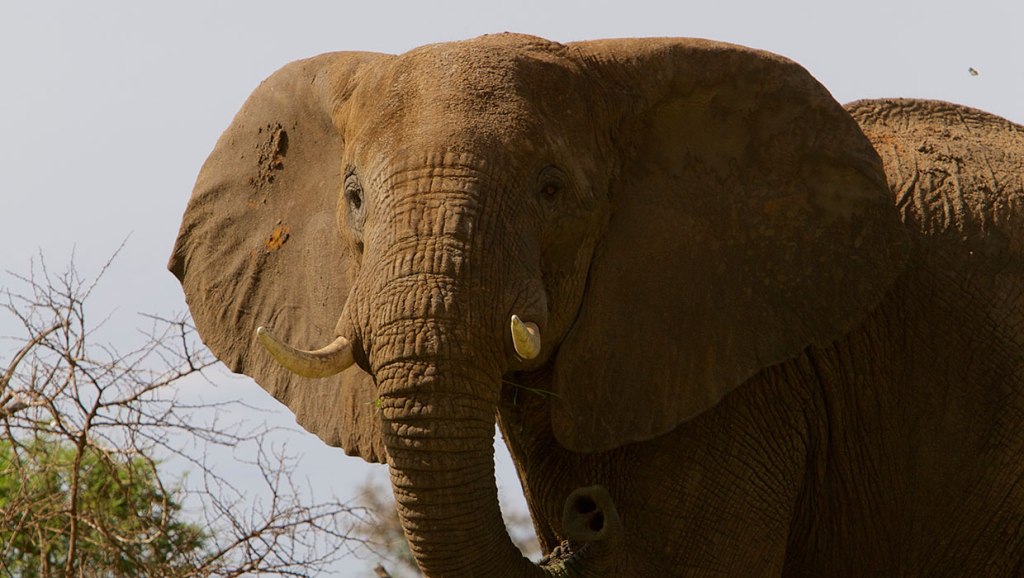
A majestic elephant showcases its grandeur while roaming in the Ugandan wilderness, a highlight of the wildlife safari.
9 a.m. Return to the lodge for breakfast.
Take time to relax, swim, read a book and enjoy the grounds.
12.30 p.m: Enjoy an early lunch, before driving to the waterfalls that squeezes through the seven-metre-wide gorge to crash down 43 metres and continue its flow to the ancient land.
2 p.m: It’s a slow boat ride looking out for the crocodiles and hippos with sightings of the plains game coming to quench their thirst before the thundering roar of the amazing waterfalls. It’s a sight to behold.
The powerful Murchison Falls cascading through lush green landscapes, a must-see on a Uganda wildlife safari.
6.30 p.m: Return to the lodge.
Take some time to refresh with a cold beer at the bar or a cool shower.
7.30 p.m. Meet for another gourmet feast by the Nile and retire after a nightcap by the fire pit.
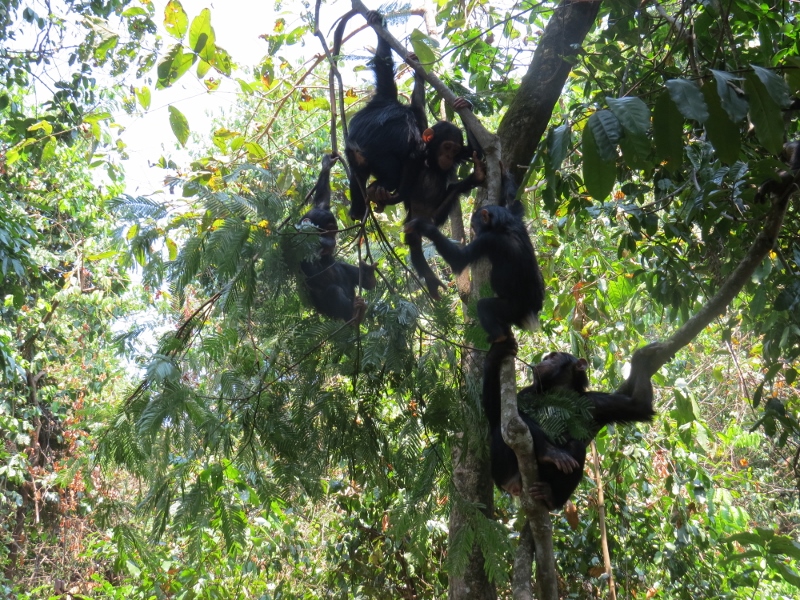
9 a.m: Depart with packed lunch boxes to Fort Portal (330 km / 6 hours). Check-in at Isunga Lodge in a picturesque setting by the Ruwenzori mountains overlooking Kibale forest that is home to the great ape – chimpanzees.
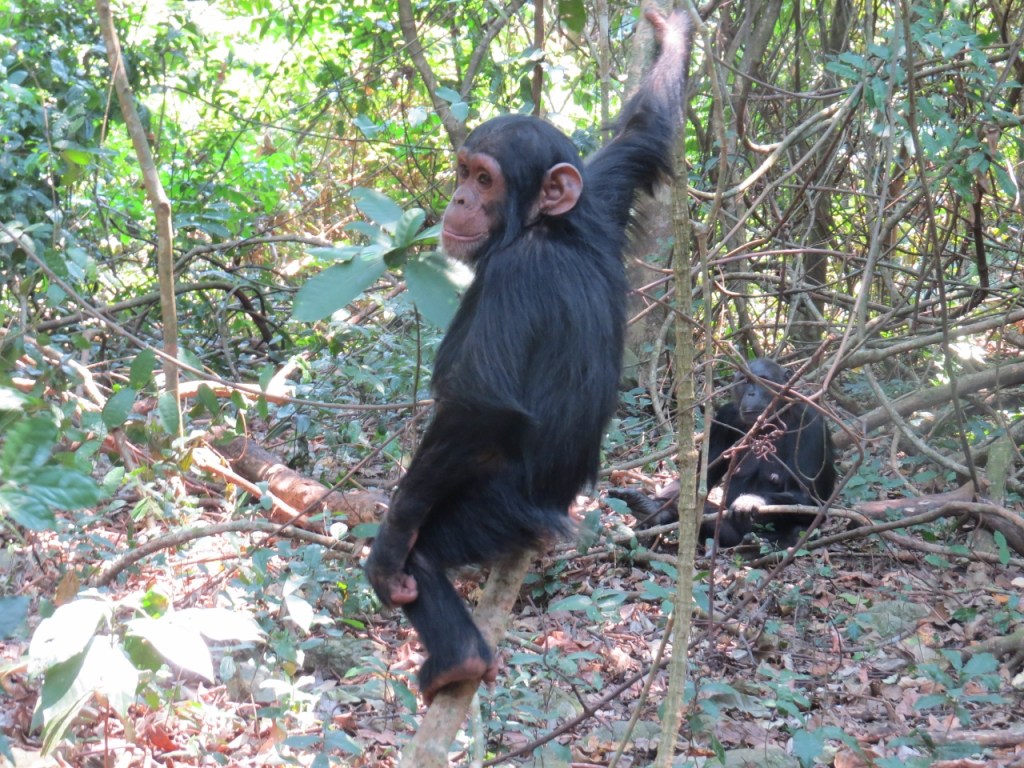
Chimpanzee in a natural habitat, capturing the essence of Uganda’s wildlife experience.
Afternoon at leisure.
7 p.m: Enjoy dinner and enjoy the rest of the evening.
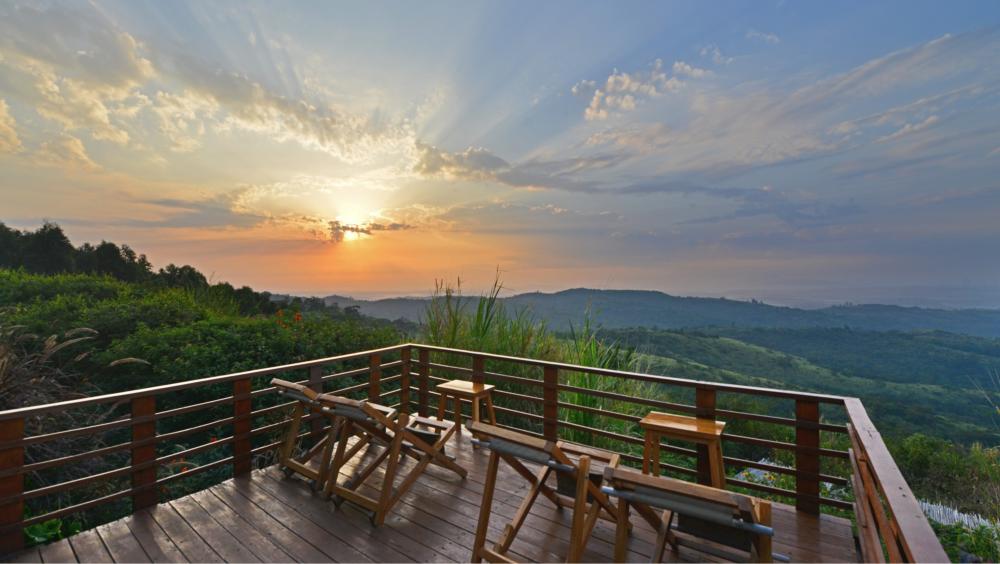
Sunset over the Mountains of the Moon from Isunga Lodge:
5.45 a.m: Depart with packed lunch boxes for Kibale Forest.
6 a.m: Arrive for a briefing on your chimpanzee habituation experience.
A lively group of chimpanzees interacting in their natural habitat in Uganda’s Kibale Forest, known for its rich biodiversity.
The chimpanzee habituation experience will take the better part of the day. (Depending on the temperament of the chimpanzees, visitors can spend approximately four hours with the chimpanzees once they are located, observing their daily activities like feeding, hunting, and social interactions.)
10:30 a.m: Depart from your lodge with packed lunch boxes and proceed to Queen Elizabeth National Park (105 km / 2 1/2 hours) the iconic 1,978-square-kiometre park in plain sight of the Ruwenzori Mountains or the Mountains of the Moon as the first-century Greek scholar Ptolemy called them and thought of them as the source of the Nile.
Stop briefly at Kasese, a charming town on the foothills of the mountains and enjoy a few minutes at the Equator.
1 p.m: Check-in at Mweya Safari Lodge.
3.30 p.m: Afternoon game drive.
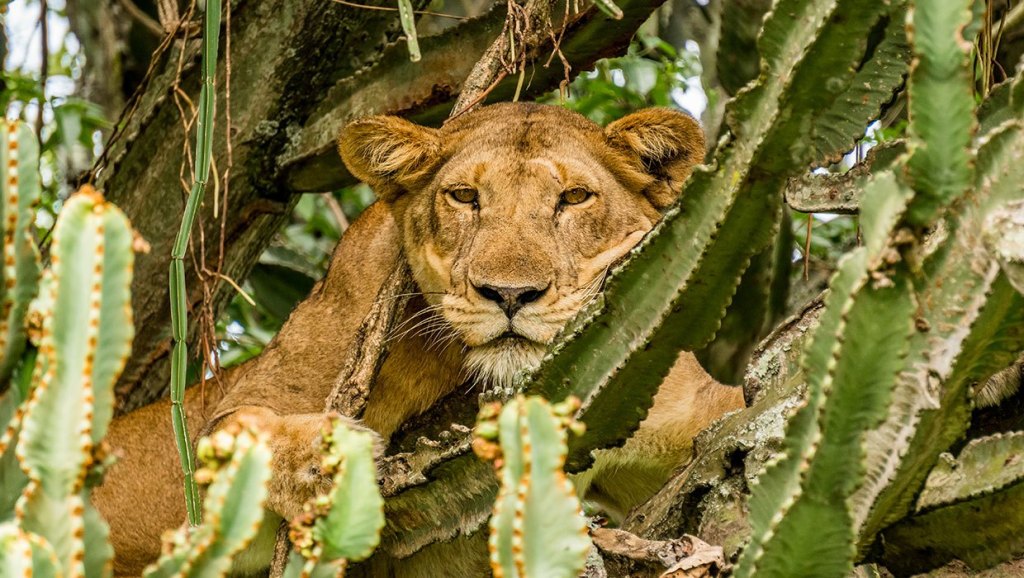
A lioness resting among the branches of a tree, showcasing the unique behavior of tree-climbing lions in Queen Elizabeth National Park.
The park, named after the late British monarch’s 1952 visit, is famous for its tree climbing lions besides the elephants, Uganda Kob and an impressive list of 600 species of birds.
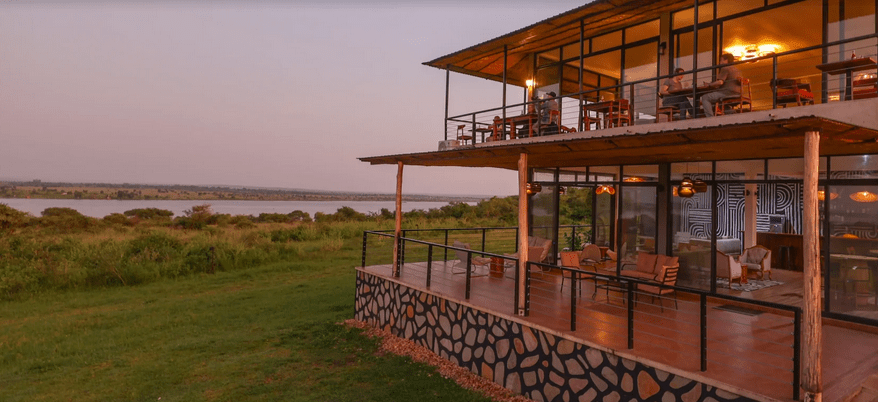
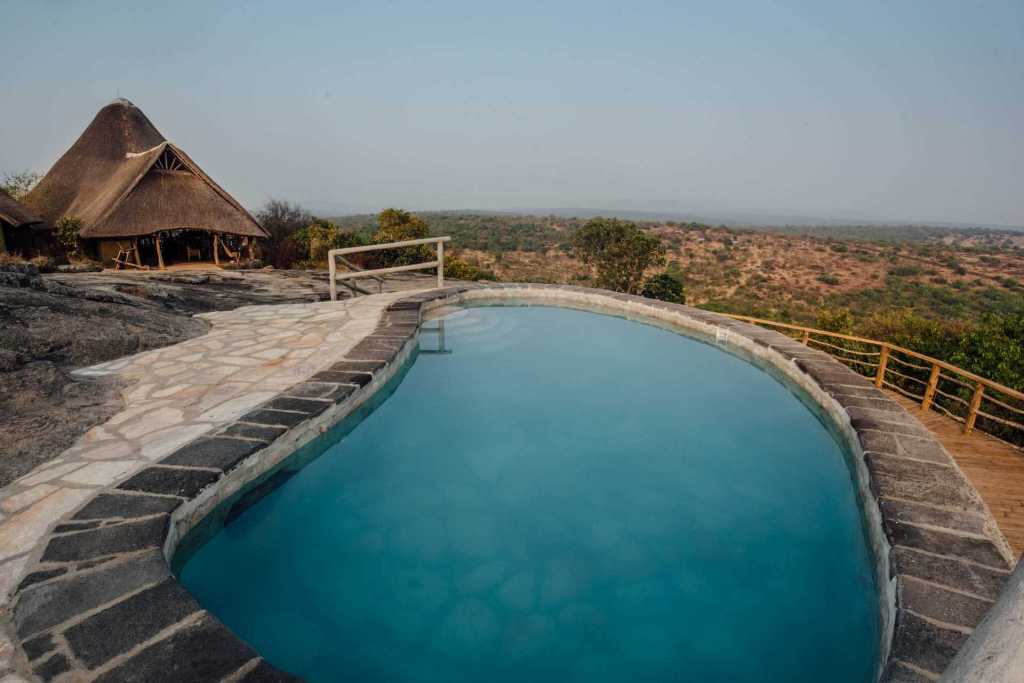
Relish the views from the lodge on the peninsula that straddles the wildlife-rich Kazinga Channel and Lake Edward. The 32-km long channel connects the two great African lakes – Edward and George.
6.30 p.m: Enjoy cocktails by the campfire before a sumptuous dinner freshly prepared under the Equatorial stars. For star gazers, this is the perfect spot to see the constellations of the two hemispheres.
Luxurious views at Mweya Safari Lodge overlooking the stunning Kazinga Channel and Lake Edward in Queen Elizabeth National Park.
Enjoy your evening and a good night’s sleep in your luxurious abode.
Another glorious morning in Africa. Rise and shine for an early morning game drive at 6.15 after a cuppa. The landscape is surreal with the Mountains of the Moon with the snow-topped high peak at 16,762 feet, making it Africa’s third highest mountain.
Return for breakfast by 9 a.m.
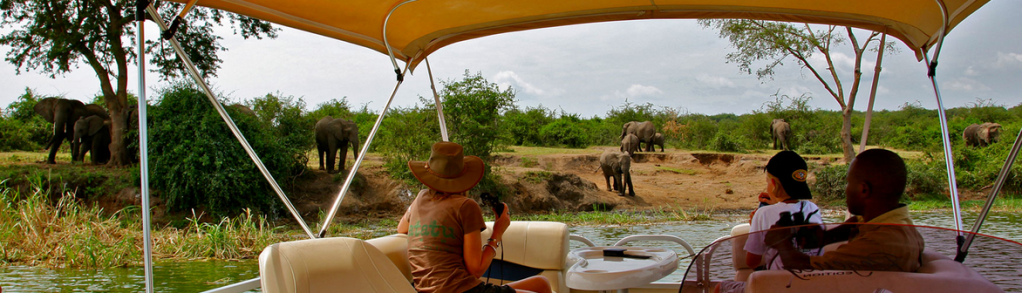
After lunch, prepare for another exciting boat ride along the famous Kazinga Channel, a 32-kilometer- long link between the Albertine Valley’s Lake Edward and Lake George. The channel boasts the world’s largest concentration of hippos, crocodiles, elephant, buffaloes and waterbucks coming for a drink. For birders, it’s time to log in the amazing birdlife that include the Pelicans, Fish Eagles, Kingfishers, Cormorants and the bright coloured Saddle-billed Stork.
A scenic boat ride on the Kazinga Channel, watching elephants come to drink at the bank.
Return for a starlit dinner followed by a night cap by the campfire and finally to a peaceful slumber in your luxurious room.
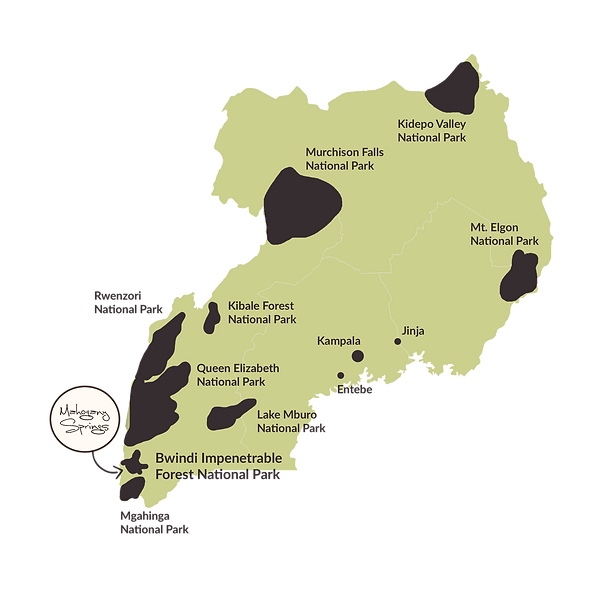
8 a.m: Depart with packed lunch boxes and proceed to Buhoma on the edge of the spectacular Bwindi Impenetrable Forest on the edge of the Albertine Rift. (165 km / 4 hours).
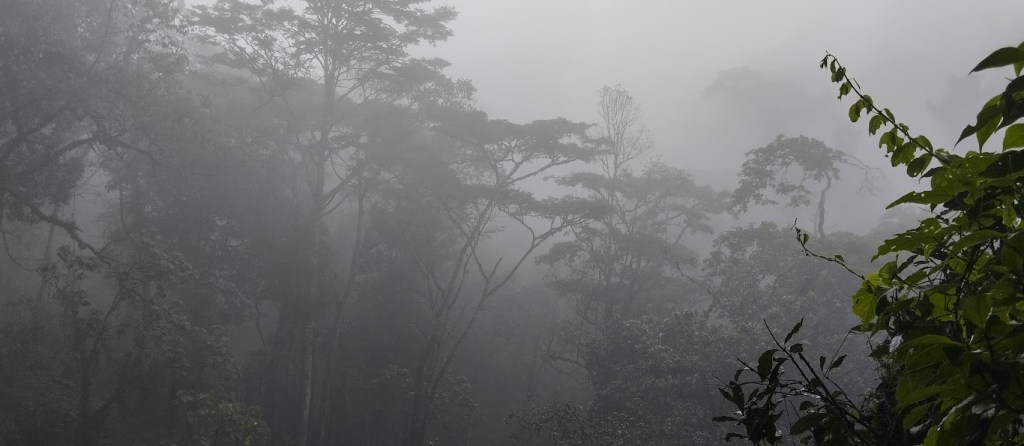
A misty landscape of Bwindi Impenetrable Forest, home to Mountain Gorillas and rich biodiversity, showcasing the enchanting atmosphere of thisunique ecosystem.
Bwindi takes its name from the dense forest that the locals call ‘Place of Darkness’. This is the home of more than half of the world’s population of the Mountain Gorillas – only discovered in Bwindi in 1987 from their night nests in the trees.
12 noon: Check-in at the lodge.
2 p.m: After an exquisite lunch, leave for an afternoon with the villagers, learn their collaboration with Dr. Gladys’s globally acclaimed NGO, Conservation Through Public Health and visit the Gorilla Health and Community Centre, where fecal samples from gorillas and livestock are analyzed and people learn about the disease vectors that harm sensitive gorilla populations.
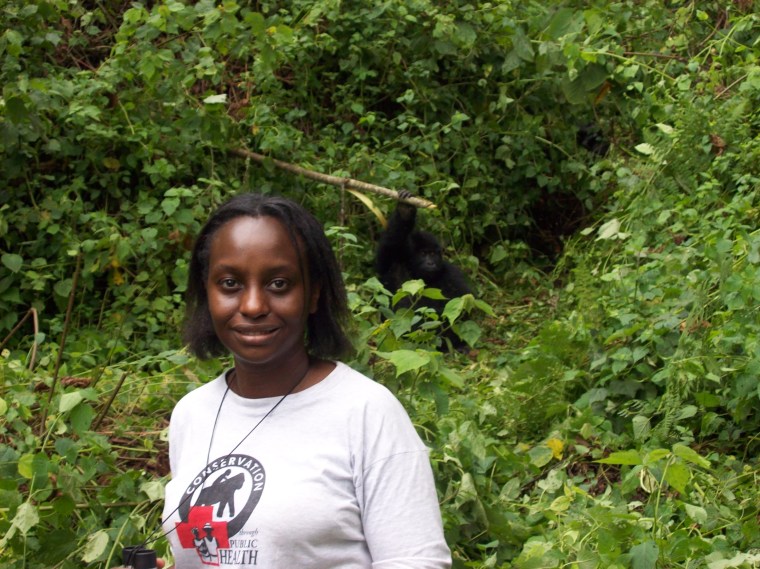
Dr. Glady Kalema-Zikusoka , Uganda’s first wildlife vet and founder of Conservation Through Public Health
Dr Gladys Kalema-Zikusoka is also the author of the best-selling ‘Walking With Gorillas’ that is about the Bwindi gorillas and her journey as Uganda’s first wildlife vet. You will get to know some fascinating insights into what it takes to save the Mountain gorillas – which is all about co-existence between the primate (us) and the non-human primate (gorillas, chimpanzees plus some 500 more species). I’m not telling you more.
6.30 p.m.: Take a few minutes to refresh before dinner on your first night in Bwindi, that is one the most bio-diverse places on Earth.
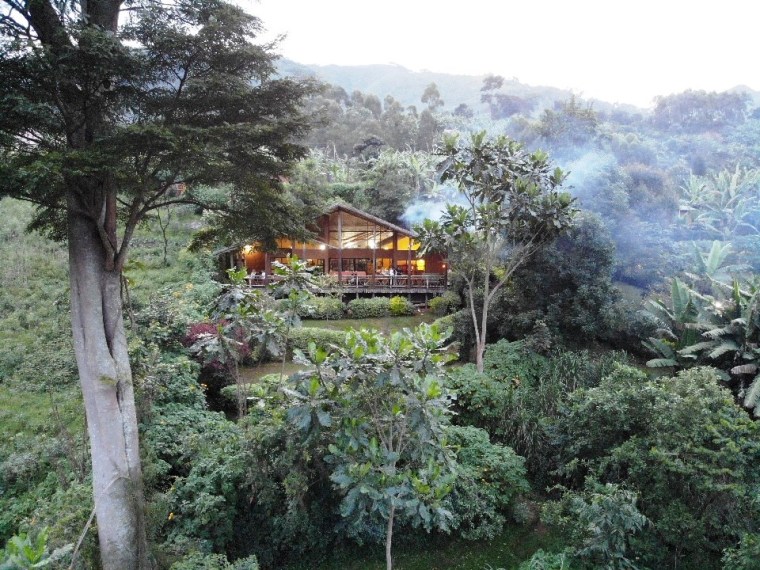
Lodge in the mist – the enchanting Mahogany Springs
Dinner will be served fused with the rich forest air and lots of lively exchanges with the excitement of meeting the gorillas.
This is your day for an encounter with the greatest ape on Earth – the Mountain gorilla.
6.30 a.m: Meet for breakfast and a short drive will have you at the legendary impenetrable forest for an exciting day of hiking for our close relative with who we share 98.4% of our genes.
You will be accompanied by a gorilla guardian working with Dr Gladys Kalema-Zikusoka who knows many of the gorillas by name and give you a first-hand insight into their world.
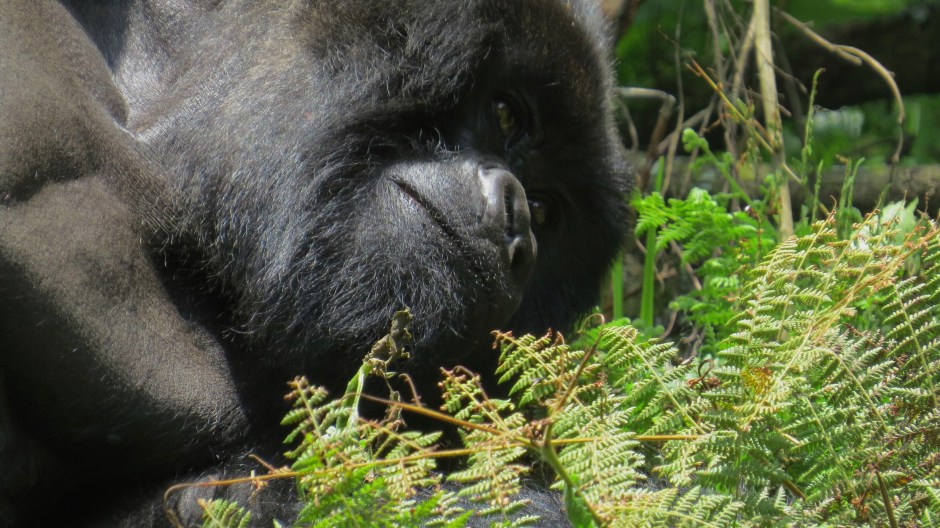
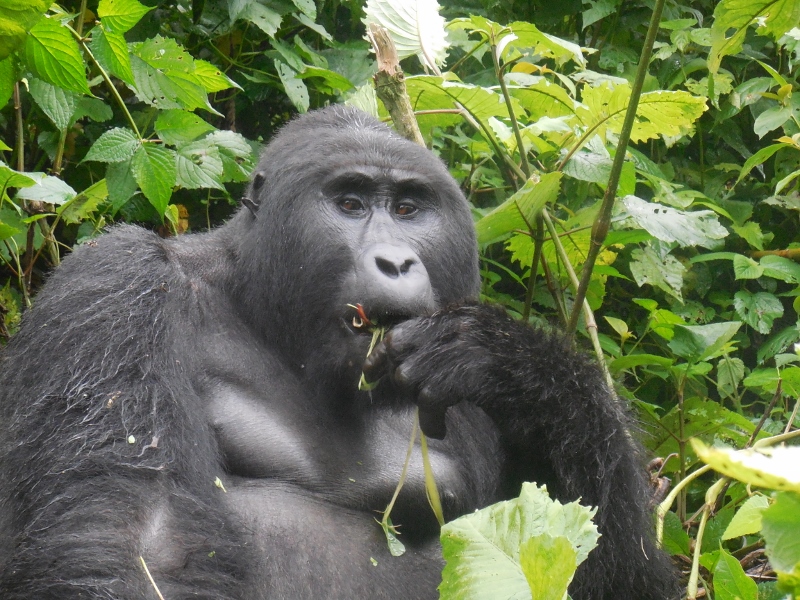
A Mountain gorilla enjoying a meal in the lush greens of Bwindi Impenetrable Forest.
Thanks to the work of Dr Gladys and CTPH founded in 2003, the population of Bwindi’s Mountain gorilla is on the rise from 300 in 1999 to 459 and increasing. The Mountain gorilla is the only gorilla species whose population is increasing which has seen it removed from being listed as Critically endangered to Endangered.
The forest is also home to the extremely rare Forest elephant that number 300. If we see one with the Great Blue Turaco, a bird of the rainforests – we will be one of the few to ever witness this!
Once you sight the gorillas, you will be permitted to view them for 1 hour before returning to the ranger post.
Depending on the duration of the hike, return to the lodge for a late lunch and then you have the afternoon to yourself in this magical paradise.
Relish your last night in the home of the great ape and all the endangered species that Bwindi is home to and make a toast that this paradise will be theirs’ forever.
7 a.m: After a sumptuous breakfast depart from your lodge at 8 a.m. with packed lunch boxes
12.30: Arrive at Mabamba Shoebill Community Site (215 km / 4 1/2 hours). Mabamba Bay Swamp is a prime wetland birding site famous for the elusive shoebill, a prehistoric bird. Enjoy a boat ride with bird viewing and very good chances of seeing it and many more species.
Close-up of a Shoebill, an iconic bird species found in Uganda’s Mabamba Swamp, renowned for its prehistoric appearance.
This lasts around 2 hours.
3 p.m: Drive to Entebbe (90 km / 2 1/2 hours). Drop off at your hotel in Entebbe or at Entebbe Airport (night flights only).
There will be a lot of memories to take back home after your amazing African safari with new friends met.
A take from the Great ape safari in the words of the first person to study gorillas in the wild, Dian Fossey:
”The more you learn about the dignity of the gorilla … you dwell less on what is past and concentrate more on the preservation of the future.”
Day room or overnight:
Additional nights at Papyrus Guest House Entebbe (before or after your safari and includes an airport transfer):
USD 95 per person sharing twin / USD 110 per person single
COST:
Per Person: US$ 7,300
Per Person Sharing: US$ 6,800
Package includes:
1 night accommodation at Papyrus Guest House Entebbe, on bed & breakfast basis
2 nights accommodation at Pakubaa Safari Lodge, Murchison Falls, on full board basis
2 nights accommodation at Isunga Lodge, Fort Portal, on full board basis
2 nights accommodation at Mweya Safari Lodge, Queen Elizabeth National Park, on full board basis
2 nights accommodation at Mahogany Springs Lodge, Bwindi, on full board basis
1 night accommodation at Rwakobo Rock Lodge, Lake Mburo, on full board basis
Arrival transfer (airport-hotel) in Entebbe (Day 1)
4×4 Safari Landcruiser with driver-guide on safari (Day 2-Day 11)
Murchison Falls: A rhino trek at Ziwa (en-route); A visit to the top of the falls; 1 Game drive; A boat cruise to the base of the falls
Fort Portal/Kibale: 1 chimpanzee habituation permit per person
Queen Elizabeth National Park: 2 Game drives, A boat cruise on the Kazinga Channel
Bwindi Impenetrable Forest: 1 gorilla tracking permit per person, Gorilla Guardian working with CTPA guiding group; visit to the CTPA centre and to a community village to see its collaboration with CTPA.
Lake Mburo: 1 game drive; A visit to Mabamba Shoebill Site en-route from Lake Mburo to Entebbe
National park entrance fees
All statutory taxes
Not included:
Lunch and dinner in Entebbe
Beverages, incidentals, gratuities and items of a personal nature
Any items not mentioned under the above inclusions
Additional nights at Papyrus Guest House Entebbe (before or after your safari and includes an airport transfer) at USD 85 per person sharing twin / USD 100 per person single
Join us on an unforgettable adventure with us on Uganda’s Great Ape safari!
Add on another East African safari before or after the Uganda great ape safari. Let me know where you would love to go.
Contact: Rupi Mangat – CEO, Moonlion Safaris
Email: rupi.mangat@yahoo.com
More on Rupi Mangat
Rupi is a travel writer with a particular concentration on wildlife conservation and sustainability. She is 3rd generation Kenyan who has been on safari countless times since she started writing professionally in 1998. She works with the Wildlife Clubs of Kenya as the editor of Komba, the magazine to promote wildlife conservation amongst schoolchildren. With her strong connections with conservation organizations like the East African Wild Life Society and the Conservation Through Public Health which are not-for-profits doing amazing wildlife conservation work in today’s challenging world.
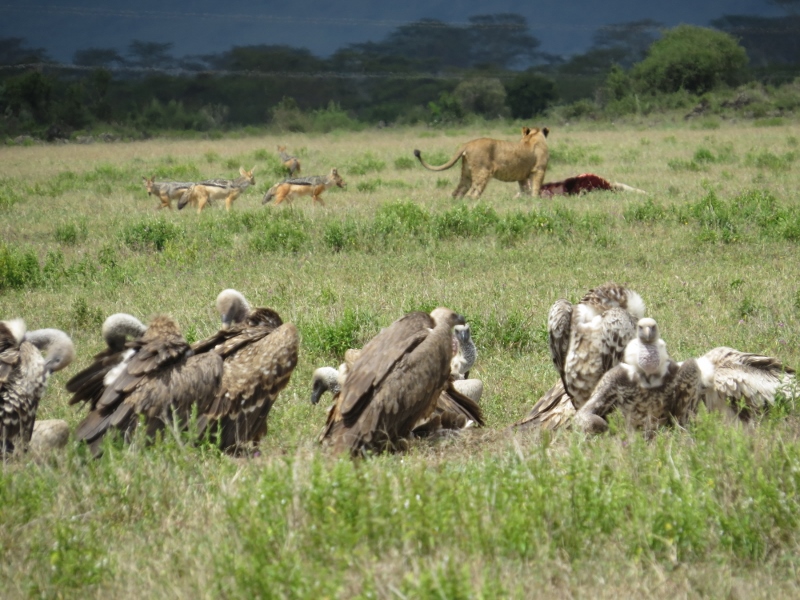
Above: Lion defending his prey from Silver-backed jackals and Ruppell’s vultures listed Critically endangered on IUCN Red List in Soysambu . By Rupi Mangat
Published: Saturday magazine 4 January 2019
A vulture circling high in the midday sky gives the first clue that there has to be something interesting on the ground. Following its wing-beat through a pair of powerful binoculars, the carrion-eater has its eye on a pride of five lions on open plain gorging on a freshly killed cow in Soysambu Conservancy bordering Lake Elmenteita in the Great Rift Valley.
The vulture that turns out to be a Ruppell’s vulture is late to arrive. On the ground there’s a flock of 70 vultures keeping a respectful distance from the lions, waiting for their turn patiently. There are three species: Ruppell’s and White-backed with a lonely Hooded one. The Hooded Vulture is smaller than the other two and keeps to the pecking order. All three species are on the IUCN Red List as Critically Endangered.
Lion feeding on cow calf by Jolai Hill oin Soysambu Conservancy in company of Silver-back jackals and vultures,. By Rupi Mangat
The Silver-backed jackals are more daring. They dart to and fro stealing bites off the carcass only to scamper when the big cat growls.
It’s like watching a wildlife documentary in real life.
Four lions stride away to a tree and slump down in the shade. For the nest two hours, the cats take turns to feed not allowing the jackals or the vultures to steal them of their kill.
Cats on the Scene
Since the early 1900s, lions hadn’t been seen in Soysambu Conservancy that once was a cattle ranch. Then in 2014 two females decided they were going to check out Soysambu and liked it and settled down. Of course they returned to the park to mate with the lion. Fliir and Valentine, the intrepid lioness then raised their cubs on Soysambu.
The pride of five is Valentine’s daughter Betty, her older two cubs and the younger pair. Fliir and Valentine are no longer around but it’s nice to see their descendants.
Suddenly the lone lion stands alert.
He’s Betty’s older son.
He’s seen two legs walking in the distance.
Lions on Soysambu. Copyright: Kat Combes copyright
“They are very afraid of two legs and white cars,” tells Rowena White monitoring the cats. Persecuted over decades by people around the lakes, the lions have a natural fear of them. White is the colour of the livestock car that chases predators away. The cats have learned that it’s best to keep away from them. The only car they trust is Rowena’s battered cream-coloured land rover and hence the reason for our gallery seats close to them.
The lions are done with the feast and move to the tree.
It’s now the turn of the vultures who completely cover the carcass chasing away the jackals. One cheeky cub returns and in a sprint chases off the vultures in a flurry of wings and flaps.
All that’s left of the carcass is gleaming bones cleaned of any flesh.
In the circle of life, vultures are the clean-up crew. In their absence, the remaining flesh on the carcass would have rotted and the stench unbearable with the fear of diseases like anthrax spreading.
Done with their feast the birds fly away.
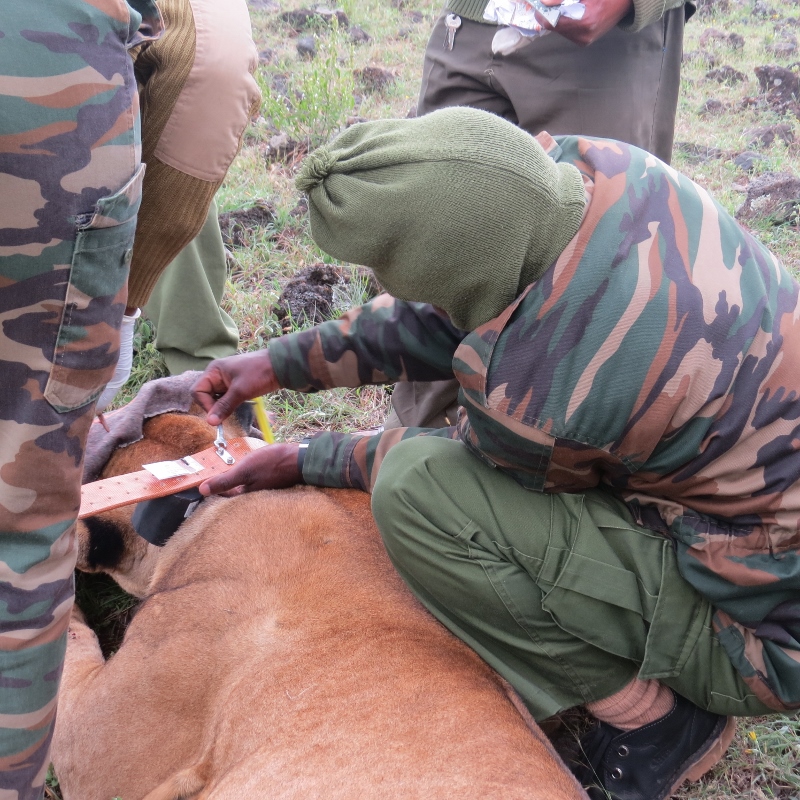
Betty is Collared
Betty being collared oin Soysambu Conservancy,. By Rupi Mangat
It’s been months of trying to dart a lion and fit a satellite collar on it. It’s to alert the cattle herders where the lions are and hence avoid the area when they take the cattle out for the morning graze. It worked with the older cats with no cattle lost to them.
The cow on the ground was unfortunate as none of these cats had been GPS collared.
With the Kenya Wildlife Service crew in the area, the vet arrives. He aims from the friendly land-rover and gets his target. It takes a few minutes for Betty to doze off while her cubs scamper away. The tranquilizer hasn’t quite taken affect and she raises her massive head to let out a roar. Everyone scampers. She’s tranquillized again and the collar fitted that will relay all her movements on the screen.
Next morning, the computer shows that at 8 p.m. the previous night as we sat on the patio, the pride had crept close and stayed at the bottom of the hill with us totally unaware.
See Soysambu
Soysambu Conservancy with Flamingos on Lake Elmenteita and Delamere’s Nose. Copyright Rupi Mangat
Soysambu Conservancy borders Lake Nakuru National Park. Part of it is in Lake Elmenteita Wildlife Sanctuary measuring 2,534 hectares.
Lake Elmenteita is a UNESCO World Heritage Site together with lakes Nakuru and Bogoria and listed as The Kenya Lakes System in the Great Rift Valley World Heritage Site because of their outstanding universal beauty, including hosting one of the richest bird life in the world
It is also a Ramsar site, a wetland of international importance; an Important Bird Area (IBA) globally recognized as a stronghold for Great White Pelicans and their only breeding site in East Africa. It is also a flamingo stronghold and an important flight-path for over a 100 species of migratory birds flying from Europe and Asia.
Soysambu Conservancy is a vital dispersal area for wildlife moving across the three lakes Nakuru-Elmenteita-Naivasha in the Great Rift Valley.
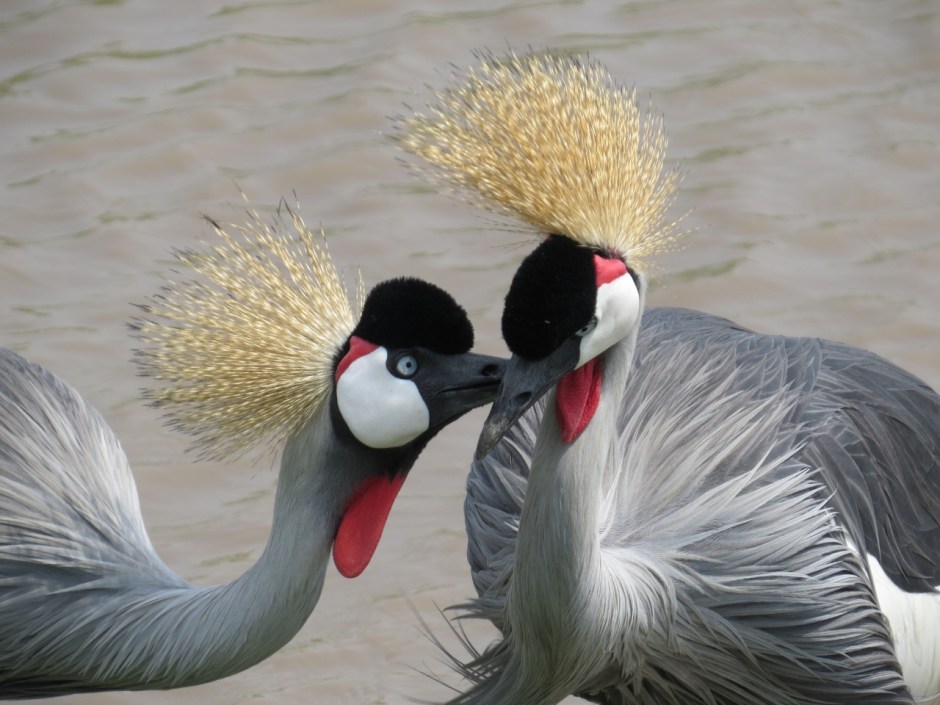
Above: Grey crowned cranes in Lake Nakuru National Park. Copyright Rupi Mangat
Published: The East African Nation media 19 to 25 October 2019
The salt ribbon around the lake has disappeared, swallowed by the rising water. It’s a phenomenon that researchers studying the lake since the first recorded data, attribute to a 50 year cycle that happened in 1901 and 1963. Continue reading “On High Water in Nakuru”→





 Moonlion Safaris