
It tops the charts on May 9 2026 on the Global Big Day
By Rupi Mangat
On May 9, 2026 Kenya topped the charts again in Africa with the most species of birds recorded in 24 hours during the annual Global Big Day in celebration of birds. Globally, Kenya ranked seventh, becoming a giant amongst giants in the bird world with the unbeatable Colombia recording the most species numbering 1566, Peru (1438), Brazil (1,204), Ecuador (1068) and Venezuala (890). India ranked sixth with 835 species doumented.
Birders in Kenya recorded 824 species, way above Tanzania placed second with 708 species and Uganda placed third with 555 species. Countries like the Democratic Republic of Congo that is four time the size of Kenya and supports the largest tropical rainforest on the continent (next to the Amazon in South America) recorded 282 species, bringing to light how seriously Kenyans have taken to birding.
Globally, 8,023 species were recorded this GBD by 80,000 eBirders and 2.1 Merlin users. It’s historic and a new world record, set by the largest community of bird enthusiasts ever united for a single event.
The Global Big Day, the world’s largest single-day citizen scientist event, started in 2015 by birders at the Cornell Lab of Ornithology in the US involving citizen scientists, bird lovers, bird scientists and ornithologists to help document species recorded on bird checklists on the eBird app. On the inaugural GBD, it gathered over 14,000 species checklists compared to. 197,640 submitted to eBird this May.
Before the age of the internet, birders created their checklists in notebooks and filed away. The eBird app now gives access to anyone to see the checklists from any corner of the world, giving data like location and time seen. Keen birders travel the world to enrich their bird lists making use of the app to know where to find the birds that may not be seen elsewhere like the endemics.
Kenyan birders like Aloise Garvey submitted 19 checklists to eBird from Kenya, followed by Edward Jenkins with 17 and Ouma Oluoko submitting 16 while Doreen Amukoya with the Kenya Women Birders tied with Salma Mazrui-Watt, each submitting 11. However the most species recorded were from Kevin Mwaniki with 225, followed by David Owiti with 214 and Simon Odhiambo with 212. Garvey and Oluoko came in 12th and 13th with 168 and 162 species recorded respectively.
In the world of science and policy, the e-bird has become an invaluable asset.
The GBD celebrated twice a year in May and October corresponds to the bird migrations between Eurasia and Africa when the feathered-kind spread their wings to escape the winter months for sunny Africa to feed and fatten up before flying home when summer arrives. It’s time for them to breed and care for the fledglings until the next winter.
Birding in Kenya
Recognized as a top global bird watching destination, with over 1,100 species recorded, this GBD saw most species recorded in Lewa Wildlife Conservancy with 245 species, famous for its arid landscape mixed with lush plains in view of Mt. Kenya, the country’ tallest mountain. Nairobi the capital city of Kenya which is the only capital city in the world that is home to a national park with lions and more, came in 19th with 123 species – and rightly called the birding capital of the world.
However, not a single checklist was submitted from Kenya’s north-eastern region which spans 127,358.5 km2 leaving a huge vacuum in the country’s bird world. The region is famous for its desert and semi-arid land where wildlife like the critically endangered Reticulated giraffe and the nocturnal aardvark are still common. Amongst its endemic bird species is the Wajir flycatcher with the last record in 2021 and the first in 1958.
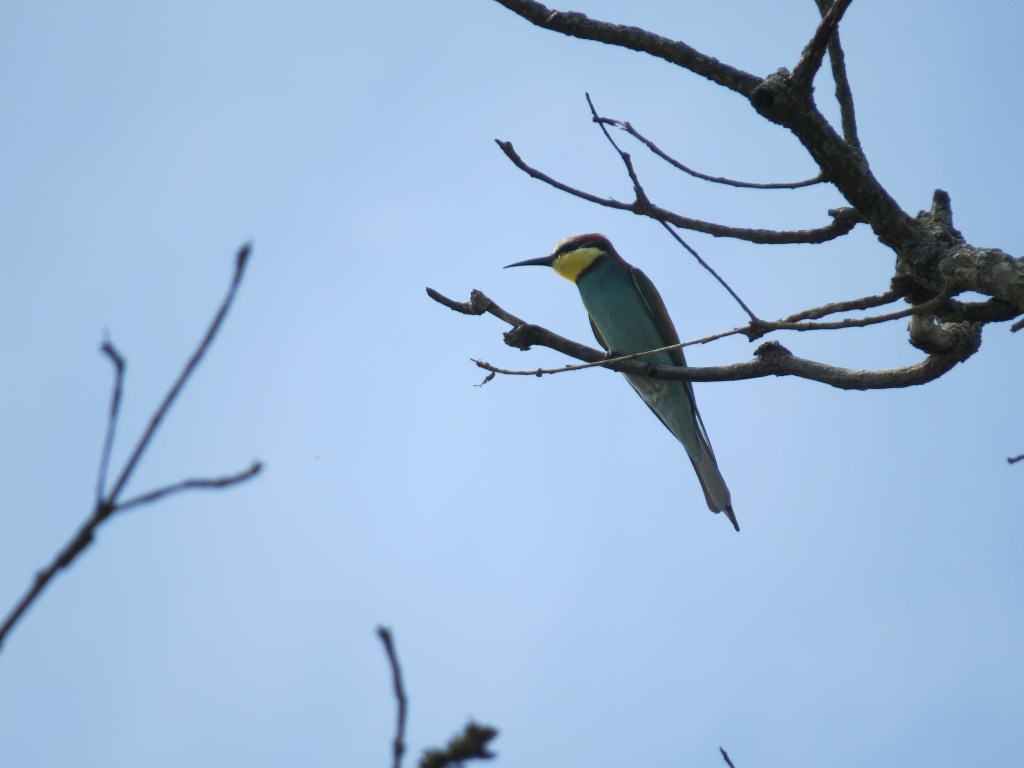
Today, Kenya boasts several birding groups under the umbrella of Nature Kenya, a branch of the East African Natural History formed in 1909. It includes Nature Tanzania and Nature Uganda.
Birding in Kenya is largely attributed to the infatigable Fleur Ng’weno who started the bird walks from the Nairobi Museum car park in 1971, enticing generations of Kenyans into the bird-world. Now in her 80s, this GBD saw her back in the Dakatcha Woodlands near the Malindi coast where she and her team solved the mystery of where the Clarke’s weaver (also called Kilifi weaver) breed – the ‘only found in Dakatcha and nearby environs’ in March 2013, a century after it was first described in 1913.
The Importance of Being a Bird
Birds are an indicator of the environment. When a species begins to vanish from the grasslands like the Sharpe’s longclaw endemic to Kenya, it shows the grasslands are vanishing. When a forest species like the Taita apalis begins to vanish, it indicates that the forest is disappearing. Today only two present of the hilltop forests of the Taita Hills exist. In tandem, fewer than 300 of this forest bird survive with populations decreasing as the forests disappear. When rivers and lakes become polluted, the shores are emptied of the waterbirds and when the skies become cluttered with towering skyscrapers, the last of the hawks and eagles will have no space to fly.
The eBird over the years is telling the story of the birds, a vital resource for policy makers and developers to heed before the world is left without its beautiful birds.
Next October Big Day on 10 October, 2026, and Global Big Day returns on 9 May, 2027.
Birding in Kenya: Join Nature Kenya and be part of the birding movement in East Africa.
For a birding safari in East Africa, we arrange customised safaris. Write to us and we will arrange your safari.
 Moonlion Safaris