Published June 2014 Saturday Magazine, Nation newspaper
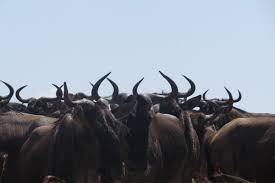
Above: Wildebeest put their heads together in the Maasai Mara. Photo/Rupi Mangat
Photo/Rupi Mangat. We got a front row view of the world-famous annual wildebeest migration at the
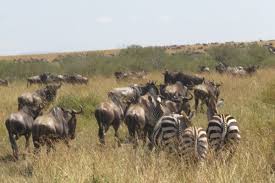
It’s finally here. The time we all wait for. Thousands of wildebeest are streaming into the Mara, a massive mass of comical gnus grunting and snorting, chomping down the grass and creating a feast for the carnivores. It’s the annual migration.
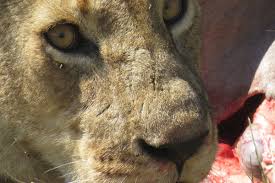
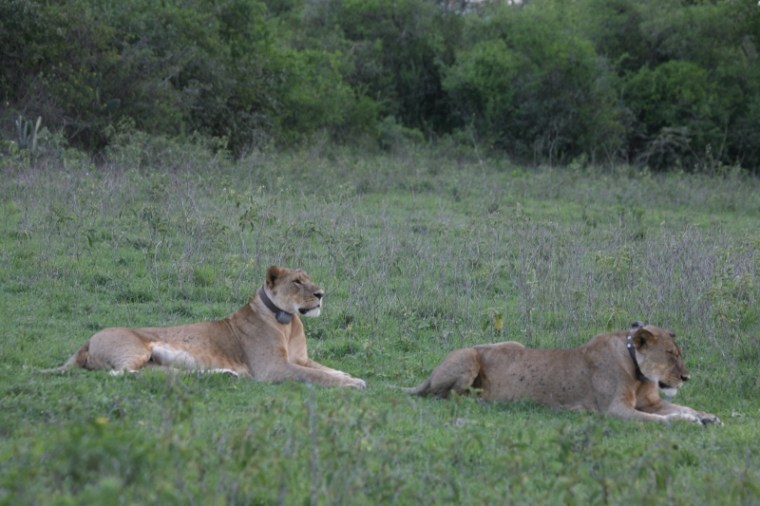
Lions at the Maasai Mara National Reserve. Photo/Rupi Mangat
The dire need for government to recognize the problem of poison
Published in The East African-Nation Media 16-22 September 2017
It was in 2005 while researching for her doctorate on Mackinder’s Eagle Owls around Nyeri in Kenya’s central highlands that Darcy Ogada realized there was a problem at hand – that of poisoning.
“I was watching as owls were being poisoned,” she recalls. Farmers were painting sliced-open tomatoes, with carbofuran to kill mice and mousebirds. But they were also killing the Mackinder’s Eagle Owls because the owls were eating the poisoned mousebirds. Found mostly in the highlands, the owls do not have a wide distribution.
United Against Wildlife Poisoning Campaign
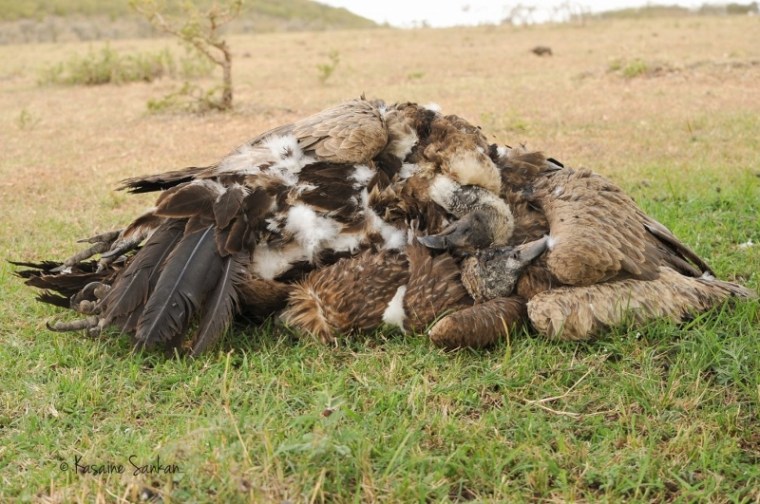
Vultures poisoned near the Masai Mara 7 July 2014. Photo E. Ole Reson
Above picture: Valentine in Soysambu Conservancy 2017 copyright Kat Combes
Both Flir and Valentine May 23 2017 when they came out of the dens in Soysambu Conservancy 2017 copyright Kat Combes
“Three lionesses turned up one day from Nakuru National Park,” tells Kat Combes of Soysambu Conservancy that straddles Lake Elmenteita. It was in July 2014.
The trio were three years old looking for their own space. Two sisters settled in but the third returned to the park separated by a wire fence.

 Moonlion Safaris