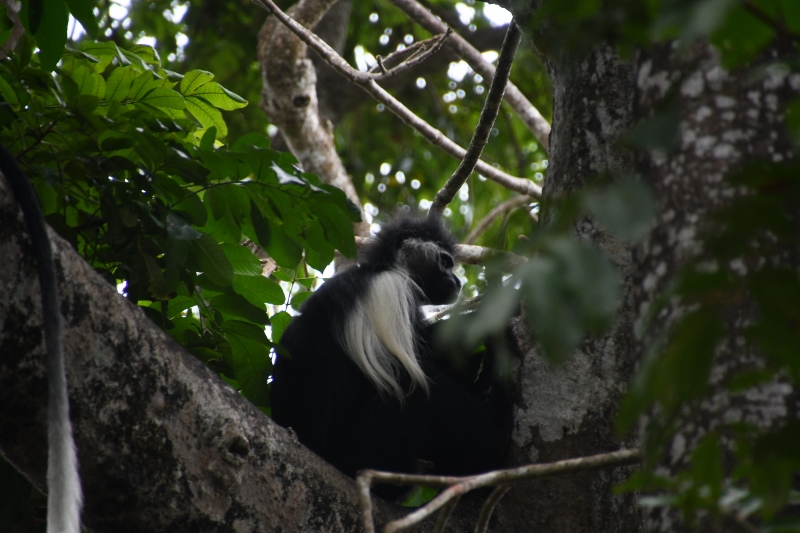
White-tipped tails hang from the branches above, when suddenly they become animated, leaping from branch to branch of the ancient baobab. They belong to the troop of black and white monkeys searching for a shadier spot to rest and munch on the nutrious leaves of the baobab that on reading The African Baobab by Rupert Watson, I’m excited to realize that the baobab is Africa’s oldest living monument, some going back to the time of the pharaohs some 5,000 years ago although the quintessential tree is not found in Egypt.
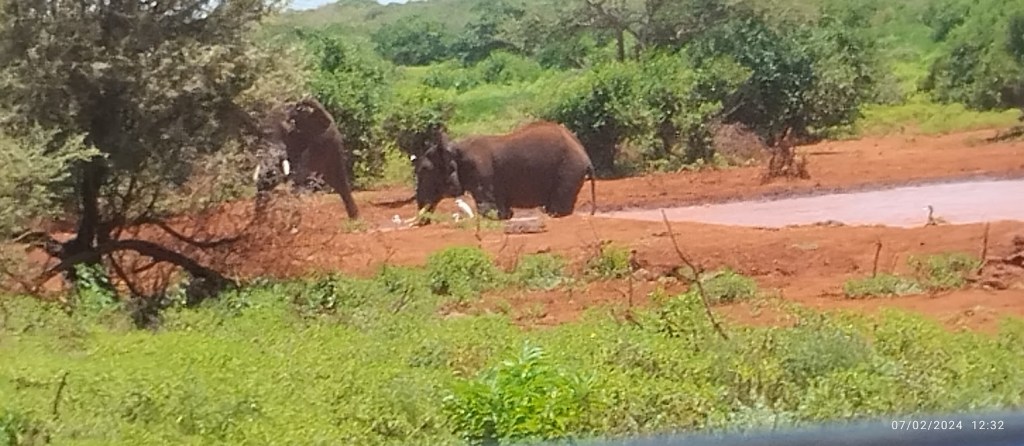
A pair of bull elephants takes refuge in the water hole in Tsavo West. The colours are vivid – red elephants in the red-earth water, the thick green scrub on red soil with the acacias and baobabs offering precious shade to the wildlife.
Afternoon heat is intense. A pair of bull elephants in the waterpan to cool off. Image Rupi Mangat
The two red giants are in no hurry to move away from the waterhole. It’s hot and they have to cool themselves, entertaining us with a mock fight by pushing each other around, hosing themselves with their trunks and trumpeting. Done with cooling their large bodies, they step out, their wet bodies glistening in the midday sun.
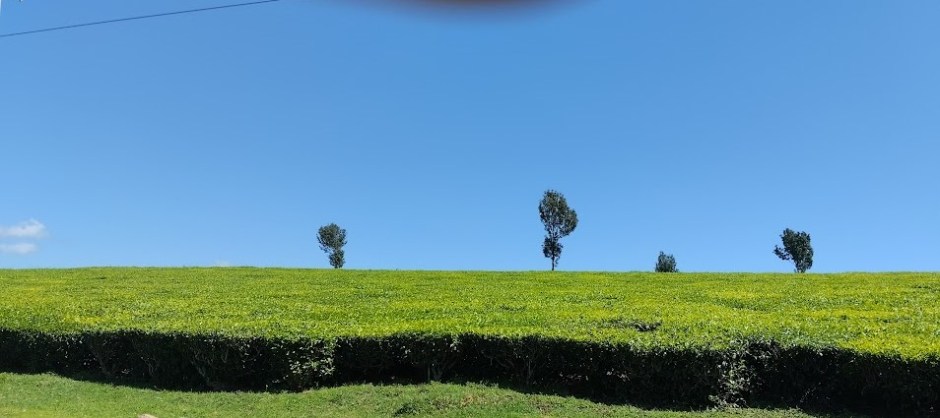
The black road cuts a narrow strip through the endless green fields of Kericho, the legendary home of Kenya’s best tea growing area. The green meets the blue of the sky in the horizon. On the southern scape, the Mau range fringes the green carpet with its ancient forest and on the western sky, it’s the massif of Tinderet that’s an extension of the Nandi Hills.
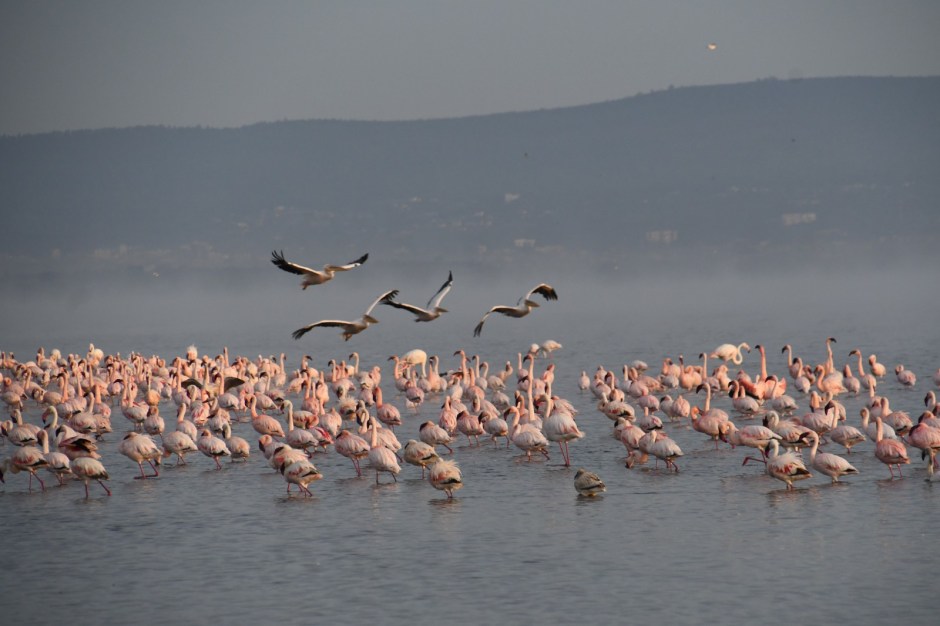
Above image: Lesser flamingoes and Great white pelicans fying overhead in Lake Nakuru National Park. Credit Inderjit Singh Mangat
Published: Saturday Nation magazine 17 Feb 2024
The lake is white-laced as we drive into the 100-year old farm house that morphed into Lake Nakuru Lodge. It sets the stage for the following events on a two-night stay.
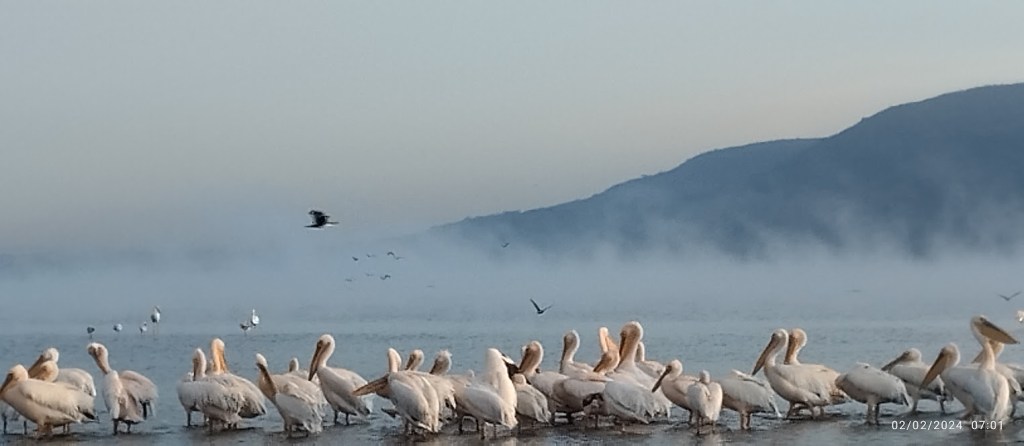
Great white pelicans at dawn with water vapor rising Lake Nakuru national park. Picture R.Mangat Feb 2024
Checked in, we’re looking the iconic lake best known for its pretty pink flamingos, the acacia woodland and the grass plains – a perfect world for all the wildlife we are about to see over a two night stay. The lake edge is laced with the Great white pelicans taking supreme advantage of the alkaline lake now turned fresh since the phenomenal rise of the Great Rift Valley lakes since 2012.
Scene one: The leopard in the tree. “You will see everything,” states Mr Muya of Lake Nakuru Lodge, who has grown up around it. The ‘everything’ includes four of the Big 5 except the elephant that is not found in the park.
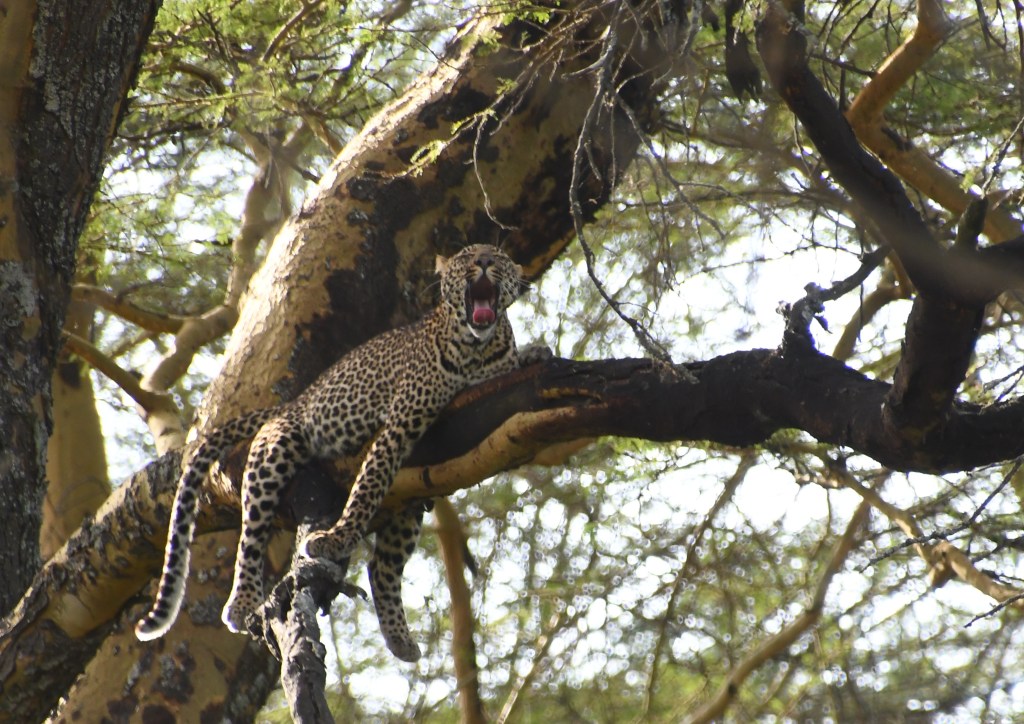
Leopard lounging on acacaia in Lake Nakuru National Park Feb 2024. Credit Inderjit Mangat
Ten minutes from the lodge of day one, the leopard lounges on a thick branch of a yellow-bark acacia tree in a forested grove. The feline holds us spell-bound, stretching, yawning, turning, sitting, lying with all four limbs dangling and after an hour of suspense – will it or will it not climb down, it’s time to leave.
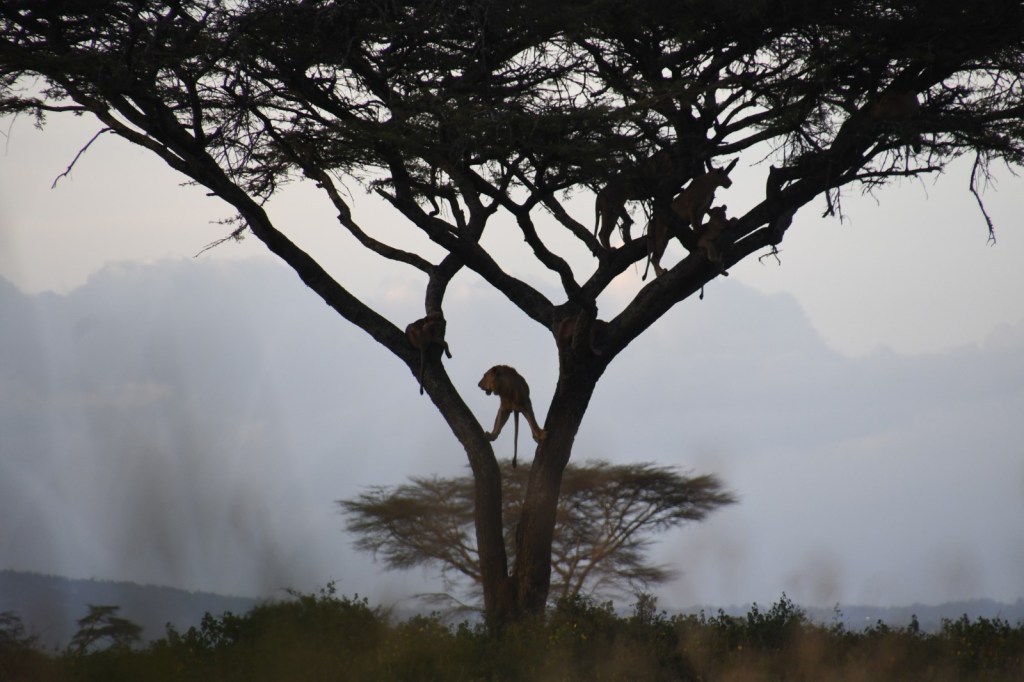
Scene two: After the leopard, same day, driving into the plains, it’s the strangest scene – a lion stuck in the tree! It’s spread-eagle with four legs apart and the tail dangling in the fork of the tree. Above it, on the higher branches are five other lions watching their mate – and on the ground, another waiting for this one to climb higher. But the poor lion can’t go any higher because the forked branches are too far apart. Is it a young dare-devil modern kid trying out new moves?
Comedy in the making – lion stuck in the fork of an acacia tree in Lake Nakuru National Park Feb 2024. Credit Inderjit Mangat
It’s straining, muscles taut. Finally some thirty minutes later, with the greatest of effort it manages to leap down safely to everyone’s relief. “The lions of Lake Nakuru climb the trees to see the best hunting ground,” tells Mr Muya. “And this pride is resident here.”
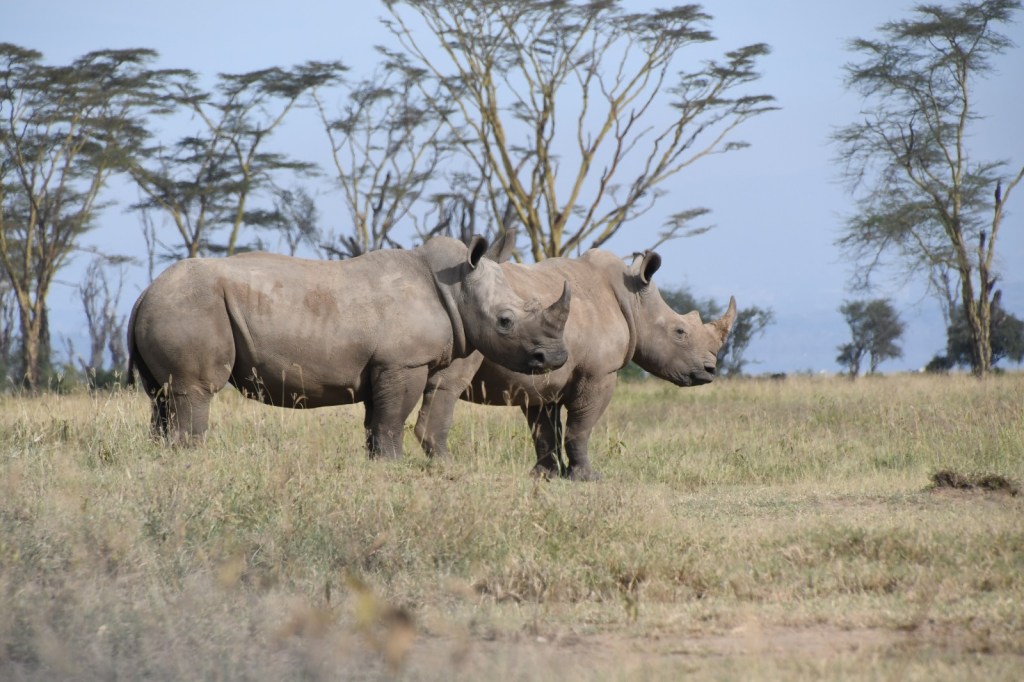
Scene three: At day break, with the piercing signature call of the African fish eagle, the family of five white rhino (the southern white which is the most common subspecies of rhino unlike the northern white that is now extinct in the wild with the last two females at Ol Pejeta Conservancy). It’s the two big females and two calves with the big male still snoozing on the ground. It’s the funniest scene. The calf decides dad has to get up. The miniature rhino bounds against the giant boulder. Dad doesn’t budge. He runs again to nudge dad up again – no luck and again – but still nothing.
White rhino family in L.Nakuru National Park. Feb 2024. Picture by Inderjit Mangat
All this would be ideal for another episode of Lion King – the real life comedy of life in the wild.
With all the drama on land, there’s more in the iconic lake that is home to over a million lesser flamingos when there is enough algae – their favourite food in the alkaline lake.
However, at this point the lake is almost fresh. Driving across Muya’s Causeway, the golden light of the morning sun fires the crimson hues of the Lesser flamingos by the salt-crusted shores, their stalky pink legs moving like ballerinas tiptoeing, busy dipping their long necks in the water to siphon the microscopic algae and plankton. It’s an engineering feat. The head in the water is upside-down, the water is sucked in, with the bird swallowing only the algae and plankton and siphoning out the salty water. For their fresh water drink, the flamingos fly a short distance to Lake Naivasha or Lake Baringo that are strung along the Great Rift.
Its colour-scope is fascinating – the pink of the flamingos the white of the pelicans, the Yellow-billed storks and African spoon bills and so many more waders while the Long-crested eagle once so common in the country finds space in the wide open plains .
Driving through the glades, herds of buffalo move like soft black waves, the gazelles and impalas gambolling, the giraffes gracefully browsing on the acacias while the baboons add more comic relief with their antics.
Lake Nakuru and its water, grasslands and open skies are home to this fascinating life on earth but for only as long as we can offer the space for the wildlife to live in and move along the migratory corridors to find new mates and breed for the next generation of healthy offspring’s.
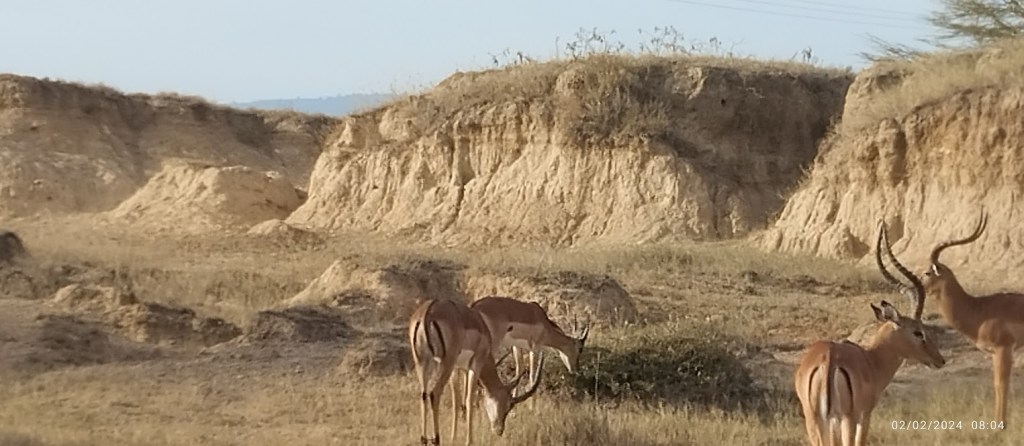
Bachelor herd of impalas at a salt lick in Lake Nakuru National Park. Pic Rupi Mangat
For now, back at the lodge, it’s time to dust off and enjoy the aromatherapy massage to rejuvenate the body and soul.
More on Lake Nakuru
Pay by e-Citizen. It can be cumbersome – it took an hour. The system needs to be more user-friendly. Once done, it’s a breeze into the parks.
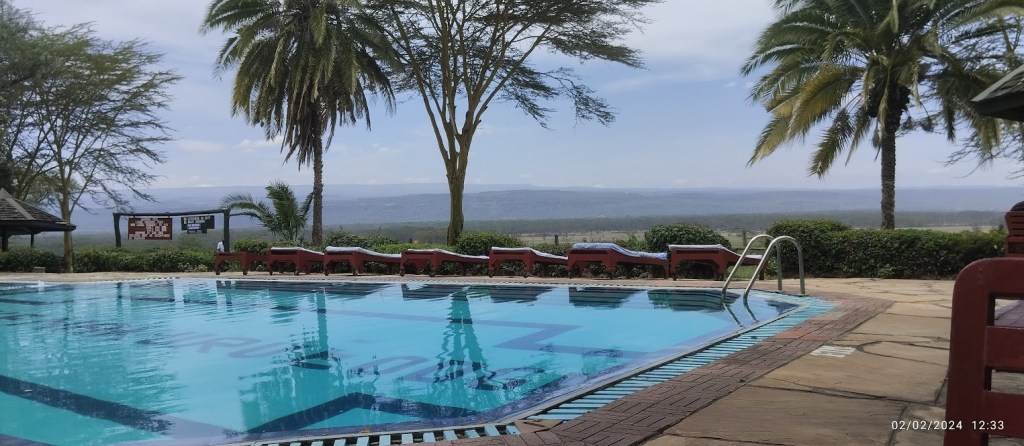
Lake Nakuru Lodge and the park. Image: Rupi Mangat
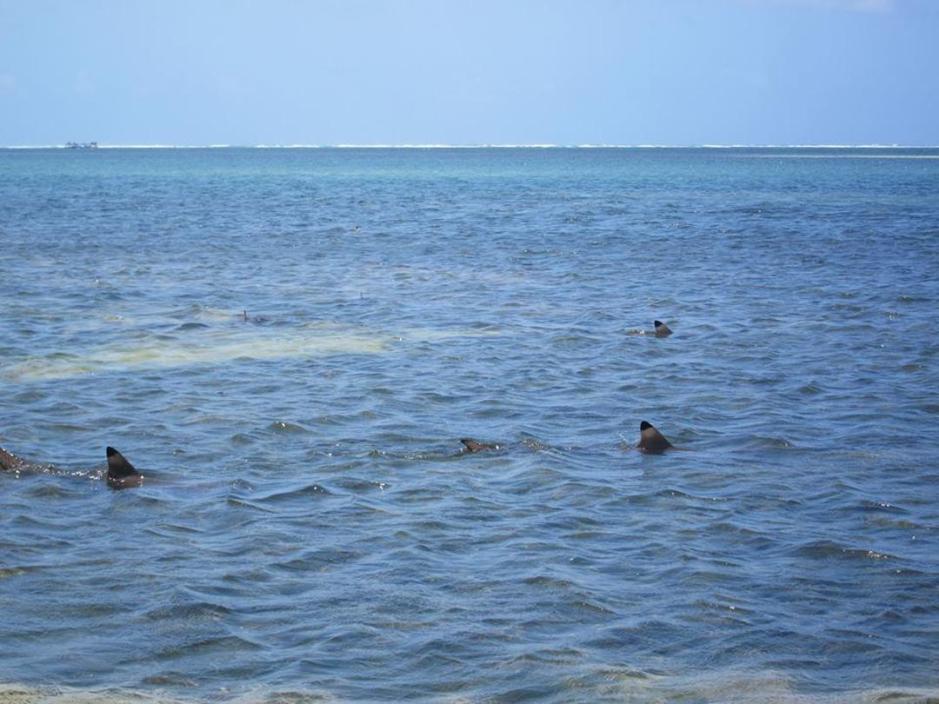
Above: Blacktip Reef Sahrk in Watamu Marirne National Park. Courtesy A Rocha Kenya marine team
Sharks have suffered bad press with ‘Jaws’ sending shivers down the spine. Yet not all species are blood-thirsty human-seeking predators and many are actually harmless. Little is known about the sharks that swim in the Kenyan waters of the Indian Ocean but here’s marine researcher Peter Musila of A Rocha (Portuguese word for The Rock), the Christian conservation organization, enlightening us about these ocean creatures.
1. Whitetip Reef Sharks
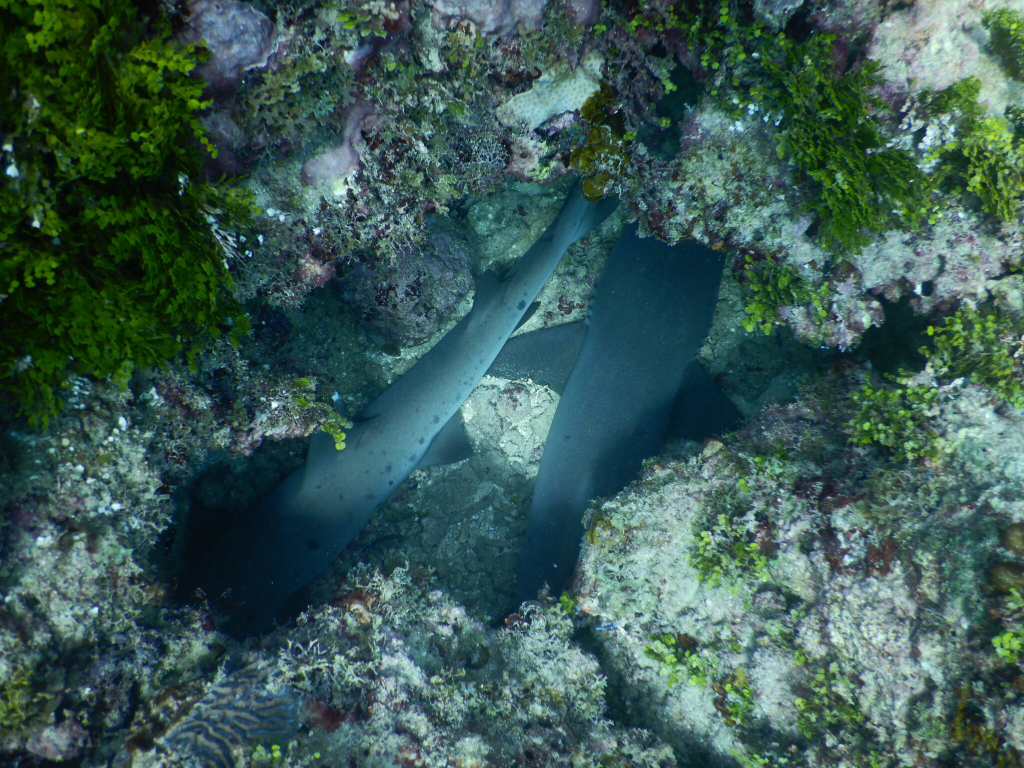
Whitetip Reef Shark in Watamu Marirne National Park. Courtesy A Rocha Kenya marine team
Listed as ‘Critically endangered’ in the recent IUCN Red List, it means they are one step away from being listed as extinct in the wild. These nocturnal sharks are rarely seen during the day, preferring to spend the day resting under rocks and crevices in coral reefs and shallow water. They come out at night to hunt when their prey is asleep or off guard like octopuses, squid, fish, and crustaceans like crabs and lobsters.
They are very shy of people and will quickly swim away when they see a diver approaching and are quite harmless to humans.
Whitetips are not large sharks. Most are about five feet rarely reaching seven feet. You can see them along the Western Indian Ocean and the larger Indo-Pacific region.
2. Blacktip Reef Sharks
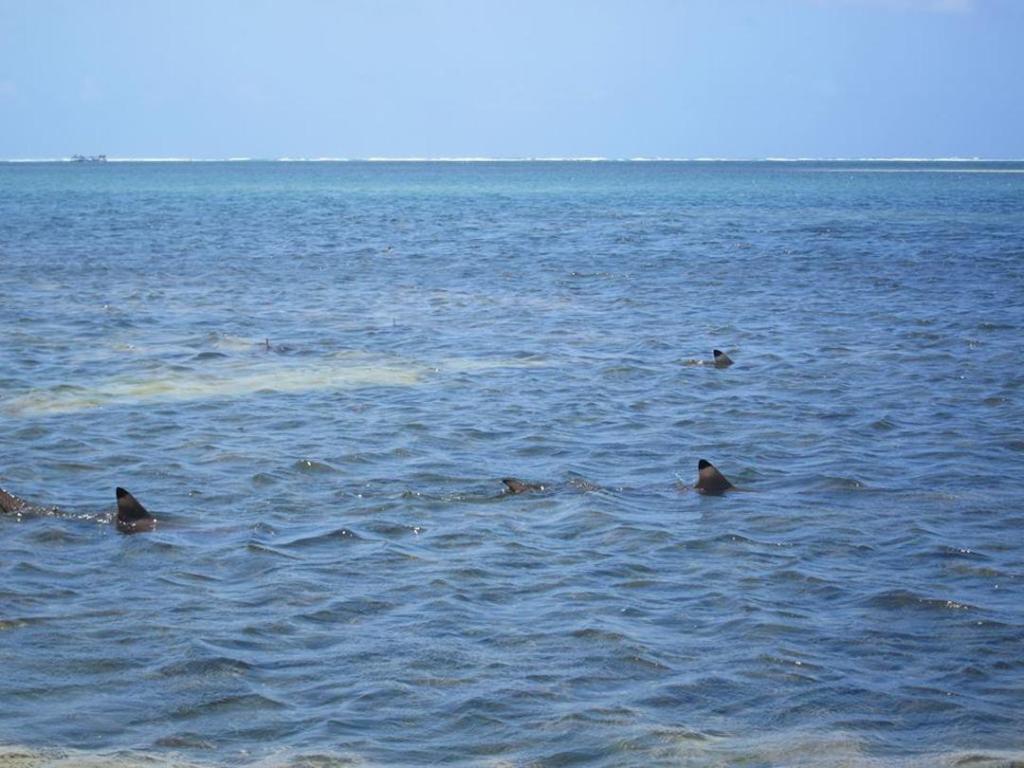
Blacktip Reef Sahrk in Watamu Marirne National Park. Courtesy A Rocha Kenya marine team
Blacktips are also not big sharks and grow to lengths of five feet and found along the coastlines of Pacific regions, such as Thailand, Japan, the Philippines, New Caledonia and northern Australia. They are also found in the Indian Ocean from South Africa to the Red Sea. Although they are listed ‘Near threatened’ on the IUCN Red List, Blacktips are common in Watamu Marine National Park and can be seen swimming in big numbers along the inner reef.
“Blacktips are not a threat to people, considering that Watamu gets thousands of tourists swimming in the intertidal shallow beaches where we see most of these reef sharks and no shark attack has ever been recorded here,” states Musila.
The A Rocha marine team is monitoring this species to study its behaviour, habitat, and threats.
Related to sharks are rays. Look out for these in Watamu:
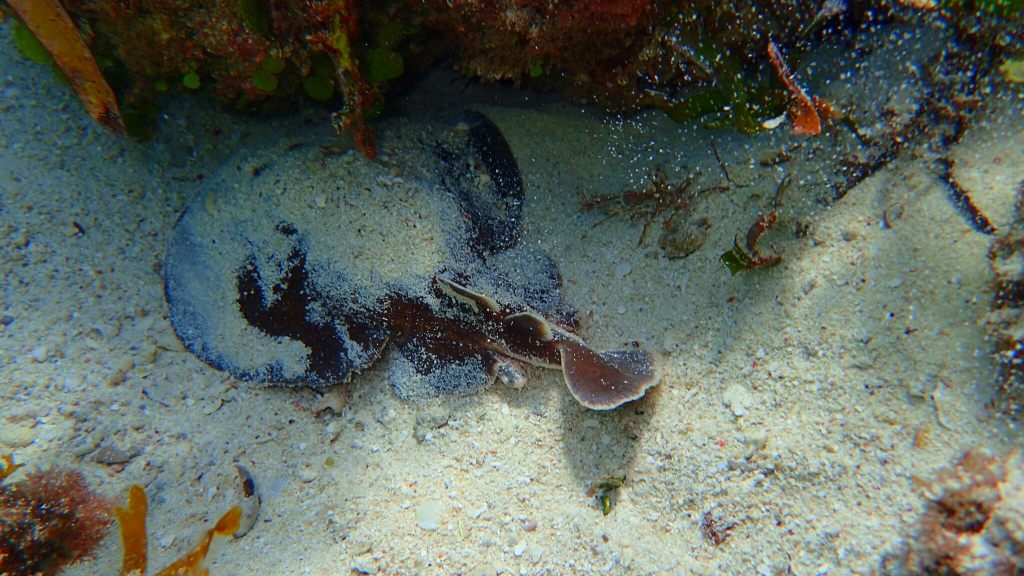
3. Marbled Electric Rays
Marbled electric ray in Watamu Marirne National Park. Courtesy A Rocha Kenya marine team
These beautifully patterned rays are found in deeper waters along the coral reef, and also sometimes near the shore in rock pools and caves in shallow lagoons. Small compared to other types of rays, they can grow to about 50 cm in length. They are nocturnal and hunt at night. They spend the day buried in the ocean floor, so if you are really lucky, you might see one during the day.
“They have electric organs at the base of their pectoral fins that generate a strong, electric discharge to subdue prey like eels and fish and to drive off predators,” explains Musila.
“They are one of the most fascinating creatures in the ocean,” continues the marine researcher. “They move very slowly, yet they can produce 10-200 volts of electricity (depending on the species) either to protect themselves from predators or to catch their food. Afterward, it would take them several days to recharge their glands.”
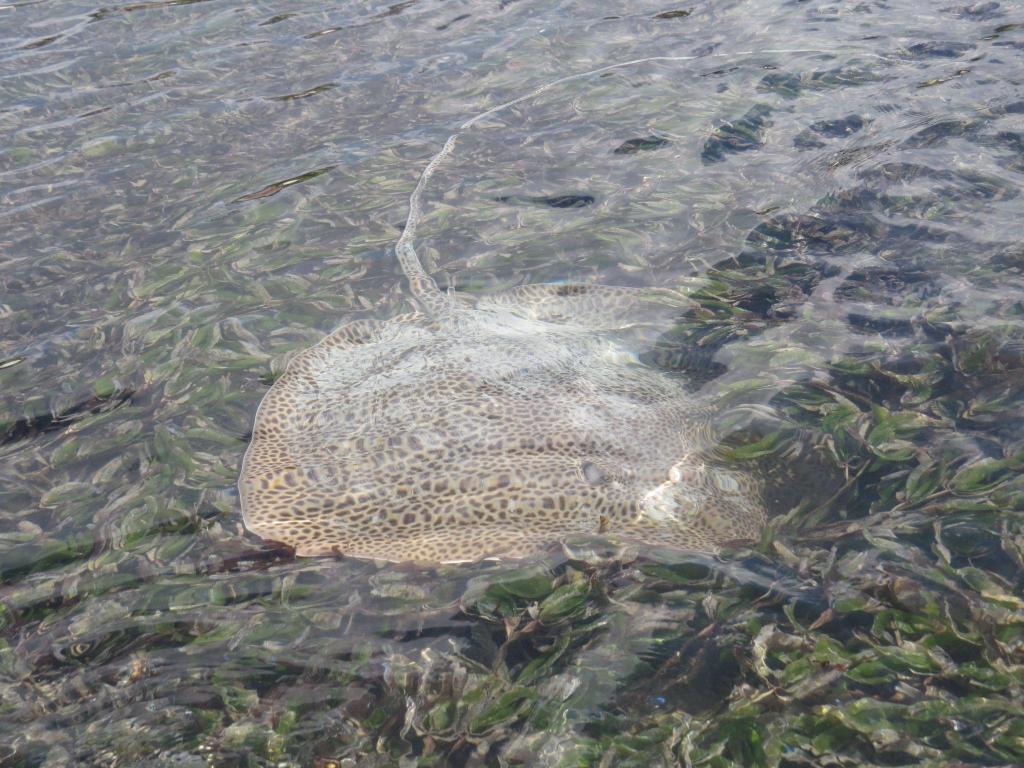
4. Honeycomb Whiprays
Honeycomb Whipray in Watamu Marirne National Park. Courtesy A Rocha Kenya marine team
Classified as ‘Vulnerable’ which means population decreasing on the IUCN Red List, they are seen in the park’s shallow sea grass beds and sand patches. Reaching up to six feet in length, they have beautiful spots that get crowded as they grow which gives them their name – honeycomb.
“They have a very long whip-like tail and hence the name,” says Musila. “But their sting is not lethal. However, there are other species of rays (stingrays) that have a sharp spine in their tails that can produce a very painful sting if accidentally stepped on.”
Also tells Musila, “Rays are often caught by fishermen in Watamu because they are actually tasty.”
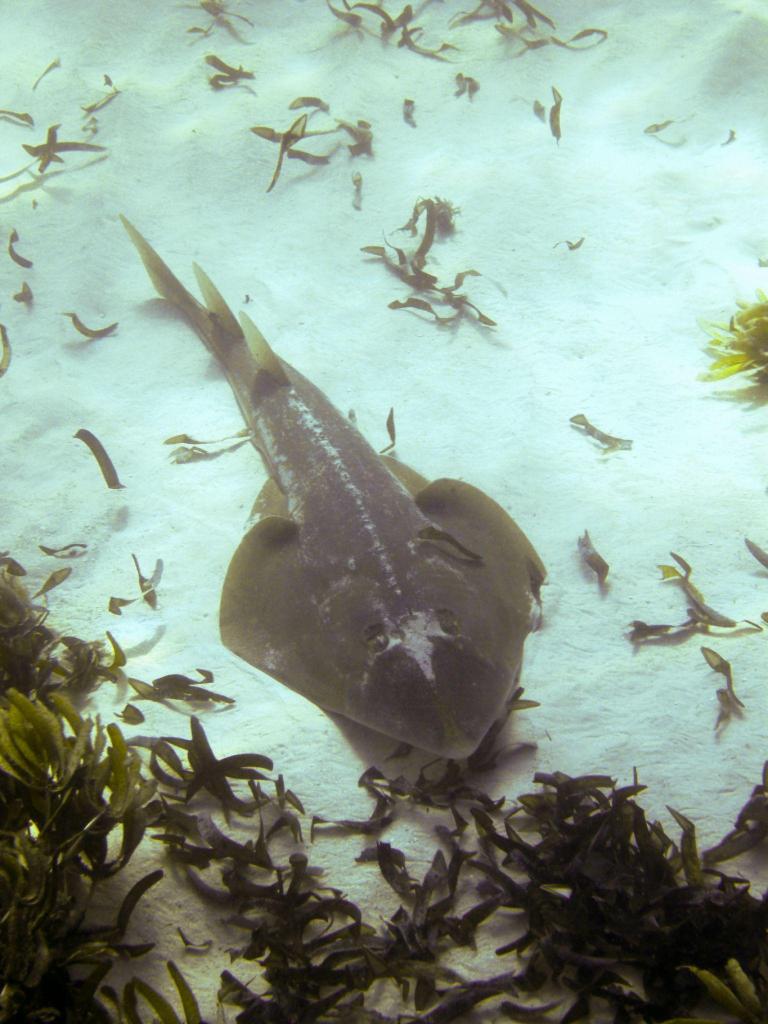
Guitarfish in Watamu Marirne National Park. Courtesy A Rocha Kenya marine team
A Critically Endangered species close to becoming extinct in the wild, the Halavi guitarfish is found in the sea grass and sandy beds of the marine park.
“These are quite rare to see,” informs Musila. “They are called guiterfish because of their shape which is an elongated body and a wedge-shaped snout that resembles a guitar.”
Best way to see these creatures?
Marine reasearcher Peter Musila. Pic courtesy Seas 4 Life by Ali Argün
“It’s by snorkeling/scuba diving in the reef or patrolling the sandy beaches along the marine park,” says Musila.
How you can help conserve these creatures?
“The biggest threat to sharks and rays range from overfishing and habitat destruction to pollution and unsustainable human development,” says Musila. “You can help conserve them by just being curious to learn, participating in restoration activities like beach clean-ups and tree planting, and being a little less wasteful because so much ends up in the ocean as trash.”
Words of Wisdom
“Be respectful to marine life, do NOT touch anything, whether live or dead, do NOT step on corals and do NOT feed the fish. Learn about marine life and the ecosystems so you can help with their conservation.”
A few metres from the beach and the marine park, it offers clean and simple accommodation to anyone who loves nature including longer-term resident researchers. It is a Christian organization, so do respect etiquette.


 Moonlion Safaris