Colour kladeiscope at Soysambu

On Global Big Day 10 May 2025 from Lake Elmenteita Serena Camp

Above: The Sleeping warrior aka Delamere’s nose between Lake Elmenteita and Mt Eburru. Credit Aloise Garvey

By Rupi Mangat  

Published Saturday Nation newspaper magazine 17 May 2025

It’s the calm of the morning, serene and quiet, one that l don’t want broken, one that l am alone in. In this world in front of me, a solitary Great White Pelican swims in the expanse of the grey-blue lake, reflected in its still waters as is the massif of Eburru and the profile of the Sleeping Warrior that we knew as Delamere’s nose in days past.
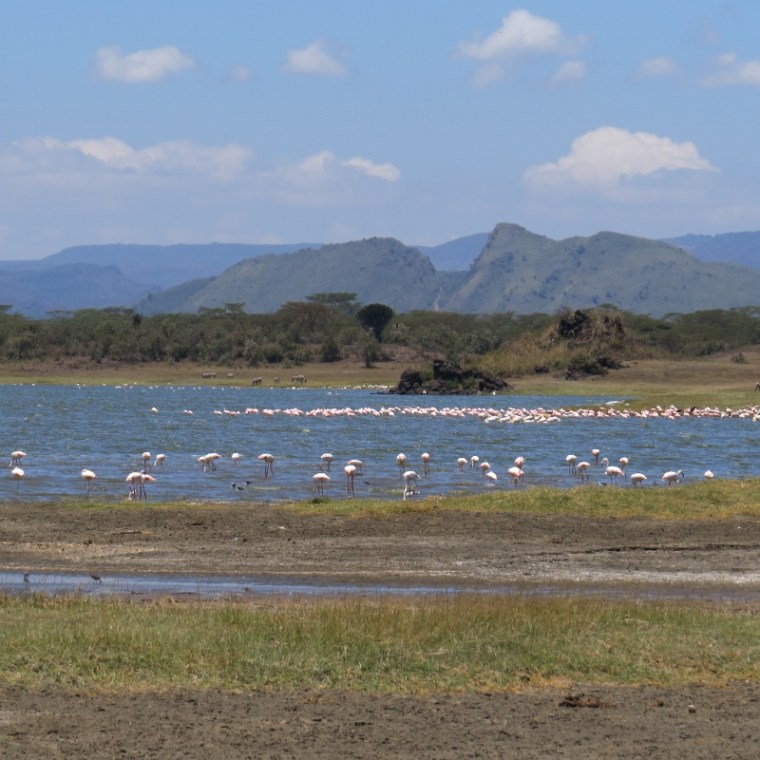
Soysambu Conservancy with Flamingos on Lake Elmenteita and Delamere’s Nose. Copyright Rupi Mangat

It’s still early and it’s the day to celebrate birds for it’s the Global Big Day for birders all over the world with birders in Kenya fanned out in the country except in the north-eastern. I’ve teamed up with two super birders Aloise Garvey Maina and Anthony Mokaya at Soysambu Conservancy to log in as many species of the feathered kind on the eBird app in a bid to make Kenya ranked amongst the top ten countries for birding. The giants of the birding world that have never been toppled since the start of GBD in 2014 are Colombia, Peru and Ecuador with Kenya hovering in the 7th or 8th position. Our mission is to inch closer to the coveted top spot.

As the morning warms the yellow-barked acacia woodland and the lawns of Lake Elmenteita Serena come alive with the cacophony of birds where Aloise is a most sought-after naturalist. By 8 in the morning, Aloise and Anthony have logged in 50 species at the camp and after a filling breakfast of freshly-baked pastries and fresh fruits followed by a hearty helping of a cooked breakfast, we’re driving out into the conservancy that takes its name from the Maasai words for ‘the place of striated rock’ and ‘Sambu’ for the cattle colour, aptly chosen by the first Lord Delamere.
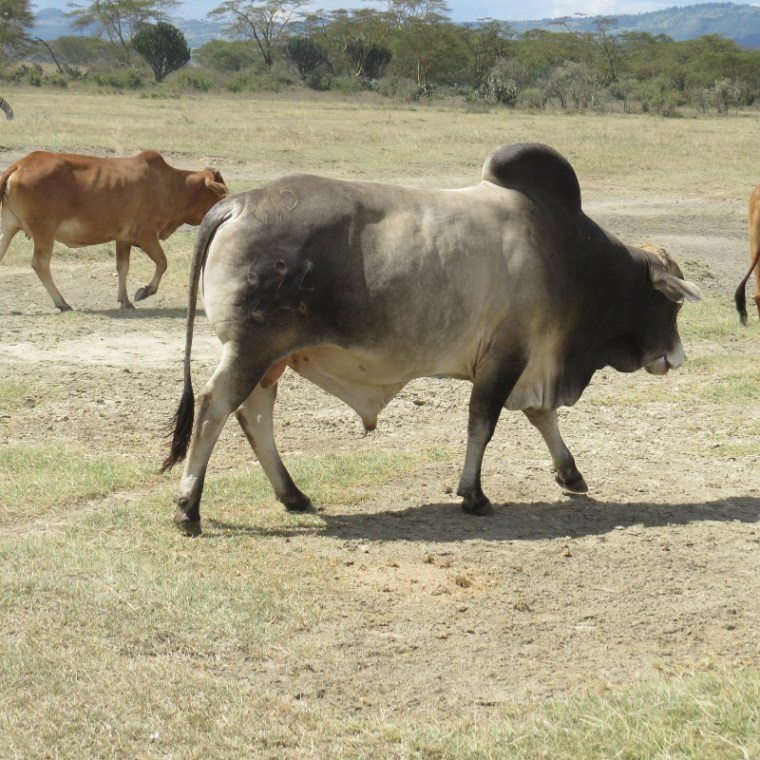
Boran cattle at Soysambu. Copyright Rupi Mangat

A colourful character from the past, he walked some 1,000 kilometres from Berbera in Somaliland to arrive in Kenya in 1897 when only in his early twenties. He then swopped his palatial estate in Cheshire to fund his projects in his adopted home building himself a mud-hut that was doorless and windowless to sleep. Delamere introduced the short-horn cattle and cross-bred them with the indigenous Borana cattle that became a hallmark of the beef industry. It’s history framed on the canvas wall of the palatial lounge fashioned after the early days of safaris that the rich came to Africa for in the early 1900s.  
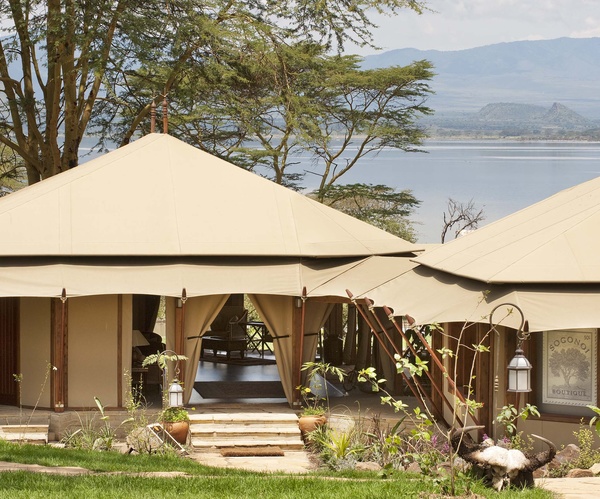
Elmenteita Serena
Lake Elmenteita Serena Camp

Having morphed from only a cattle ranch into a wildlife conservancy that’s famed for its 450 species of birds, lions, 10 percent of the global population of the endangered Rothschild giraffes, and so much more, we’re regaled by a Green-headed sunbird which the two men are keen to photograph. “The Green-headed sunbird is a central Kenya species but when it’s too cold in the highlands, it flies south for warmer climes,” narrates Aloise who grew up fascinated by nature mentored by his grandfather.
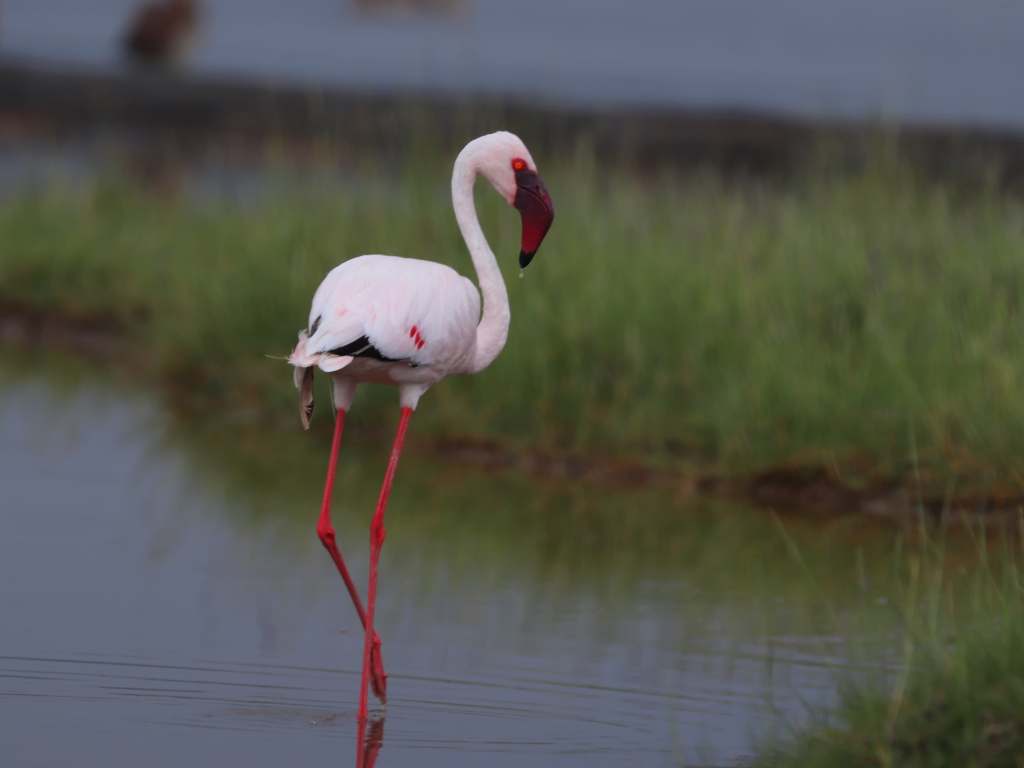
A solitary Lesser flamingo in the now-fresh Lake Elmenteita. Credit Aloise Garvey

Armed with binoculars and super-powerful cameras like the Cannon R5 with a 200-800 mm lens, we scan the plains peppered with lilac and white wild flowers and scour the blue skies. The men shoot the Martial that’s the most powerful and a pair of Tawny that has them wandering into the grassland when they are surprised by a pair of Secretarybirds stalking for their menu of snakes and rodents. Numerous until recently, these stately birds are now labelled ‘endangered’. Mokaya is elated when he logs in the Coqui francolin, a lifer for him – meaning it’s the first time he’s seeing it.

The list expands, a herd of Rothschild amble by, a pair of Silver-backed jackals frolic in the long grass and by the lakeshore that’s risen from a single-digit foot to 30-plus, the handsome bulls for beef with impressive humps are herded for a drink to the lake in the company of the Grey white pelican that perform a synchronized dance to gulp their fish. The now-submerged islands in the lake are their only breeding ground in East Africa.
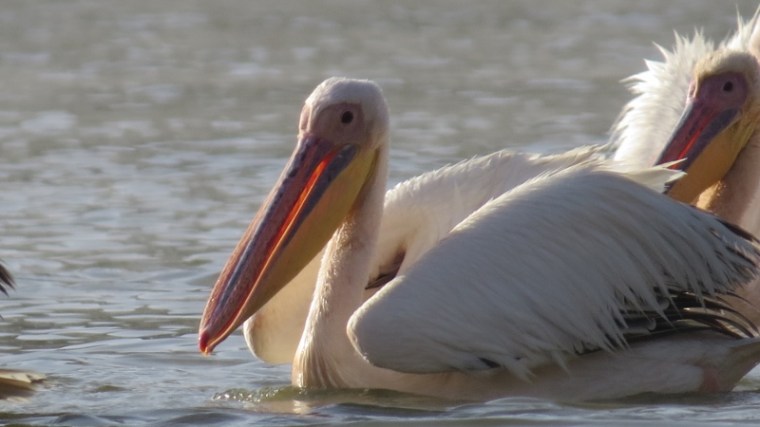
Great White Pelicans getting ready for breakfast. So they have to pool together and start herding the fish in a tigtt fist. Then the pelicans will upturn themselves with just their ‘tutus’ showing while they open their great big bills and snap up the fish. Copyright Rupi Mangat

The Merorani flows in spate, few flamingos grace the lake and by eventide with 166 species logged in, we return to the comfort of the camp to dine on exquisite foods. Click the link https://ebird.org/checklist/S235684791 to see Aloise’s bird list on GBD. The preliminary results has Kenya ranked 8th.

Camp in a conservancy – Soysambu

Log Lake Elmenteita Serena Camp to see the 24 palatial en-suite tents that come complete with king-sized beds and chandeliers. Lake Elmenteita Serena is for the discerning traveller without the crowds. Indulge at the signature spa, swim in the heated pool, or ride the horses and camels by the lakeshore, game drives and nature walks– the camp’s fashioned to revel in nature.

A Feast for All at Soysambu by Elmenteita’s Shores

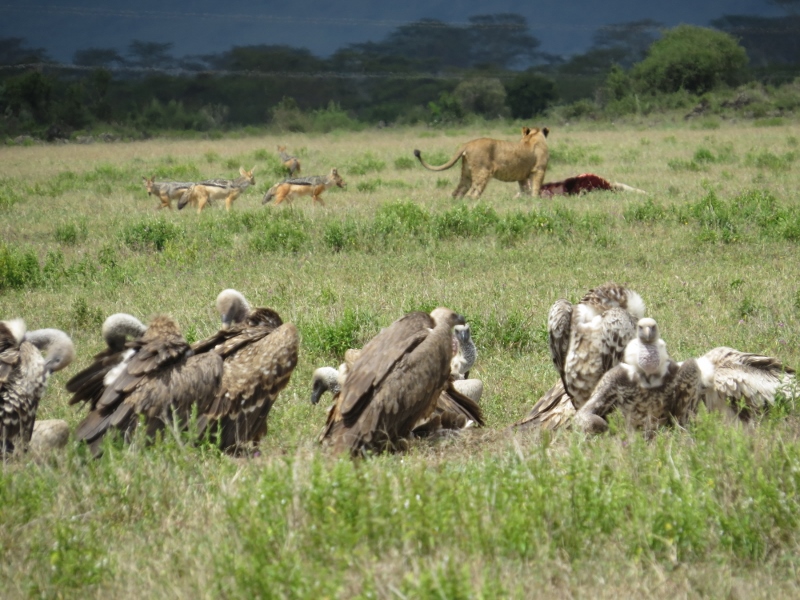
Above: Lion defending his prey from Silver-backed jackals and Ruppell’s vultures listed Critically endangered on IUCN Red List in Soysambu . By Rupi Mangat

Published: Saturday magazine 4 January 2019

A vulture circling high in the midday sky gives the first clue that there has to be something interesting on the ground. Following its wing-beat through a pair of powerful binoculars, the carrion-eater has its eye on a pride of five lions on open plain gorging on a freshly killed cow in Soysambu Conservancy bordering Lake Elmenteita in the Great Rift Valley.

The vulture that turns out to be a Ruppell’s vulture is late to arrive. On the ground there’s a flock of 70 vultures keeping a respectful distance from the lions, waiting for their turn patiently. There are three species: Ruppell’s and White-backed with a lonely Hooded one. The Hooded Vulture is smaller than the other two and keeps to the pecking order. All three species are on the IUCN Red List as Critically Endangered.

Lion feding on cow calf by Jolai Hill oin Soysambu Conservancy in company of Silver-back jackals and vultures,. By Rupi Mangat (800x600)
Lion feeding on cow calf by Jolai Hill oin Soysambu Conservancy in company of Silver-back jackals and vultures,. By Rupi Mangat

The Silver-backed jackals are more daring. They dart to and fro stealing bites off the carcass only to scamper when the big cat growls.

It’s like watching a wildlife documentary in real life.

Four lions stride away to a tree and slump down in the shade. For the nest two hours, the cats take turns to feed not allowing the jackals or the vultures to steal them of their kill.

Cats on the Scene

Since the early 1900s, lions hadn’t been seen in Soysambu Conservancy that once was a cattle ranch. Then in 2014 two females decided they were going to check out Soysambu and liked it and settled down. Of course they returned to the park to mate with the lion. Fliir and Valentine, the intrepid lioness then raised their cubs on Soysambu.

The pride of five is Valentine’s daughter Betty, her older two cubs and the younger pair. Fliir and Valentine are no longer around but it’s nice to see their descendants.

Suddenly the lone lion stands alert.

He’s Betty’s older son.

He’s seen two legs walking in the distance.

Kat Combes copyright 13 sep 2018 Soysambu
Lions on Soysambu. Copyright: Kat Combes copyright

“They are very afraid of two legs and white cars,” tells Rowena White monitoring the cats. Persecuted over decades by people around the lakes, the lions have a natural fear of them. White is the colour of the livestock car that chases predators away. The cats have learned that it’s best to keep away from them. The only car they trust is Rowena’s battered cream-coloured land rover and hence the reason for our gallery seats close to them.

The lions are done with the feast and move to the tree.

It’s now the turn of the vultures who completely cover the carcass chasing away the jackals. One cheeky cub returns and in a sprint chases off the vultures in a flurry of wings and flaps.

All that’s left of the carcass is gleaming bones cleaned of any flesh.

In the circle of life, vultures are the clean-up crew. In their absence, the remaining flesh on the carcass would have rotted and the stench unbearable with the fear of diseases like anthrax spreading.

Done with their feast the birds fly away.

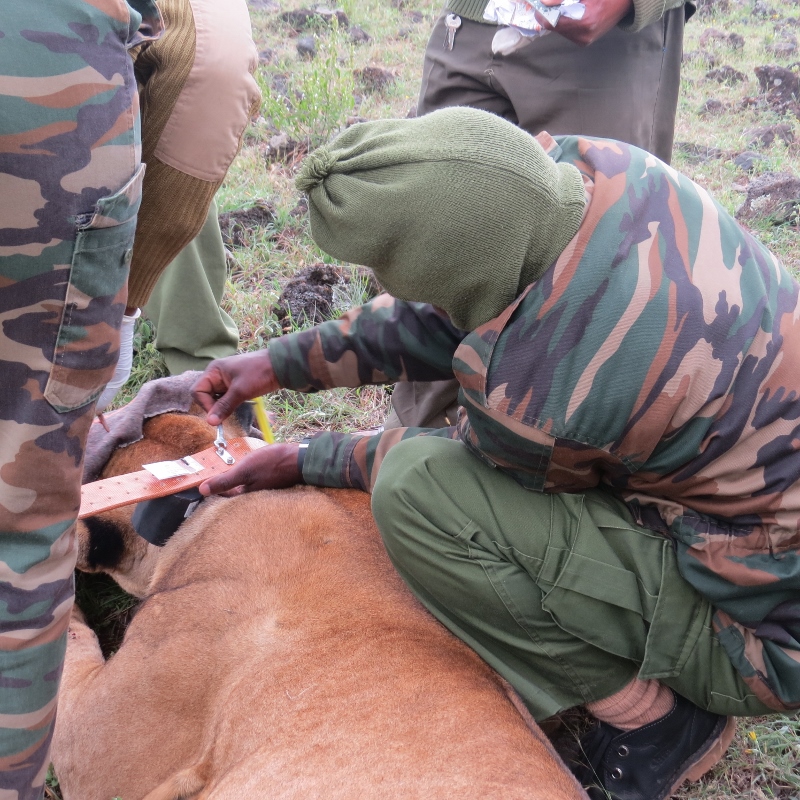
Betty is Collared

Lion collared oin Soysambu Conservancy,. By Rupi Mangat (800x800)
Betty being collared oin Soysambu Conservancy,. By Rupi Mangat

It’s been months of trying to dart a lion and fit a satellite collar on it. It’s to alert the cattle herders where the lions are and hence avoid the area when they take the cattle out for the morning graze. It worked with the older cats with no cattle lost to them.

The cow on the ground was unfortunate as none of these cats had been GPS collared.

With the Kenya Wildlife Service crew in the area, the vet arrives. He aims from the friendly land-rover and gets his target. It takes a few minutes for Betty to doze off while her cubs scamper away. The tranquilizer hasn’t quite taken affect and she raises her massive head to let out a roar. Everyone scampers. She’s tranquillized again and the collar fitted that will relay all her movements on the screen.

Next morning, the computer shows that at 8 p.m. the previous night as we sat on the patio, the pride had crept close and stayed at the bottom of the hill with us totally unaware.

See Soysambu

Soysambu Conservancy with Flamingos on Lake Elmenteita and Delamere's Nose. Copyright Rupi Mangat
Soysambu Conservancy with Flamingos on Lake Elmenteita and Delamere’s Nose. Copyright Rupi Mangat

Soysambu Conservancy borders Lake Nakuru National Park. Part of it is in Lake Elmenteita Wildlife Sanctuary measuring 2,534 hectares.

Lake Elmenteita is a UNESCO World Heritage Site together with lakes Nakuru and Bogoria and listed as The Kenya Lakes System in the Great Rift Valley World Heritage Site because of their outstanding universal beauty, including hosting one of the richest bird life in the world

It is also a Ramsar site, a wetland of international importance; an Important Bird Area (IBA) globally recognized as a stronghold for Great White Pelicans and their only breeding site in East Africa. It is also a flamingo stronghold and an important flight-path for over a 100 species of migratory birds flying from Europe and Asia.

Soysambu Conservancy is a vital dispersal area for wildlife moving across the three lakes Nakuru-Elmenteita-Naivasha in the Great Rift Valley.

There are beautiful campsites on Soysambu and Lake Elmenteita Serena the luxury lodge. Nairobi to Lake Elmenteita is 15o kms. Booking is a must to enter Soysambu Conservancy. Log on http://www.soysambuconservancy.org/


On High Water in Nakuru

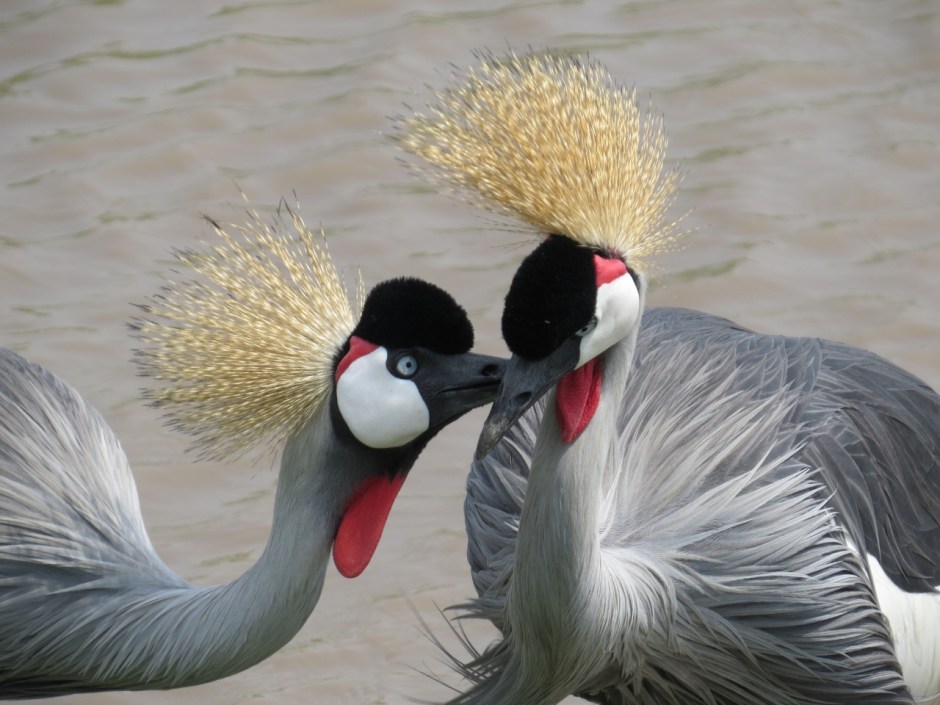
Above: Grey crowned cranes in Lake Nakuru National Park. Copyright Rupi Mangat

Published: The East African Nation media 19 to 25 October 2019

The salt ribbon around the lake has disappeared, swallowed by the rising water. It’s a phenomenon that researchers studying the lake since the first recorded data, attribute to a 50 year cycle that happened in 1901 and 1963. Continue reading “On High Water in Nakuru”