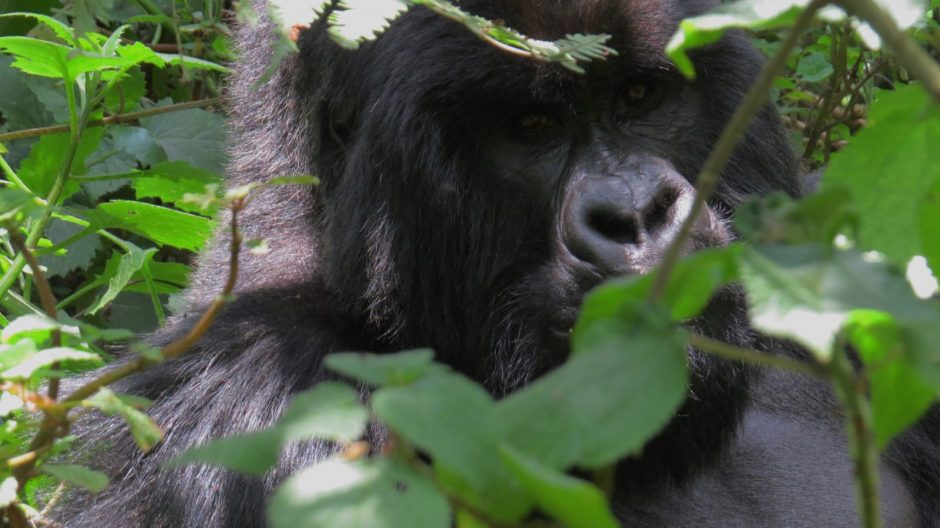
In the stillness of the forest, the silence is interrupted by the sound of snapping branches. “It’s the forest elephants moving through the forest,” tells Chelimo Salim in a quiet tone. He’s our gorilla guide on the trek to see the greatest ape on the planet – the gorilla and to be specific, the Mountain gorillas of Bwindi.
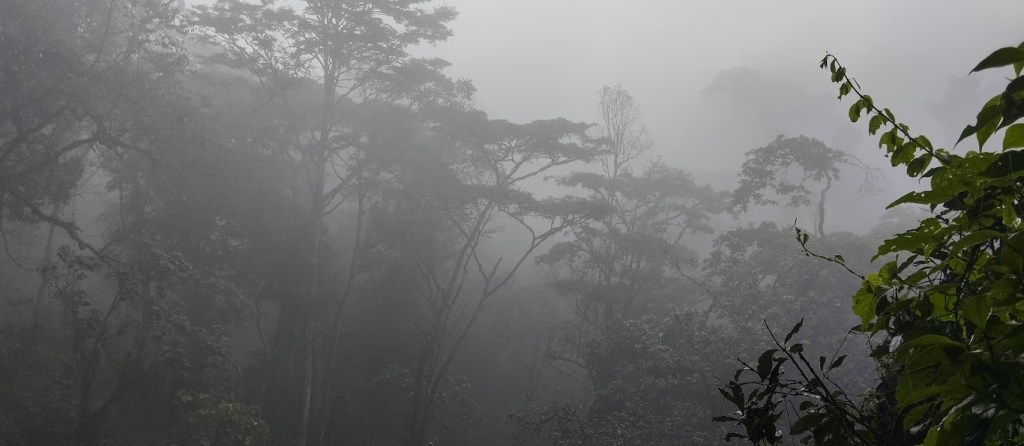
The morning mist is rising to reveal the dense forest covering the mountain range of the Virunga volcanoes that stretch into neighbouring Rwanda that is also home to these gorillas.
But at this moment I want to see the unique forest elephants that are rare and adapted to living in the dark, dense forests of Bwindi. Smaller than the African savannah elephants, they have rounded ears and straighter downward pointing tusks which make it easier for them to move through the forest. It’s anybody’s guess how many there are in the forest – estimates waver between 40 and 300.
The sound ebbs as the elephants move deeper into the impenetrable forest that few outsiders knew about until recently. Its sudden claim to fame came with the ‘discovery’ of the Mountain gorillas – and that not even by sight but from their droppings below their night nests when researchers began to venture into the thick forest glades. That was in the 1980s when Uganda was in the midst of political turmoil. Needless to say, this ‘discovery’ made little headlines.
FYI – Bwindi means place of darkness from the Runyakitara word Mubwindi.
Meet the mighty river on its most dramatic stage where it plunges 43 metres on its journey north to drain into the Mediterranean. By RUPI MANGAT
Published: Nation media Sarmag 9 August 2025
The great expanse of water shimmers in the morning light as we fly over it to land in Entebbe, an hour’s flight from Nairobi. Yet less than two hundred years ago, the outside world knew nothing about this lake or the country that we now know of as Uganda.
Back then, Africa’s interior was a closely guarded secret by the Arab traders mainly for slaves, elephant tusks and timber. The mystery of the Nile’s origin became the driving force for the European explorers to enter the unknown. So when John Hanning Speke saw the lake in 1858 from a village near Mwanza in Tanzania, he uttered the unforgettable quote, “The Nile is solved”. He was ridiculed for it. The matter of the Nile was finally solved in 1875 when the journalist-explorer Henry Morten Stanley circumvented Victoria (as Speke christened it after the then British monarch, Queen Victoria), confirming it as the Nile’s source.
From Entebbe to the world’s most powerful falls
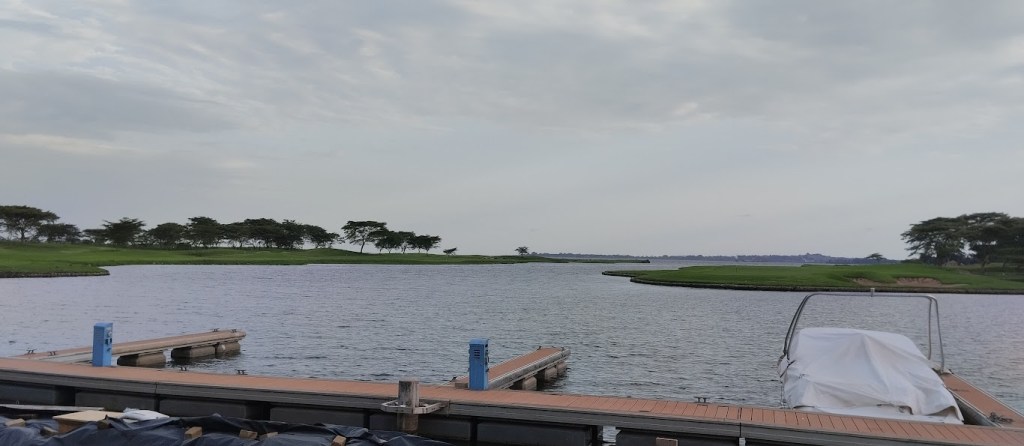
The Marina and jetty by the golf course on Lake Victoria at Lake Victoria Serena, Entebbe, Uganda. Image: Rupi Mangat
We’re wrapped in luxury at Lake Victoria Serena Entebbe on the edge of the Great African lake. Our journey into Uganda is to scale the mountains of the impenetrable forest in search of Bwindi’s Mountain gorillas that the outside world only got to know of in 1987 – and that not even by sighting our ape cousins but from the droppings below their night nests.
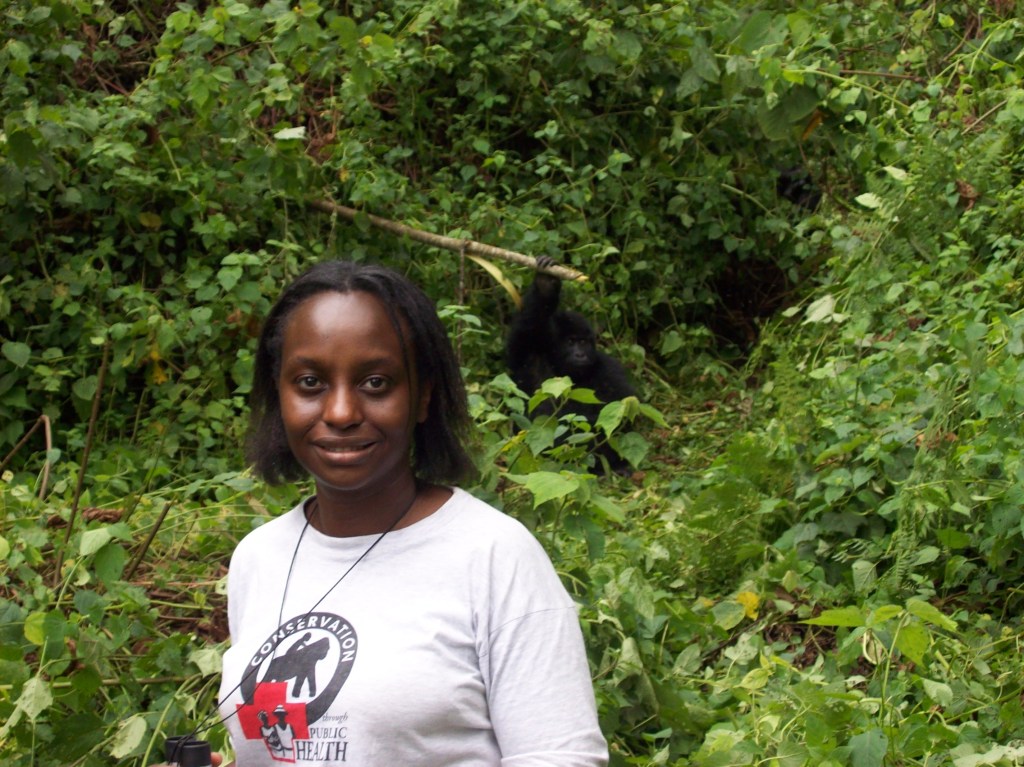
“The Mountain gorilla is the only subspecies of gorillas that is increasing in number and is now classified as ‘endangered’ from ‘Critically endangered’,” states Dr Gladys Kalema-Zikusoka, Uganda’s first wildlife vet. Their numbers have increased from an estimated 300 to 1063 in the wild today.
Dr. Glady Kalema-Zikusoka , Uganda’s first wildlife vet and founder of Conservation Through Public Health
Dr Gladys is a trail blazer. She and her husband Lawrence founded Conservation Through Public Health (CTPH) 20 years ago and have achieved international recognition for their ‘One Health’ approach that involves the well-being of the people who live alongside our ape cousin. Dr Gladys’ book, ‘Walking with Gorillas’ is a best seller, copies of which she signs after her presentation to the enraptured group.
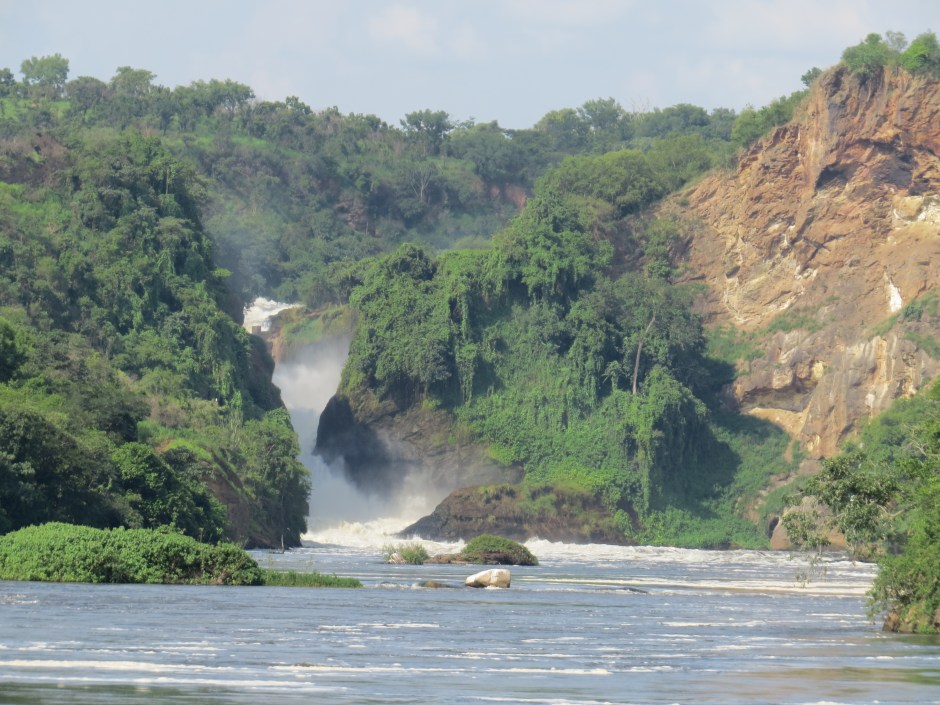
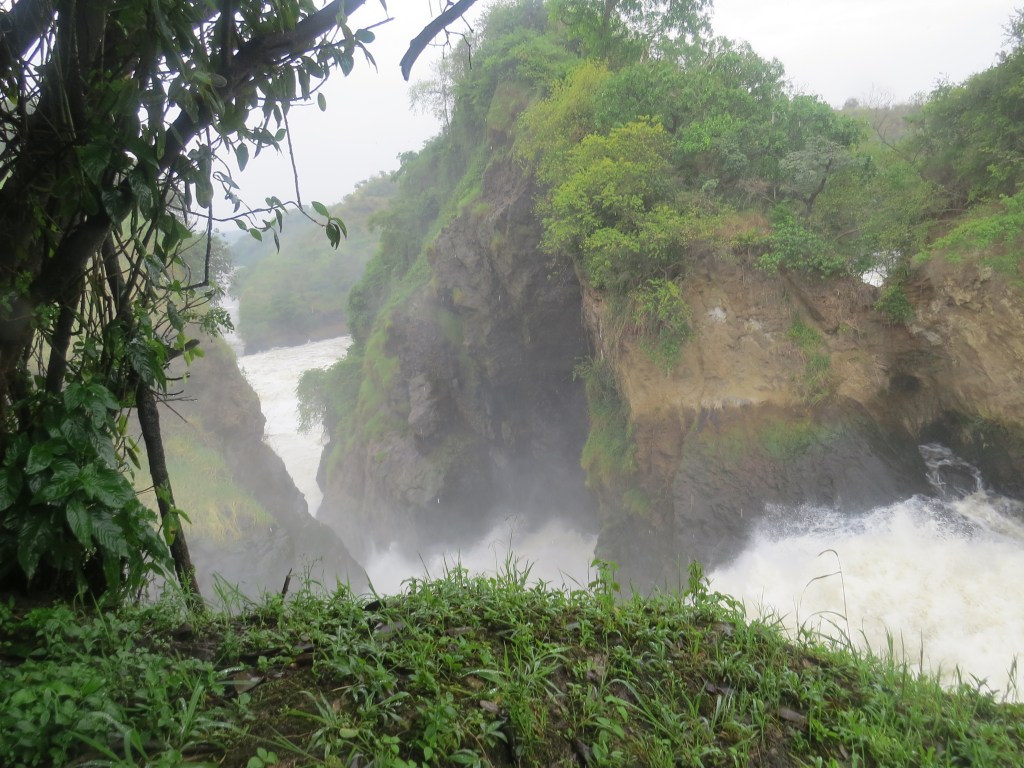
The first leg of the journey is to Murchison Falls National Park – a 50-minute flight – to meet the Nile on its most dramatic stage where the mighty river plunges 43 metres through a 7-metre chasm on its 6,000-kilometre journey north to drain into the Mediterranean in the land of the pharaohs.
Murchison on the Nile
It was Baker with his wife Florence who came upon the ‘world’s most powerful waterfall’ in 1864, when looking to solve the Nile’s source – which they did not. They named the falls Murchison after the president of the Royal Geographical Society. However, the wandering couple came upon the lake (which today spans Uganda-DRC border) that glistens in the horizon as we land in 3,893-square-kilometre Murchison Falls National Park at Pakuba airstrip – the lake they named Albert after the British queen’s husband. The duo also documented Karuma Falls, a spectacular series of cataracts along the Nile spanned today by Karuma bridge along the main Kampala-Gulu highway.
The park is lush green like an emerald with towering Borassus palms that our safari guide jokes are planted by elephants! The seed passes through the elephant’s gut and germinates on the ground.
The common patas monkeys watch us from the road side. Unlike other monkeys that prefer trees to terra firma, the patas is mostly seen on ground and with its long legs is a fast runner. Unfortunately the Kenyan patas monkey is extinct in the wild – the Critically Endangered southern patas monkey (E. baumstarki). Found only in northern Tanzania today, the population is between 40–100 mature individuals remaining in the wild.
The Rothschild giraffes grace the plains nibbling on the acacias, Jackson’s hartebeest stand sentinel, a lioness in the tree stops all on track and finally the day ends with a drive to the top of the thundering falls on a road recently tarmacked over the new bridge spanning the Nile, doing away with the iconic ferry crossing.
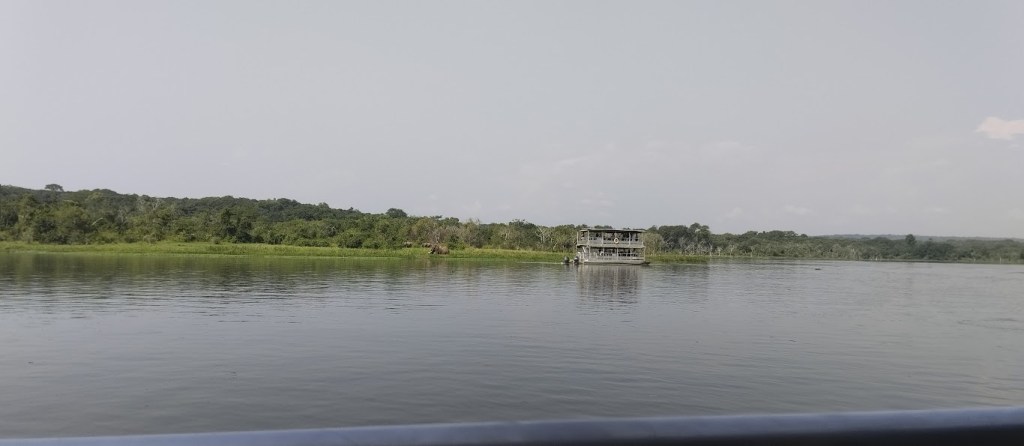
The following day we sail the Nile to the bottom of the falls. A crocodile slithers into the river; others stay statuesque with jaws wide open to cool down in the afternoon heat. A herd of elephants frolic on the river’s edge hosing themselves with the rich red mud – a spa in the wild. FYI – Baker had by the age of 20, invented a powerful gun to kill an elephant with a single shot.
Pods of hippos pop around in the blue waters and we give them a wide berth. In 1870, Baker’s boat was attacked by an angry hippo on the Nile who munched a large mouthful of the wooden vessel. An hour later we sight the falls – and they never fail to impress. The river has risen and the force of the falls keeps the boats at a distance. All we can do is watch in awe with its permanent rainbow.
The Nile tumbling through a 7-metre gap down 43 metres to the land of the pharoahs. Pic: Rupi Mangat
More on Murchison Falls
It’s easily doable from Nairobi via road or by air with a range of accommodation in and outside the park. Combine the falls for a safari circuit with Budongo or Kibale forests for chimpanzee trekking; Queen Elizabeth National Park and Bwindi for the Mountain gorillas.
Log on to Uganda Wildlife Authority for current park fee.
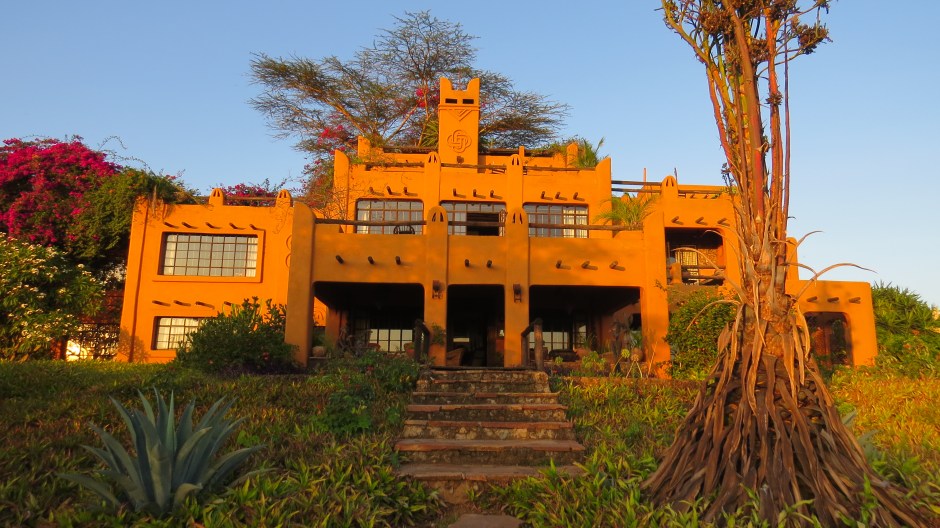
Every floor is a testimony to Africa’s great arts, giving accolade to the African Heritage House as the most photographed house in the world.
Published: Nation newspaper Saturday magazine 11 May 2024
Above: The African Heritage House. Credit Maya Mangat
It’s nostalgic being back at the African Heritage House, one of the world’s most unique houses inspired by all that is African – from her architecture to the arts, from her textiles to the cuisine.
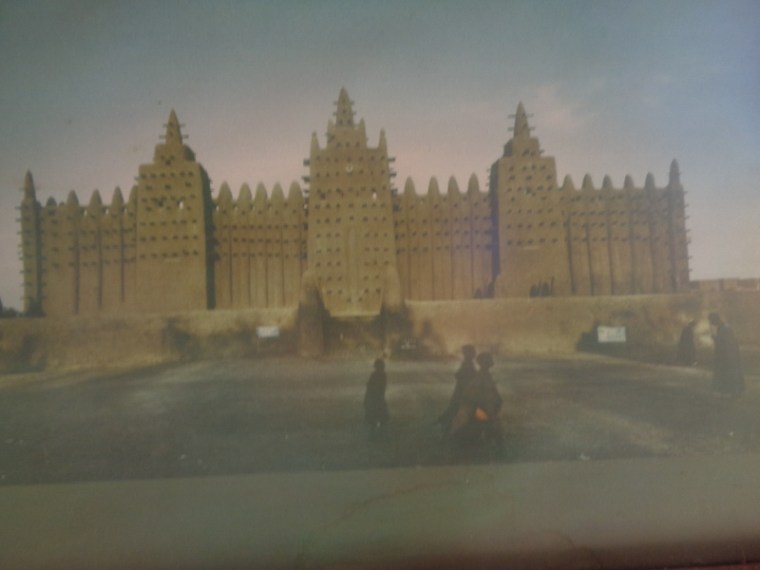
I remember the first time driving up there in early 2006 and wondering if we had the correct address amidst the urban sprawl of Mlolongo. I see the same expression on my guests till we arrive at the house, the façade inspired by the mud mosques of Timbuktu and Djenne in Mali.
The mud mosque of Timbuktu that so inspired Alan Donovan to build the African Heritage House
Copyright Rupi Mangat
It was the first time I had seen anything like that. The mystical Timbuktu came alive, which was the centre of Islamic studies in the 15th and 16th centuries and the home of the Koranic Sankore University founded in the 14th century that was the intellectual and spiritual centre of Islam throughout Africa.
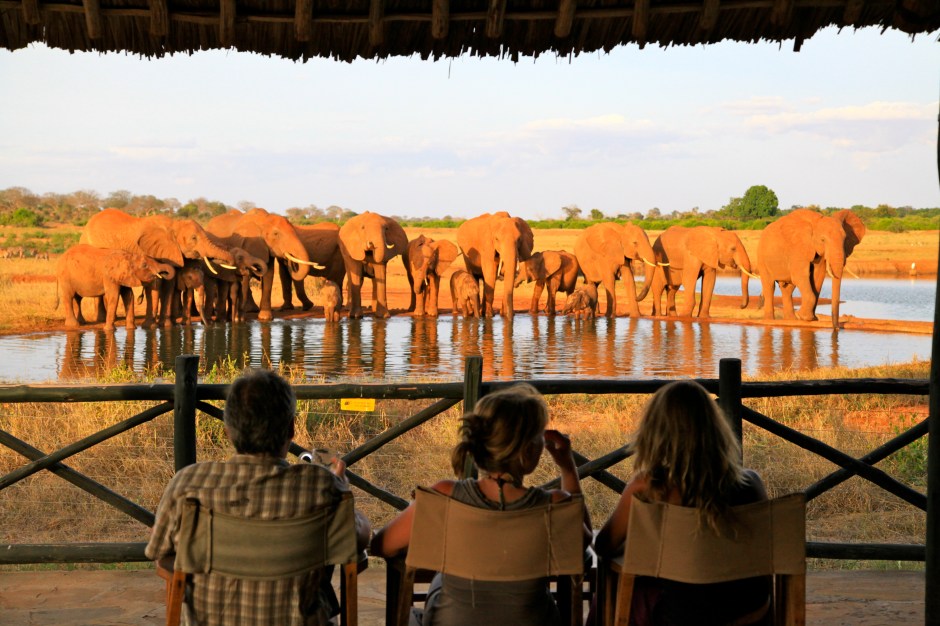
Above: Elephants at the waterhole at Voi Wildlife Lodge looking into Tsavo East National Park. Image courtesy.
Published: Saturday magazine in Nation newspaper 4 May 2024
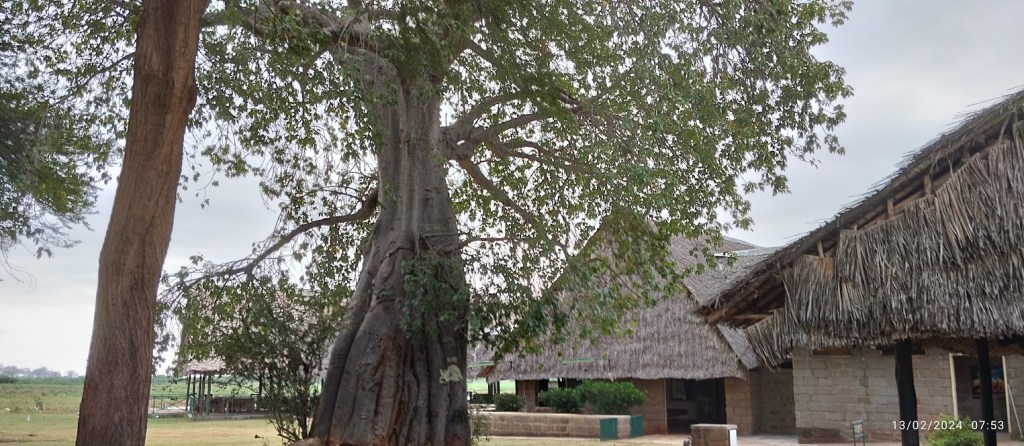
The air is still and sun-baked. I take refuge under the shade of the banda staring into space that is the grandeur of Tsavo East National Park. It’s been 20 years since l sat in the same spot, with the solitary baobab for company at Voi Wildlife Lodge on the edge of the great park.
It’s opportune time to read the new edition of ‘The African Baobab’ by Rupert Watson, lawyer by profession and naturalist by choice. Every page l turn of the full-colour book on baobabs increases my awe of the tree.
Baobab tree in leaf at Voi Wildlife Lodge overlooking Tsavo East National Park. Image Rupi Mangat
Watson writes, ‘For starters, baobabs are living monuments, the oldest natural things in Africa, outlasting every plant and animal on the continent… They survive in the driest, rockiest areas of the continent – yet for all the hostility of much of their habitat, African baobabs live longer and grow larger than most other trees in the world. That is the great paradox of their existence.’
I didn’t know that, and suddenly realize that The African Baobab is one of two books fully dedicated to this living monument, some well over 2,000 years and still standing sentinel on the savannahs.
Lions, Rhinos, Elephants and Mountains on a Wildlife Safari
November 16-23, 2026
7 nights, 8 days
Game drives in customized safari cruisers
Overview:
Rejuvenate with a safari to discover Kenya’s rich wildlife and its diverse cultures in this tropical paradise on the Equator, the denizen of big game – elephants and rhino; lions, leopards and cheetahs; rhinos and mighty raptors that soar the skies.
The Kenya classic safari takes you through the tapestry of sweeping grasslands, and lush swamps with snow-topped mountains that is home to this spectacular wildlife.
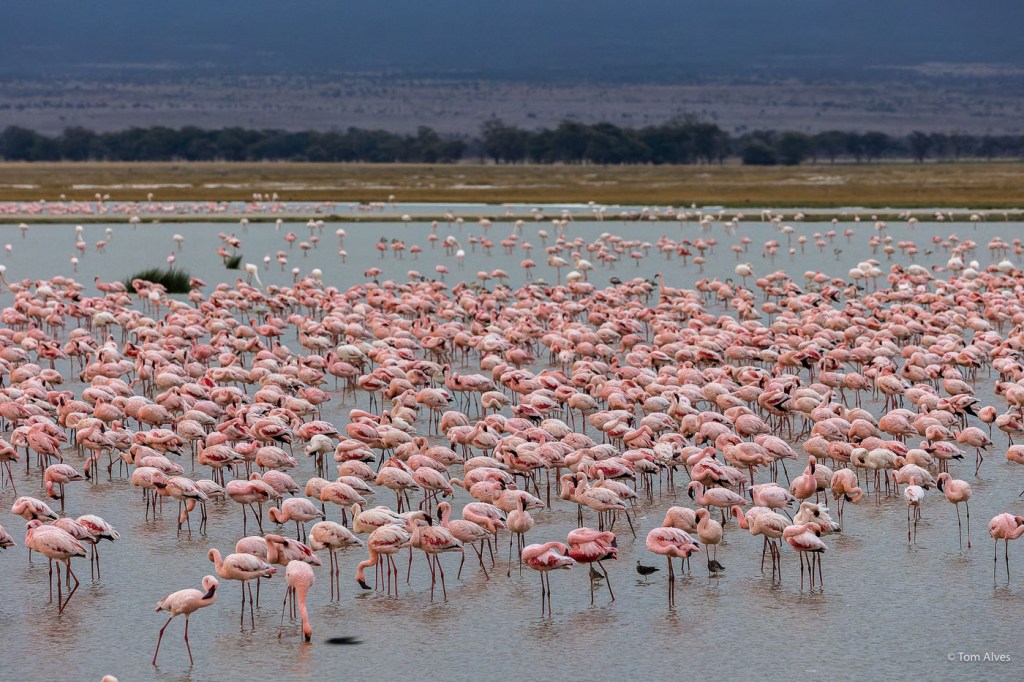
Lesser flamingoes in the Amboseli wetland
Highlights
Experience the thrill of a Luxury Safari across three breathtaking game parks, where every moment is a captivating nature’s finest!
Watching Africa’s big game in the wild has a different vibe than a zoo!
Stay in two unique tented camps
See the Samburu 5, rare endemic animals only found in the arid north region
Stay in a beautiful Nairobi hotel
See Africa’s two highest mountains – Kilimanjaro and Kenya
Check out the elephant research camp in Amboseli to hear about the longest-studied elephants in the wild!
Dive into a culinary adventure on safari!
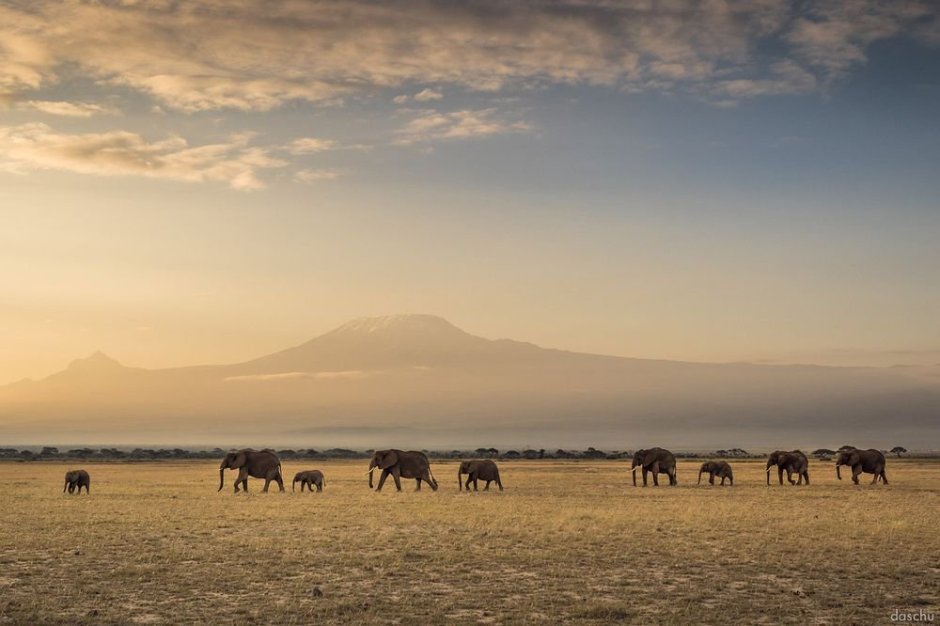
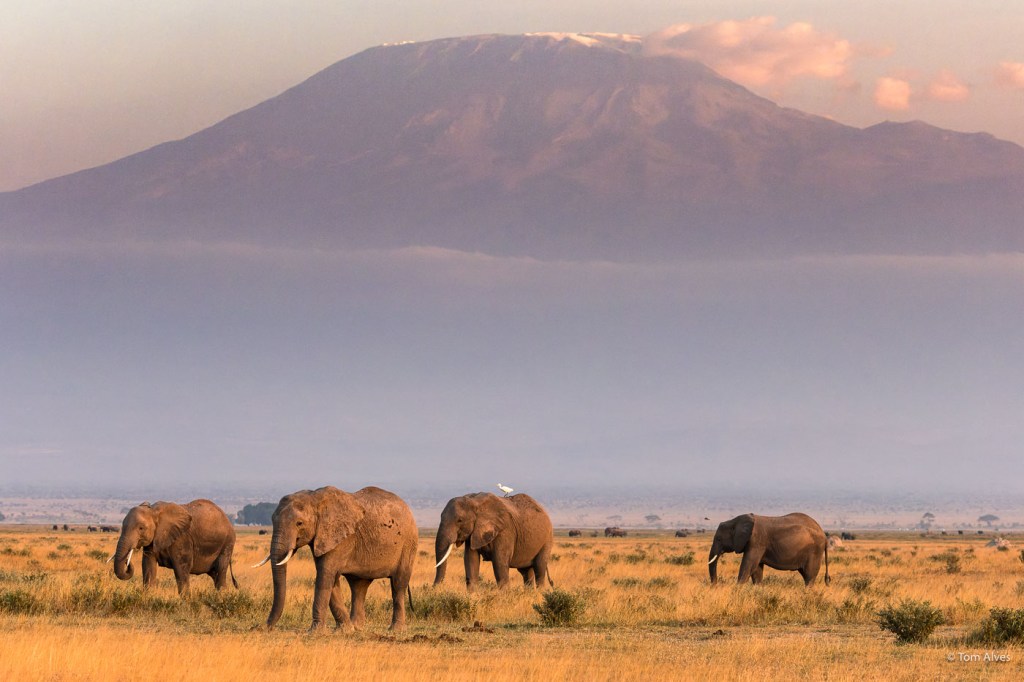
Imagine watching elephants beneath the magnificent snow-capped Kilimanjaro, then ending your day with an exciting game drive in the warmth of the ‘golden light’.
Amboseli elephants on the plains of Mount Kilimanjaro
Meet your safari host, Rupi Mangat founder of Moonlion Safaris
Rupi is a travel writer with a penchant for wildlife conservation and sustainability. A third-generation Kenyan, she’s been on safari more times than she can count since she started writing profesionally in 1998. She teams up with the Wildlife Clubs of Kenya as the editor of Komba, which is all about getting kids excited about saving wildlife. With her awesome connections to groups like Action for Cheetahs in Kenya, Nature Kenya, and the Mara Meru Cheetah Project, she gives you a behind-the-scenes look at their incredible and sometimes tough world.
Day 1 Monday November 16
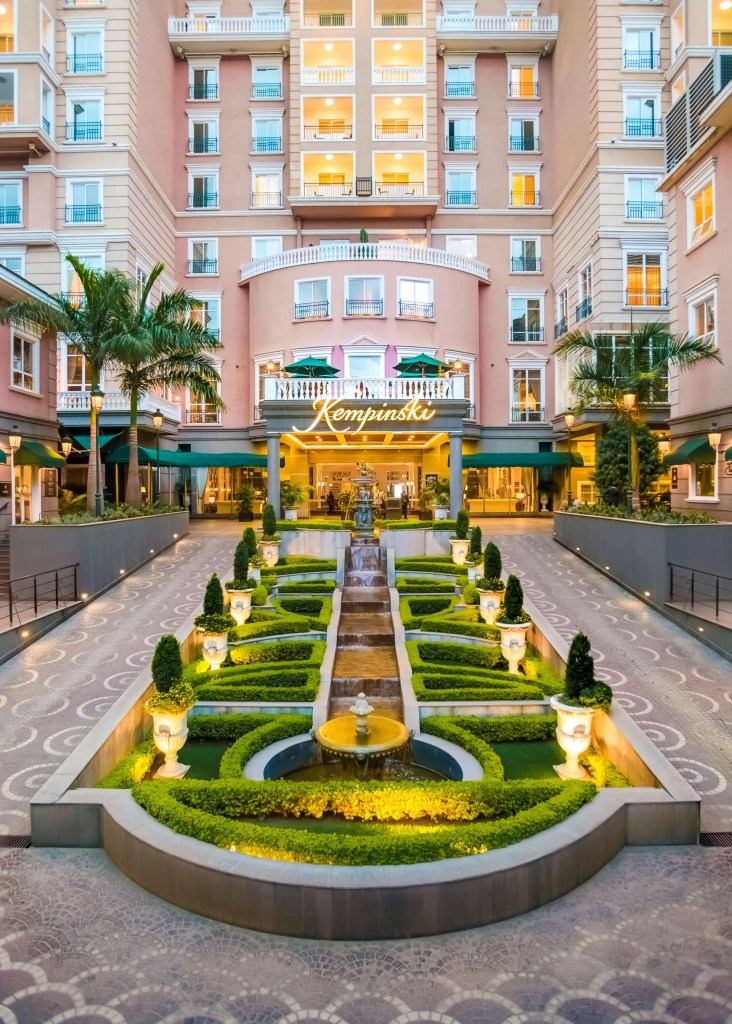
Fly into Nairobi the capital city of Kenya. You will be met at the airport by our representative who will guide you through arrival. You will then be driven by your driver-guide to your hotel, the Villa Rosa Kempinski.
The Villa Rosa Kempinski is one of Nairobi’s finest hotels that has played host to world leaders like former U.S. president Barack Obama and famous artists like Lupita An’yong. It boasts a beautiful spa to pamper yourself.
The day is at leisure. Villa Rosa is a few minutes’ drive to the central business district. Nairobi is a fast-paced city. The core of the city centre boasts early colonial architecture and modern high-rise towers. Day excursions can be booked at the reception.
Day at leisure
Dinner – the hotel boasts a variety of restaurants to choose from or we can suggest restaurants in the city.
It’s an early start to the day. After a hearty breakfast we will fly to Amboseli National Park 250 kms southeast of Nairobi, under the Snows of Kilimanjaro. It’s a 45-minute flight over Karen Blixen’s (Out of Africa) famed Ngong Hills and Nairobi National Park, the only wildlife park in a capital city that today it is still home to black rhinos, the big cats and more.
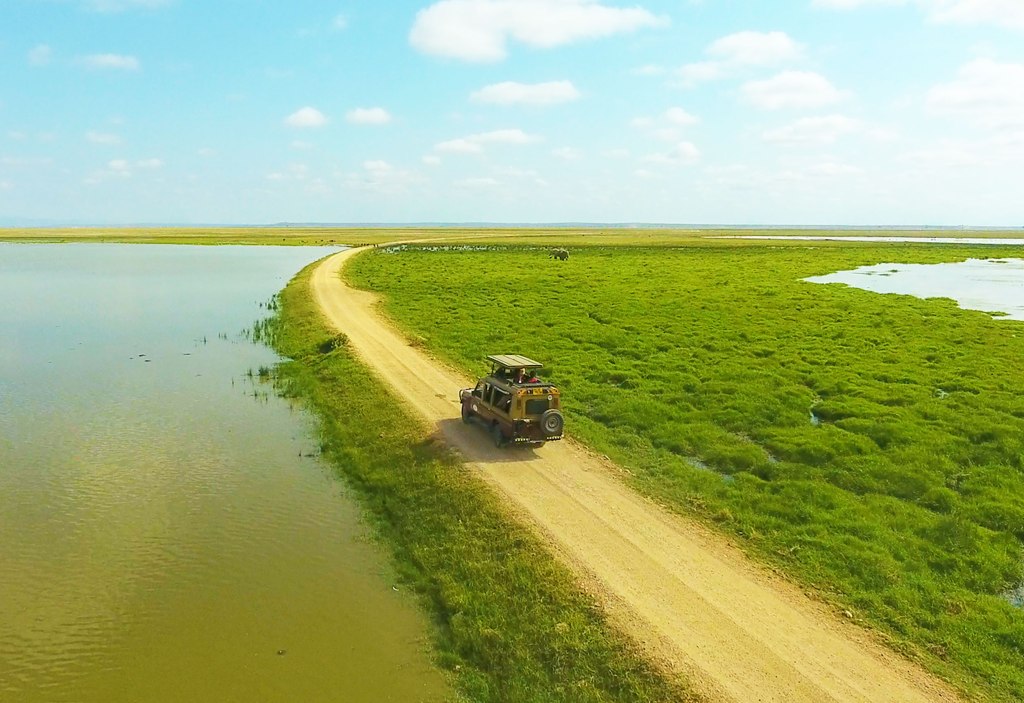
You will be collected from the airstrip and driven to Ol Tukai Lodge at the foot of Mt. Kilimanjaro in Amboseli with a game drive en route in our custom-made safari cruisers driven by expert driver/guides.
The 392-square-kilometer Amboseli sits on the border with Tanzania where Kilimanjaro looms. The park is spectacular for its wildlife and tapestry of grassland, forest and swamps fed by the snows of Kilimanjaro which at 19,340 feet is the roof of Africa. Amboseli comes from the Maasai word ‘empusal’ meaning salty dust because of the dry lake bed from where plumes of dust rise.
By now it’s lunch time.
Enjoy your gourmet lunch buffet under the gaze of Kilimanjaro and in the company of elephants that linger in the wetland.
Iced tea at lunch at Ol Tukai Lodge watching elephants and zebra in the swamp
Amboseli is home to the longest studied elephant population in the wild, a research pioneered in 1972 by Dr Cynthia Moss of the Amboseli Trust for Elephants. All the elephants in the park are known to the research team with files on individuals dating from the first elephants in the study dating back 50 years.
3 p.m. – Leave for an exciting talk on elephant research at the Amboseli Trust for Elephants research centre in the park.
After the talk proceed for an afternoon game drive in search of big game like lions and elephants plus we’ll enjoy the rich birdlife with a short climb up the ancient hill by to have a sweeping view the vast Amboseli lands before returning to camp at sunset.
7.30 p.m. Meet for a cocktail at the bar and then dine on delicious foods with Kilimanjaro in a blanket of darkness. We’ll exchange the day’s highlights and later be entertained by the local Maasai performing traditional dances with their signature high leaps and throaty chants celebrating love, lion hunts, war and happiness. You may want to join in.
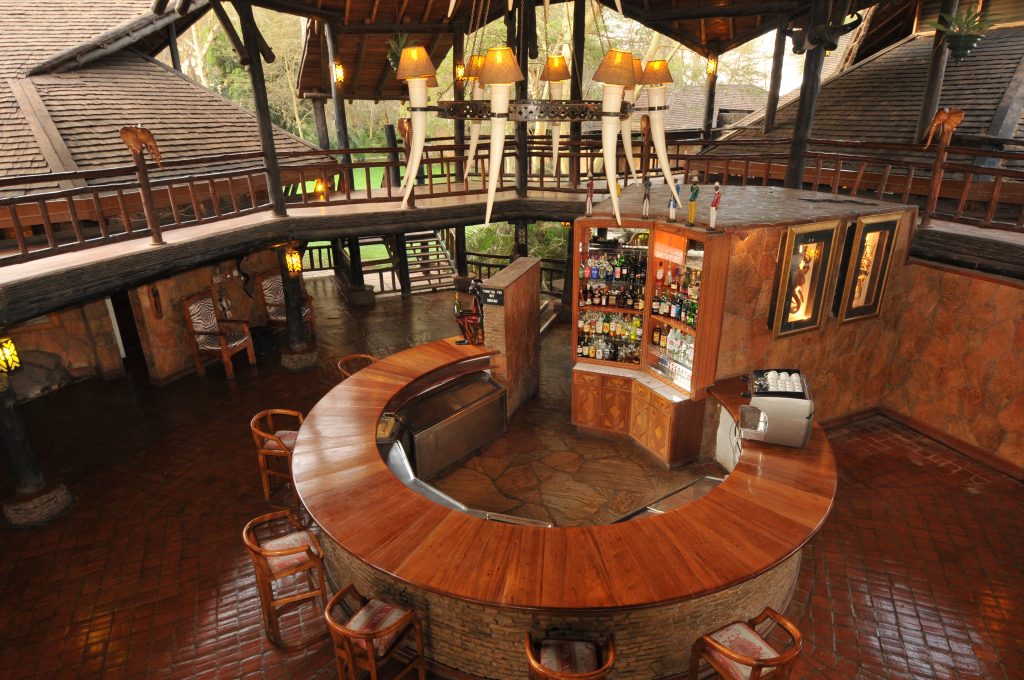
Elephant Bar at Ol Tukai Lodge
The Maasai have co-existed for many years with African wildlife because both the wildlife and the large herds of cattle owned by the Masai need wide spaces to survive.
6 a.m. – It’s an early start to the day at Wake up calls can be arranged. Enjoy a cuppa coffee or tea and biscuits.
6.30 a.m. Leave for an early morning game drive. This is the best time to enjoy wildlife as well as late afternoons before the sun goes down. It’s the time when the animals are most active before the sun becomes too hot for them and lethargy sets in. The lionesses would rather hunt when it’s cooler but being opportunistic the hunt is on if the quarry is easy. Lions do not have sweat glands and you’ll hear them panting a lot.
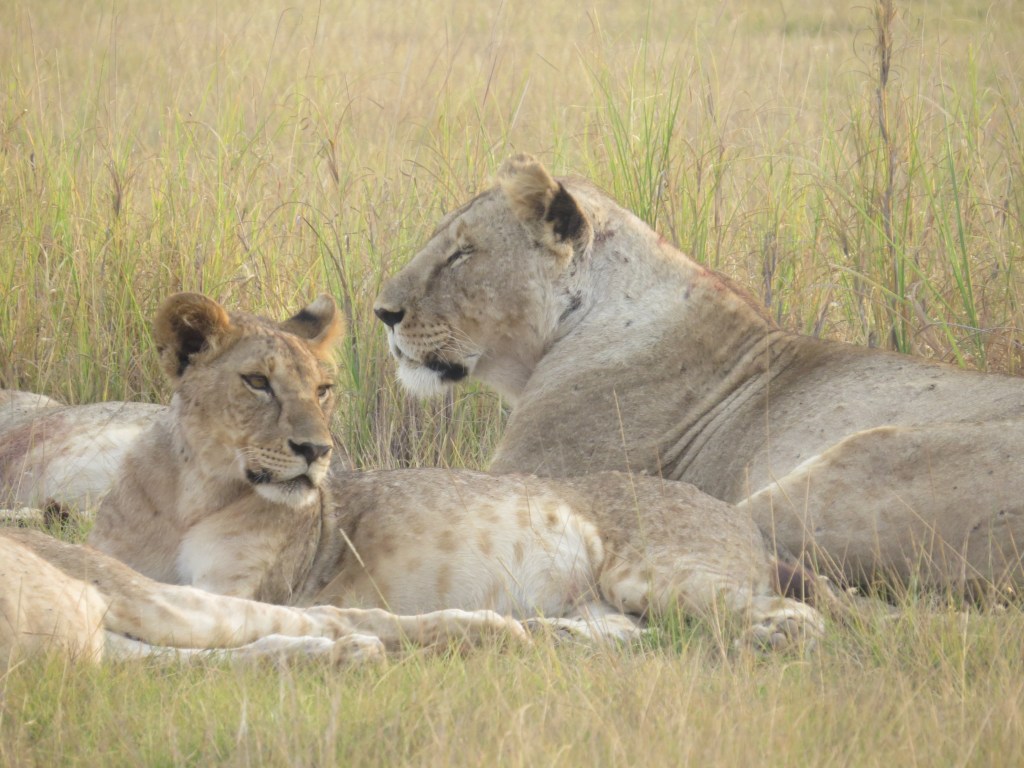
Lioness in Amboseli
9 a.m. Return to the lodge for breakfast.
Take time to relax, swim, read a book and enjoy the grounds.
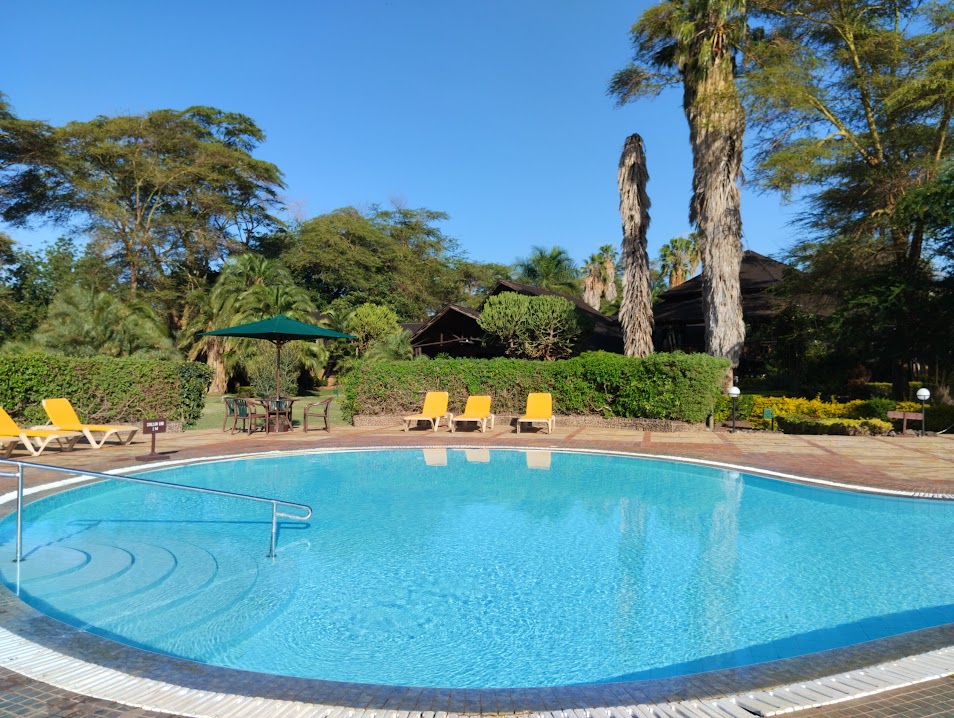
Ol Tukai Lodge – cool off in the swimming pool
1 p.m. – Lunch
4 p.m. – Depart for an exciting afternoon game drive
6.30 p.m. – Return to the lodge.
Take some time to refresh with a cold beer at the bar or a cool shower.
7.30 p.m. Enjoy another gourmet feast while entertained by the local Maasai or with a talk on amazing Amboseli by the resident naturalist before retiring to bed. Having a nightcap by the fire pit is a nice way to end the day.
8 a.m. After breakfast depart to the airstrip for a 90-minute flight to Samburu National Reserve in the arid lands, north of the equator with a short stopover in Nairobi and a light lunch at the in-house restaurant. Be assured the menu serves sumptuous meals and great Kenyan coffee.
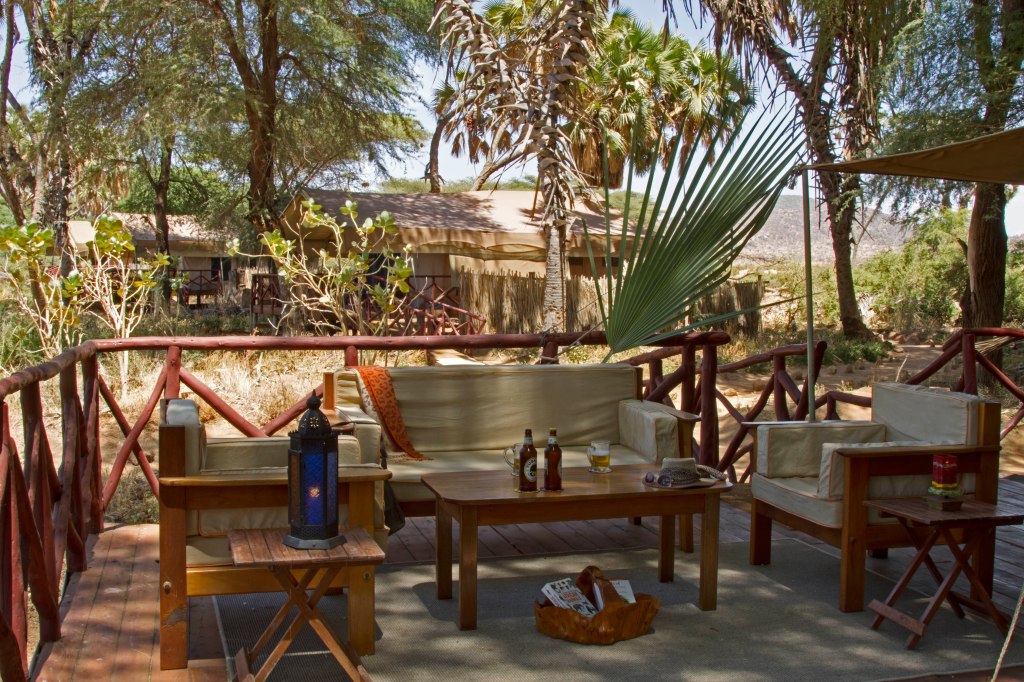
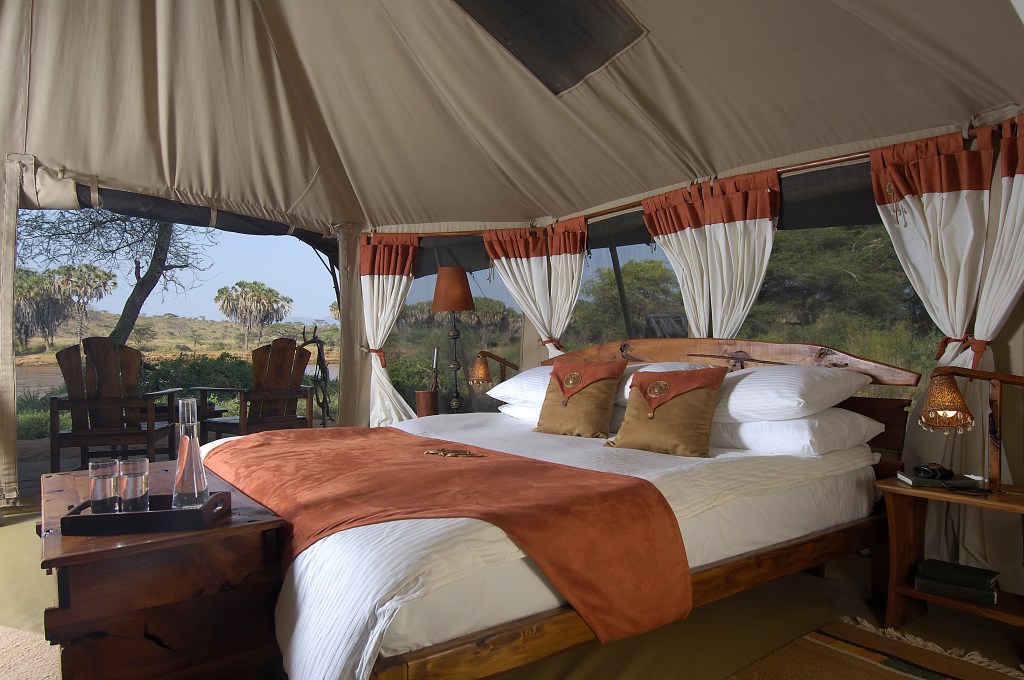
Elephant Bedroom Camp on the banks of the Uaso Nyiro River – image courtesy
Have your cameras ready. If it’s clear you will see Mount Kenya on the equator. This volcanic mountain at 17,057 feet (5,199 meters) is Kenya’s tallest. When the first explorers reported of the snow-capped mountains on and near the equator, they were ridiculed – for who had ever heard of snow on the equator?
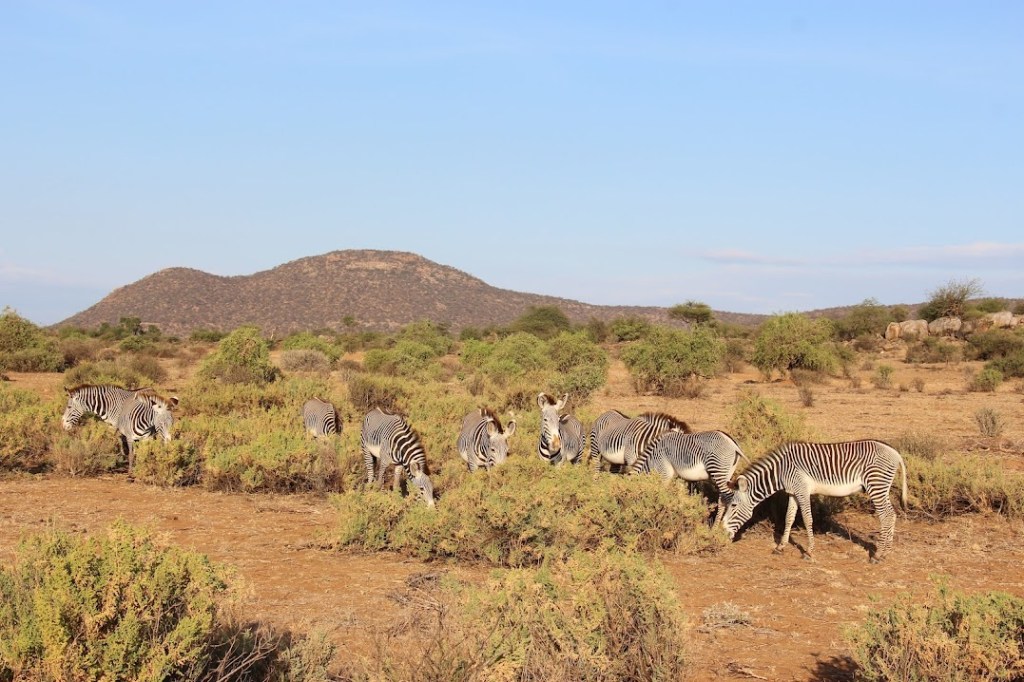
Samburu is the land of the Samburu Special, wildlife only found north of the equator and adapted to life in the arid lands such as: the Reticulated giraffe, Grevy’s zebra, Beisa oryx, gerenuk and Somali ostrich. These species have adapted to life without water, surviving just on morning dew. The life-lung of the land is the Ewaso Nyiro River that is to this region what the Nile is to Egypt.
The rarest zebra on earth – Grevy’s in Samburu
On arrival early afternoon at Samburu National Reserve we will be transferred from the airstrip to the camp with a game drive en route before checking in and enjoying time at the camp by the River.
3.30 p.m. Embark on another exciting game drive through the arid bush and the lush oasis by the river. Look out for leopard, lions and elephants and raptors before returning to camp at sunset.
Relax at Elephant Bedroom Camp
6.30 p.m. Return in time for a sumptuous dinner freshly prepared under the stars of the northern hemisphere. If you’re a star gazer, this is the perfect spot close to the equator to see the constellations straddling the two hemispheres.
You might be entertained by local Samburu dancers with the songs and dances of their ancestors.
The Samburu like the Maasai belong to the Nilotic ethnic group that came into present day Kenya from the north along the Nile some five centuries ago. Interestingly, in addition, the Samburu believe that they hail from Venus the planet.
Enjoy your evening and a good night’s sleep in your luxurious tent.
6.15 a.m. Another glorious morning in Africa. Rise and shine for an early morning game drive after a cuppa. The landscape is surreal with mountains and rocky insets.
9 a.m. Return for breakfast and then enjoy your morning watching the local wildlife or treat yourself to a spa treatment in the wild.
1 p.m. – Lunch.
4 p.m. – Samburu is also part of the lion project pioneered by Ewaso Lions. The driver-guides will point out to some on the game drives.
Return for a starlit dinner followed by a night cap by the campfire and finally to a peaceful slumber in your ‘tent’.
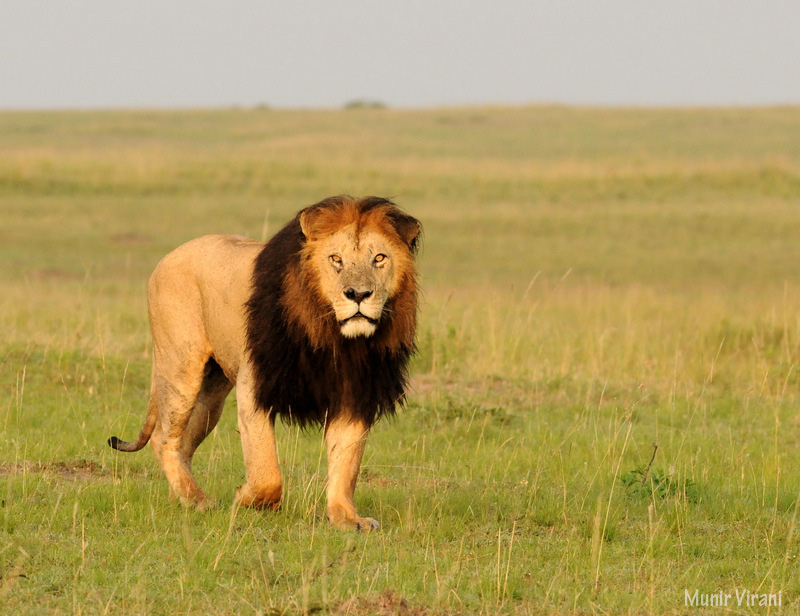
A 90-minute flight from Samburu via Nairobi, and you will land in the Maasai Mara, after flying over the Great Rift Valley. It is the planet’s longest valley on land stretching 6,000km from Lebanon in the Middle East to Mozambique in South-eastern Africa and best seen in Kenya. The flight then enters the savanna grassland in the mighty Mara that is home to the Big 5 – elephant, rhino, buffalo, lion and leopard (and cheetah). This is lion country famous for its black manned lions and it is possible to see all the three big cats – lion, leopard and cheetah – in a day.
King of Beast – the famous black maned lion of the Mara – courtesy of camp
You will be collected from the airstrip and driven to the glam canvas camp with a short game drive en route. After check-in, relax and enjoy an exquisite lunch.
The spotted sphinx in the Mara with wildebeest in the background – image courtesy of camp
3.30 p.m. Leave for the afternoon game drive at to return at sunset to the camp.
Take a few minutes to refresh before dinner will be under the stars with lots of lively exchanges on your first night in the Mara, dubbed one of the seven natural wonders of the modern world.
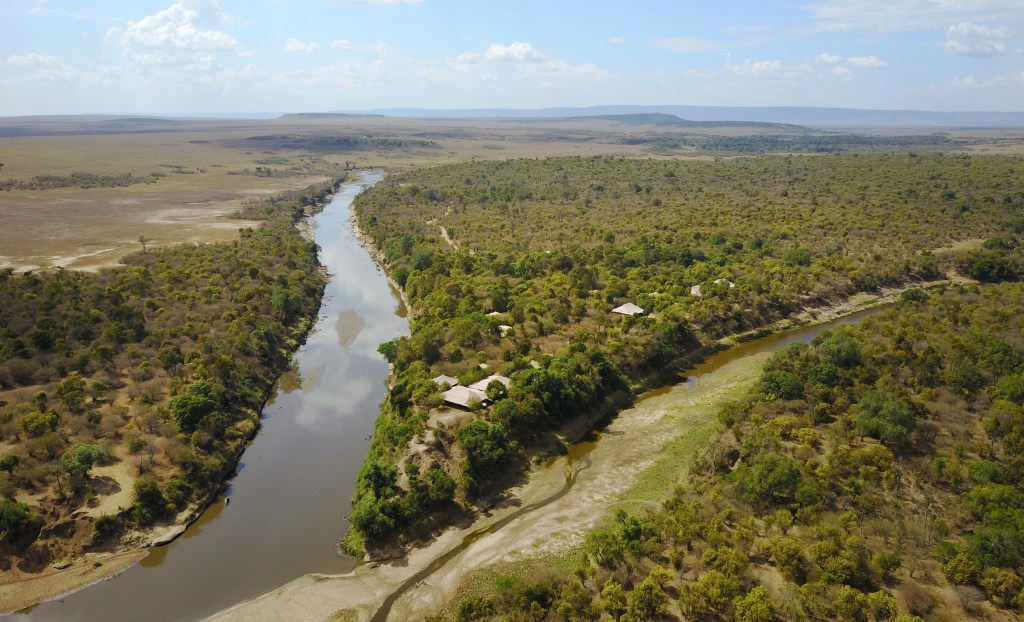
Mara Ngench Tented Camp aerial view on the banks of the mighty Mara River – image courtesy
Finally it’s lala salama, ‘a peaceful sleep’ in Kiswahili.
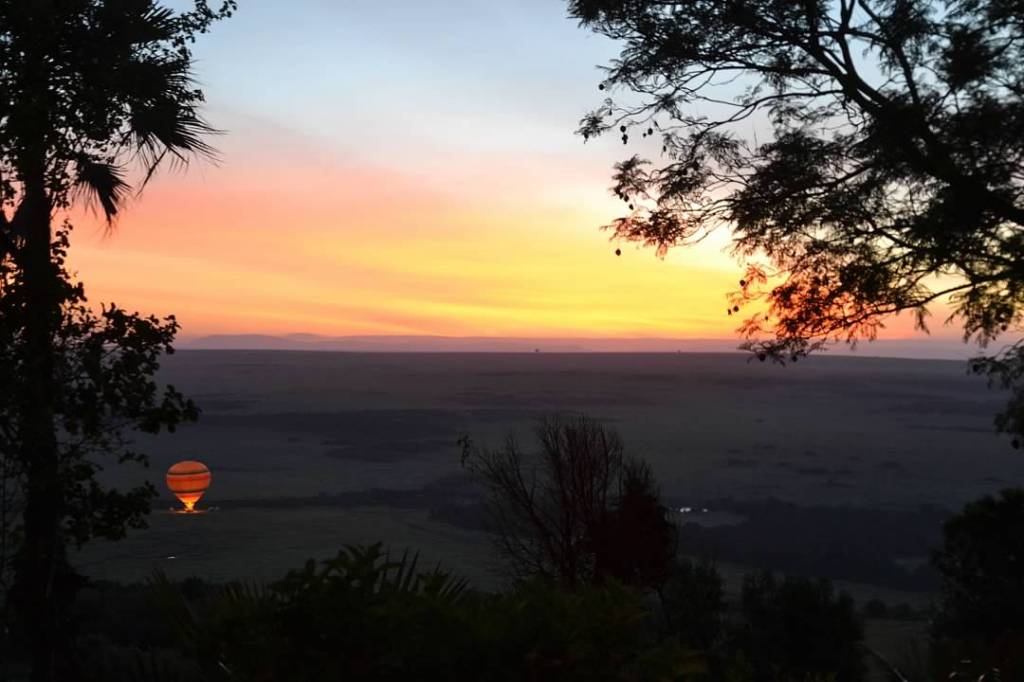
5 a.m. – After a cuppa tea/coffee, OPTIONAL AT EXTRA COST depart for a thrilling balloon safari (Please wear long pants and warm jacket, a hat and shoes) at sunrise with a champagne breakfast on landing. It’s a novel way of game watching catching an eagle’s eye view of the land and life below.
Sunrise over Africa with a balloon safari in Maasai Mara. Image by Inderjit Singh Mangat
6.30 a.m. OR enjoy a morning game drive followed by breakfast.
The morning is at leisure.
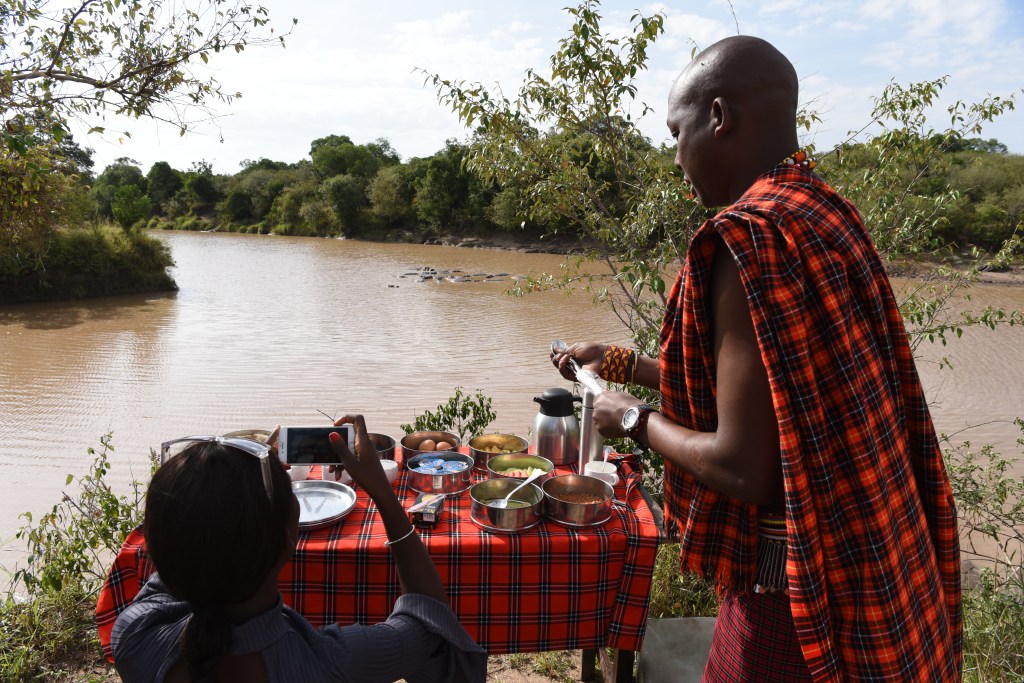
1 p.m. – lunch by the river.
Lunch by the Mara River with hippos in the river – courtesy
4 p.m. – Depart for a game drive in search of the spotted cat whose global population in the wild is less than 10,000 today compared to 100,000 a century ago. Kenya is a stronghold for these cheetahs.
7.30 p.m. – It’s your last night in the African bush with dinner under the stars before we wish you ‘lala salaama’.
After a sumtuous breakfast in the Mara, fly back to Nairobi to arrive by midday and head to the Jomo Kenyatta International Airport for your flights the next day or that night.
As Karen Blixen, the author of ‘Out of Africa’ said: “If there were one more thing I could do, it would be to go on safari once again.”
NOTE:Ms. Mangat reserves the right to alter the itinerary based on weather, availability as well as exciting opportunities that might crop up!
*You have an option at the Four Points at Sheraton at Jomo Kenyatta International Airport hotel. Because you might be flying back that evening you can book your room as a day room or for the whole night depending on when your flights are. For this reason we didn’t include this night in our overall price. The hotel will transfer you to the airport terminal.
Prices range from $128 – $171 and include a transfer to the airport. Lunch or dinner at the buffet at the hotel is around $30.
Not to worry – Vegetarians will be well fed in all camps as well as those on wheat intolerant diet or others. Just let us know in advance.
What’s Included?
Everything stated in itinerary above including all meals. Meals on the first day in Nairobi are not included as people will be arriving at different times.
All entry fees and all transport including transfers to and from the airport on safari.
What’s Not Included?
Roundtrip airfare to Kenya. Any additional spa treatments desired beyond what is described. Last day accommodation at Nairobi Airport hotel. Any personal souvenirs or purchases. Wine, beer or spirits. Travel insurance (very highly recommended) and trip medical coverage (required for travelers over 50 years of age).
Tips for the driver-guides and lodging staff.
Next steps?
I’m interested so what do I do next?
Whatsapp on an agreed time with Rupi on +254 791 401 490 to ask any questions or voice any concerns you may have. This will give you a better understanding of your African safari.
Or email: rupi.mangat@yahoo.com
Quick reads:
Cheetahs in Meru and Maasai Mara – Action for Cheetahs in Kenya and The Mara-Meru Cheetah project with fascinating insights into the spotted cat whose global population in the wild is less than 10,000 today compared to 100,000 a century ago. Kenya is a stronghold for these cats.
SAFARI COST
USD 9,500 per person in single room
USD 8,900 per person sharing
The rate includes:
Everything stated in the safari itinerary
Game drives with professional driver-guides in safari cruisers with window seats




 Moonlion Safaris