By Rupi Mangat
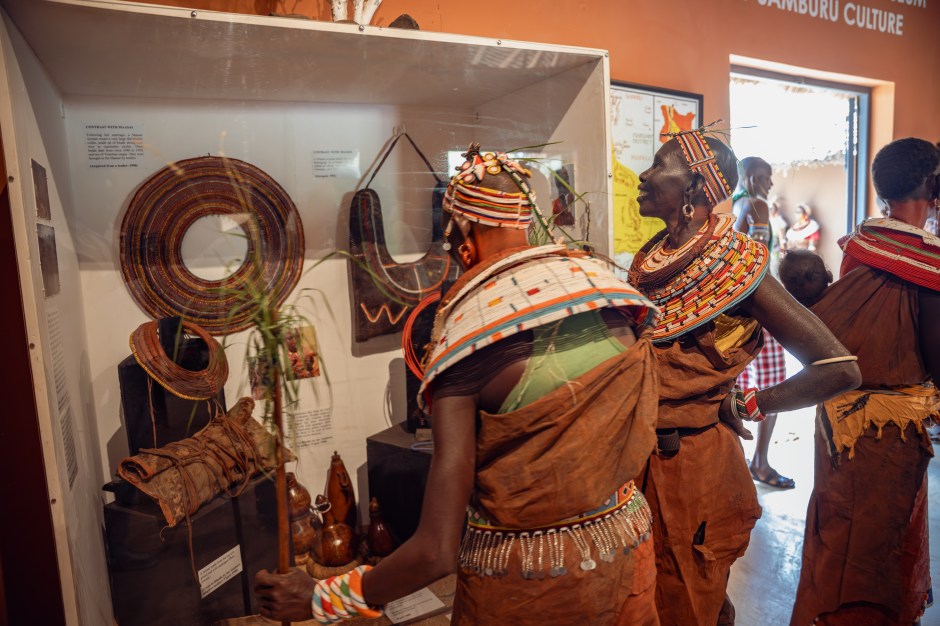
Above: Samburu women admiring all things Samburu during launch of the Rhodia Mann Museum of Samburu Culture at Sasaab Luxury Camp- Image by Klein Nettoh
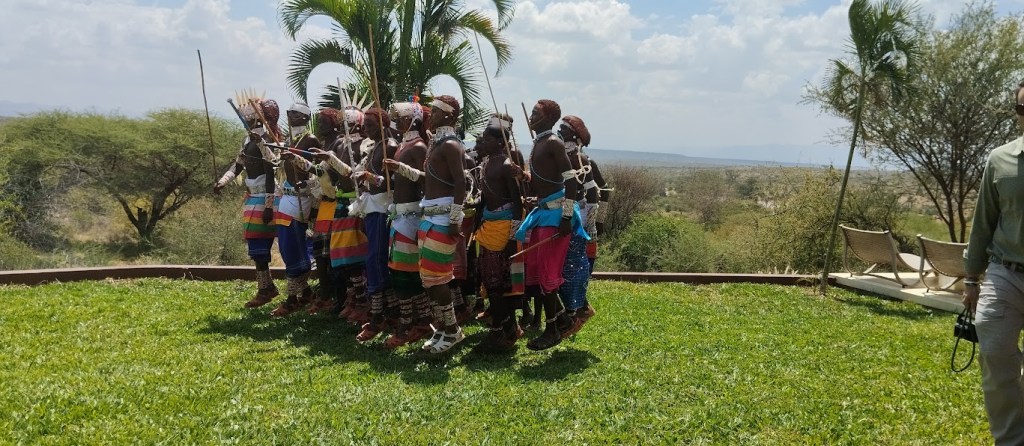
It’s a day of celebration with the Samburu elders blessing the ceremony, the women dressed in traditional regalia of beaded necklaces singing songs of praise and the morans dancing with high leaps and deep-throated beats.
“This is a moving day for me of a story that began when l was nine years,” tells Rhodia Mann her voice emotional as she begins the story of how the Rhodia Mann Museum of Samburu Culture came into being.
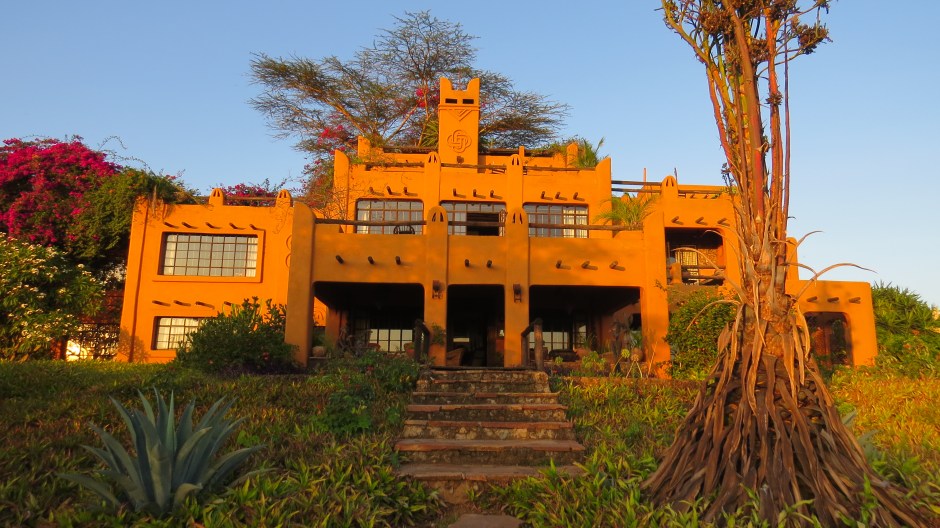
Inaugurated on 5th December 2025 at the Sasaab Luxury Tented Camp in Westgate Conservancy in the heart of Samburu land, it is Rhodia’s collection of all things Samburu collected over a span of six decades.
It houses 60 artefacts, 150 photographs and pages of maps, diagrams, charts and text that were transported from Nairobi in a seven-ton truck filled with 53 crates to Samburu, the land where it all came from. “I had to give it all back because it rightfully belongs there,” tells Rhodia, now in her 80s.
Standing by the museum that is the only one of its kind in the world that houses the Samburu culture, Rhodia continues her story. Dressed in an earth-red shirt and pants, now increasingly frail with an autoimmune condition, she’s still feisty and here to see the museum come to life – a collection she put up in four days with her eye to detail.
The Start of the Journey
“My father brought me to Maralal,” narrates Rhodia to a rapt audience against a backdrop of ancient rocks weathered in time over a span of 25 million years that once stood taller than the tallest mountain Kenya that’s dated at two million years.
Born of immigrant parents – her Polish father Igor and Romanian mother Erica who fled the Nazi regime in the second world war – she grew up in a house full of intellectuals, artists, writers and political activists from around the world. Her father was a veterinary doctor and became the world authority in parasitology and her mother, Nairobi’s earliest town planner commissioned to plan the largest city between Cape and Cairo of 250,000 people, recalls Rhodia.
Her father being a vet in the colonial regime was posted to the northern lands to develop the livestock industry at a time when it was closed to the outside world and deemed dangerous. On many of these forays into the north, he was accompanied by his wife and daughter.
On her first safari, Rhodia remembers. “I was at a Samburu manyatta and everyone was all over me. I was the first white child the Samburu had seen. I was totally admired and pampered and by the end of the visit, I was completely covered in ochre and dust. But it was the happiest day of my life.
“The provincial administrator then drove us to a point and asked me to close my eyes. He guided me a few steps and then asked me to open my eyes. What I saw was the most beautiful sight. I was standing at the edge of the Great Rift Valley at a place called Losiolo and I had the whole world spread below me. I wrote about it in my diary.”
Fast Forward
School took over and then further studies in New York in fashion design and business administration. Marriage followed with a bitter divorce where she fought for custody of her two sons – and lost.
While in the US, her father sent her beads from Afghanistan. “I strung the first ones into a necklace for myself but when a friend saw it, she asked if she could by it. Off my head, I quoted USD 60 and she paid. At that time (in the 1970s) it was a lot of money.”
It was the beginning of Rhodia’s jewellery business that saw her travel to remote and far-flung places like Ladhak, Mongolia, Pakistan, India, Bali and more, buying beads to fashion into unique pieces of jewellery with sold-out exhibitions in high-end galleries like on Madison Avenue.
Returning Home
In 1981, Rhodia returned home to Kenya never to return to the US. At a loose end on what to do and with no money, she discovered a bead shop in downtown Nairobi selling old beads.
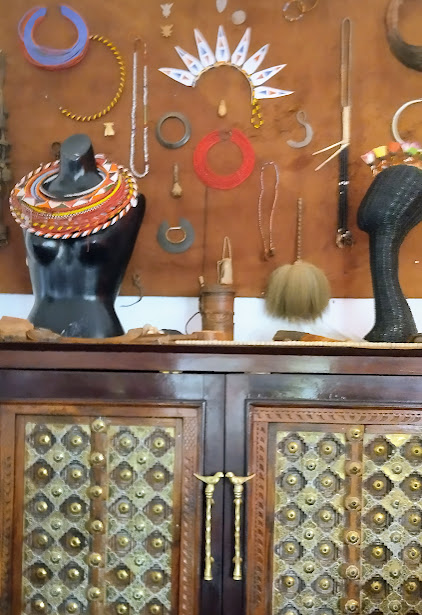
“I started designing jewellery again with beads available here and began travelling the world again.”
When Rhodia talks beads, she’s talking about beads bought from local people, nomads, refugees like in western Tibet fleeing from Chinese invasion. They are selective pieces of historical significance in today’s industrial age of mass manufacture.
And then one day she chanced upon her childhood diary that her mother had kept. In it she had written about a dream when she was 16 of standing at the same place as a nine-year-old at the edge of the escarpment at Losiolo.
To Follow the Dream
The discovery of her childhood diary was the cue to return to Samburu.
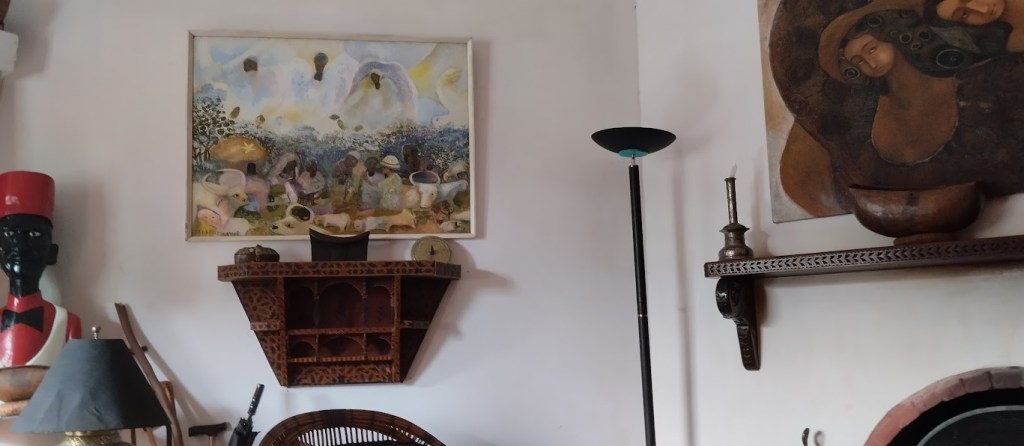
In 1996, Rhodia drove herself in her tiny shoebox-sized car to Maralal. She met a Samburu blacksmith who showed her all the things he made. She also found the manyatta with the same family she had been to as a child. It was the start of her many safaris to the vast parts of northern Kenya stretching from Moyale to Mandera, the border towns of the Ethiopian and Somalia respectively.
“I spent years learning the Samburu culture. Cultures enrich you. I started bringing tourists here. At the time there were few tourists coming here. My Samburu mother adopted me and gave me her wedding necklace, which is passed on from mother to daughter.”
Her Samburu mother, Ntaipi Lelenguyu, was a respected holy woman. With her adopting Rhodia and naming her Noongishu meaning cattle in Samburu, all doors were opened to Rhodia. The name Noongishu implies a woman who has her own wealth and does not need a man to provide for her.
Documenting Samburu Culture
From 1996 to 2000, Rhodia and Clive Ward photographed rituals and ceremonies, many that had never been seen by the outside world. Ward a professional mountaineer, guide and photographer passed away in April this year.
They are in the museum.
“Rhodia is a living legend,” commented Her Excellency Ms. Nicol Adamcová,
the Czech Ambassador to Kenya.
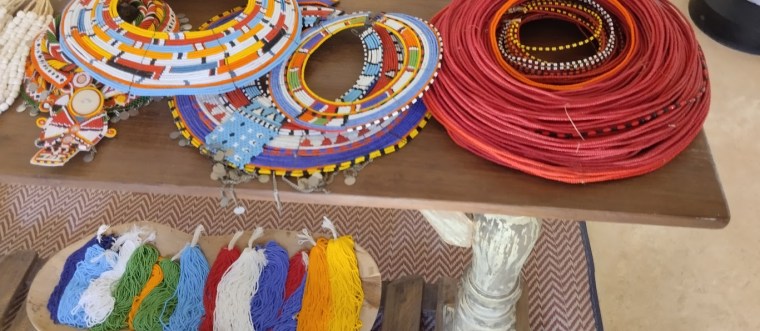
“Since 1976, every bead used by the Samburu has come from the Czech Republic and we are proud of this special bond, 50 years of Czech beads in Samburu.”
“Rhodia, thank you for this museum,” added Steven Lelendoia, Westgate conservancy’s wildlife warden, “for bringing back home this collection. It is a great honour for us because some of the things in the museum are not easy to see today. This collection is for all generations to come.”
Sitting amongst the Samburu women who earlier on blessed the ceremony is Masulani Lenaiwasae from a village near Sasaab. “I wasn’t aware that our culture is changing so much. Many of the things in the museum are now rare. I’m happy to see our culture being preserved here.
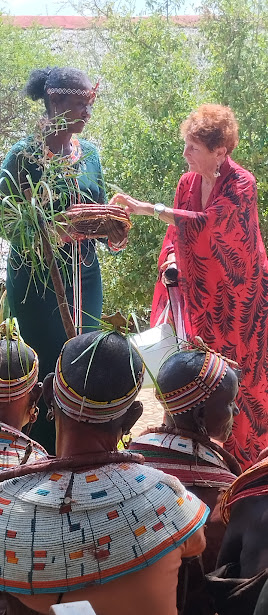
“I remembered my dream and followed it. I am now at the end of my dream,” stated Rhodia. With that she passed her necklace to Stella Napanu, her Samburu ‘daughter’, a necklace that spans generations made of elephant hair and with a string of Venetian beads in the middle, the style no longer made today. Napanu will only wear the necklace once she is married.
Accepting the marriage necklace, said an emotional Napanu, “We are slowly losing our culture. This museum will play a vital role in preserving our culture and therefore it is really important that the Samburu including Samburu children are able to access it to learn about our roots and our connection to our lands.
With that, Rhodia unveiled the sign to the museum.
The Samburu
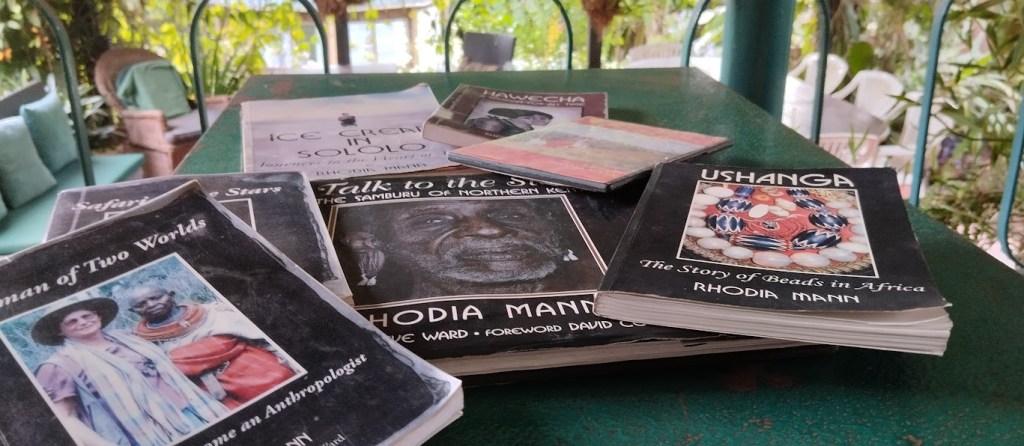
Ntimayon kumontare is the planet Venus on the headpiece of Samburu women. It represents the morning star and acts as a guide and brings good omen to the wearer.
The Samburu, a Nilotic people, believe they lived on Venus. Then God made a new world and sent them there. The people climbed down the ladder and landed on a rock. The rock, now revered holy, is in the middle of Kisima, a large water body in Samburu county.

 Moonlion Safaris