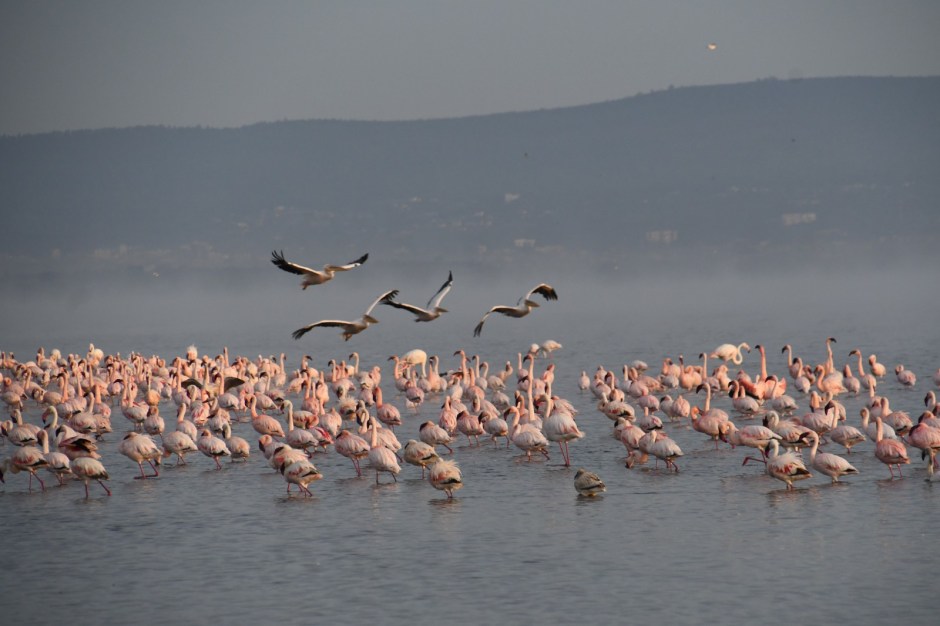
Above image: Lesser flamingoes and Great white pelicans fying overhead in Lake Nakuru National Park. Credit Inderjit Singh Mangat
Published: Saturday Nation magazine 17 Feb 2024
The lake is white-laced as we drive into the 100-year old farm house that morphed into Lake Nakuru Lodge. It sets the stage for the following events on a two-night stay.
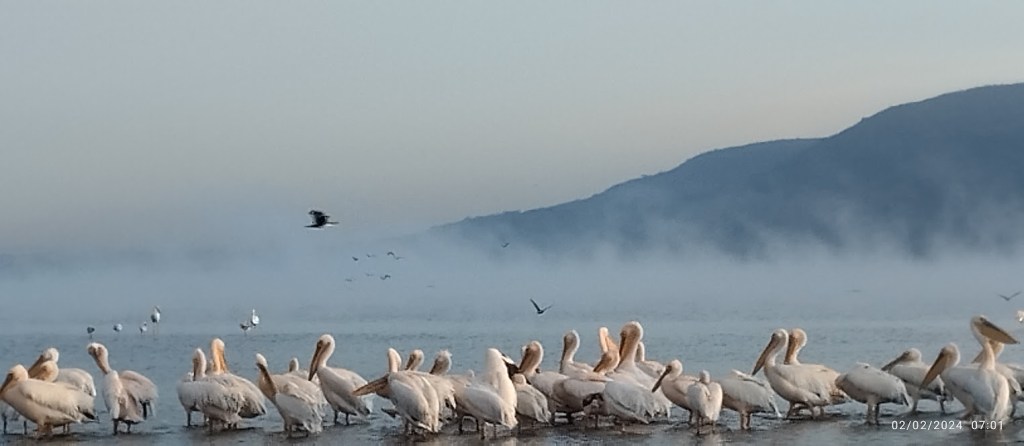
Checked in, we’re looking the iconic lake best known for its pretty pink flamingos, the acacia woodland and the grass plains – a perfect world for all the wildlife we are about to see over a two night stay. The lake edge is laced with the Great white pelicans taking supreme advantage of the alkaline lake now turned fresh since the phenomenal rise of the Great Rift Valley lakes since 2012.
Scene one: The leopard in the tree. “You will see everything,” states Mr Muya of Lake Nakuru Lodge, who has grown up around it. The ‘everything’ includes four of the Big 5 except the elephant that is not found in the park.
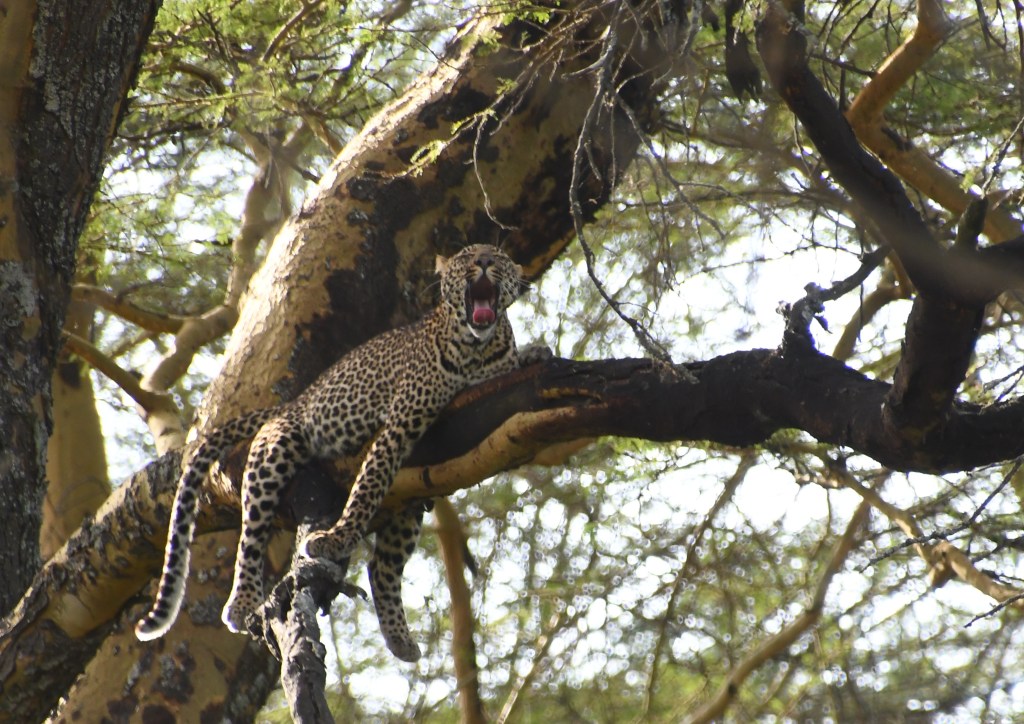
Ten minutes from the lodge of day one, the leopard lounges on a thick branch of a yellow-bark acacia tree in a forested grove. The feline holds us spell-bound, stretching, yawning, turning, sitting, lying with all four limbs dangling and after an hour of suspense – will it or will it not climb down, it’s time to leave.
Scene two: After the leopard, same day, driving into the plains, it’s the strangest scene – a lion stuck in the tree! It’s spread-eagle with four legs apart and the tail dangling in the fork of the tree. Above it, on the higher branches are five other lions watching their mate – and on the ground, another waiting for this one to climb higher. But the poor lion can’t go any higher because the forked branches are too far apart. Is it a young dare-devil modern kid trying out new moves?
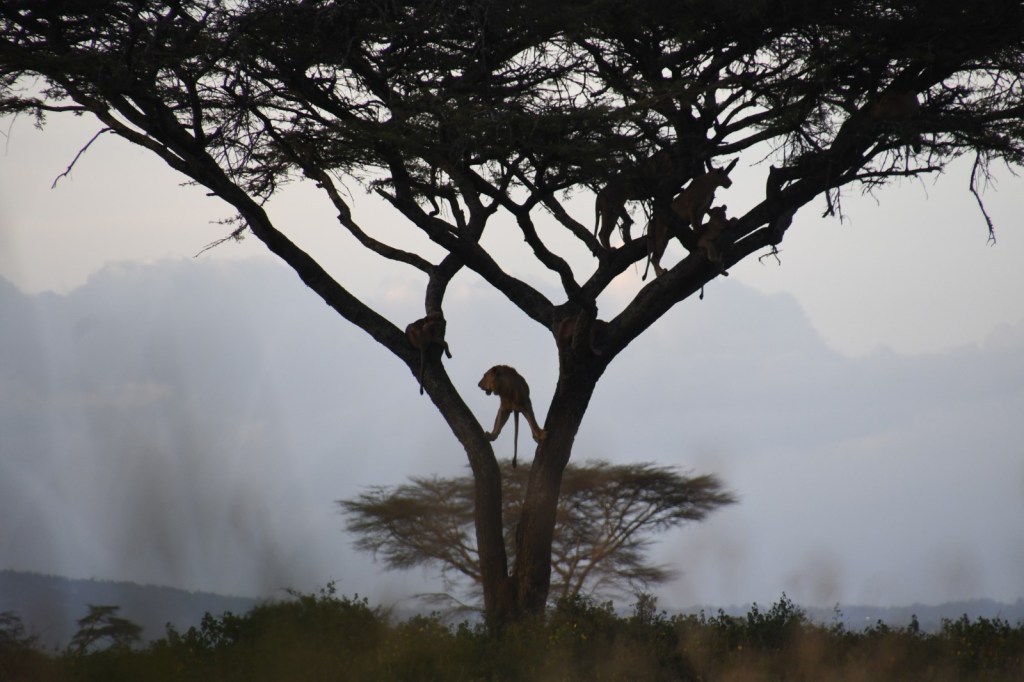
It’s straining, muscles taut. Finally some thirty minutes later, with the greatest of effort it manages to leap down safely to everyone’s relief. “The lions of Lake Nakuru climb the trees to see the best hunting ground,” tells Mr Muya. “And this pride is resident here.”
Scene three: At day break, with the piercing signature call of the African fish eagle, the family of five white rhino (the southern white which is the most common subspecies of rhino unlike the northern white that is now extinct in the wild with the last two females at Ol Pejeta Conservancy). It’s the two big females and two calves with the big male still snoozing on the ground. It’s the funniest scene. The calf decides dad has to get up. The miniature rhino bounds against the giant boulder. Dad doesn’t budge. He runs again to nudge dad up again – no luck and again – but still nothing.
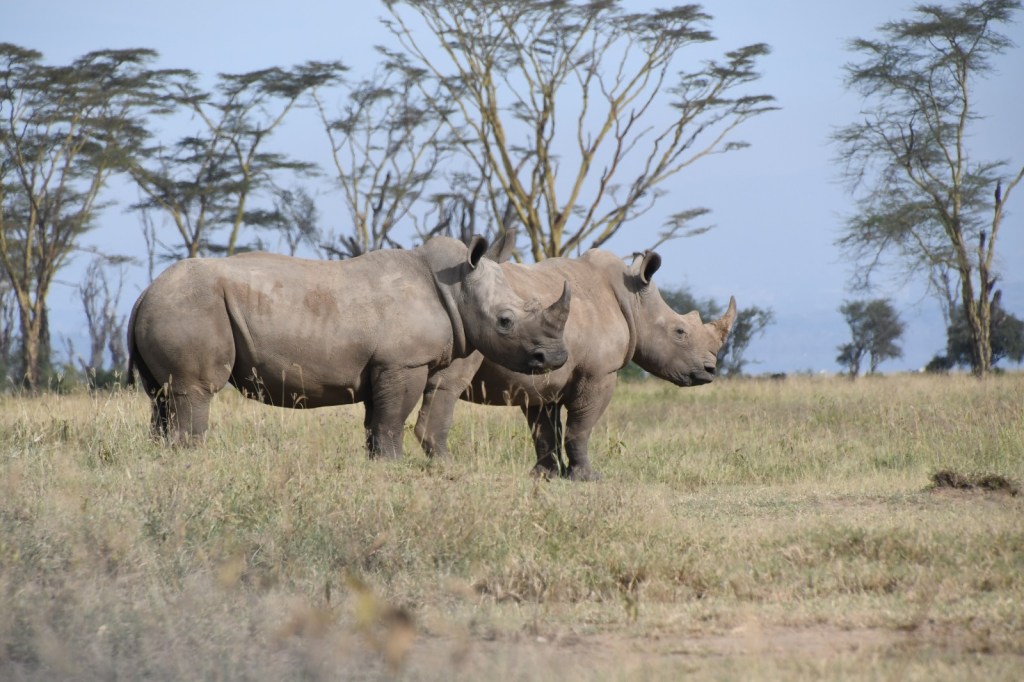
All this would be ideal for another episode of Lion King – the real life comedy of life in the wild.
With all the drama on land, there’s more in the iconic lake that is home to over a million lesser flamingos when there is enough algae – their favourite food in the alkaline lake.
However, at this point the lake is almost fresh. Driving across Muya’s Causeway, the golden light of the morning sun fires the crimson hues of the Lesser flamingos by the salt-crusted shores, their stalky pink legs moving like ballerinas tiptoeing, busy dipping their long necks in the water to siphon the microscopic algae and plankton. It’s an engineering feat. The head in the water is upside-down, the water is sucked in, with the bird swallowing only the algae and plankton and siphoning out the salty water. For their fresh water drink, the flamingos fly a short distance to Lake Naivasha or Lake Baringo that are strung along the Great Rift.
Its colour-scope is fascinating – the pink of the flamingos the white of the pelicans, the Yellow-billed storks and African spoon bills and so many more waders while the Long-crested eagle once so common in the country finds space in the wide open plains .
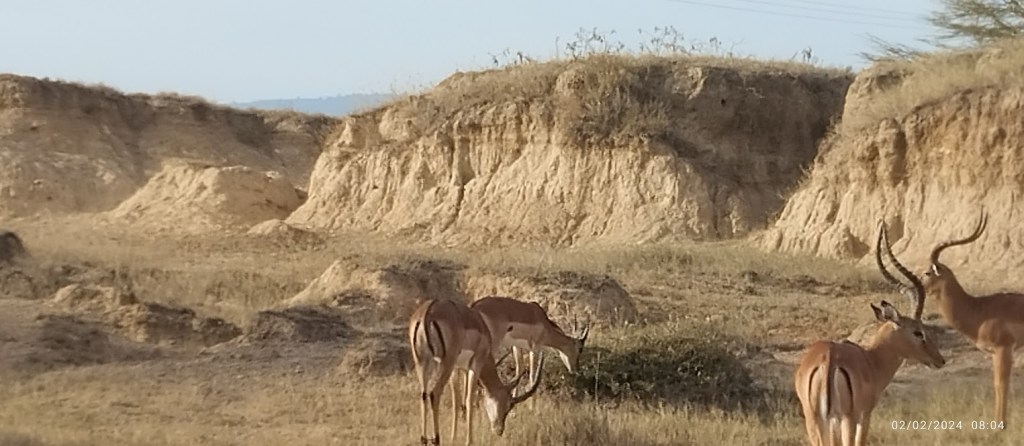
Driving through the glades, herds of buffalo move like soft black waves, the gazelles and impalas gambolling, the giraffes gracefully browsing on the acacias while the baboons add more comic relief with their antics.
Lake Nakuru and its water, grasslands and open skies are home to this fascinating life on earth but for only as long as we can offer the space for the wildlife to live in and move along the migratory corridors to find new mates and breed for the next generation of healthy offspring’s.
For now, back at the lodge, it’s time to dust off and enjoy the aromatherapy massage to rejuvenate the body and soul.
More on Lake Nakuru
Pay by e-Citizen. It can be cumbersome – it took an hour. The system needs to be more user-friendly. Once done, it’s a breeze into the parks.
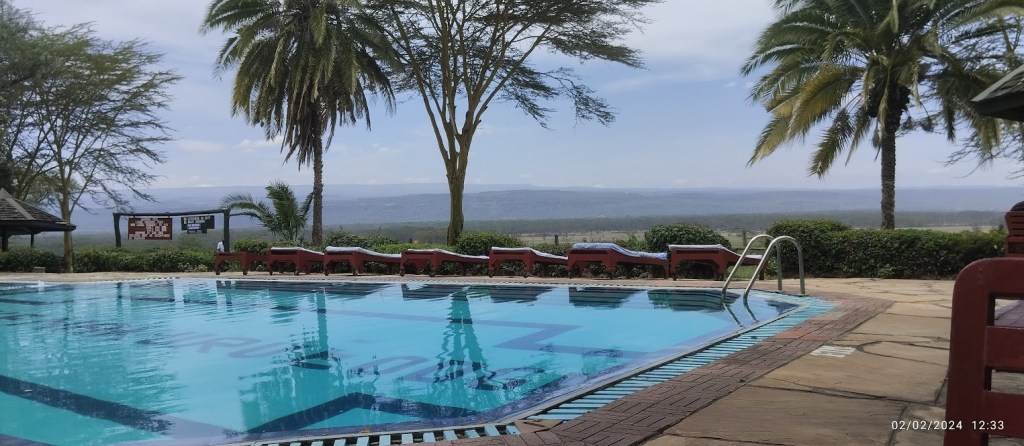
Lake Nakuru Lodge is affordable luxury and strategically placed. Log on: https://lakenakurulodge.com/
It’s a great stopover between Nairobi and Kisumu – 150 kms each way.
Remember it’s not a zoo where you know what to expect. We only saw the leopard once even though we returned multiple times.
 Moonlion Safaris