Whales in Watamu

Watamu Marine Association and Kenya Wildlife Service report an amazing sigh for the first time ever.

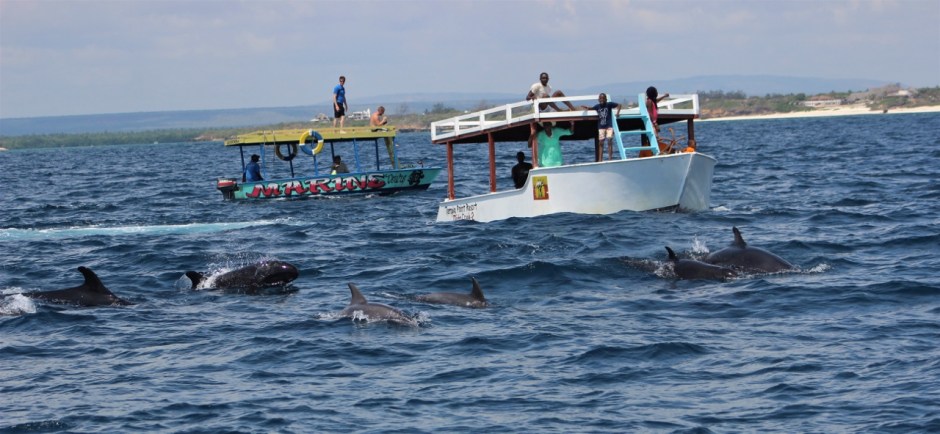
Picture above: False killer whales recorded first time in Kenya in December 2016.
They are witha pod of Indo-Pacific botlenose dolphins. Courtesy Jane Spilsbury/Watamu Marine Association

Published: Satmag Nation 14 Jan 2017

The gorgeous blue-ocean waters of Watamu reveal the first ever sighting in Kenya of False killer whales during a survey carried out by team from Kenya Wildlife Service and the Watamu Marine Association. The excitement is far-reaching.

“False killer whales are similar to Killer whales but smaller,” says a very excited Jane Spilsbury of WMA. “We were about two kilometres from shore when we saw these animals which are normally found in much deeper water.
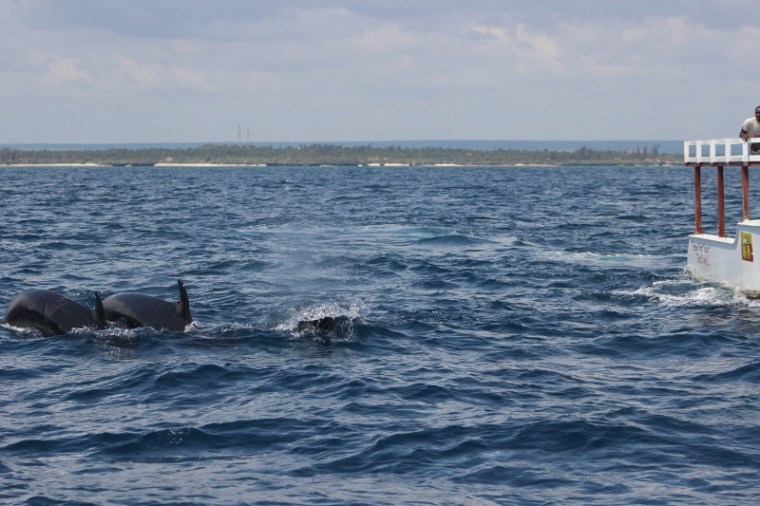
False killer whales off Watamu, Kenya November 2016.
False killer whales off Watamu, Kenya November 2016. Courtesy Jane Spilsbury/Watamu Marine Association

She continues. “These 13 to 19 feet long animals were hunting in a group of 50 – 100 and were accompanied by Indo Pacific Bottlenose dolphins. For an hour that we watched them the whales covered an area of over three square kilometers hunting sailfish.

“This shows that the Malindi Watamu Marine Protected Area has a rich biodiversity to attract such a rarely documented, data deficient species and also why it is an important conservation area for dolphins and whales. We’re so excited!”

Hoping off the boat after a morning sail in Mida Creek landing by the village of Dabasso, I stop to chat with Spilsbury at Eco-World. I  had no idea that wine bottles had more than one use as she shows me around the newly built resource centre at Eco-World.

Continue reading “Whales in Watamu”

Bio-Ken Snake Farm in Watamu

Learning about the Reptilian World of Snakes and Scorpions

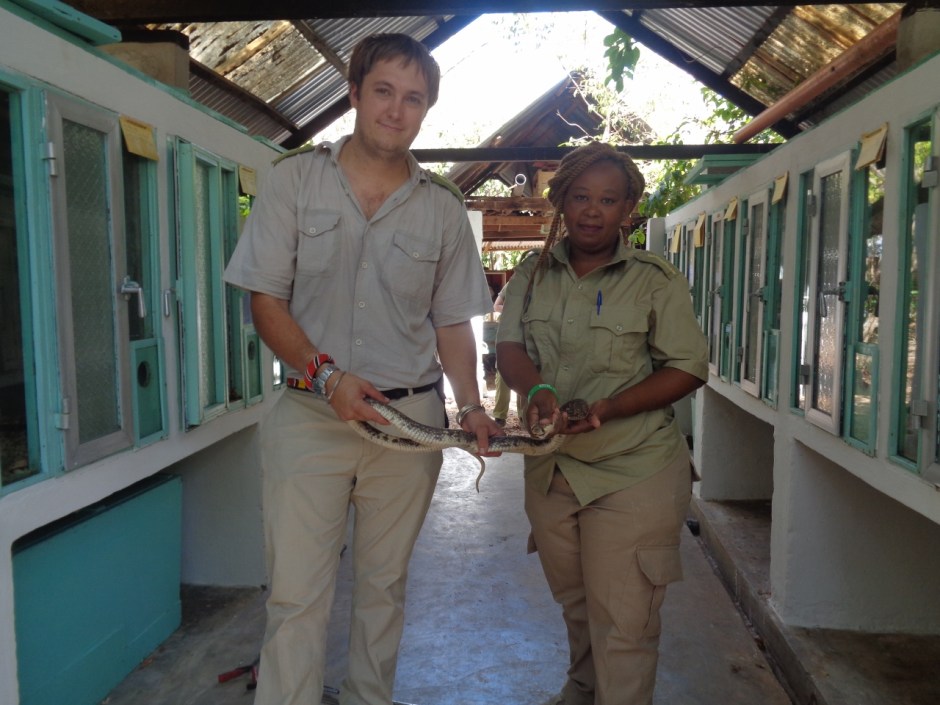
Main picture: Nancy Njeri and Kyle Ray – profesional snake handlers at Bio-Ken Snake Farm Watamu, Kenya

Copyright Rupi Mangat

A gorgeous tropical blue snake is twined around a twig. It’s a speckled bush snake and not venomous. Nancy Njeri, the professional snake handler is giving the grand tour of the snake farm that was started in 1980 by the late and very amazing James Ashe and his wife Sanda. Sanda still handles the snakes and other injured animals and return them to the wild. She has the reputation of being the finest snake-handler – especially the venomous green mamba.

Njeri on the other hand is working her way up to the gold-level –when she will be allowed to handle the really venomous snakes like black mambas – alone.

“Speckled bush snakes come indifferent colours,” tells the young woman and continues to take us around, giving tit-bits about the reptiles in residence. “This is the twig snake,” she points to another thin, long snake that really looks like the paler cousin of the speckled bush snake only that as Njeri tells us, it is a venomous snake that has no antivenom manufactured for its bite. I’d hate to be bitten by this one (or any other) as it means going to hospital for a blood transfusion.

“Anyway,” continues the young woman nonchalantly, “snakes don’t bite to kill. They bite to defend themselves.”

That’s so nice to know.

Winnie Bore - activist and founder of Snakebite-Kenya - http://www.snabirc-kenya.org/ to provide anti-venom in rural areas, help rehabilitate victims disabled or visually impaired by snakebites and develop a research programme simply because there is very little information on snakebites in Kenya.
Winnie Bore – activist and founder of Snakebite-Kenya – http://www.snabirc-kenya.org/ to provide anti-venom in rural areas, help rehabilitate victims disabled or visually impaired by snakebites and develop a research programme simply because there is very little information on snakebites in Kenya. Copyright picture Rupi Mangat

Continue reading “Bio-Ken Snake Farm in Watamu”

Drama of the Drought in Amboseli

Part 1 of 2

21 October 2016

Published Nation newspaper 19 November 2016

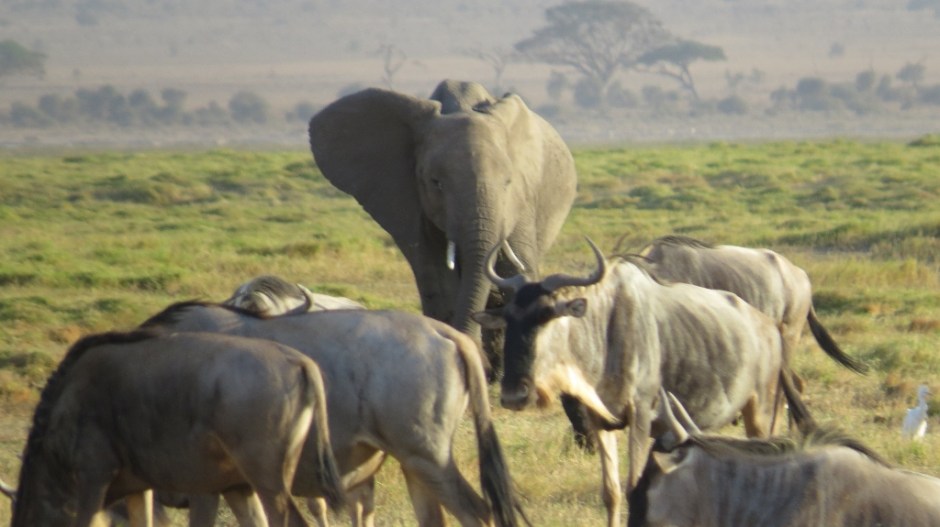
A dry lake bed catches the eye near Iremeto Gate into Amboseli National Park off the Emali Road. On a whim, we decide to take a walk over the small hill to the dry pan that looks similar to the dry Lake Amboseli inside the park in the shadow of Kilimanjaro.

Continue reading “Drama of the Drought in Amboseli”

Rüppell’s Vulture

Marathon runners of the sky

Dr Darcy Ogada

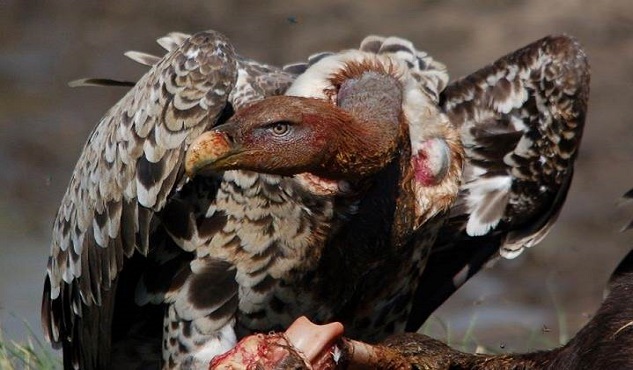
Rüppell’s Vultures are the marathon runners of the sky.  They soar over huge distances to find their favourite meal of carrion.  When they arrive at a carcass, often together with White-backed vultures, they can strip a carcass bare in a matter of minutes.  They are such highly-evolved scavengers that no other animal can match their efficient removal of flesh from a carcass.  This means that without Rüppell’s and other vultures, carcasses can lie uneaten for days, and there is a much greater chance of the spread of disease.

Over the last 30 years Rüppell’s Vultures have disappeared from the skies of East Africa.  Although they can still be seen in most game parks, their numbers have declined dramatically due to poisoning.  Poisons are often used by pastoralists to kill predators, such as lions and hyenas that have attacked livestock.  Rüppell’s and other vulture species are the unintentional victims of such poisonings because they often arrive first at carcasses and in large numbers.

Continue reading “Rüppell’s Vulture”

On the Moors of the Aberdares

September 2016


dsc05295-800x600
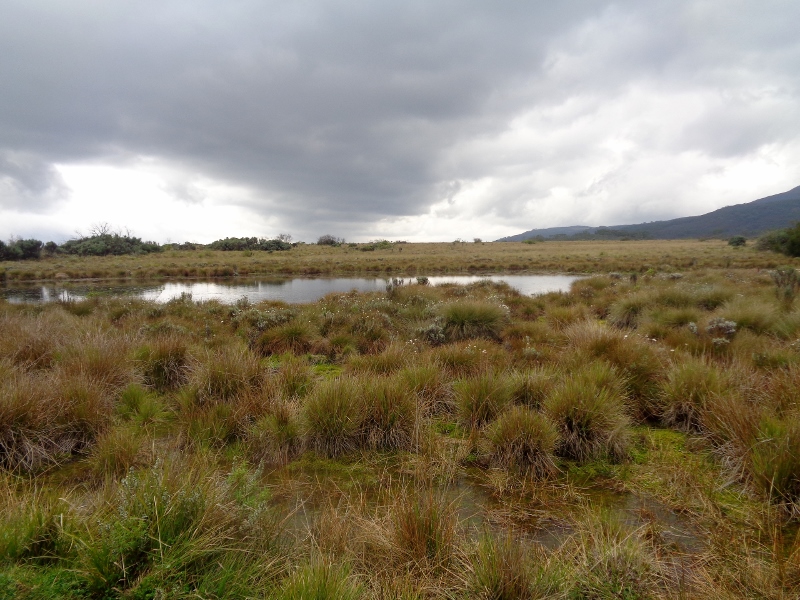
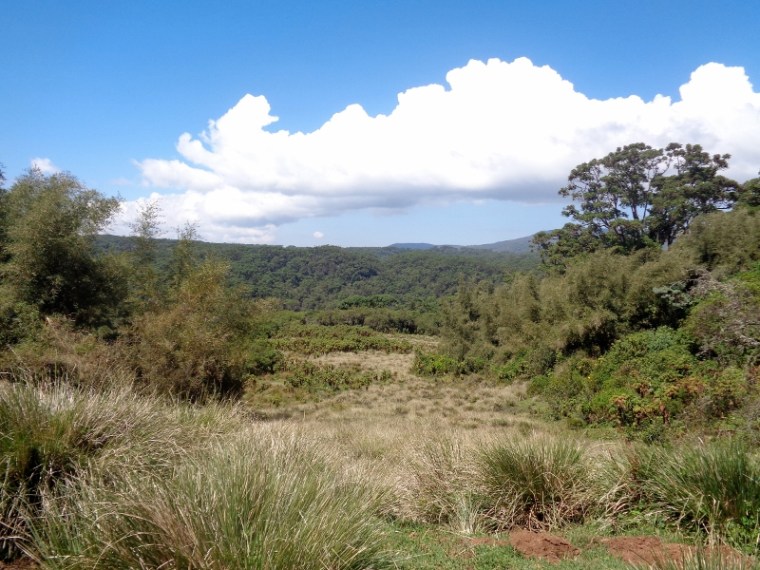
The high moorland of the Aberdares Copyright Rupi Mangat

The slippery high road to the moors of the Aberdares is stunning through thick groves of bamboo forest giving way to the hagenia forest that’s also known as rosewood on higher slopes. The colours of the forests are rich and lush – the luxuriant green of the thick moss on the fat branches of the hagenia and the wispy tails of the hanging lichens in the fresh, clean air of the mountains. At this high altitude, forest ferns and giant lobelia compete for space with Red-hot pokers breaking though the many shades of green. I’m eager to see the Mountain Bongo – one of Kenya’s rarest antelopes but the antelope with ivory-tipped horns doesn’t dash out of the forest like it did a decade ago.

Continue reading “On the Moors of the Aberdares”