Exciting morning in search of Papa Shillingi

By Rupi Mangat

Published: Nation Saturday magazine 19 April 2025

Legend has it that God was so impressed with the gentleness of the mighty wanderer of the oceans, that he threw fistful of coins on its back – hence the Kiswahili name for it –Papa shilling which loosely translates to “Shark covered in silver coins.”

I arrive in time to catch the whale shark boat in search of the world’s biggest fish – the whale shark. It’s super-hot being March with the morning tide coming in. Volker Bassen, operator of the Whale Shark Adventures and co-founder of the East African Whale Shark Trust is at the helm with his crew of professional underwater video/photographers and dive masters. 

There’s excitement on board for the whale shark is no ordinary shark. Despite being humongous – it can reach lengths of 60 feet and weigh as much as 36.000 kilograms – it’s so gentle that you can swim alongside it. Being a shark, it does have jaws but the teeth are tiny and harmless. Instead this giant of the seas is a filter feeder using its mouth to draw in water and filter out plankton and small fish.

Further into the ocean, the wind picks up, the waves gain momentum. The sky melds with the sea in shades of blue. The underwater world holds magic that awes the mere human on the boat. A pod of bottlenose dolphins in supreme grace slip in and out of the ocean, silvery grey against the dark blue. After a few minutes of curious playfulness around the boat, the dolphins vanish into their world.
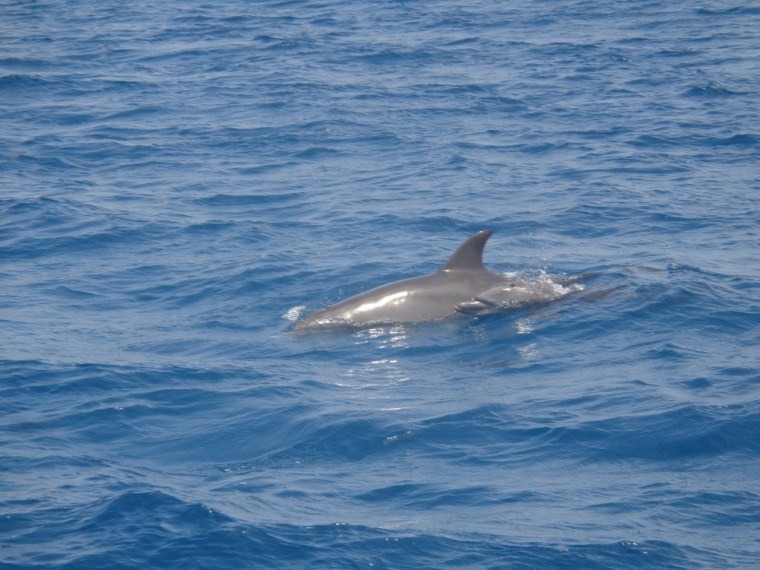
Bottlenose dolphin with young in Kisite-Mpunguti National Marine Park Copyright Rupi Mangat

There’s still no sighting of the whale shark. On my first whale shark adventure with Bassen in 2008, the big fish had appeared within moments of us reaching the reef.  We reach a patch of the ocean that’s calm and jade green. Heads begin to bob in and out of the water. We’re in the company of the green turtles – the ancient mariners of the sea that have outlived the dinosaur. Being reptiles, they need air to breathe and pop their heads out of water for a few seconds. Joana Hancock of the Olive Ridley Project (the Olive Ridley is the most abundant of the turtles species found in all the world’s oceans i.e. Indian, Pacific and the Atlantic) later tells me that these are resident green turtles – for now until they migrate further into the endless ocean. In one of nature’s most amazing feats, the female returns to the beach she was born on to lay her eggs.
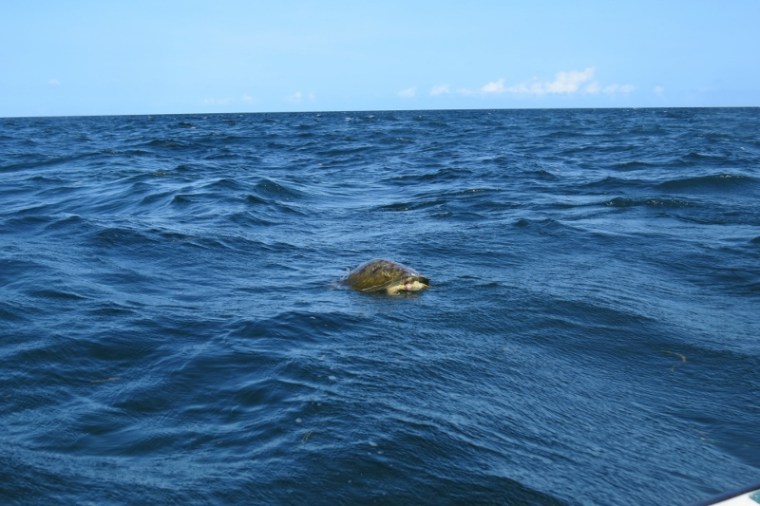
Green turtle - Kiunga Marine National Reserve Copyright Maya Mangat
Green turtle – Kiunga Marine National Reserve Copyright Maya Mangat

It’s nearing noon and still no big fish. Despite its gigantic size, you would think it’s easy to spot the whale shark. But this once abundant shark faces increasing collisions by the ocean liners, maimed by the propellers or caught in the massive seine purse nets in the fishing industry.  

All the goggle-eyed snorkelers know that there is the odd day that the whale shark will elude all, for it is one of the most elusive creature on the planet. They jump into the water to swim with the turtles and be fascinated by the rich colours of the coral reef.  Humans being warm-blooded mammals return on board having had their share of fun while the cold-blooded reptiles remain in the sea. On board there’s fresh fruits awaiting – and a surprise.

‘Mzee Pombe’ is a fixture by the reef which at low tide reveals a sandbar. Having paddled on his surf board with a cooler-box full of cold beers and soft drinks, his floating bar is an instant attraction and soon everybody has a drink in the hand.

It’s the last sail day of the season for the whale shark as it continues its swim in its constant search of food like the fish and coral spawn and the plankton blooms. There’s still so much we do not know about the ethereal Papa shilling that researchers like the EAWST team is dedicated to finding out to ensure the survival of the world’s biggest fish.

Swim with the Whale Shark

Join EAWST on a sail day in search of the whale sharks, turtles. dolphins and humpback whales. 

The whale sharks arrive in Diani-Kenya around mid-December until mid of March as they continue with their migration on routes unknown and reappear a year later.

“You can never tell where they are going,” says Bassen. “It’s a very mysterious fish.

EAWST tagged 22 whale sharks between 2007 and 2010. One swam to Mozambique, one to Djibouti and one towards Australia.Due to lack of funding, the project stopped. However EAWST operates microlight spotter aircraftswhen the whale sharks and humpback whales are around to monitor their movements.

Note: the humpback whale season starts mid-July until end of September.

EAWST has also started turtle counts with Joana Hancock of the Olive Ridley Project: https://www.facebook.com/share/p/1CPY92bCp7/?mibextid=wwXIfr
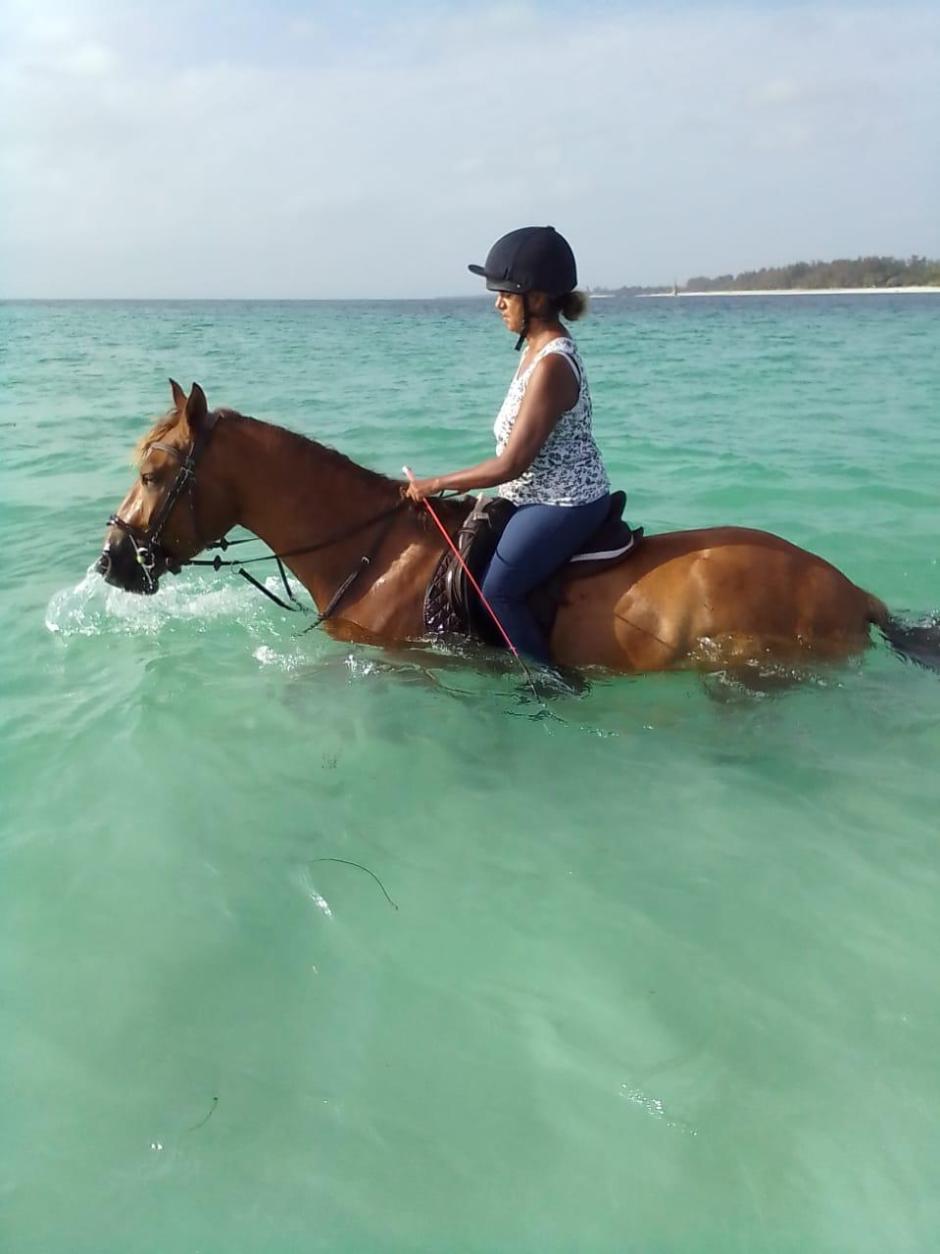
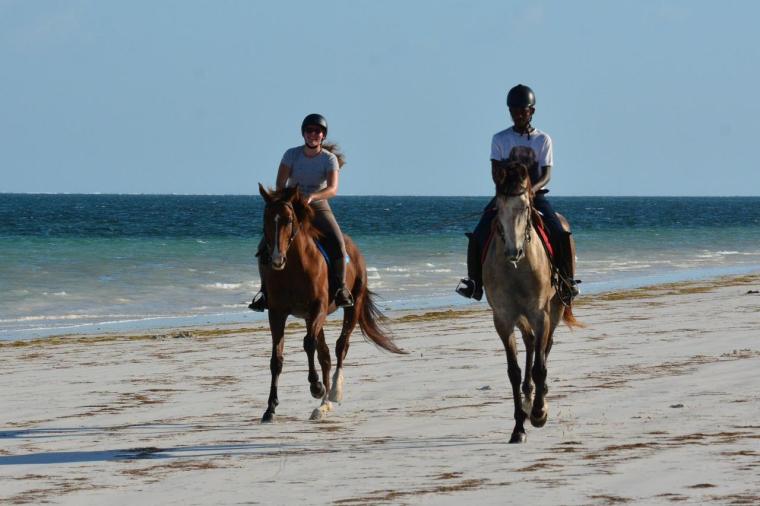
Horse Riding on the Beach for a good cause

By Rupi Mangat  

Published: Saturday Nation magazine: 10 April 2025

Kenya’s South Coast boasts one of the world’s most beautiful beaches with powder white sands and the tropical blue waters of the Indian Ocean. Protected by a stunning reef that’s rich with colourful corals and marine life, it’s paradise for beach lovers who love to walk barefoot on the beach, snorkel, scuba dive, deep sea fishing and kite surfing. Added now to the list is horse riding, a new adventure even for those who have never sat on a horse. 

Clients riding on the beach at Diani on Kenya South Coast. Courtesy Sheila Somaia

“Everybody wants to ride on the beach,” states the Kenyan-born Sheila, patting one of her horses at the stable near the beach. “We ride between 7.30 a.m. and 9.30 a.m. and then in the evening between 4.30 p.m. and 6.30 p.m.,” tells the horse woman who fell in love with horses as a child, a passion that’s not waned six decades on. “It’s cooler for the horses before the sun turns on its heat,” she continues. “Horse welfare is the number one priority at this stable”.

Continue reading “Horse Riding on the Beach for a good cause”

Birding at Breakfast, celebrating a global big day at Sandai, Mweiga

Published Saturday magazine an insert in Nation newspaper 25 May 2024

Above: Petra Allmendinger birding at breakfast on Global Big Day at Sandai House in Mweiga. Courtesy Petra Allmendinger

Worldwide, the birding community is abuzz on Saturday 11 May to log in as many species of birds as they can to participate in Global Big Day, marking its 10th anniversary. A tech-savvy Kenyan birder has tagged all the spots in the country that birders will be at. Nobody’s birding in Mweiga and so we head that way to check in at Sandai, one of the most scenic houses in the world twixt the two big massifs of Mount Kenya and the Aberdares. It’s a dream farm house with cottages dotted around the expensive grass plains with surreal views of the great massifs on the equator.

Sandai House after the rains green with grass.

Driving in late afternoon, the sky is hung heavy with clouds threatening to burst with the ongoing heavy rains. It’s going to make bird watching a challenge but when a big raptor soars above to land on the tall acacia in the neighbouring Solio Ranch, more famous for its rhinos where you can see up to a mind-boggling 40 in a day, things begin to look up.

Continue reading “Birding at Breakfast, celebrating a global big day at Sandai, Mweiga”

The enduring legacy of the African Heritage House

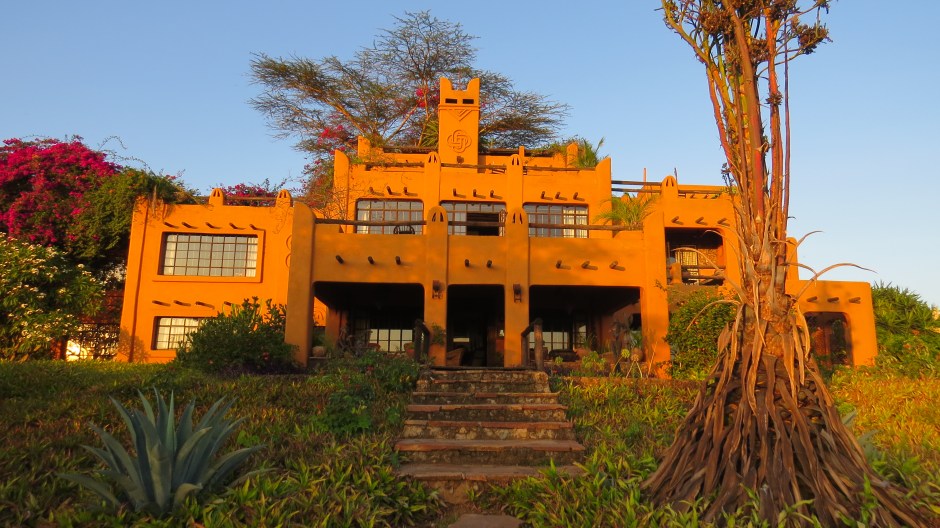
Every floor is a testimony to Africa’s great arts, giving accolade to the African Heritage House as the most photographed house in the world.

Published: Nation newspaper Saturday magazine 11 May 2024

Above: The African Heritage House. Credit Maya Mangat

It’s nostalgic being back at the African Heritage House, one of the world’s most unique houses inspired by all that is African – from her architecture to the arts, from her textiles to the cuisine.

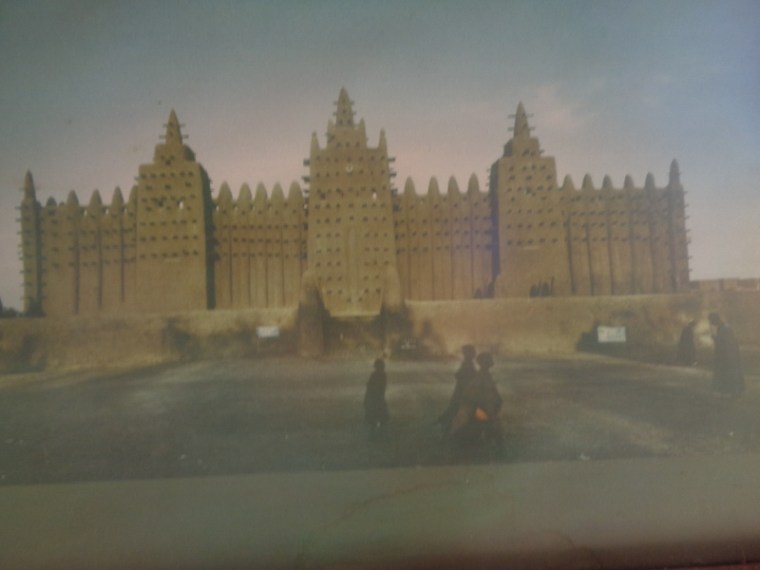
I remember the first time driving up there in early 2006 and wondering if we had the correct address amidst the urban sprawl of Mlolongo. I see the same expression on my guests till we arrive at the house, the façade inspired by the mud mosques of Timbuktu and Djenne in Mali.

The mud mosque of Timbuktu that so inspired Alan Donovan to build the African Heritage House Copyright Rupi Mangat

It was the first time I had seen anything like that. The mystical Timbuktu came alive, which was the centre of Islamic studies in the 15th and 16th centuries and the home of the Koranic Sankore University founded in the 14th century that was the intellectual and spiritual centre of Islam throughout Africa.  

Continue reading “The enduring legacy of the African Heritage House”

Tales from Tsavo East

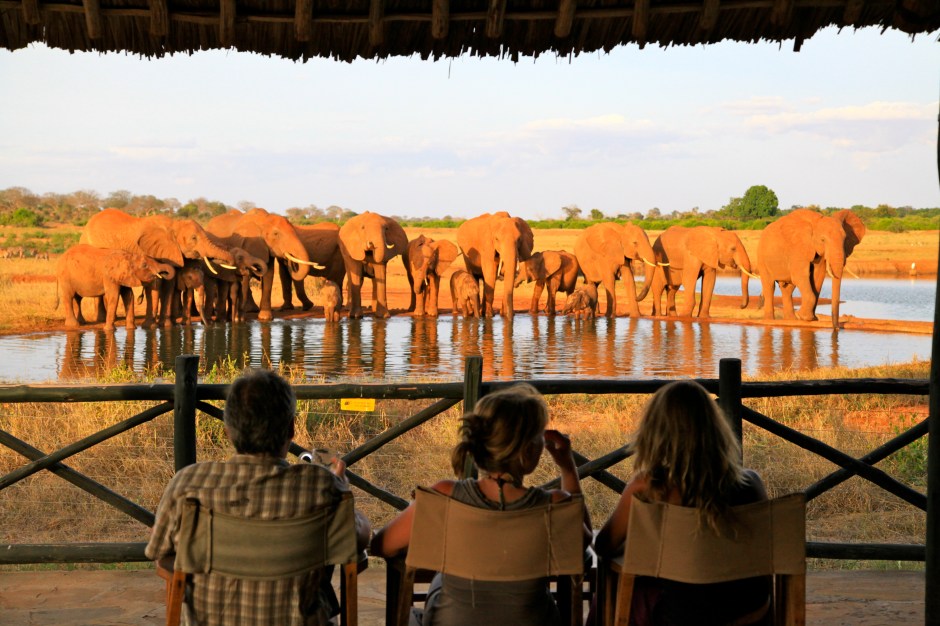
Above: Elephants at the waterhole at Voi Wildlife Lodge looking into Tsavo East National Park. Image courtesy.

Published: Saturday magazine in Nation newspaper 4 May 2024

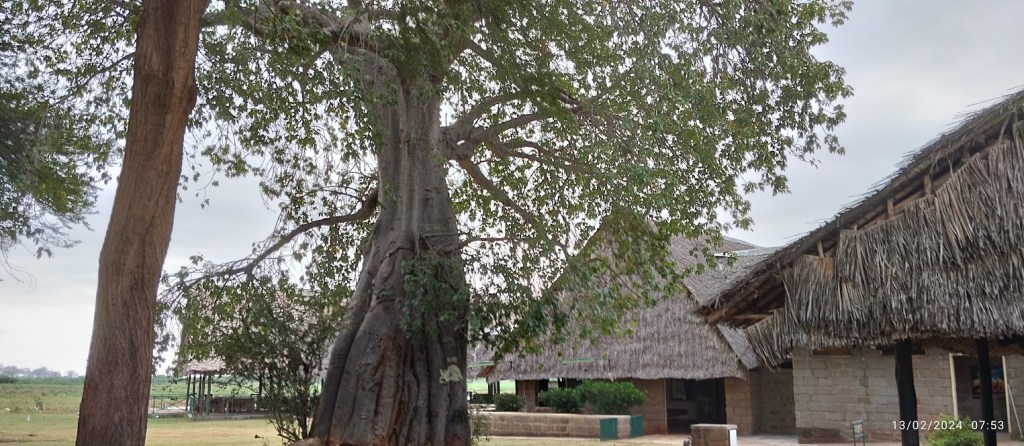
The air is still and sun-baked. I take refuge under the shade of the banda staring into space that is the grandeur of Tsavo East National Park. It’s been 20 years since l sat in the same spot, with the solitary baobab for company at Voi Wildlife Lodge on the edge of the great park.

It’s opportune time to read the new edition of ‘The African Baobab’ by Rupert Watson, lawyer by profession and naturalist by choice. Every page l turn of the full-colour book on baobabs increases my awe of the tree.

Baobab tree in leaf at Voi Wildlife Lodge overlooking Tsavo East National Park. Image Rupi Mangat

Watson writes, ‘For starters, baobabs are living monuments, the oldest natural things in Africa, outlasting every plant and animal on the continent… They survive in the driest, rockiest areas of the continent – yet for all the hostility of much of their habitat, African baobabs live longer and grow larger than most other trees in the world. That is the great paradox of their existence.’

I didn’t know that, and suddenly realize that The African Baobab is one of two books fully dedicated to this living monument, some well over 2,000 years and still standing sentinel on the savannahs.

Continue reading “Tales from Tsavo East”