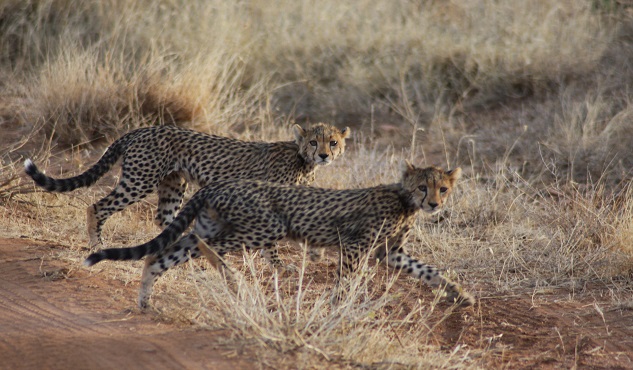
When you see a Cheetah…

By Femke Broekhuis, PhD

Project Director

Mara Cheetah Project

Kenya Wildlife Trust

Don’t:

–          Come too close to the cheetahs. Even if cheetahs are used to the presence of vehicles they are wild animals and we need to treat them with respect

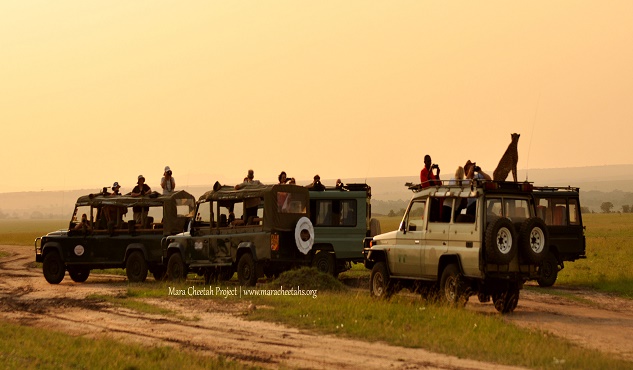
–          Surround a cheetah on a kill. Kills often attract other predators such as lions and spotted hyaenas so make sure that they (cheetahs) can see approaching dangers

–          Come between a mother and her cubs as this will stress both the mother and cubs

–          Overcrowd at a cheetah sighting. If there are too many vehicles then see if you can return to the sighting later

–          Let cheetahs climb on your vehicles! Some cheetahs are known to do so – if you see one of these cheetahs approaching, move away slowly

–          Try and get a cheetah’s attention by making unnecessary noise, for example hooting or banging on the car door, or throwing objects at a cheetah

Do:

–          Keep at distance of at least 25m

–          When a cheetah is hunting keep your distance so that you do not disturb the prey or cheetah. If the cheetah is successful do not immediately rush in to see the cheetah Give the cheetah some time and then slowly and quietly approach the cheetah.

–          Keep noise levels down to a minimum to minimize the stress on an individual

The Mara Cheetah Project is working to conserve cheetahs in the Maasai Mara landscape.

To donate or find out more about this project visit www.maracheetahs.org.

Taita Apalis

BIRD IN DANGER

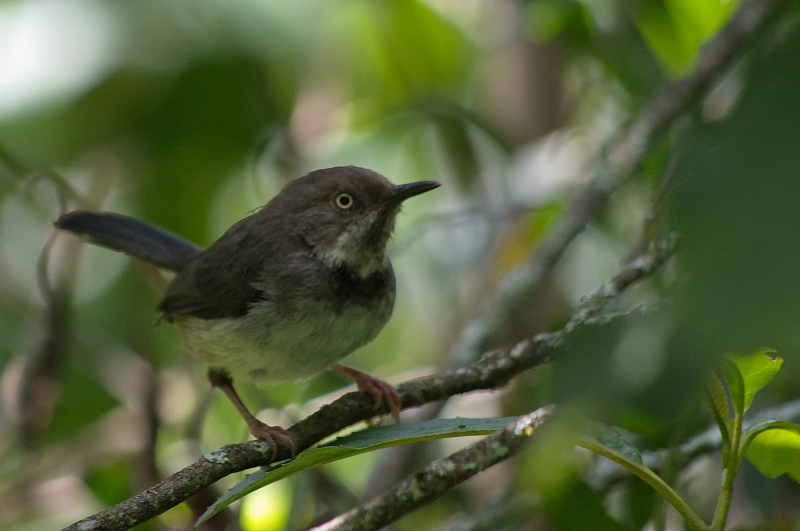
The Taita Apalis is a small songbird found only in Kenya: only in the forests of the Taita Hills.

And it can become Kenya’s first bird to become extinct if nothing is done to save its habitat.

This slideshow requires JavaScript.

Today fewer than 200 remain. It is therefore CRITICALLY ENDANGERED – threatened with extinction. If nothing is done, Kenya might lose this bird species forever.

What can we do to save the Taita Apalis? Continue reading “Taita Apalis”

Rüppell’s Vulture

Marathon runners of the sky

Dr Darcy Ogada

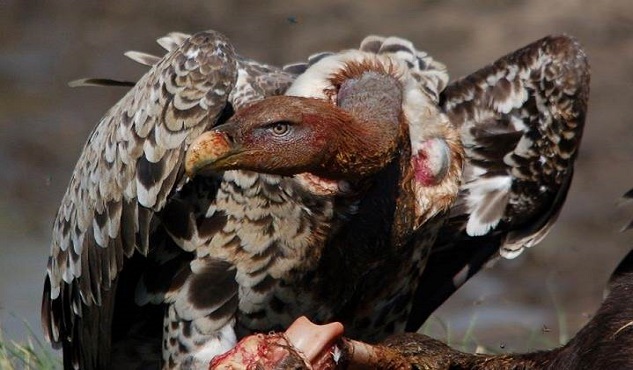
Rüppell’s Vultures are the marathon runners of the sky.  They soar over huge distances to find their favourite meal of carrion.  When they arrive at a carcass, often together with White-backed vultures, they can strip a carcass bare in a matter of minutes.  They are such highly-evolved scavengers that no other animal can match their efficient removal of flesh from a carcass.  This means that without Rüppell’s and other vultures, carcasses can lie uneaten for days, and there is a much greater chance of the spread of disease.

Over the last 30 years Rüppell’s Vultures have disappeared from the skies of East Africa.  Although they can still be seen in most game parks, their numbers have declined dramatically due to poisoning.  Poisons are often used by pastoralists to kill predators, such as lions and hyenas that have attacked livestock.  Rüppell’s and other vulture species are the unintentional victims of such poisonings because they often arrive first at carcasses and in large numbers.

Continue reading “Rüppell’s Vulture”

On the Moors of the Aberdares

September 2016


dsc05295-800x600
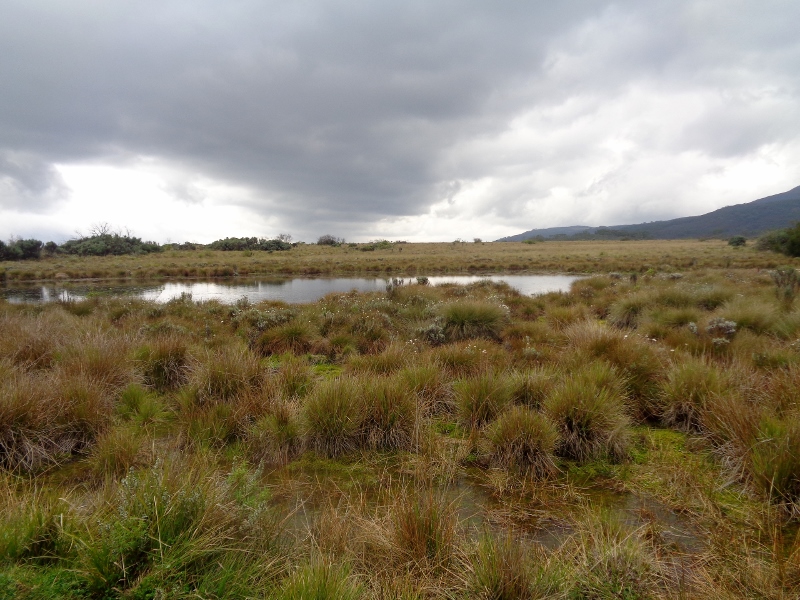
The high moorland of the Aberdares Copyright Rupi Mangat

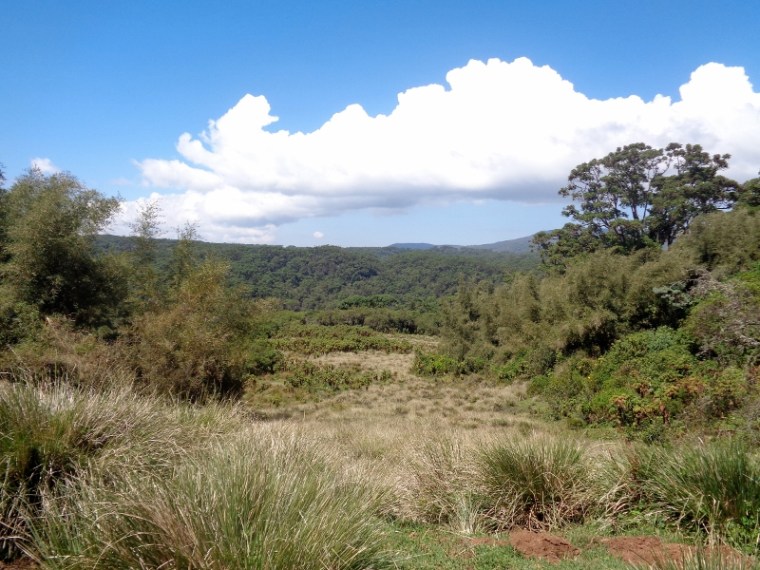
The slippery high road to the moors of the Aberdares is stunning through thick groves of bamboo forest giving way to the hagenia forest that’s also known as rosewood on higher slopes. The colours of the forests are rich and lush – the luxuriant green of the thick moss on the fat branches of the hagenia and the wispy tails of the hanging lichens in the fresh, clean air of the mountains. At this high altitude, forest ferns and giant lobelia compete for space with Red-hot pokers breaking though the many shades of green. I’m eager to see the Mountain Bongo – one of Kenya’s rarest antelopes but the antelope with ivory-tipped horns doesn’t dash out of the forest like it did a decade ago.

Continue reading “On the Moors of the Aberdares”

Action for Cheetahs in Kenya

By Mary Wykstra founder of Action for Cheetahs in Kenya

Can you explain briefly why we need to save cheetah

Kenya holds one of the last remaining cheetah strongholds. Not only are cheetahs a valuable part of the ecosystem, but also cheetahs are one of the most beautiful animals to see. Tourists come to Kenya to see unique sightings and parents in Kenya tell stories to their children about cheetahs. If cheetahs go extinct neither local people nor tourists will be able to see them. When a cheetah hunts, like most predators they seek out the weak or injured in the herd, thus contributing to the health of the herd. A cheetah makes a kill every 2-4 days, but loses about 50% of its kills to other scavengers. Thus, the cheetah plays a role in herd and other predator populations.

When did the big crash in numbers happen?

Two big crashes have already happened in history; cheetah numbers have dropped to near extinction during the ice age when many other animals became extinct and again in the time of the Czars and Moghuls when cheetahs were taken from the wild in mass numbers as pets.

Today the major threat to cheetahs is land use change. As the human footprint expands and develops land in ways that do not permit animals to move between parks, the wildlife numbers decline or become pocketed into small areas.

There is a new wave in wild pet trade making the illegal removal of live cubs a fast growing cause of cheetah decline. Right now, through all of Africa the cheetah numbers are dropping at a rate of 2.1% annually (IUCN). This means that the cheetah could go extinct in our lifetime.

What NOT to do when one sees or hears cheetah

In all of Africa, there is not case of a cheetah killing a person.

When someone is on foot and sees a cheetah it is highly likely that the cheetah is already running away. If someone sees cubs, they should NEVER pick up the cubs. A mother cheetah can leave its young for several hours while she goes away to hunt. If someone thinks that cubs are abandoned they should call authorities immediately, but they should leave the cubs where they are.

If you are visiting one of Kenya’s parks or sanctuaries, you should never drive off road and you should not allow cheetah to climb on your vehicle. Cheetahs on vehicles can be injured, drivers can run over cubs if they are too close. A mother cheetah often runs away from her cubs, often trying to lure the threat, this also means that she can easily be separated from her cubs if tourists block her or scare her away.

How can readers help research?

People can contribute to research through reporting cheetah sightings.

Action for Cheetahs in Kenya is organizing a range-wide cheetah database, so if you see cheetahs in remote areas, please send details and photographs to info@actionforcheetahs.org or download the iNaturalist application and submit your photo to http://www.inaturalist.org/projects/cheetah-and-wild-dog-spotting.

You can also support the research through volunteering or donating funds to assist in our work.

If you are interested in a cheetah talk please contact one of the researchers who will be more than happy to visit your school or function to talk about cheetahs and their fight for survival.