2013 Ecotourism Journalist of the Year (Ecotourism Society of Kenya) | Editor, Komba Magazine (Wildlife Clubs of Kenya) | Contributor, The East African and Saturday Magazine (Nation)
Exploring Musanze Caves, Buhanga Eco-Park and Red Rocks Community Camp
Published Saturday magazine, Nation newspaper 3 December 2016
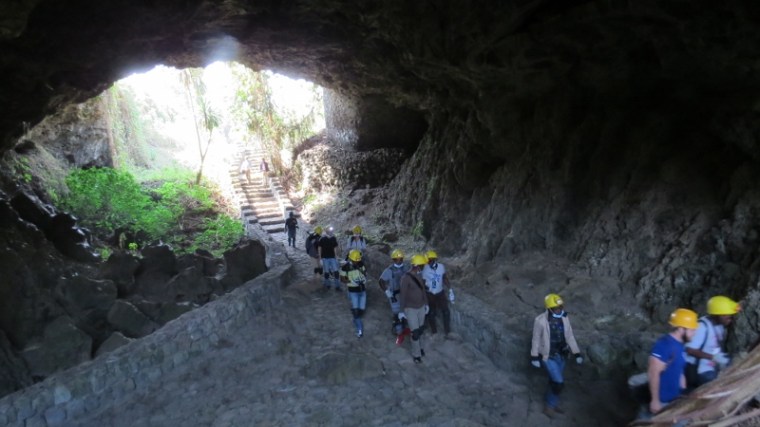
Musanze caves near Virunga National Park in Rwanda. Copyright Maya Mangat
Basking in the afterglow of having been in the company of the critically endangered Mountain gorillas on the high slopes of Volcanoes National Park in north-western Rwanda, we’re now in the belly of the ancient caves that are a product of the fiery volcanic drama of the volcanic Virungas. In Kinyarwanda, Virunga is the word for volcano.
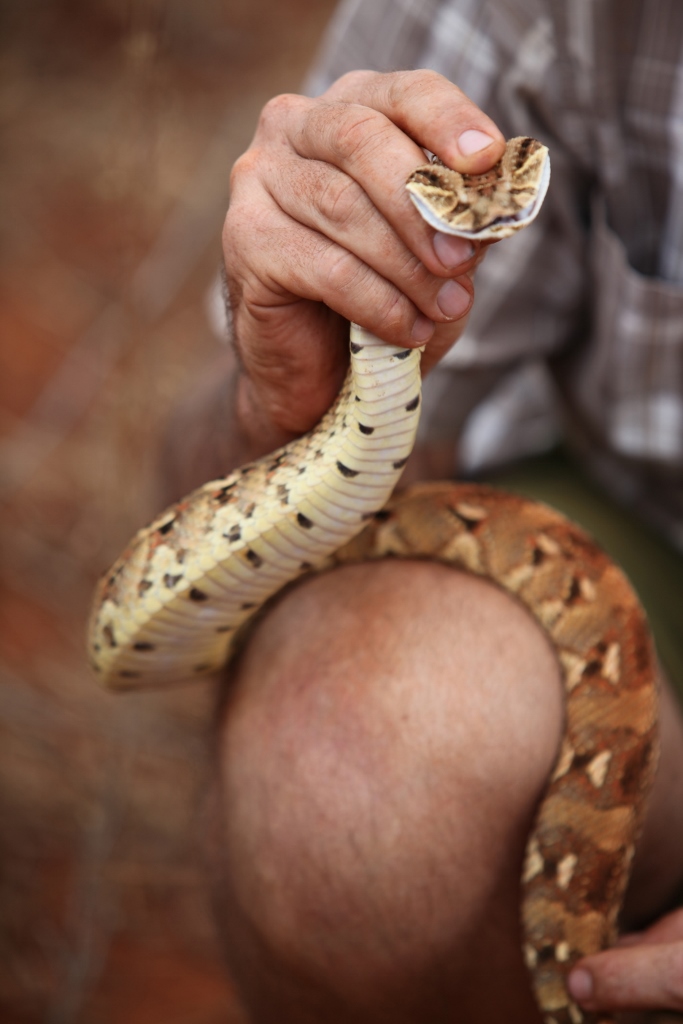
13-year-old Menza Benjamin was picking up cashewnuts on the ground when he felt a burning hot bite on his leg followed by another. He started to vomit and broke out in a cold sweat. Close to his hut he fainted. He never saw the snake.
That was three years ago and he’s lucky to be alive, sitting at the snakebite seminar held in Watamu early November.
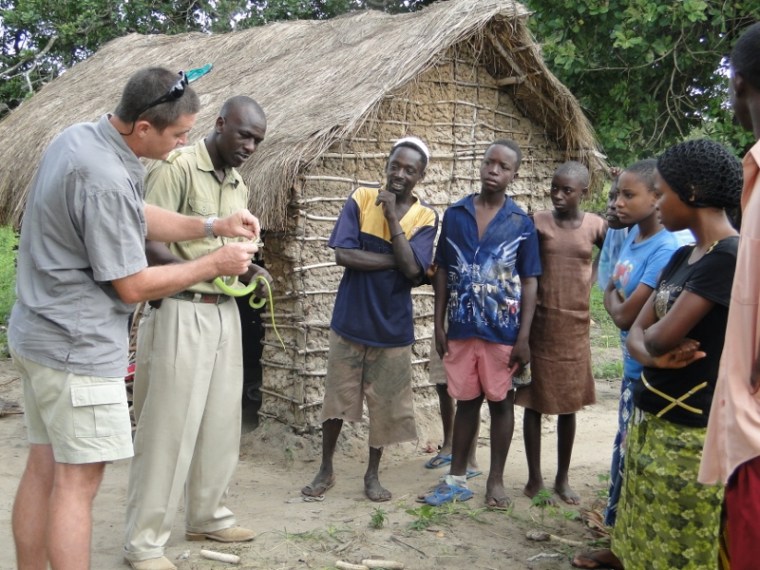
Royjan and Boniface who had been called by these villagers to catch a snake in the roof of one of their huts. It was a green mamba. Royjan and Boniface took some time to talk to them and answer their questions. Picture copyright Royjan Taylor
What saved Menza was the speed with everything that followed. His uncle saw him and immediately put him on a pikipiki and took him 12 kilometers to the Bio-Ken Snake Farm. By the time they reached the snake farm, the boy was already showing rapidly advancing symptoms of black mamba bite. He was rushed by car – along with a supply of suitable antivenom to the local private hospital where he was treated by the hospital’s founder, Dr. Erulu, also present at the seminar.
Black mambas are among the fastest and deadliest snakes in the world. A bite requires urgent urgent attention.
Young Menza with Royjan after surving in his Black Mamba bite. Copyright picture: Rojjan Taylor
A young Orma girl who was treated successfully with good Antivenom from a Red Spitting Cobra bite. Picture copyright Royjan Taylor
The young man who recently died in Voi from bad Antivenom.
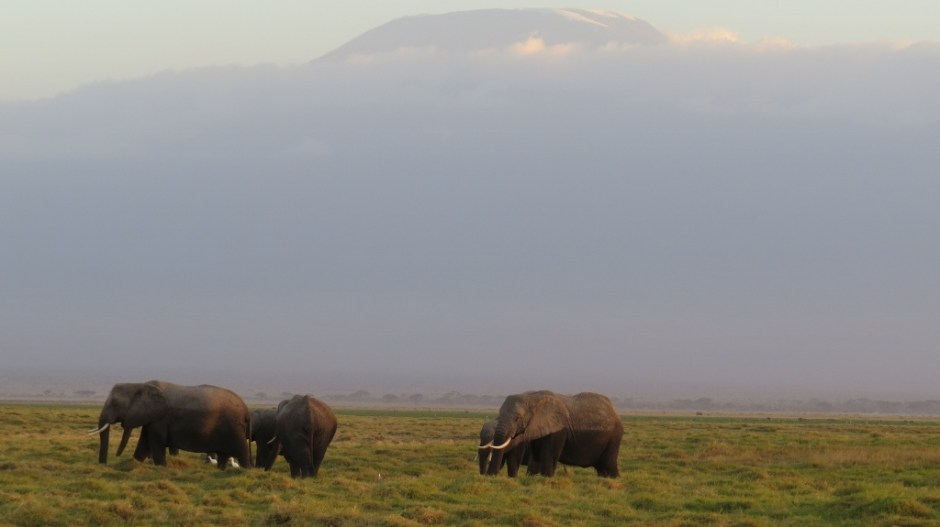
Kilimanjaro is resplendent in the blazing morning sun – but its snow cap’s on the peak of Kibo has melted to a thin teardrop. The Maasai bring their cattle into the park under the watch of the Kenya Wildlife Service rangers. As the skeletal cattle head for the swamps, they raise a halo of dust on the dry plains of Amboseli – derived from Empusel, the Maasai word for dry dusty plains. “There’s no water outside for the cattle,” explains the KWS ranger. “So we allow the community to bring the cattle for a few hours to drink in the swamps.”
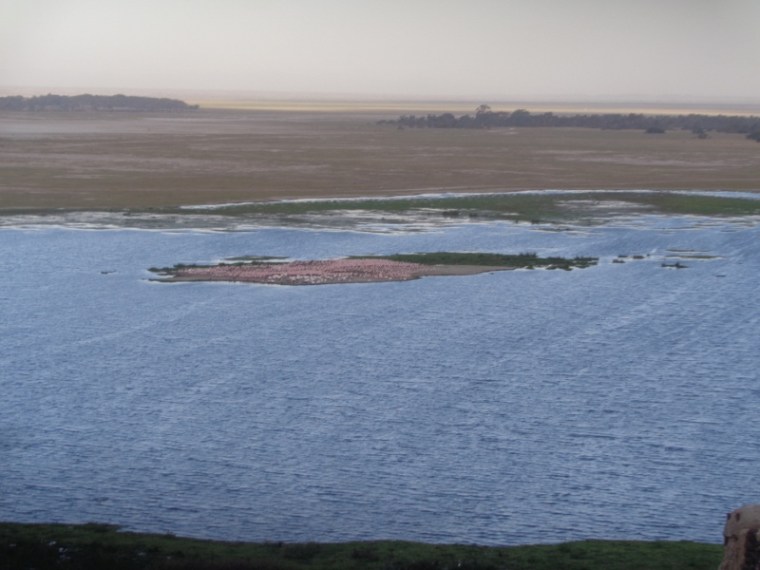
Away from the edge of the park, we’re up on Observation Hill or Noomotio that’s juxtaposed between the lush swamp and the dry-white dust plains under the watchful gaze of Kilimanjaro. It’s surreal for in the midst of the drought-parched land, the deep blue lake has an islet brimming with the beautiful pink bird – the lesser flamingos and flocks of white pelicans.
It’s an exciting game drive in the custom-designed safari cruiser from Ol Tukai Lodge. By the edge of a swamp an enormous Verreaux’s eagle owl with its pink-eyelids so visible through the binoculars is perched on its yellow-bark acacia tree. It is Africa’s largest owl and the only owl with pink eyelids – we’re suitably impressed.
A dry lake bed catches the eye near Iremeto Gate into Amboseli National Park off the Emali Road. On a whim, we decide to take a walk over the small hill to the dry pan that looks similar to the dry Lake Amboseli inside the park in the shadow of Kilimanjaro.
Months-old dry elephant dung near a waterless lake outside Amboseli National Park Copyright Maya Mangat
On the trail of the elephant dung Copyright Maya Mangat
To the dry lake bed outside Amboseli National Park Copyright Maya Mangat
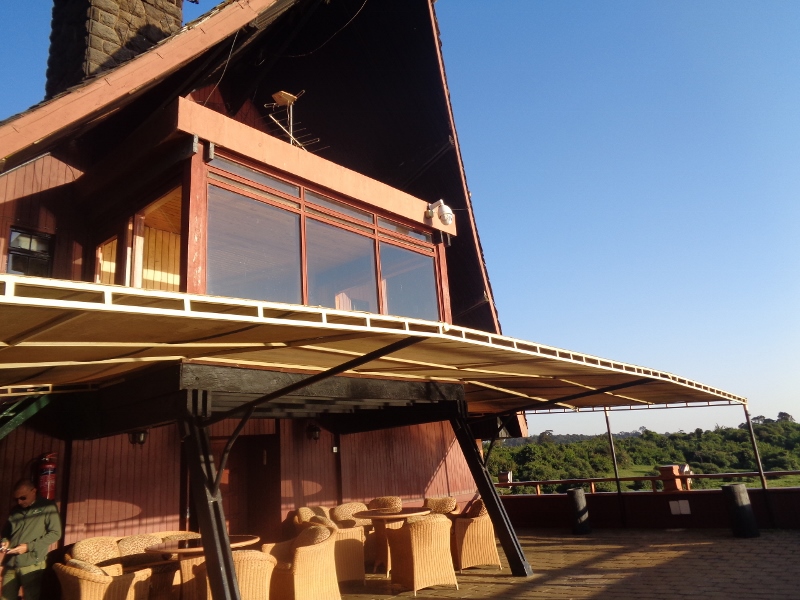
The animals begin to arrive at the Ark. More than two at a time. And the stage is set at the salient for the evening’s entertainment. Of the two thousand elephants in the Aberdares, there’s a herd of twenty at the waterhole. The baby in the family fits squarely under the belly between its mother’s legs. It’s a beautiful scene with the floodlights of the Ark and the full moon.
The elephant family nudge clumps of soil with their toes to lick the salt on the salient. A huge male blows a trunk-full of dust over itself while some in the herd dangle their trunks in the waterhole for a drink.
Black rhino killed by elephant in front of Ark lodge on night of 6th May 1979 Copyright picture Rupi Mangat
Chania waterfall in the Aberdares Copyright picture Luca Borghesio
Meanwhile, a pair of Grey crowned cranes – a bird that’ increasingly rare to find – come to the swamp as do the night birds. An owl hoots and lands on the rock by the water pool. The elephant family leave just as a trio of Spotted hyenas lumber in. They play amongst themselves and lie down to rest for some time before something catches their attention. It’s a family of the Giant forest hog busy foraging on the lush scrub around the Ark. The Giant hogs weighing up to 150 kilograms outstare the hyenas and the show is over as the hyenas skulk away.








 Moonlion Safaris