Published: Nation newspaper 27 Septemeber 2025
By Rupi Mangat
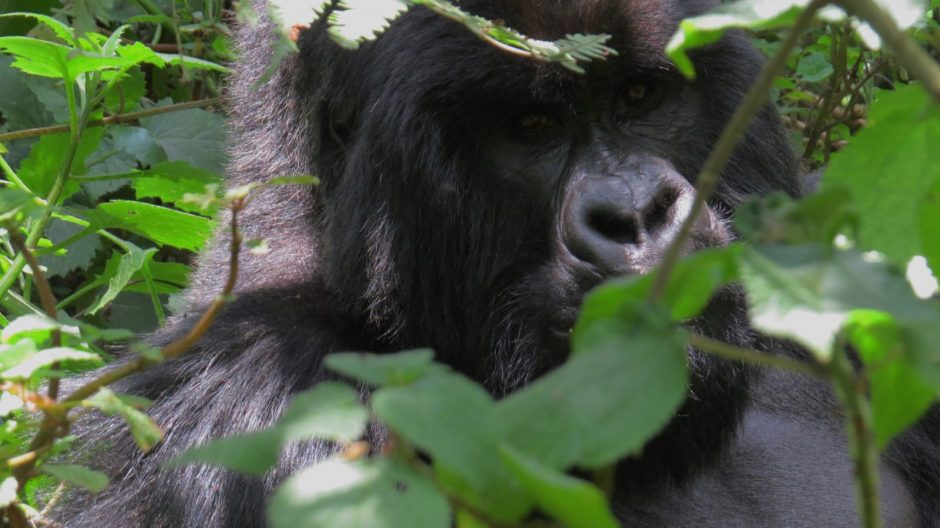
In the stillness of the forest, the silence is interrupted by the sound of snapping branches. “It’s the forest elephants moving through the forest,” tells Chelimo Salim in a quiet tone. He’s our gorilla guide on the trek to see the greatest ape on the planet – the gorilla and to be specific, the Mountain gorillas of Bwindi.
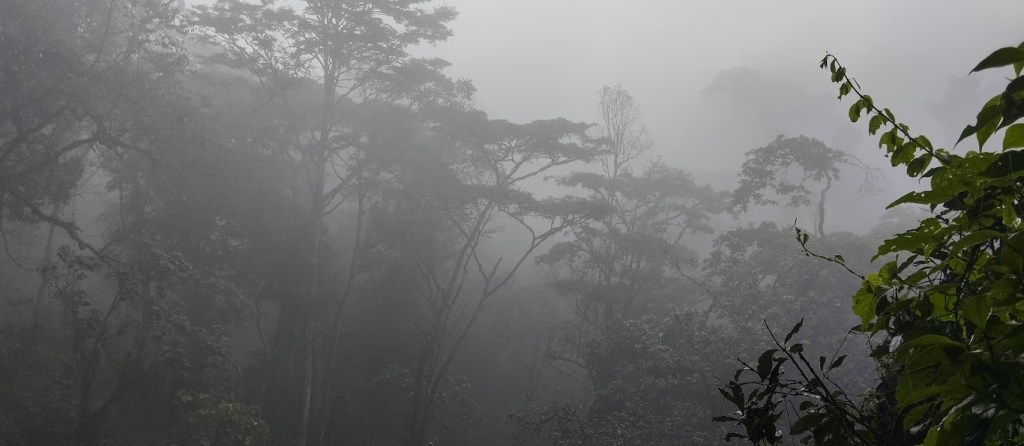
The morning mist is rising to reveal the dense forest covering the mountain range of the Virunga volcanoes that stretch into neighbouring Rwanda that is also home to these gorillas.
But at this moment I want to see the unique forest elephants that are rare and adapted to living in the dark, dense forests of Bwindi. Smaller than the African savannah elephants, they have rounded ears and straighter downward pointing tusks which make it easier for them to move through the forest. It’s anybody’s guess how many there are in the forest – estimates waver between 40 and 300.
The sound ebbs as the elephants move deeper into the impenetrable forest that few outsiders knew about until recently. Its sudden claim to fame came with the ‘discovery’ of the Mountain gorillas – and that not even by sight but from their droppings below their night nests when researchers began to venture into the thick forest glades. That was in the 1980s when Uganda was in the midst of political turmoil. Needless to say, this ‘discovery’ made little headlines.
FYI – Bwindi means place of darkness from the Runyakitara word Mubwindi.
“The locals knew about the gorillas but the outside world did not,” tells Dr Gladys Kalema-Zikusoka giving a presentation to an enchanted group of tourists before the climb up. As Uganda’s first wildlife vet and founder of Conservation Through Public Health with her husband Lawrence in 1993, her life is dedicated not only to saving the gorillas but also empowering the people who live on the edge of the forest that share space with our ape cousin. “It’s only when researchers found their scat and did genetic analysis, that it came to light that there were Mountain gorillas in Uganda,” reveals Dr Gladys.
Encounter with the Great Ape
We’re trekking in the southern side of Bwindi in Rushaga. It’s cool and the earth moist from the cold morning air as we move between the towering trees laden with lichens and moss; ferns and orchids. As the mist gives way to the sun, the mountain birds begin to twitter and the forest air warms. It’s an enchanted world.
Chelimo points up a tree some two hours into the hike (I’m seated on an ‘African helicopter’ carried by porters – a seat costs USD 300 – as I’m recovering from a fractured leg but can’t miss this opportunity),. There’s a gorilla watching us silently from its high perch. For us mere Homo sapien who are part of the great ape family, it’s a moment of awe.
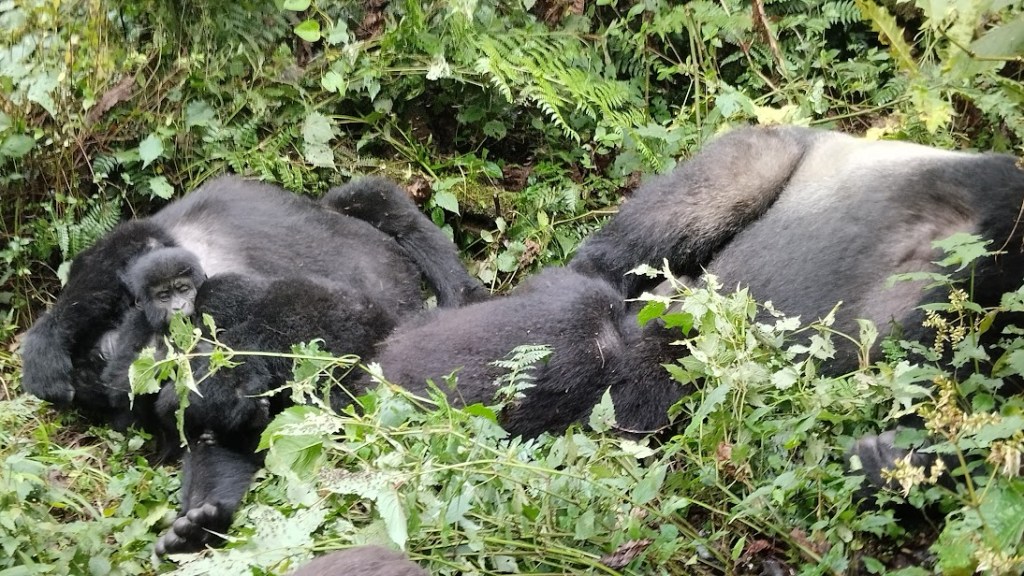
As we are guided through the narrow forest path, the family shows up. We are in its midst.
The male silverback ambles along the path appearing from the dense underground foliage. His streak of white on his back is pronounced like that of all adult males. He is followed by a pair of little gorillas so cute – you just want to pick them up. They tumble over each other in a playful ‘fight’; the silverback finds a dense undergrowth and lies down; the female does the same and the youngsters continue their playful antics. Despite their size, it’s amazing how quiet they are.
“This is the Mishaya family headed by Tinfayo the silverback,” tells Chelimo. “Tinfayo means the gentle one, nothing bothers him.” The name seems to suit him for he allows the gorilla youngsters to climb over him and keep playing.
Watching over the gorilla family is a young woman (Homo sapien) female tracker. Her name is Immaculate Tukamushaba who has been with the Mishaya family for five years. She’s been guiding Chelimo to bring us to this spot. “I love them,” she says smiling at her ‘family’. “I want to see them multiple for future generations to see them.”

The hour passes in a flash. Chelimo signals it’s time to leave and we trace our way back to the starting point.
On reaching the start point again, we discover our gorilla guide is Kenyan born in Kapenguria, and an ex radio presenter on Bahari FM in Mombasa.
It was a friend who told him about the opening at the Uganda Wildlife Authority. “I joined in 2017 as a ranger and after two years was promoted to be a ranger Guide. It’s a very important job for me because I lead tourists to interact with the gorillas in the wild. It’s total fun, learning to conserve gorillas, understand their behaviour and how to manage them. I have habituated three gorilla families up to now,” tells Chelimo.
Asked what inspired him to become a gorilla guide, Chelimo answers: “Dian Fossey. Her story inspired me to join the fight against poachers. Unfortunately, she was killed by people who were ignorant about conservation”.
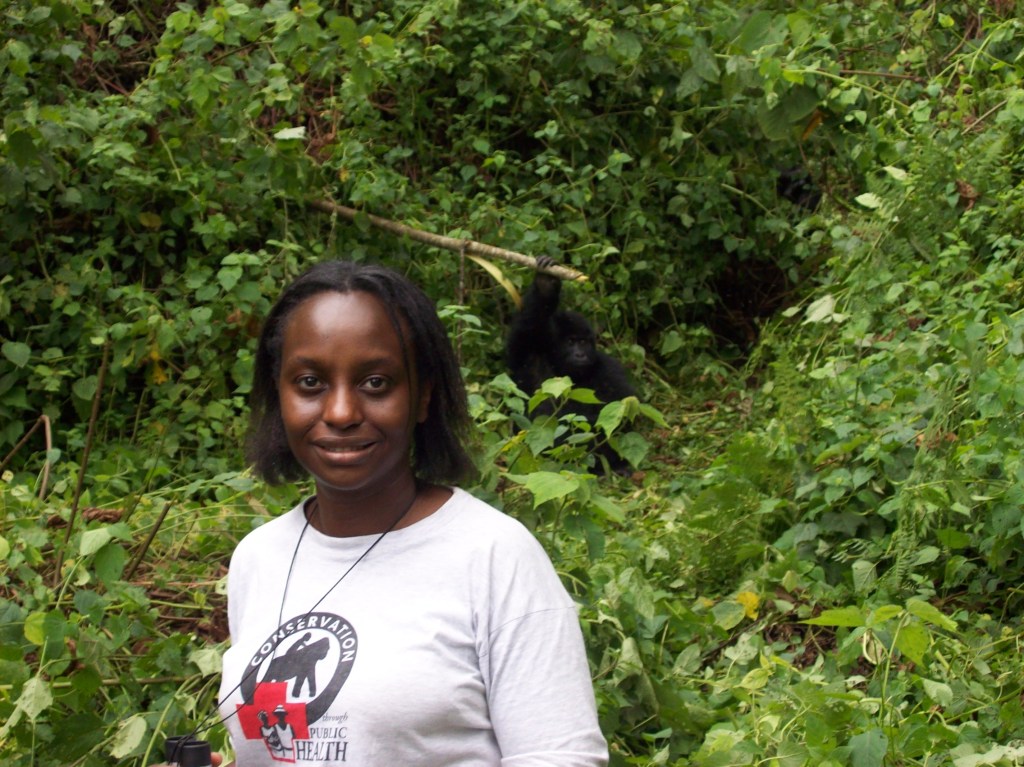
Today there are more Mountain gorillas being born than dying , a success story thanks to people like Dian Fossey, Dr Gladys Kalema-Zikusoka and the gorillas guides and rangers.
More on Bwindi’s gorillas, read Bwindi Impenetrable National Park
A 7-night flying safari from Murchison Falls to Queen Elizabeth National Park on the edge of the Ruwanzori Mountains and on to Bwindi shows the different facets of the Uganda. Contact Moonlion Safaris for a Uganda safari.
 Moonlion Safaris