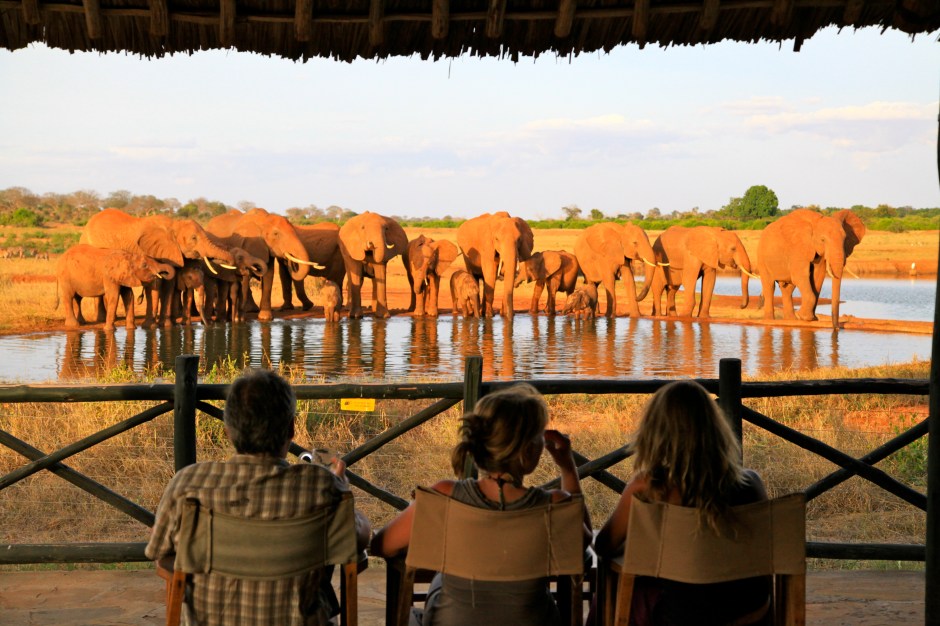
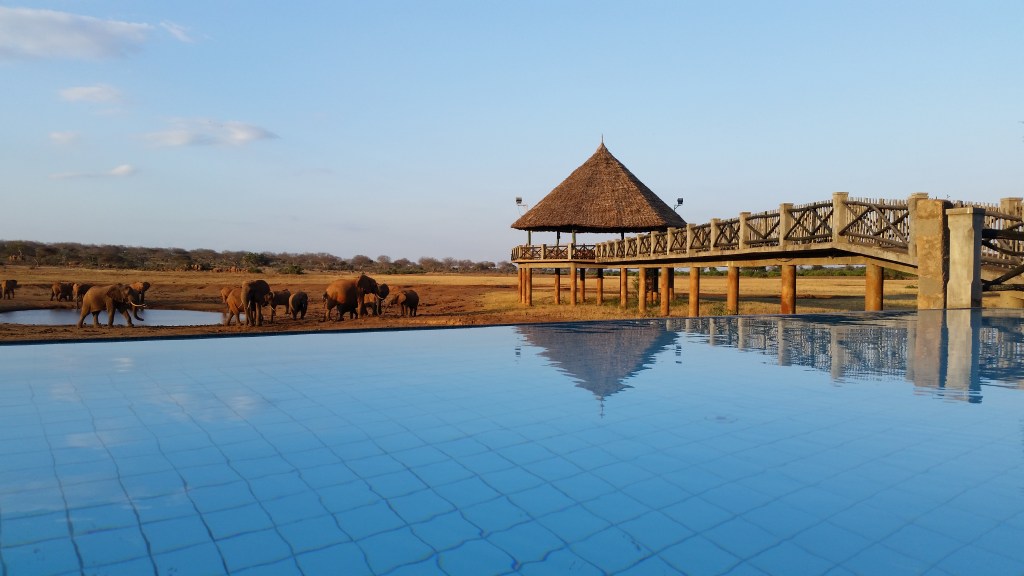
Above: Elephants at the waterhole at Voi Wildlife Lodge looking into Tsavo East National Park. Image courtesy.
Published: Saturday magazine in Nation newspaper 4 May 2024
The air is still and sun-baked. I take refuge under the shade of the banda staring into space that is the grandeur of Tsavo East National Park. It’s been 20 years since l sat in the same spot, with the solitary baobab for company at Voi Wildlife Lodge on the edge of the great park.
It’s opportune time to read the new edition of ‘The African Baobab’ by Rupert Watson, lawyer by profession and naturalist by choice. Every page l turn of the full-colour book on baobabs increases my awe of the tree.
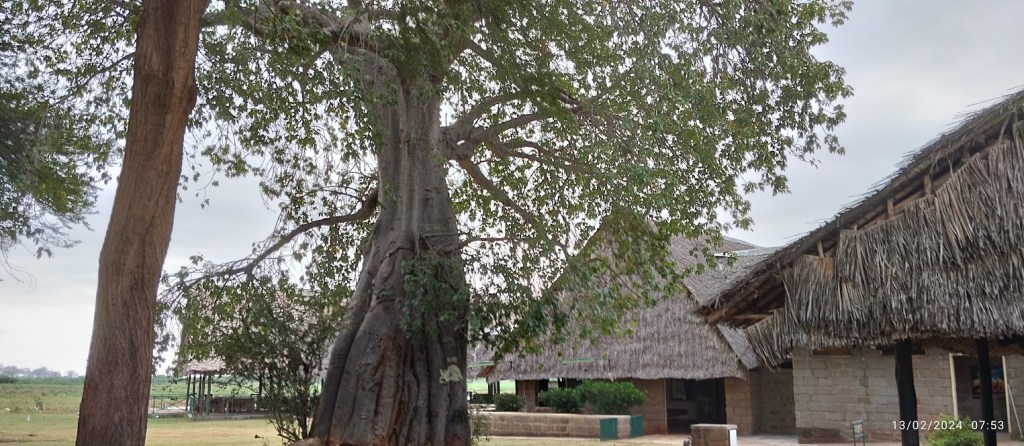
Watson writes, ‘For starters, baobabs are living monuments, the oldest natural things in Africa, outlasting every plant and animal on the continent… They survive in the driest, rockiest areas of the continent – yet for all the hostility of much of their habitat, African baobabs live longer and grow larger than most other trees in the world. That is the great paradox of their existence.’
I didn’t know that, and suddenly realize that The African Baobab is one of two books fully dedicated to this living monument, some well over 2,000 years and still standing sentinel on the savannahs.
For all its largesse, the baobab was only first described in the 18th century by Michel Adanson, a French botanist on an expedition in Senegal. He was so mesmerised by the tree that he wrote, “… the whole tree formed a forest in itself.” The African species goes by the name, Adonsonia digitata after him.
The baobab in front of me is young by comparison, about 300 years old.
Watson’s fascination with the baobab began sometime around 2005 when hiking along the Dogon Escarpment in Mali. In that barren environment, the locals use every single bit of the tree for food, fodder, ropes, and make lollipops from the white pith in the pods.
Baobabs need space, and Tsavo offers it to them. “They are not remotely endangered, but one is hard pushed to find young seedlings surviving anywhere, thanks to grazing pressure from livestock or wild game,” says Watson. And now, there’s further intrigue with the export of the baobabs from Kilifi to Georgia on the shores of the Black Sea!
A waterbuck arrives and takes refuge under the acacia. The elephants stay away because there is water in the park now. The only elephant we have in company is Lord Ganesha, the elephant-headed Hindu god of prosperity and wisdom overlooking the plains of Tsavo, despite some 12,000 elephants wandering around somewhere in the Tsavo, which makes for one-third of all the elephants in Kenya.
Again, as much as we think we know it all about the gigantic elephants, I’m fascinated to read one of the first accounts of an elephant birth in 1990 recorded in detail in Tsavo East by Dr Barbara McKnight in the African Journal of Ecology – and FYI, 30 years-plus, the lady is still studying the Tsavo elephants and founder of Tsavo Elephant Research.
She describes the birth: ‘There were 80 elephants including 8 bulls in a 150 m radius. A group of females and calves clustered together, a great deal of excitement rumbling and ear flapping. Two females – the one nearly to give birth and her ‘mid-wife’ walked to a nearby bush with the pregnant one leaning on the other, rubbing her head, face and truck on the other female’s back. The female gave birth standing unlike other elephant births. The male calf was standing and walking soon after and when he fell over sideways after a few metres, she helped him up, encircling her trunk around his body. She had to bring him back under her forelegs by encircling her trunk around him again.’
To see 80 elephants today in a herd is not a common sight, neither is a female giving birth. The more we learn about elephants (and other species) we realize, we are so alike. We have the same emotions of joy, pain, concern and helping. McKnight’s study on elephant behaviour focuses on family dynamics vis-a-vis environmental conditions and human activities.
Be at Voi Wildlife Lodge https://voiwildlifelodge.com/
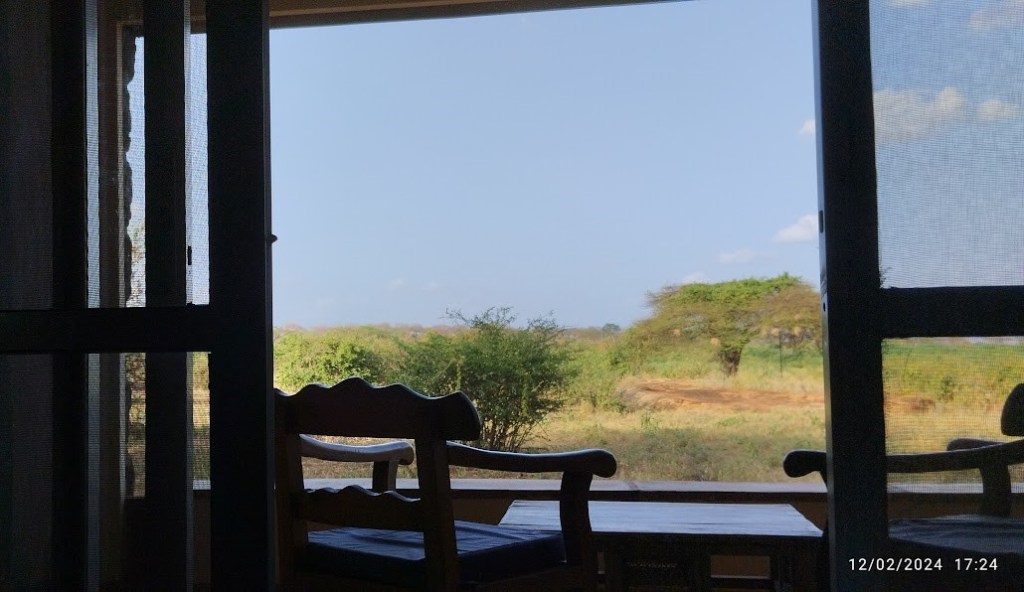
It’s an easy destination by car, air or the SGR. It’s affordable luxury – spacious rooms overlooking Tsavo East, child friendly, and for the physically-challenged, kitchen dedicated to vegeterians and the raised walk-way to watch the Tsavo’s tuskers and more at close range. You can then catch the train for a beach holiday at the coast.
It has a museum dedicated to the historical Uganda Railway, East Africa’s first mode of modern transport built between 1896 and 1901 without the use of any mechanised tools.
 Moonlion Safaris