Powerful and progressive, Kabalega defended his kingdom against colonial onset
It was the taxi driver who announced, “The royal tomb of Kabalega is here.” He brought the car to a halting screech when he realized l was serious about seeing it.
At that point Kabalega was quite unknown to me. I was whiling away days in Masindi visiting friends. With time on my hands and no intention of doing Murchison Falls – for now dubbed as the most powerful waterfall in the world – which l had visited in 2017, l was following in my late grandmother’s steps to Hoima. She gave birth in each of the three East African countries with the last born in Hoima in the 1940s.
Hoima was only 60 kilometres further west of Masindi and another 20 to Lake Albert, one of the African great lakes in the rift.
Published: The East African Nation magazine 20 April 2019
The fastest growing sector in tourism now is birding. With an estimated eight million American bird watchers looking for new vistas to fly to in search of the feathered kind, East Africa is a top destination. Then there is the rest of the world with a few more million birders.
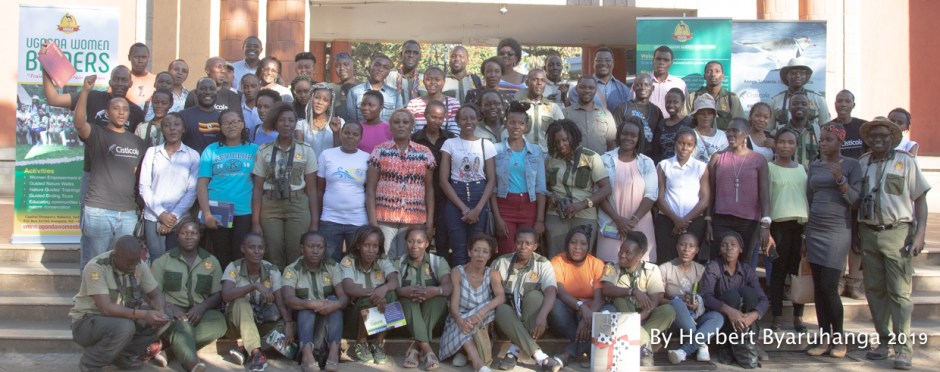
The Rwandans and Ugandans have tapped into this figure and are investing in training guides including women guides. Both countries have their respective chapters: launched Rwanda Women Birders and Uganda Women Birders in 2013 to draw in the other half of the population.
Following hot on the heels is Kenya with the launch of the Kenya Women Birders on 29 March 2019.
“The reason for launching a chapter for women is because despite having really top-rated women birders in Kenya, when it comes to bird guiding, there are very few,” explained Washington Wachira of Cisticola Tours who joined hands with the Uganda Safari Guides Association (USAGA) to kick-start the Kenyan women birders.
“Cisticola Tours will host the Kenya program to train professional bird guides. The plan is to have an East African group of women birders who can lead birding tour groups and research groups.”
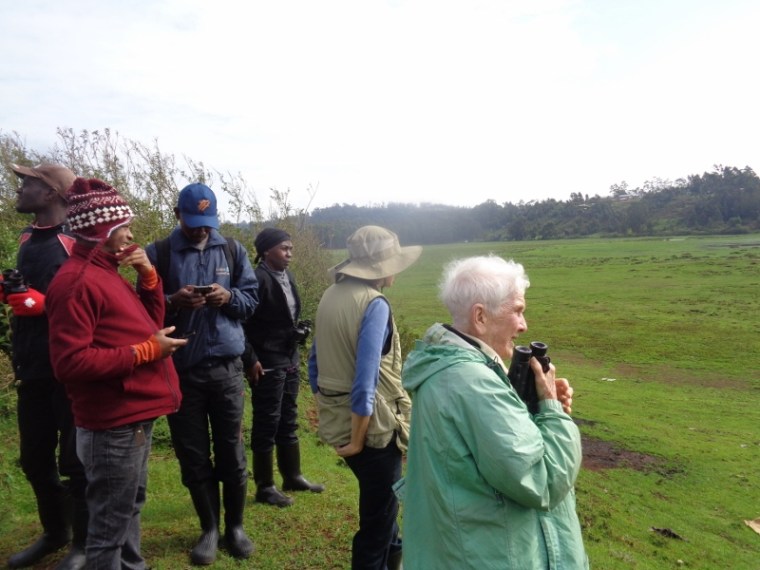
Fleur Ng’weno in green jacket who has started bird walks in Nairobi in February 1971 and still at it – Manguo Swamp March 2018 Copyright Rupi Mangat
Fleur Ng’weno the widely acclaimed top Kenyan woman birder was at the launch and honoured for her work in birding. At 80 she stills leads the bird walks every third Sunday of the month and the weekly Wednesday morning walks she has done since 1971 – 48 years ago. Almost every bird guide in the country has passed through Fleur’s ‘school of birding’.
Opportunities
“There are many opportunities that arise through birding,” quipped Fleur at the launch. “In Kenya, we now have Site Support Groups in many parts of the country.”
Site Support Groups under the umbrella of Nature Kenya (East African Natural History Society) are a spin-off from the bird walks in Nairobi. The local groups guide visitors and monitor the birds, rare and endemic like the Clarke’s weaver in Kilifi, Papyrus Gonolek along Lake Victoria’s shores and Grey crowned cranes at Lake Ol Bolossat.
“Birders come for many days in search of the birds they want to see,” remarked Herbert Byaruhanga of USAGA. Rare and endemic birds means patience and a stay of more than a night.
In Uganda, women birders now own tour companies, hotels and support community projects. “When you empower a woman, you empower the whole community,” remarked Lilian Kamusiime owner of Kigezi Biota Tours Ltd based in Kabale town which she started in 2013 and is a driver-guide herself. She was once a teacher.
“As a female tourist driver, yes I have encountered difficult moments like when I went to pick up seven clients from Kigali (Rwanda),” continued Kamusiime. “They were not expecting a lady guide – and they were all women from overseas.
“Anyway, it was the best trip ever for the clients. When they flew back, the leader wrote on her facebook for the 2018 International Women’s Day that I was among the best women to celebrate because I did my job as well as any other best male guide.”
Challenges
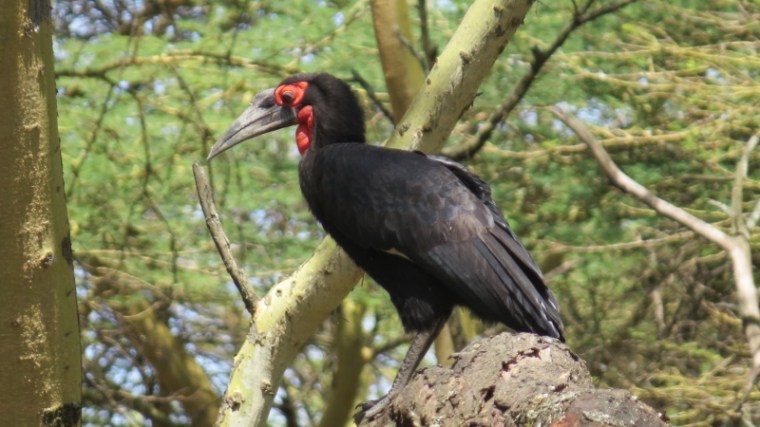
Ground Hornbill rarely seen on a tree at Lake Naivasha KWS ground Copyright Rupi Mangat
But the challenges are there for women. “I’ve had to deal with safari drivers who don’t take women guides seriously,” stated Jennifer Oduori, a protégé of Fleur and amongst the top rated bird guides in Kenya. “But you have to take a stand and show that you know what you are talking about.
“It’s the same in Uganda,” added Kamusiime. “Like most African countries, Uganda is also a male-dominated country and that was a factor why we as women had to unite to form the birders group for professional bird guides.
Research and Policy
Lilac breasted rolller Maasai Mara Copyright Rupi Mangat
African Grey Parrot -Psittacus erithacus timneh-, adult on tree, native to Central Africa and West Africa. Copyright: World Animal Protection
As an invited speaker – despite being really bad at identifying the feathered kinds – l love birding. And as a writer passionate about conservation and the environment, birds are indicators of the state of the environment. Policy makers must partner with researchers and use their data to inform the way forward on sustainable development. For when the last vulture vanishes, the crane crashes and the song bird silences, we know we’ve lost our swamps, forests, grasslands and rivers – the very ecosystems that we humans depend on.
The grand massif dominates the western skyline around Kitale. Superlatives describe it as the oldest extinct volcano in East Africa dated at 24 million years ago – much older than the 19,340-foot tall, three-million-year old Kilimanjaro that is Africa’s tallest.
With an eighty kilometre diameter, Elgon also boasts the largest volcanic base in the world. It would have once towered over Kilimanjaro but over millennia much of it has been eroded to leave behind dramatic bare faced cliffs and peaks with the highest, Wagagai at 14,177 feet in Uganda. Elgon now is East Africa’s fourth and Africa’s eighth highest mountain with a dramatic 40-square-kilometre caldera.
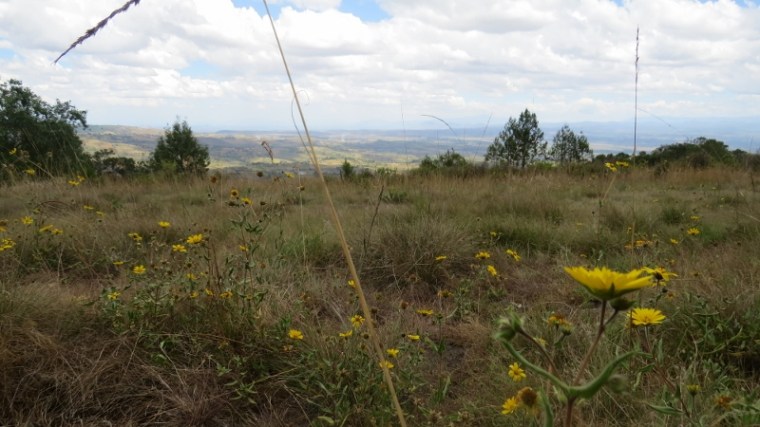
Wild flowers on Endebess cliff on Mount Elgon. Copyright Maya Mangat
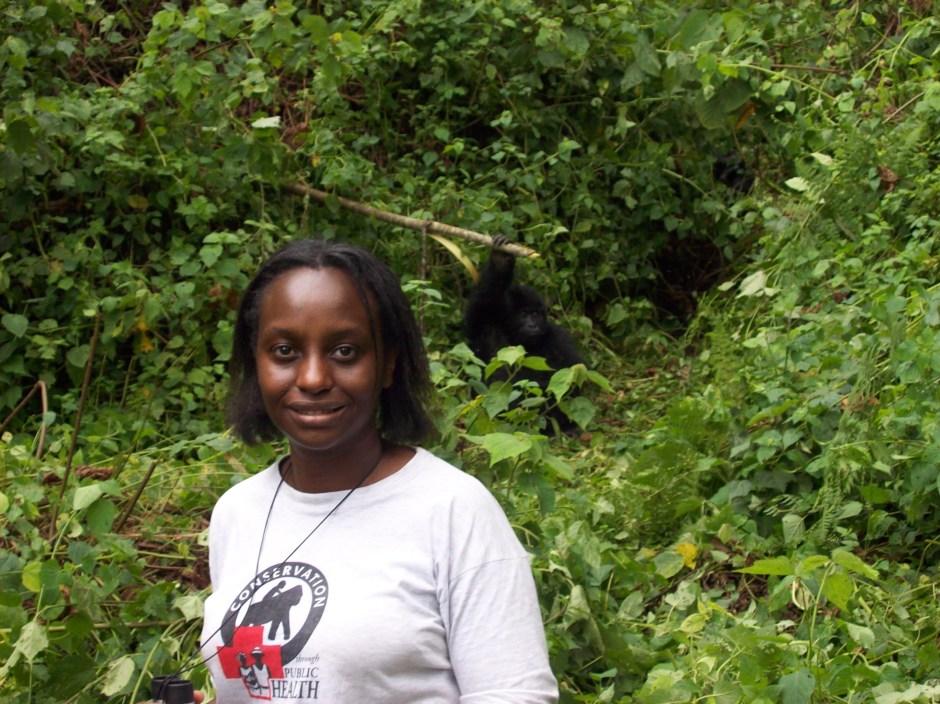
Above: Dr. Kalema-Zikusoka conducting gorilla clinical observation at Mount Tshiabirimu, DRC August 2008
Published The East African – Nation media 25-31 August 2018
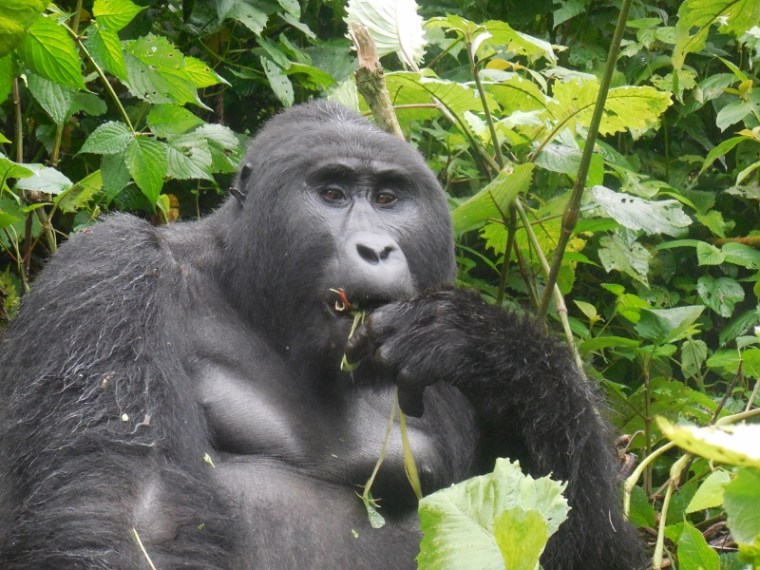
Kanyonyi, Silverback from Mubare Gorilla Group Copyright CTPH
Picture:Kanyonyi, 21 year old leader of Mubare group, died on December 9th 2017 after sustaining serious injuries during multiple attacks by a solitary silverback named Maraya. He was one of Dr Kalema-Zikusoka’s favourite gorillas.
Published 30 September 2017 Saturday magazine Nation newspaper
Above: Building from the early 1900s – Barclays Bank on Jinja main street
Copyright Rupi Mangat
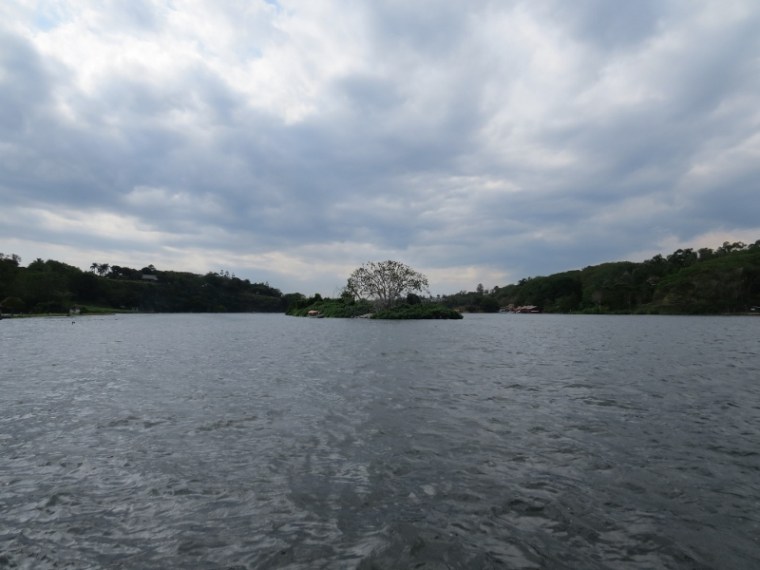
Source of the Nile at Jinja – copyright Rupi Mangat
“Speke passed on the Buganda side and standing on a rock by the river asked ‘what is the name of this river?’,” relates Captain Masanja of Jinja Sailing Club sailing us down the Nile from the mighty Victoria at Jinja, the quaint little town on the Ugandan shores – 90 kilometes from Kampala and 236 kilometers west of Kisumu on the Kenyan shores. Continue reading “Jinja on the Nile”→




 Moonlion Safaris