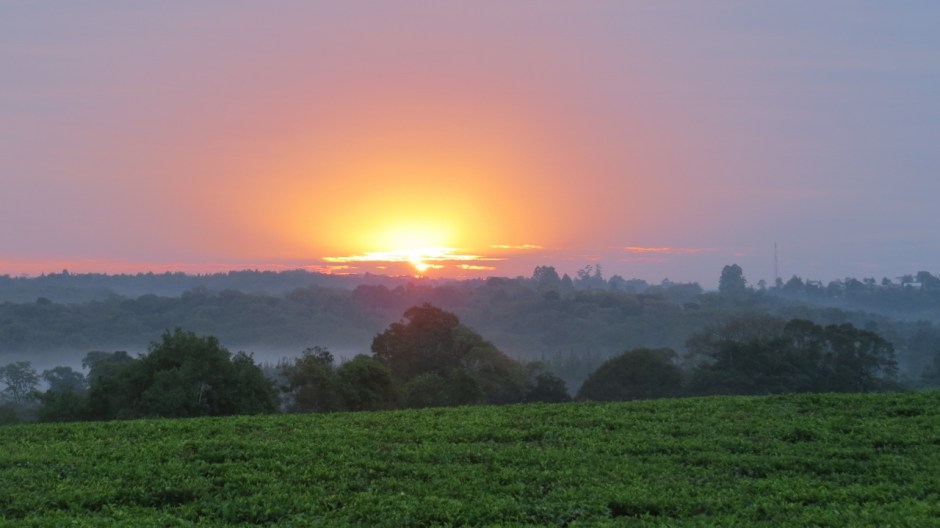
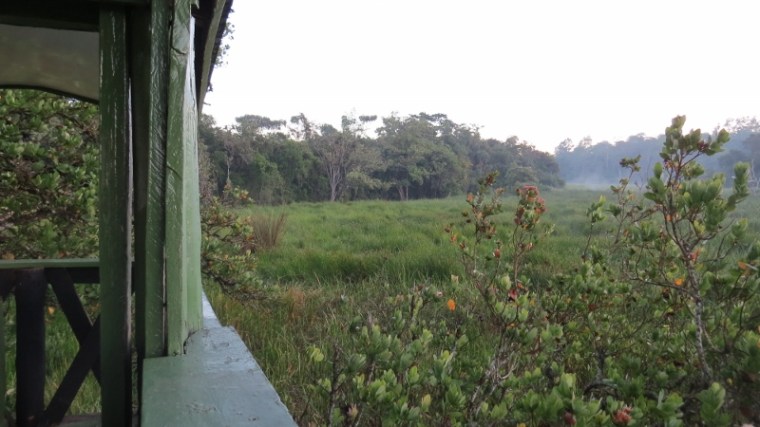
Above: Sunrise at South Nandi Forest surrounded by Nyayo Tea Zone at Kobujoi. May 2019. Copyright Rupi Mangat
It’s dawn. And magical.
In the first light, the rising sun illuminates the tea and forest-clad peaks of the South Nandi Forest as a white mist lifts languidly from the valleys. It’s so beautiful an image that we have to stop to take it all in. On the other side of the road that stretches from Kapsabet to Nandi Hills Town via Serem, the ancient rock-clad hills of Maragoli lines Lake Victoria that is Africa’s largest lake.
South Nandi Forest surrounded by Nyayo Tea Zone at Kobujoi. May 2019. Copyright Rupi Mangat.
Okay – here’s a brain teaser. What do you get when you cross a donkey with a horse? Answer: You get a smart ass! Actually, you get a mule.
“Mules are very tough animals,” explains Rosalie Faull who runs Samburu Trails, a trekking safari into the wilderness of the northern frontiers on donkeys and mules. A handsome chestnut coloured mule runs across the garden to join the others grazing with the pack of donkeys. “They are very sure-footed and with a western-style saddle, very comfortable to ride. It’s like sitting in a big arm chair.”
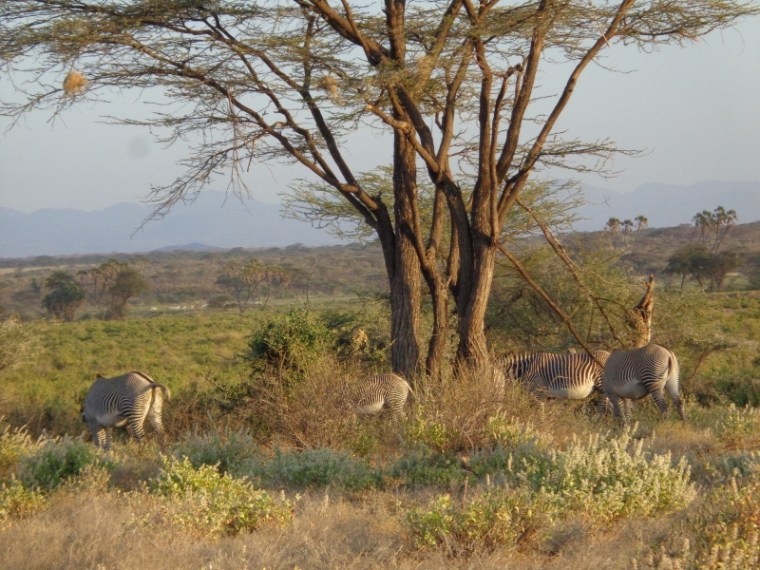
Grevy’s zebra in northern Kenya. Copyright Rupi Mangat
We’ve just driven in from Maralal, which disappears into the valley below as we drive up the high glades of Leroghi Plateau, the air cool and crisp, the rains turning everything a magical lush green, with old man’s beard hanging from the branches of the ancient podo and cedar trees, showing how pure and clean the air is. We reach Porro, a tiny Samburu hamlet that l’ve never heard of before.
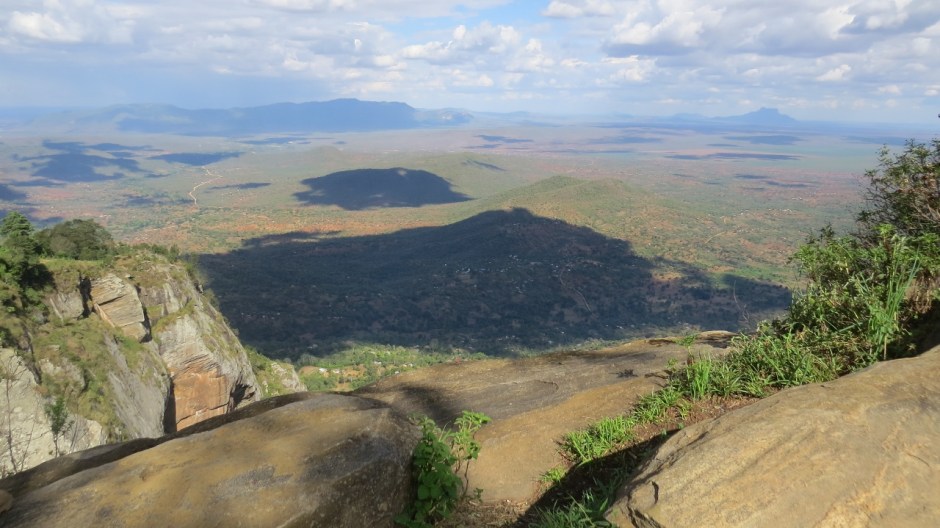
Above: Plains of Tsavo from the Mwachora Hill. Copyright Rupi Mangat
Published: 15 June 2019
The road from the peak of Ngangao that is part of the magical Taita Hills loops steep into the plains of Tsavo with amazing views of the solitary massifs of Sagalla and Kasigau. I’m taking a break from hiking to discovering the tastes and tales of Taita.
I’m full of respect for the pikipiki having reached Mwatate safely. It’s the town on the flat lands at the junction of the historical road that was action-packed during the WW1 fought between British East Africa (Kenya) and German East Africa (Tanzania).
Kasigau mountain from Mwachora Hill. The area was a battlefield during WW1. Copyright Rupi Mangat
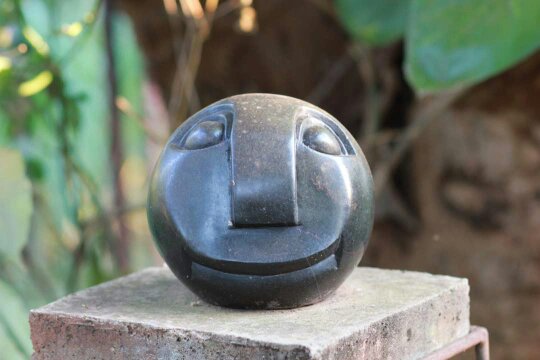
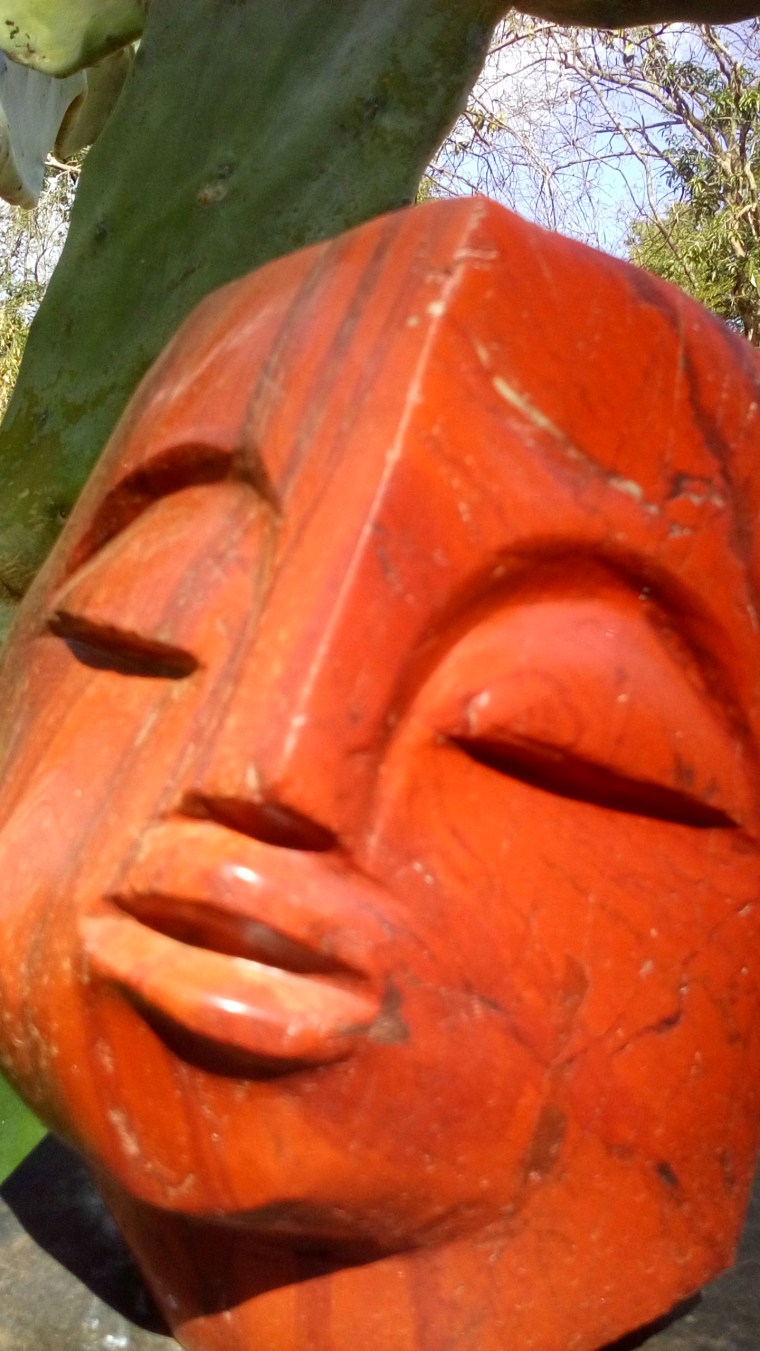
Above: Stone Sculpture from Zimbabwe. Courtesy: Carola Rasmussen
Published: 4 May 2019
Tucked away near Malindi’s powdered white beaches and tropical blue waters that are more famous for sun worshippers and ocean sports including all the sharks, whales and dolphins that swim by, l’m in a garden that’s an open art gallery of the most amazing sculptures from Zimbabwe. Strolling around l learn more of the country and its art.
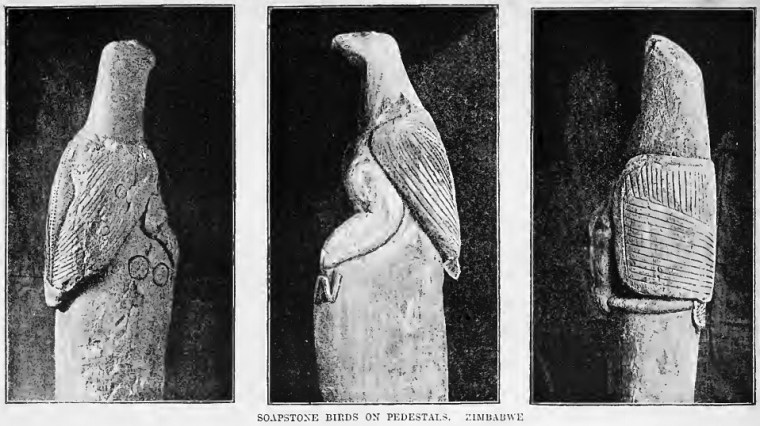
The most famous of Zimbabwe’s stone sculptures are the Zimbabwe stone birds that are the country’s emblem.
Soapstone birds on pedestals by James Theodore Bent
House of Stones
“Zimbabwe is the Shona word for ‘house of stones’,” tells Carola Rasmussen, a former journalist turned art collector where her garden gallery in Malindi is called Ndoro showcasing more than 300 stone sculptures.
“Ndoro (in Shona language) is a spiral sea shell that washes up on the East coast of Africa. It’s grinded flat. Local women healers wore it on their forehead,” explains Rasmussen. It was also worn by chiefs, their wives and daughters as symbols of authority.
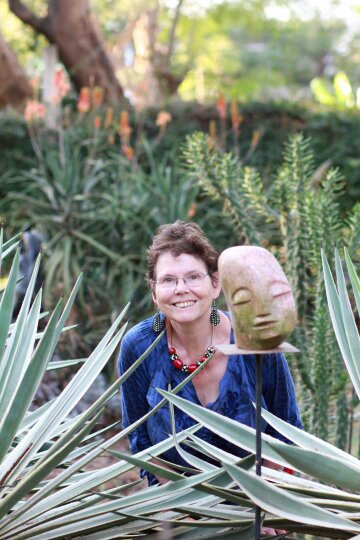
Carola Rasmussen at Ndoro in Malindi
“When the Portuguese came in the 16th century, they noticed the ndoro. They then made them in porcelain back home and returned with them to exchange them for gold, ivory and other items. Today they are collector’s items.”
Her collection of stone sculptures has many pieces from the first generation of 20th century Zimbabwean artists, none of who had any formal education in the arts which makes their work even more intriguing. They are based on local legends and the spirit work.
Legacy
Zimbabwe’s stone sculptures date from 500 years ago.
The most famous of these are the Zimbabwe birds found in the ruined city of Great Zimbabwe built in the 11th century and inhabited for the next 300 years. When first reported to the outside world in the 16th century by the Portuguese explorer Joao de Barros, it was one of the world’s most extraordinary finds that still baffles many.
The elaborate stone buildings were built using no cement.
The Zimbabwe birds were only seen in the city by a European hunter, Willi Posselt in 1899 and many taken away. They were positioned around an altar in the centre of an enclosure.
Post- Colonial Stone Sculptures
Contemporary Zimbabwe stone sculptures: Carola Rasmussen at Ndoro in Malindi
In contemporary times, the sculpture movement also known as the Shona sculpture movement took the art world by storm because critics and art collectors could not understand how this art had emerged in an area that was seen as artistically barren unlike the great sculptural heritage of West Africa. The emergence of the Shona sculpture movement was coined an art renaissance and a phenomenon.
During Mugabe’s regime the art world suffered but now a younger generation of artists hopes that foreign gallery owners and tourists will return.
I never imagined l would learn so much about Zimbabwe in Malindi but art is universal. So enjoy your days exploring Malindi besides enjoying its tropical beaches and warm ocean waters, scuba diving, snorkelling and exploring historical sights.
A Dozen and more things to see in Malindi Town
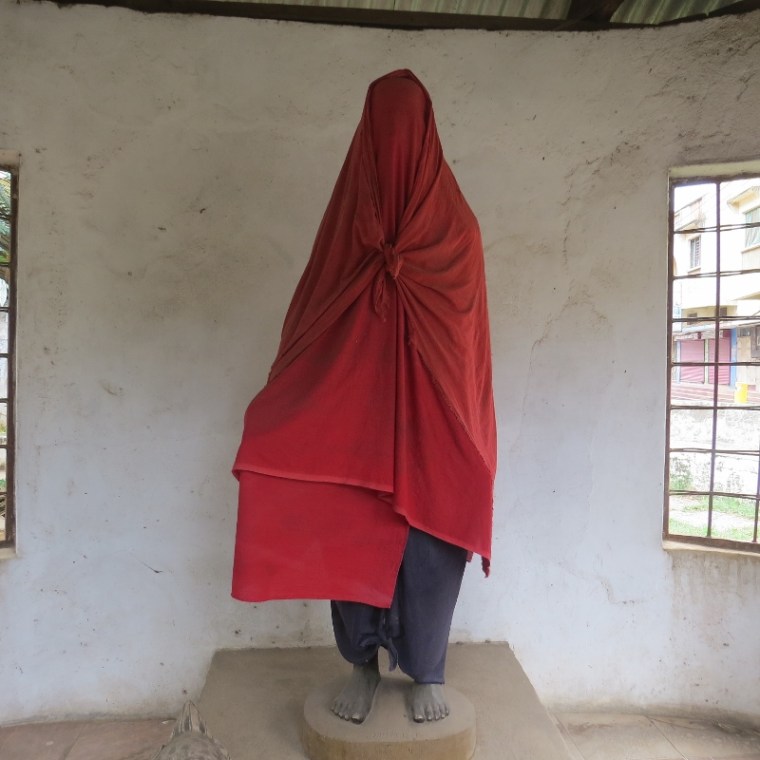
Mekatilili wa Menza, the fiery crusader against colonial rule. Statue in Malindi town square Copyright Rupi Mangat
Statue of Mekatilili wa Menza, the fiery heroine who led the Giriama community in a rebellion against British colonial rule in 1913-1918. She died in 1924 and was buried in the Dakatcha woodlands outside Malindi. Dakatcha woodlands is home to Hell’s Kitchen, a series of eroded gulleys and home to rare birds like Clarke’s weaver and the Sokoke scops owl.
Henry the Navigator’s monument
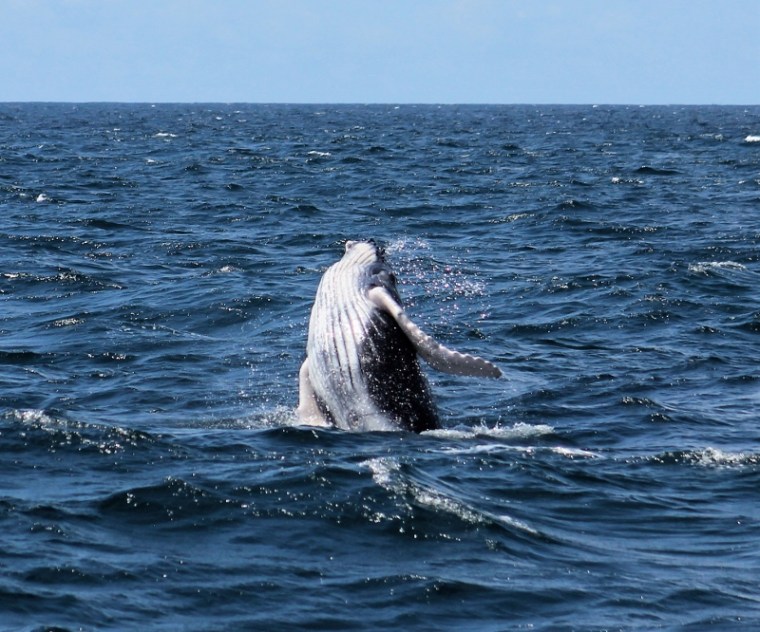
Humpback whale in Watamu, Kenya coast, Indian Ocean, doing its back flip Copyright Jane Spilsbury/Watamu Marine Association
It’s on the grounds of Malindi National Museum. It was unveiled in October 1960 by the Portuguese consul in Mombasa to honour the prince 500 years after his death in 1460. The monument also honours the Sultan of Malindi and Ahmed Ibn Majid, the local Malindi marine pilot who navigated Portuguese explorer Vasco da Gama on the sea route to India.
Vasco d Gama pillar and the quaint makuti-thatched Portuguese Chapel commissioned by Vasco Da Gama the Portuguese explorer in 1498 on his epic voyage to India via Malindi. He was the first European to do the route.
The century-old House of Columns near the church that served as a palatial home, hospital and museum and now a library.
Malindi Sea Fishing Club – Malindi is the best place for deep sea fishing. The season runs from July till March. It’s one of the few spots in the world where anglers can try their hand at a Grand Slam (three different billfish a day), a Super Grand Slam (four different billfish in a day), and a Fantasy Slam (five different billfish species in one trip). The billfish are Black, Blue and Striped Marlin, Sailfish and Broadbill Swordfish.
Best Beach – stretching all the way to the Sabaki River and the towering sand dunes of Malindi.
Malindi Golf Club – a charming club by the seafront with a rare cycad and baobab by the fairways.
And you’ll discover the mountain shared by Kenya and Uganda, rare wildlife and wild plants plus a bit of history in the struggle for freedom
Above: Mount Elgon. Copyright Maya Mangat
Published: The East African magazine – Nation media 6 April 2019
Western Kenya’s most famous landmark is Victoria the great African lake shared by three countries – Kenya, Uganda and Tanzania. Huge like an inland sea, the world’s second largest freshwater lake was unknown to the outside world except for the Arab slave traders who kept the route a secret and told little of the lake. Then came the tide of change and European explorers smitten with the Nile’s origins coursed the land and in 1858 John Hanning Speke standing on the lake’s shores near modern day Jinja and took a guess to state it as the Nile’s source.
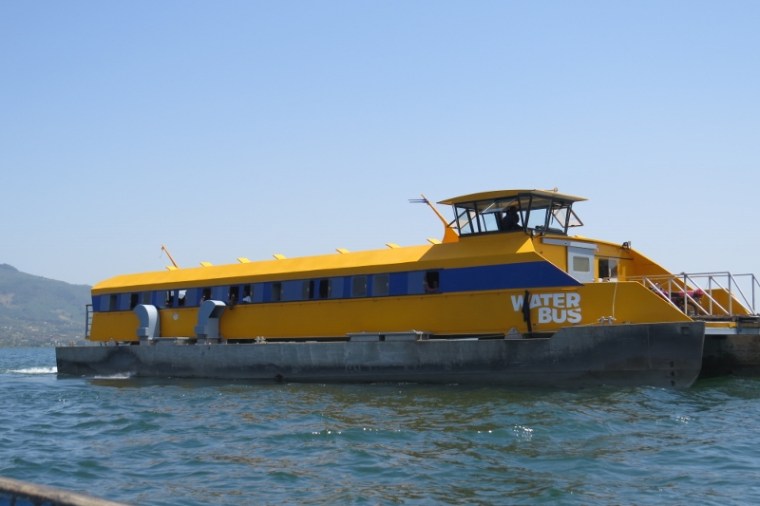
The waterbus, Lake Victoria. Copyright Rupi Mangat
But apart from this African great lake that the locals of the time called Nyanza, there’s interesting stuff up north. Like the great big mountain that straddles Uganda and Kenya. If you get to the caldera, you can have a foot in each country. Ancient and weathered – this extinct shield volcano is dated 24 million years (whereas Lake Victoria is only half a million years old) but stunningly chiselled by the winds of so many centuries.
Views from Elephant Platform – Mount Elgon. Copyright Maya Mangat
It’s a great mountain to explore if you’re into hiking, nature and all that. Or if you just want to see something new. The two famous landmarks on the mountains are the elephant-chiselled tunnel called Kitum. These amazing tuskers come to scratch out the salt in the walls of the tunnel. However a few years ago huge boulders tumbled down and blocked part of the entrance. When l first wandered into the pitch dark cave 20 years ago, it had a huge mouth. But there’s still some space left for you to walk in – better with a guide and a strong torch. A waterfall guards the entrance and you can wander down the nature trail.
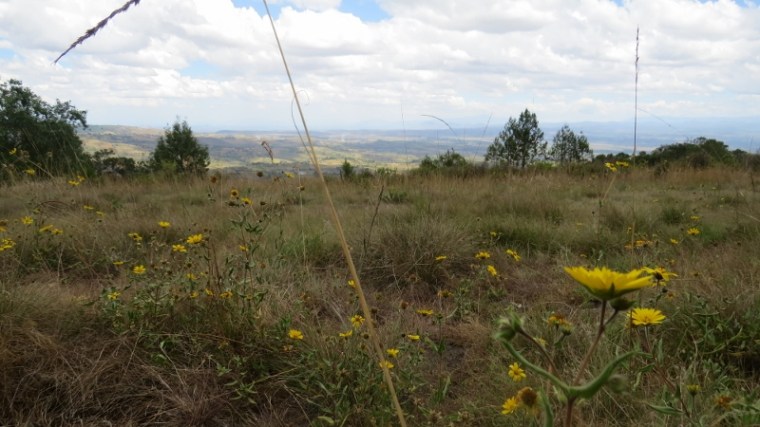
Wild flowers on Endebess cliff on Mount Elgon. Copyright Maya Mangat
Like l said don’t rush your trip to this mountain because if you’re really energetic you have to get to the caldera and Koitobos a flat-topped basalt column which is the highest peak on the Kenyan side at 13,852 feet. Any reasonably fit person can do this hike from last driveable spot – it’s six kilometres up along mountain plants like groundsels and lobelias including those with the ‘only found on Mount Elgon’ tag. Botanists will love this.
Saiwa Swamp National Park
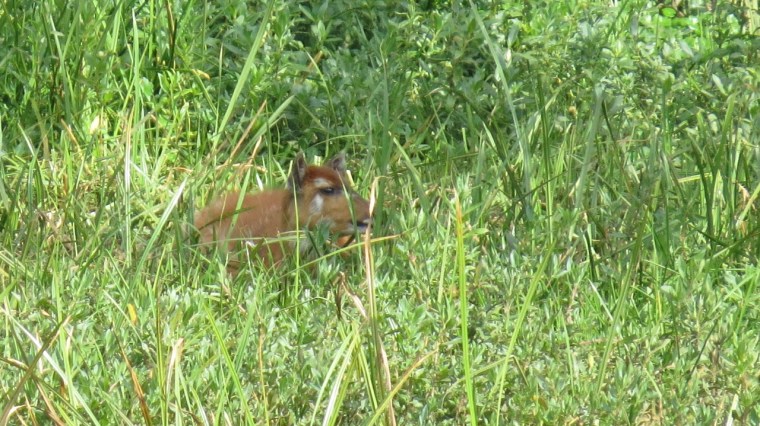
Sitatunga in Saiwa Swamp National Park. Copyright Maya Mangat
Once off the mountain, drive up north to Kenya’s smallest national park that’s just a swamp but not just any swamp. Measuring 2.9 square kilometres, it’s home to the very endangered swamp-loving antelope called the sitatunga. Some 70 years ago, it was found in the swamps lining Lake Victoria and the rivers that flowed in (Kagera from Rwanda and Nzoia) and out of it (i.e. the Nile). With its water-resistant coat and played out hooves, it lived a pretty comfortable life until swamps got cleared (and hunted for the pot) that it found itself without a home – save for Saiwa in Kenya and a few other glades. Spend a night in the park and you’ll be nicely rewarded with a sight of the swamp antelope. During the day, it hides in the thickets so you may not see any. And you can treat yourself with a night in the tree house above the swamp – increasing your chances of spotting the sitatunga.
Sitatunga Tree House in Saiwa Swamp. Copyright Maya Mangat
Saiwa Swamp. Copyright Maya Mangat
Camp ground at Saiwa Swamp. Copyright Maya Mangat
Kapenguria
Done with the swamp, drive on north some 40 minutes on a good tarmac road to this once little-known tiny dot on the map which was perfect for the colonial government to send its wayward charges for trials far from the masses. It shot to fame for the trial of the Kapenguria Six – that is Jomo Kenyatta, Bildad Kaggia, Kungu Karumba, Fred Kubai, Paul Ngei and Ramogi Achieng Oneko who were held here and put on trial in 1952/3. The cells of the freedom fighters are part of the museum including documents of the trial. The galleries show the Pokot people’s culture – and forest snakes like the Gabon and rhinocerous vipers.
The shujaa (heros) cells with the names of each occupant on the door at Kapenguria Museum. Copyright Mayai Mangat.
Cell of the foundating father – President Mzee Jomo Kenyatta at Kapenguria Museum. Copyright mayai mangat
Rhinoceros viper, Kakamega Forest. Copyright Julia Fulcher
The shujaa (heros) cells with the names of each occupant on the door at Kapenguria Museum. Copyright Mayai Mangat.
Cell of the foundating father – President Mzee Jomo Kenyatta at Kapenguria Museum. Copyright mayai mangat
You have the option to drive back and get to Kakamega forest which is the only bit of an ancient rainforest left in Kenya and treat yourself to a few nights at Rondo Retreat and then continue to Kisumu on the shores of Lake Victoria.
On Cherangany hills road looking at Turkwel Dam in the distance. Copyright Mayai Mangat
Or drive further into the northern frontiers along the Cherangani Hills that winds its way along the Morunyi River and spend a couple of days at the Maarich Pass Field Study Centre. There’s tons to do from here like hiking up the hills and watching the Pokot pan for gold.
And if you’re really up to it, get to the world’s largest permanent lake in a desert – Lake Turkana. The thing is that it’s 250 kilometers long and the north east is totally different from the North West while the southern end is again different.
Words of Wisdom
For accommodation log on to the Kenya Wildlife Service. It has comfortable guest houses and campsites in the parks. Carry your food and camping gear. Campers will also enjoy Barnleys Guest House north of Saiwa. Drive a good four-wheel drive car, have your ID card on you otherwise you can’t enter the parks…and enjoy your road trip.
Nyati campsite – Mount Elgon Copyright Maya Mangat
Kapkuro cottage on Mount Elgon. Copyright Maya Mangat
The tallest tree – Antiaris toxicaris is where Africa’s mightiest raptor the African Crowned eagle nests at Rondo Retreat Kakamega Forest. Copyright Maya Mangat
Don’t limit yourself to this – it’s only a nudge to get you exploring.




 Moonlion Safaris