Published: The East African Nation media 26 October 2019
I stared at myself in the mirror, transfixed and let out an audible gasp. The beaded collar copied from the Egyptian queen dating more than 4,500 years, adorning my skin was the single most beautiful thing l had ever worn. It held me mesmerized, entrenched and enchanted me into the world of beads, that l had until hereto little interest in.
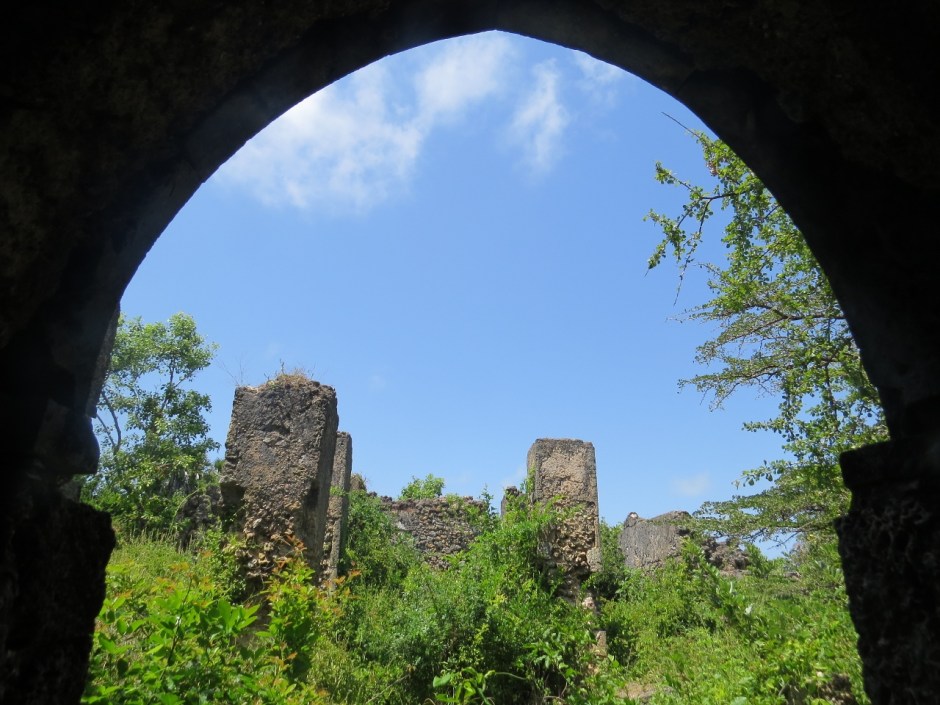
Above: From the arch of the mosque near Fumo Liyogo’s grave near Kipini on the tip of Tana Delta – Rupi Mangat
Published: Saturday Nation magazine 16 November 2019
It’s a quiet brook at Kalota on the tip of the delta that is Kenya’s largest, the Tana. It’s here we hop on to the boat belonging to the Ozi Community Conservation Area that is supported by Nature Kenya, the country oldest natural history society started in 1909 by like-minded naturalist.
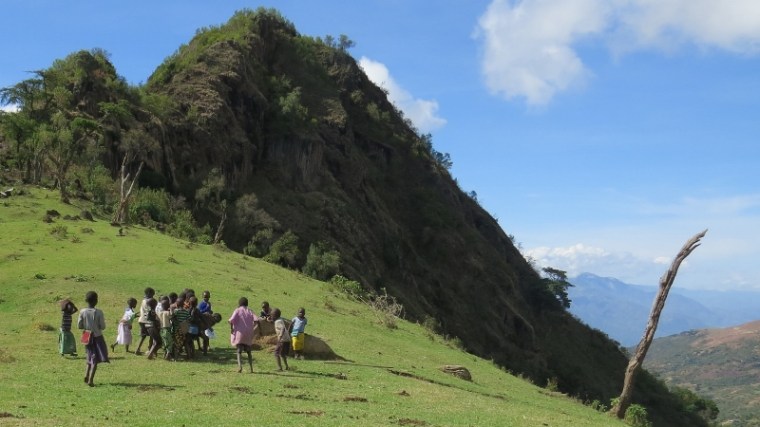
I’m sitting on the saddle of the Sekerr mountain range between the peaks of Katugh and the rest: Kaimut, Chaichai and the famous Mtelo that is the peak and the fifth highest point in Kenya at 10,944 feet. It is also the sacred mountain of the Pokot and all face the mountain when praying.
Pokot kids playing football on the ridge of Sekerr Hills between Kaitugh and Mtelo. Copyright Rupi Mangat
Above: Island forests on Mathews Range in the drylands of northern Kenya. Copyright Luca Borghesio
Part 2 of 3
A little-known mountain range with one of the least disturbed forests in north Kenya makes for exciting long term research in forest dynamics
Dynamics of the Forest
“People tend to think of forests as never changing,” continues Borghesio. “But forests change a lot and quite fast.”
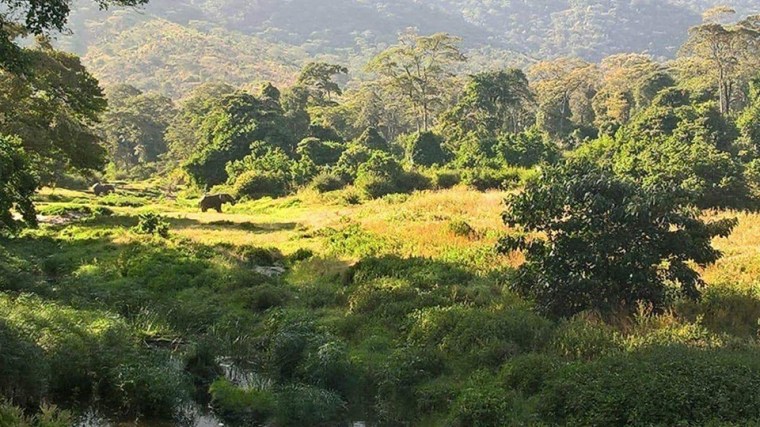
Elephants on Mathews Range. Facebook: Kitich Forest Camp
Sunlight pours through gaps created by ancient trees crashing at the end of their life span bringing down other trees with them. Voracious safari ants march through the litter of leaves and dead trees munching them into fine particles. Elephant dung shows a healthy population but the black rhino – the last known free ranging ones of the north died out in the late 1990s. Its calcium-white bones lie quietly in the forest glade. “A century ago, this was more open because the elephant and rhinos ate the bush. There are reports of 20 rhino seen in a day. With the demise of the herbivores, the land that was much more grassland is more bush now.” The cyclic change of forest reverting to bushland and opening into grassland for smaller herbivores and back to forest in tandem with the ancient movement of the elephant migrations is an ancient cycle.
Borghesio begins his narration of the forest with a time in the distant past, when the forest was much more open than now, stimulating the germination of light-demanding trees such as Cordia and Croton. More than a century later, these trees have grown to remarkable sizes. “Based upon this, we can speculate that the forest at that time was kept more open by higher densities of wildlife,” he says.
Soaring to the heavens, the towering croton trees seem healthy but for the scientist and his team of field assistants and Samburu aides, they recognize the signs of stress and the major die-back caused by the drought of 2009. “The trees survived the drought but in the following years we saw the death of large trees at a rate above the normal. The effect of drought can go on for many years,” continues Borghesio.
The stretch of Mathews range. Copyright Rupi Mangat
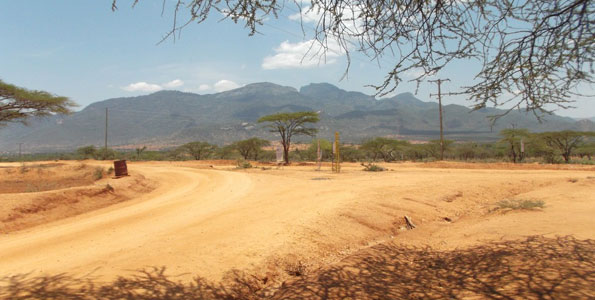
Drought is nothing new in this part of the world for northern Kenya is mostly arid with little rainfall. “There were droughts in 2004, 2009, 2010 and 2011. What we’re seeing is increasing droughts in the last ten years whereas prior to that the droughts occurred once every ten years.”
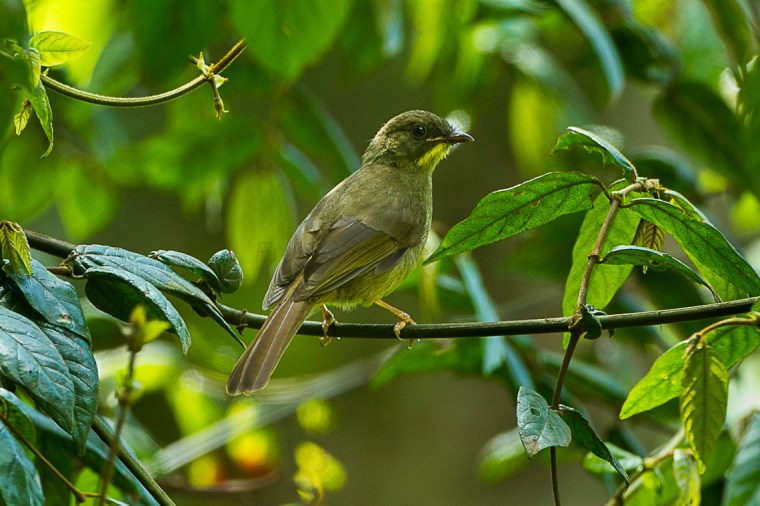
Lawrence Wagura the field assistant carefully untangles a Yellow-whiskered Greenbul from the mist nest to record the ring around its tarsus. From the data over the last six years, its numbers have been fluctuating. The data from the many species of birds give an interesting insight to the happenings in the forests.
Yellow-whiskered greenbull by Francesco Veronesi
“Frugivores like Yellow-whiskered Greenbuls numbers will fluctuate from year to year depending on the fruit availability,” explains Borghesio. “These are not new birds because we’re seeing them after two years which indicates that these birds don’t die but move through the forest. But for the Abyssinian ground-thrush that’s very territorial and moves little inside the forest, things are tough showing an 80 per cent decrease in eight years. On the other hand, the insectivorous Blue-mantled Crested Flycatcher is a strict forest bird which during the drought moves higher up the mountain to the forest. But what we’re seeing now are non-forest bird species increasing in numbers like the Grey-backed Camaroptera, a widespread bird outside the forest whose population has increased following a series of droughts.
“Some bird species will increase and others will decrease depending on the forest changes. A five-year frame gives us some perception of the changes while a one-year frame is a static picture of the forest,” reflects the scientist. “What we don’t know is if the demise of species and increase of others are long or short term changes. Will there be a demise of species with recurrent droughts?” he ponders.
The vastness of Mathews Range – Facebook Kitich Forest Camp
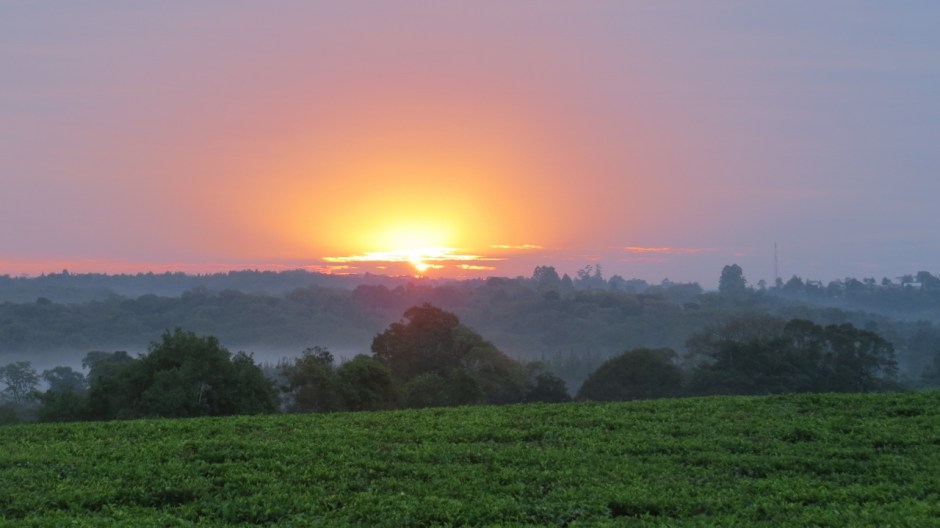
Above: Sunrise at South Nandi Forest surrounded by Nyayo Tea Zone at Kobujoi. May 2019. Copyright Rupi Mangat
It’s dawn. And magical.
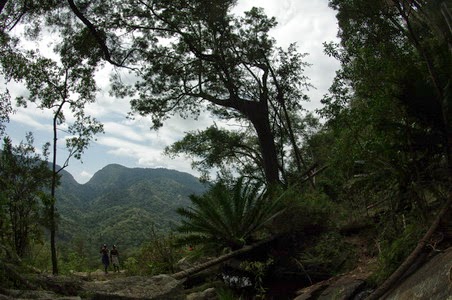
In the first light, the rising sun illuminates the tea and forest-clad peaks of the South Nandi Forest as a white mist lifts languidly from the valleys. It’s so beautiful an image that we have to stop to take it all in. On the other side of the road that stretches from Kapsabet to Nandi Hills Town via Serem, the ancient rock-clad hills of Maragoli lines Lake Victoria that is Africa’s largest lake.
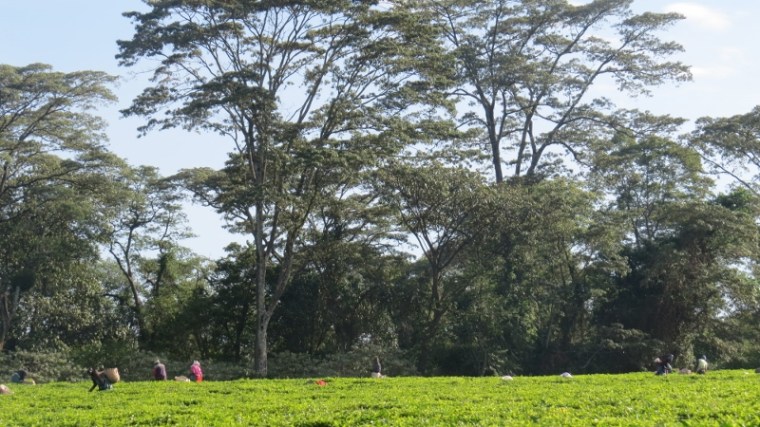
South Nandi Forest surrounded by Nyayo Tea Zone at Kobujoi. May 2019. Copyright Rupi Mangat.


 Moonlion Safaris