Culture: Samburu heritage preserved in new museum

By Rupi Mangat

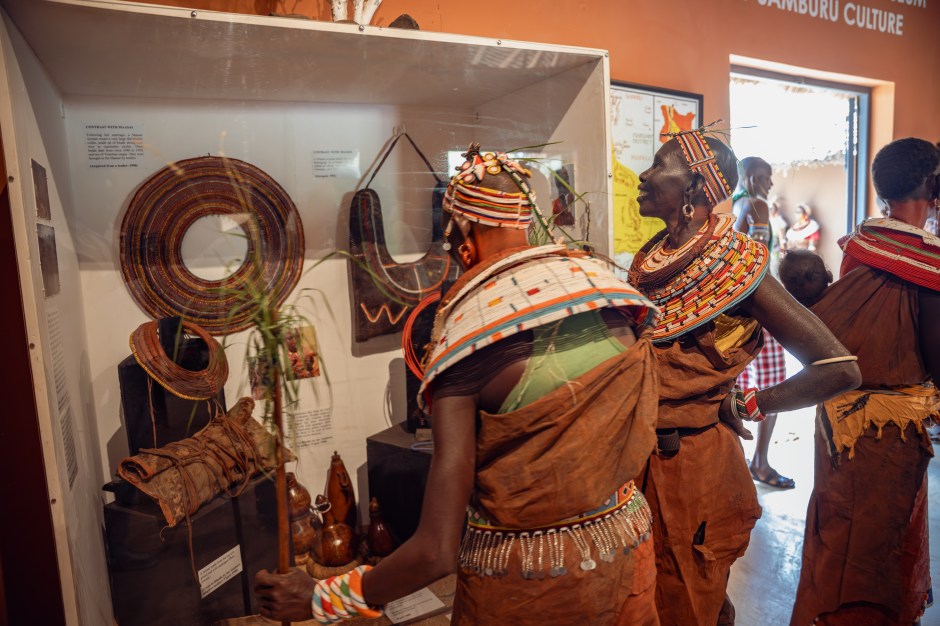
Above: Samburu women admiring all things Samburu during launch of the Rhodia Mann Museum of Samburu Culture at Sasaab Luxury Camp- Image by Klein Nettoh

It’s a day of celebration with the Samburu elders blessing the ceremony, the women dressed in traditional regalia of beaded necklaces singing songs of praise and the morans dancing with high leaps and deep-throated beats.
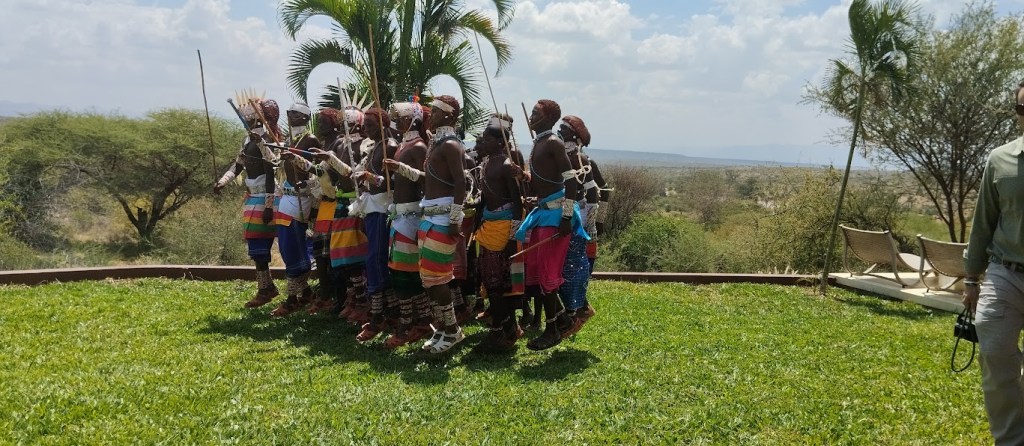
Samburu morans dancing at the opening of the Rhodia Mann Museum of Samburu Culture at Sasaab. Picture: Rupi Mangat

“This is a moving day for me of a story that began when l was nine years,” tells Rhodia Mann her voice emotional as she begins the story of how the Rhodia Mann Museum of Samburu Culture came into being.

Inaugurated on 5th December 2025 at the Sasaab Luxury Tented Camp in Westgate Conservancy in the heart of Samburu land, it is Rhodia’s collection of all things Samburu collected over a span of six decades.

It houses 60 artefacts, 150 photographs and pages of maps, diagrams, charts and text that were transported from Nairobi in a seven-ton truck filled with 53 crates to Samburu, the land where it all came from. “I had to give it all back because it rightfully belongs there,” tells Rhodia, now in her 80s.

Standing by the museum that is the only one of its kind in the world that houses the Samburu culture, Rhodia continues her story. Dressed in an earth-red shirt and pants, now increasingly frail with an autoimmune condition, she’s still feisty and here to see the museum come to life – a collection she put up in four days with her eye to detail.

The Start of the Journey

“My father brought me to Maralal,” narrates Rhodia to a rapt audience against a backdrop of ancient rocks weathered in time over a span of 25 million years that once stood taller than the tallest mountain Kenya that’s dated at two million years.

Born of immigrant parents – her Polish father Igor and Romanian mother Erica who fled the Nazi regime in the second world war – she grew up in a house full of intellectuals, artists, writers and political activists from around the world. Her father was a veterinary doctor and became the world authority in parasitology and her mother, Nairobi’s earliest town planner commissioned to plan the largest city between Cape and Cairo of 250,000 people, recalls Rhodia.

Her father being a vet in the colonial regime was posted to the northern lands to develop the livestock industry at a time when it was closed to the outside world and deemed dangerous. On many of these forays into the north, he was accompanied by his wife and daughter.

On her first safari, Rhodia remembers. “I was at a Samburu manyatta and everyone was all over me. I was the first white child the Samburu had seen. I was totally admired and pampered and by the end of the visit, I was completely covered in ochre and dust. But it was the happiest day of my life.

“The provincial administrator then drove us to a point and asked me to close my eyes. He guided me a few steps and then asked me to open my eyes. What I saw was the most beautiful sight. I was standing at the edge of the Great Rift Valley at a place called Losiolo and I had the whole world spread below me. I wrote about it in my diary.”

Fast Forward

School took over and then further studies in New York in fashion design and business administration. Marriage followed with a bitter divorce where she fought for custody of her two sons – and lost.

While in the US, her father sent her beads from Afghanistan. “I strung the first ones into a necklace for myself but when a friend saw it, she asked if she could by it. Off my head, I quoted USD 60 and she paid. At that time (in the 1970s) it was a lot of money.”

It was the beginning of Rhodia’s jewellery business that saw her travel to remote and far-flung places like Ladhak, Mongolia, Pakistan, India, Bali and more, buying beads to fashion into unique pieces of jewellery with sold-out exhibitions in high-end galleries like on Madison Avenue.

Returning Home

In 1981, Rhodia returned home to Kenya never to return to the US. At a loose end on what to do and with no money, she discovered a bead shop in downtown Nairobi selling old beads.
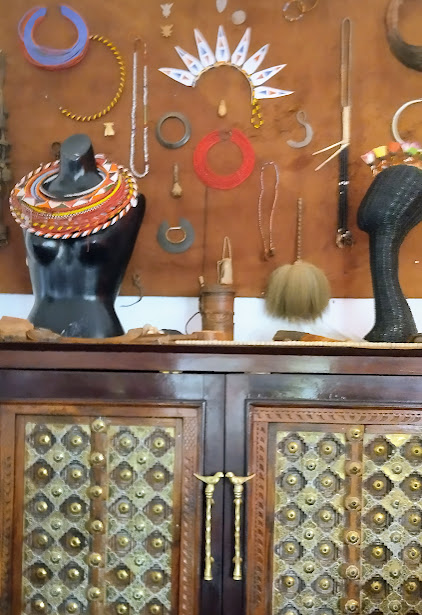
Collection of Samburu jewellery in Rhodia Mann private collection. Image by Rupi Mangat

“I started designing jewellery again with beads available here and began travelling the world again.”

When Rhodia talks beads, she’s talking about beads bought from local people, nomads, refugees like in western Tibet fleeing from Chinese invasion. They are selective pieces of historical significance in today’s industrial age of mass manufacture.

And then one day she chanced upon her childhood diary that her mother had kept. In it she had written about a dream when she was 16 of standing at the same place as a nine-year-old at the edge of the escarpment at Losiolo.

To Follow the Dream

The discovery of her childhood diary was the cue to return to Samburu.
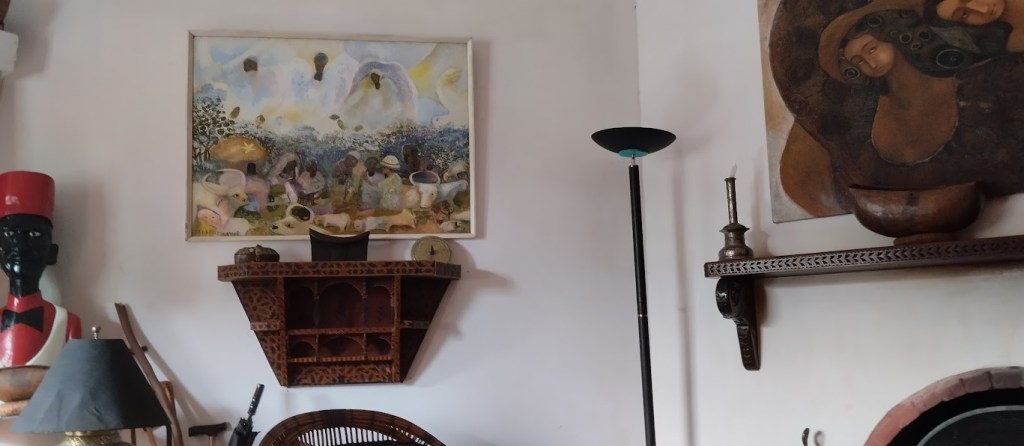
Painting by Jak Katarikawe the acclaimed Ugandan artist of Rhodia meeting her Samburu family hanging in her living room. Picture Rupi Mangat

In 1996, Rhodia drove herself in her tiny shoebox-sized car to Maralal. She met a Samburu blacksmith who showed her all the things he made. She also found the manyatta with the same family she had been to as a child. It was the start of her many safaris to the vast parts of northern Kenya stretching from Moyale to Mandera, the border towns of the Ethiopian and Somalia respectively.

“I spent years learning the Samburu culture. Cultures enrich you. I started bringing tourists here. At the time there were few tourists coming here. My Samburu mother adopted me and gave me her wedding necklace, which is passed on from mother to daughter.”

Her Samburu mother, Ntaipi Lelenguyu, was a respected holy woman. With her adopting Rhodia and naming her Noongishu meaning cattle in Samburu, all doors were opened to Rhodia. The name Noongishu implies a woman who has her own wealth and does not need a man to provide for her.

Documenting Samburu Culture

From 1996 to 2000, Rhodia and Clive Ward photographed rituals and ceremonies, many that had never been seen by the outside world. Ward a professional mountaineer, guide and photographer passed away in April this year.

They are in the museum.

“Rhodia is a living legend,” commented Her Excellency Ms. Nicol Adamcová,

the Czech Ambassador to Kenya.
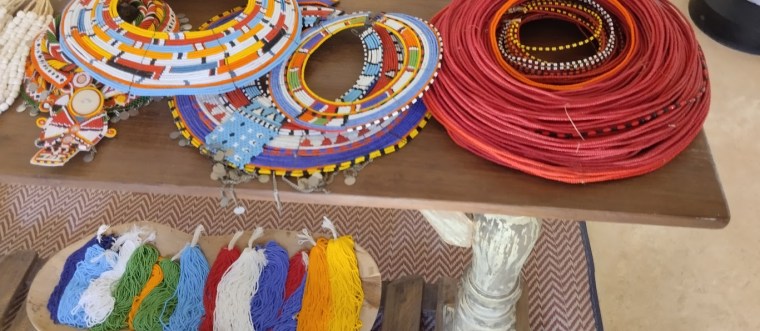
Since 1976, every bead used by the Samburu has come from the Czech Republic. Picture by Rupi Mangat

“Since 1976, every bead used by the Samburu has come from the Czech Republic and we are proud of this special bond, 50 years of Czech beads in Samburu.”

“Rhodia, thank you for this museum,” added Steven Lelendoia, Westgate conservancy’s wildlife warden, “for bringing back home this collection. It is a great honour for us because some of the things in the museum are not easy to see today. This collection is for all generations to come.”

Sitting amongst the Samburu women who earlier on blessed the ceremony is Masulani Lenaiwasae from a village near Sasaab. “I wasn’t aware that our culture is changing so much. Many of the things in the museum are now rare. I’m happy to see our culture being preserved here.
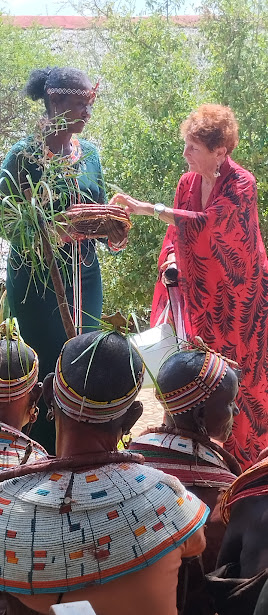
Rhodia Mann presenting Stella Napanu, her Samburu ‘daughter’, a necklace that spans generations made of elephant hair and with a string of Venetian beads in the middle, the style no longer made today. Napanu will only wear the necklace once she is married.

“I remembered my dream and followed it. I am now at the end of my dream,” stated Rhodia. With that she passed her necklace to Stella Napanu, her Samburu ‘daughter’, a necklace that spans generations made of elephant hair and with a string of Venetian beads in the middle, the style no longer made today. Napanu will only wear the necklace once she is married.

Accepting the marriage necklace, said an emotional Napanu, “We are slowly losing our culture. This museum will play a vital role in preserving our culture and therefore it is really  important that the Samburu including Samburu children are able to access it to learn about our roots and our connection to our lands.

With that, Rhodia unveiled the sign to the museum.

The Samburu
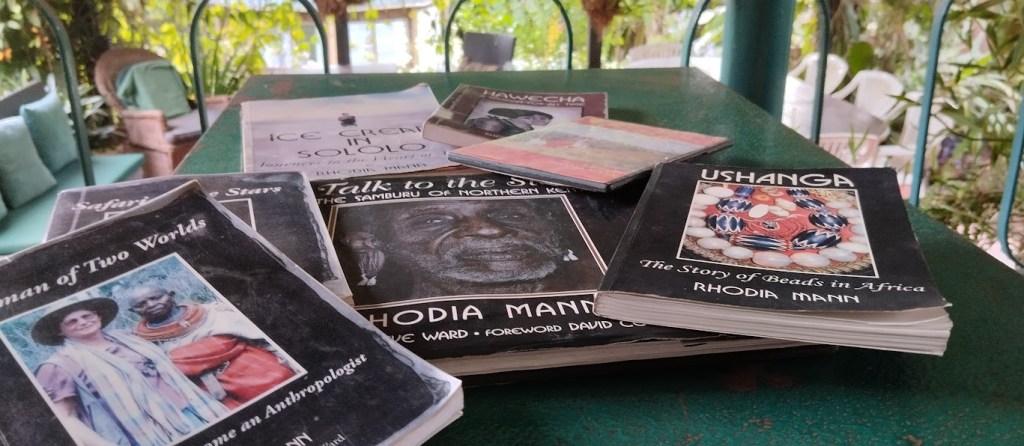
Rhodia Mann’s books authored by her. Image Rupi Mangat

Ntimayon kumontare is the planet Venus on the headpiece of Samburu women. It represents the morning star and acts as a guide and brings good omen to the wearer.

The Samburu, a Nilotic people, believe they lived on Venus. Then God made a new world and sent them there. The people climbed down the ladder and landed on a rock. The rock, now revered holy,  is in the middle of Kisima, a large water body in Samburu county.
Sensational Safari in Kenya – November 2026

Lions, Rhinos, Elephants and Mountains on a Wildlife Safari

November 16-23, 2026

7 nights, 8 days

Game drives in customized safari cruisers

Overview:

Rejuvenate with a safari to discover Kenya’s rich wildlife and its diverse cultures in this tropical paradise on the Equator, the denizen of big game – elephants and rhino; lions, leopards and cheetahs; rhinos and mighty raptors that soar the skies.

The Kenya classic safari takes you through the tapestry of sweeping grasslands, and lush swamps with snow-topped mountains that is home to this spectacular wildlife.

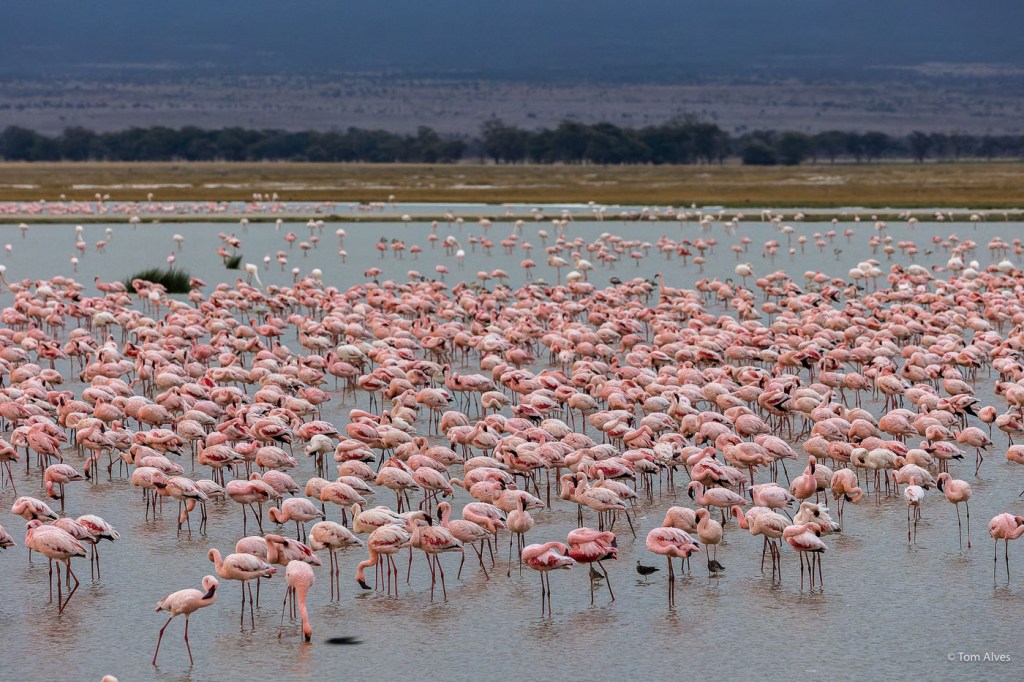
Lesser flamingoes in the Amboseli wetland

Highlights

  • Experience the thrill of a Luxury Safari across three breathtaking game parks, where every moment is a captivating nature’s finest!
  • Watching Africa’s big game in the wild has a different vibe than a zoo!
  • Stay in two unique tented camps
  • See the Samburu 5, rare endemic animals only found in the arid north region
  • Stay in a beautiful Nairobi hotel
  • See Africa’s two highest mountains – Kilimanjaro and Kenya
  • Check out the elephant research camp in Amboseli to hear about the longest-studied elephants in the wild!
  • Dive into a culinary adventure on safari!

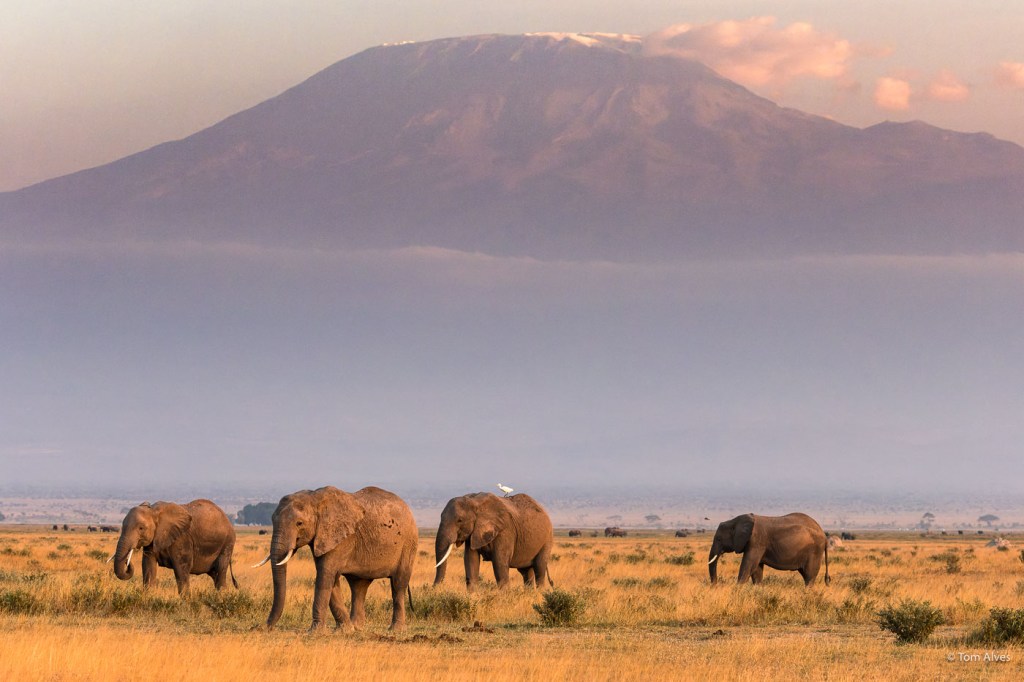
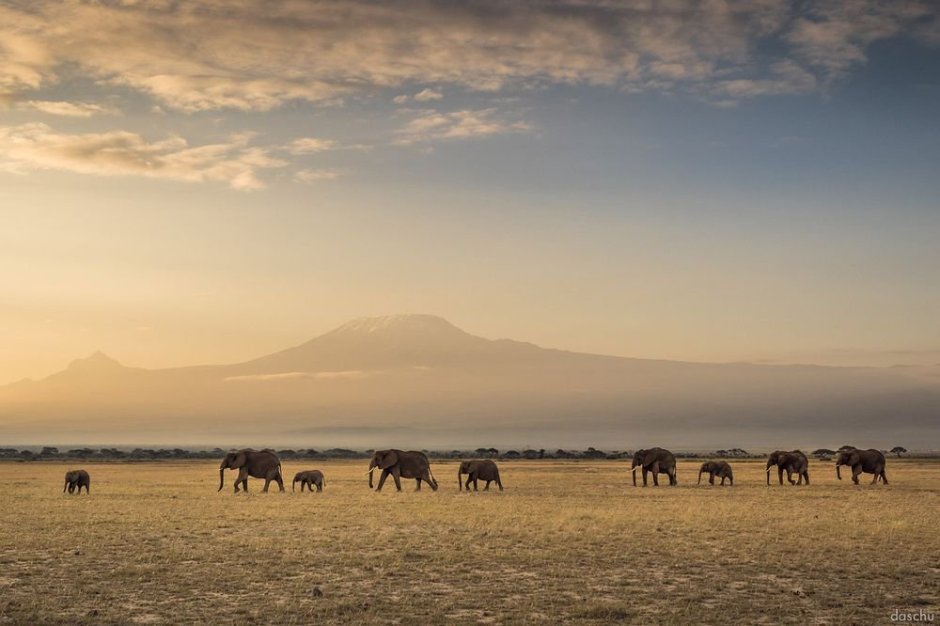
Imagine watching elephants beneath the magnificent snow-capped Kilimanjaro, then ending your day with an exciting game drive in the warmth of the ‘golden light’.

Amboseli elephants on the plains of Mount Kilimanjaro

Meet your safari host, Rupi Mangat founder of Moonlion Safaris

Rupi is a travel writer with a penchant for wildlife conservation and sustainability. A third-generation Kenyan, she’s been on safari more times than she can count since she started writing profesionally in 1998. She teams up with the Wildlife Clubs of Kenya as the editor of Komba, which is all about getting kids excited about saving wildlife. With her awesome connections to groups like Action for Cheetahs in Kenya, Nature Kenya, and the Mara Meru Cheetah Project, she gives you a behind-the-scenes look at their incredible and sometimes tough world.

Day 1 Monday November 16

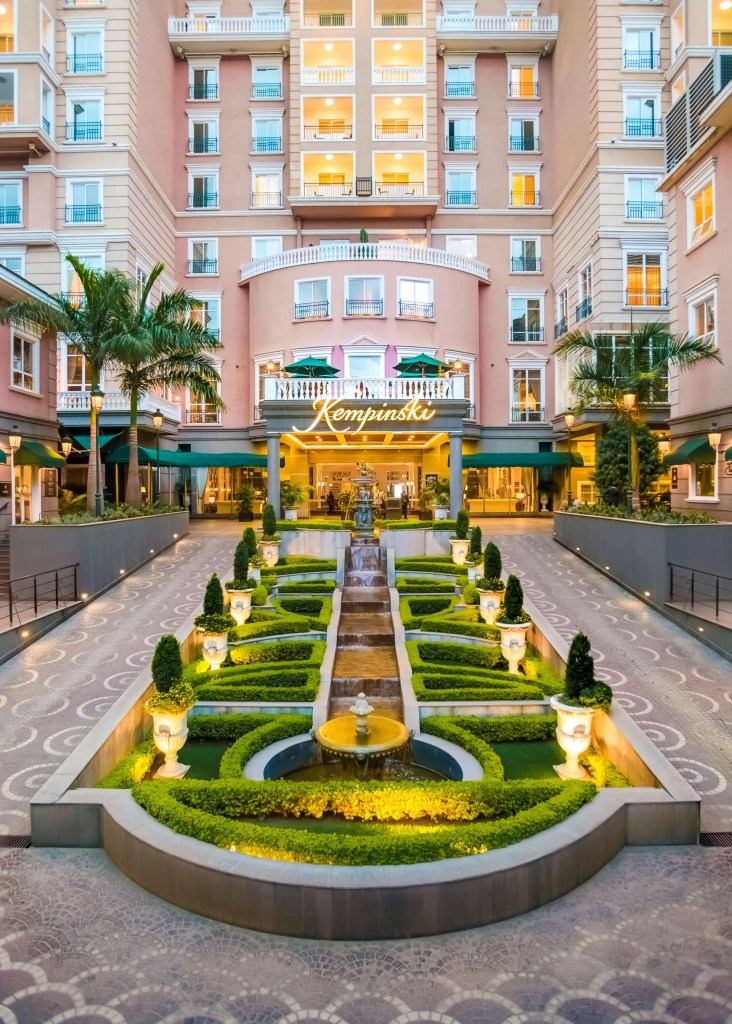
Fly into Nairobi the capital city of Kenya. You will be met at the airport by our representative who will guide you through arrival. You will then be driven by your driver-guide to your hotel, the Villa Rosa Kempinski.

The Villa Rosa Kempinski is one of Nairobi’s finest hotels that has played host to world leaders like former U.S. president Barack Obama and famous artists like Lupita An’yong. It boasts a beautiful spa to pamper yourself.

The day is at leisure. Villa Rosa is a few minutes’ drive to the central business district. Nairobi is a fast-paced city. The core of the city centre boasts early colonial architecture and modern high-rise towers. Day excursions can be booked at the reception.

Day at leisure

Dinner – the hotel boasts a variety of restaurants to choose from or we can suggest restaurants in the city.

HOTEL: The Villa Rosa B&B                         

Day 2 Tuesday November 17

Today the adventure begins.

It’s an early start to the day. After a hearty breakfast we will fly to Amboseli National Park 250 kms southeast of Nairobi, under the Snows of Kilimanjaro. It’s a 45-minute flight over Karen Blixen’s (Out of Africa) famed Ngong Hills and  Nairobi National Park, the only wildlife park in a capital city that today it is still home to black rhinos, the big cats and more.

You will be collected from the airstrip and driven to Ol Tukai Lodge at the foot of Mt. Kilimanjaro in Amboseli with a game drive en route in our custom-made safari cruisers driven by expert driver/guides.

The 392-square-kilometer Amboseli sits on the border with Tanzania where Kilimanjaro looms. The park is spectacular for its wildlife and tapestry of grassland, forest and swamps fed by the snows of Kilimanjaro which at 19,340 feet is the roof of Africa. Amboseli comes from the Maasai word ‘empusal’ meaning salty dust because of the dry lake bed from where plumes of dust rise.

By now it’s lunch time.

Enjoy your gourmet lunch buffet under the gaze of Kilimanjaro and in the company of elephants that linger in the wetland.

Iced tea at lunch at Ol Tukai Lodge watching elephants and zebra in the swamp

Amboseli is home to the longest studied elephant population in the wild, a research pioneered in 1972 by Dr Cynthia Moss of the Amboseli Trust for Elephants. All the elephants in the park are known to the research team with files on individuals dating from the first elephants in the study dating back 50 years.

3 p.m. – Leave for an exciting talk on elephant research at the Amboseli Trust for Elephants research centre in the park.

After the talk proceed for an afternoon game drive in search of big game like lions and elephants plus we’ll enjoy the rich birdlife with a short climb up the ancient hill by to have a sweeping view the vast Amboseli lands before returning to camp at sunset.

7.30 p.m. Meet for a cocktail at the bar and then dine on delicious foods with Kilimanjaro in a blanket of darkness. We’ll exchange the day’s highlights and later be entertained by the local Maasai performing traditional dances with their signature high leaps and throaty chants celebrating love, lion hunts, war and happiness. You may want to join in.

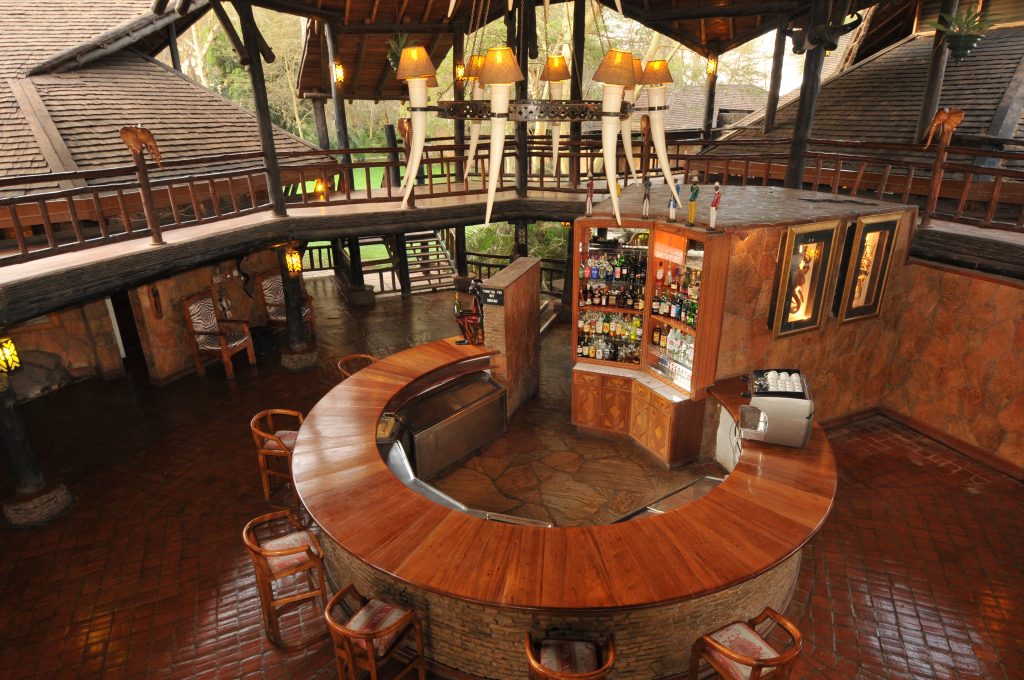
Elephant Bar at Ol Tukai Lodge

The Maasai have co-existed for many years with African wildlife because both the wildlife and the large herds of cattle owned by the Masai need wide spaces to survive.

Hotel:  Ol Tukai Lodge Amboseli National Park

Day 3 Wednesday November 18

6 a.m. – It’s an early start to the day at Wake up calls can be arranged. Enjoy a cuppa coffee or tea and biscuits.

6.30 a.m. Leave for an early morning game drive. This is the best time to enjoy wildlife as well as late afternoons before the sun goes down. It’s the time when the animals are most active before the sun becomes too hot for them and lethargy sets in. The lionesses would rather hunt when it’s cooler but being opportunistic the hunt is on if the quarry is easy. Lions do not have sweat glands and you’ll hear them panting a lot.

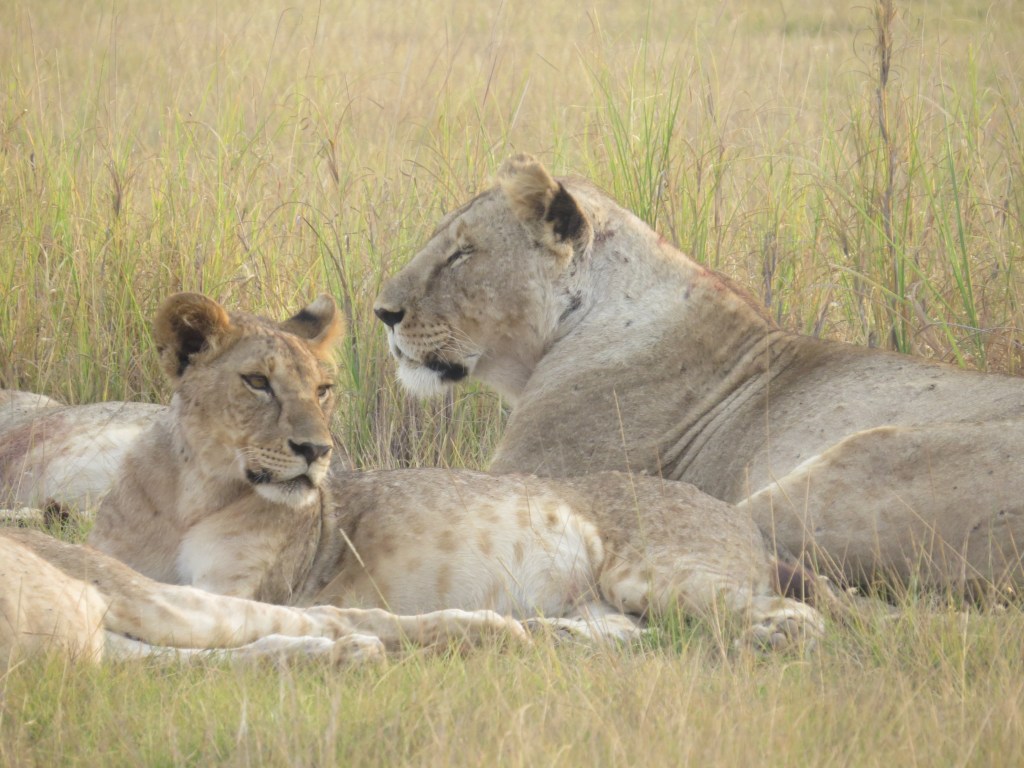
Lioness in Amboseli

9 a.m. Return to the lodge for breakfast.

Take time to relax, swim, read a book and enjoy the grounds.

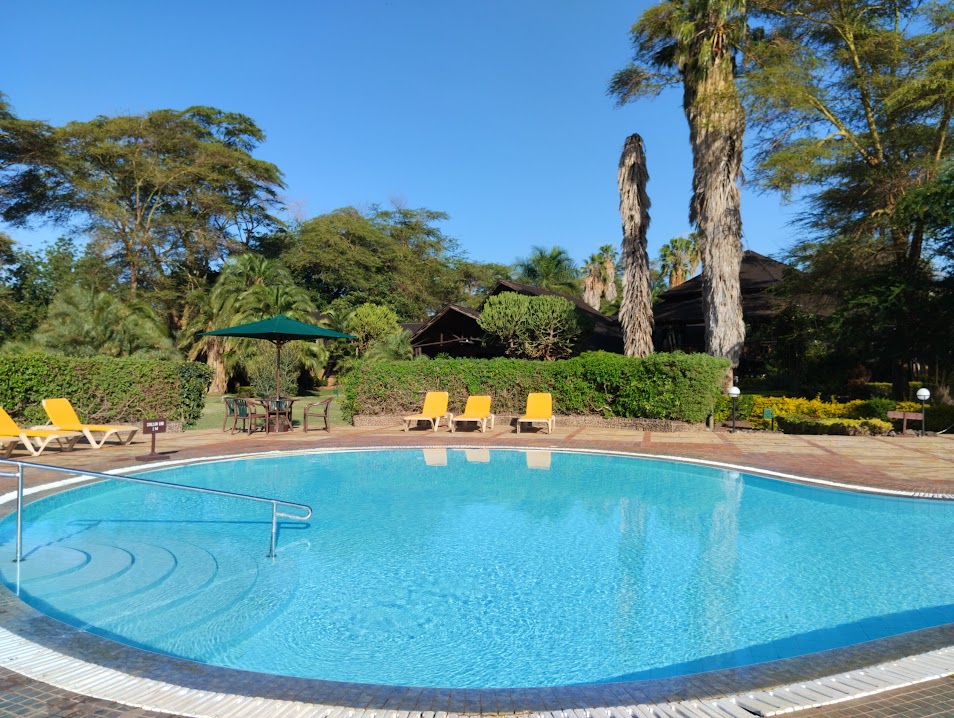
Ol Tukai Lodge – cool off in the swimming pool

1 p.m. – Lunch

4 p.m. – Depart for an exciting afternoon game drive

6.30 p.m. – Return to the lodge.

Take some time to refresh with a cold beer at the bar or a cool shower.

7.30 p.m. Enjoy another gourmet feast while entertained by the local Maasai or with a talk on amazing Amboseli by the resident naturalist before retiring to bed. Having a nightcap by the fire pit is a nice way to end the day.

Hotel:  Ol Tukai Lodge Amboseli National Park

Day 4 – Thursday November 19

8 a.m. After breakfast depart to the airstrip for a 90-minute flight to Samburu National Reserve in the arid lands, north of the equator with a short stopover in Nairobi and a light lunch at the in-house restaurant. Be assured the menu serves sumptuous meals and great Kenyan coffee.

Elephant Bedroom Camp on the banks of the Uaso Nyiro River – image courtesy

Have your cameras ready. If it’s clear you will see Mount Kenya on the equator. This volcanic mountain at 17,057 feet (5,199 meters) is Kenya’s tallest. When the first explorers reported of the snow-capped mountains on and near the equator, they were ridiculed – for who had ever heard of snow on the equator?

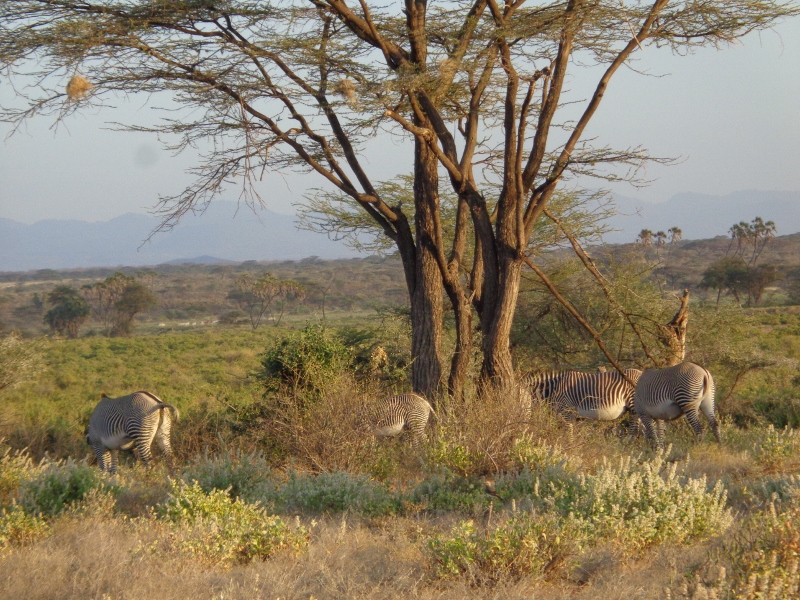
Samburu is the land of the Samburu Special, wildlife only found north of the equator and adapted to life in the arid lands such as: the Reticulated giraffe, Grevy’s zebra, Beisa oryx, gerenuk and Somali ostrich. These species have adapted to life without water, surviving just on morning dew. The life-lung of the land is the Ewaso Nyiro River that is to this region what the Nile is to Egypt.

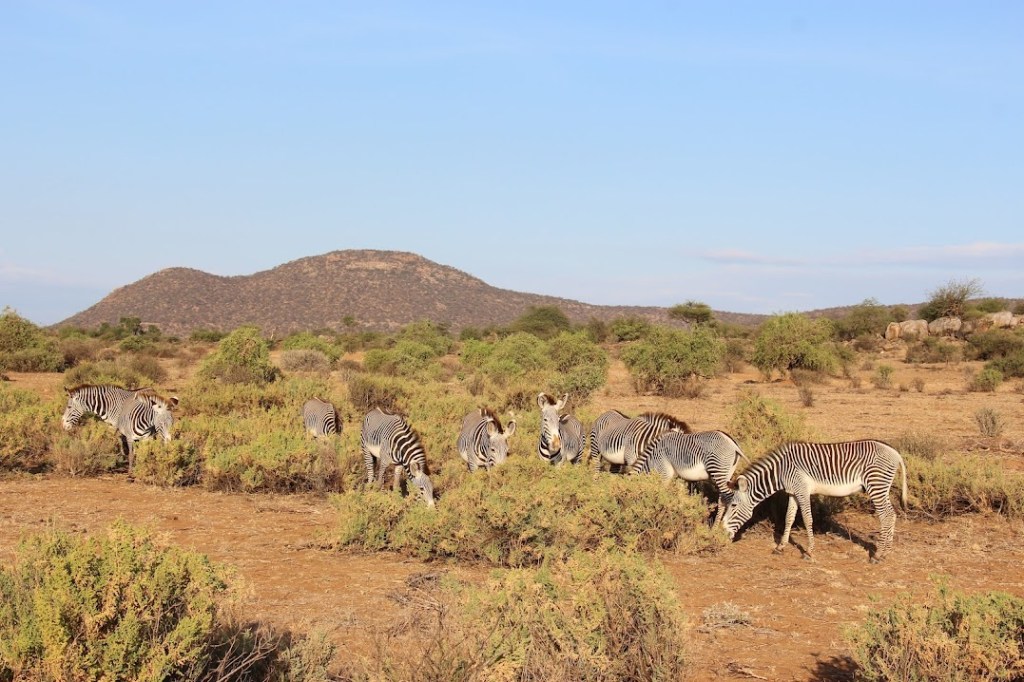
The rarest zebra on earth – Grevy’s in Samburu

On arrival early afternoon at Samburu National Reserve we will be transferred from the airstrip to the camp with a game drive en route before checking in and enjoying time at the camp by the River.

3.30 p.m. Embark on another exciting game drive through the arid bush and the lush oasis by the river. Look out for leopard, lions and elephants and raptors before returning to camp at sunset.

Relax at Elephant Bedroom Camp

6.30 p.m. Return in time for a sumptuous dinner freshly prepared under the stars of the northern hemisphere. If you’re a star gazer, this is the perfect spot close to the equator to see the constellations straddling the two hemispheres.

You might be entertained by local Samburu dancers with the songs and dances of their ancestors.

The Samburu like the Maasai belong to the Nilotic ethnic group that came into present day Kenya from the north along the Nile some five centuries ago. Interestingly, in addition, the Samburu believe that they hail from Venus the planet.

Enjoy your evening and a good night’s sleep in your luxurious tent.

Hotel: Elephant Bedroom Tented Camp

Day 5 – Friday November 20

6.15 a.m. Another glorious morning in Africa. Rise and shine for an early morning game drive after a cuppa. The landscape is surreal with mountains and rocky insets.

9 a.m. Return for breakfast  and then enjoy your morning watching the local wildlife or treat yourself to a spa treatment in the wild.

1 p.m. – Lunch.

4 p.m. – Samburu is also part of the lion project pioneered by Ewaso Lions. The driver-guides will point out to some on the game drives.

Return for a starlit dinner followed by a night cap by the campfire and finally to a peaceful slumber in your ‘tent’.

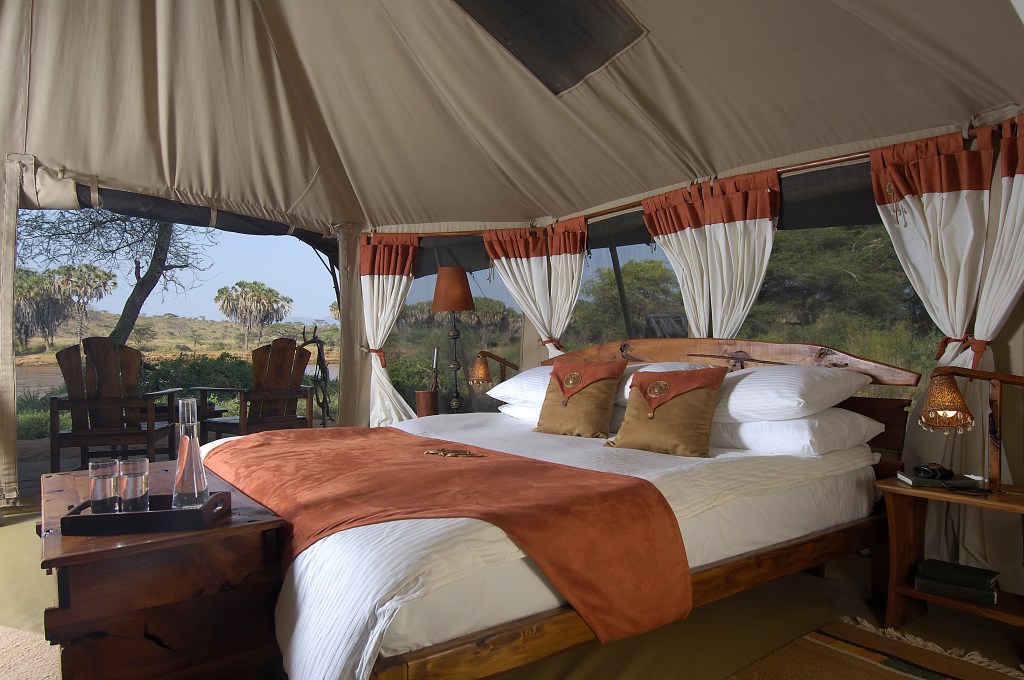
Elephant Bedroom suite

Hotel: Elephant Bedroom Tented Camp

Day 6 Saturday November 21

A 90-minute flight from Samburu via Nairobi, and you will land in the Maasai Mara, after flying over the Great Rift Valley. It is the planet’s longest valley on land stretching 6,000km from Lebanon in the Middle East to Mozambique in South-eastern Africa and best seen in Kenya. The flight then enters the savanna grassland in the mighty Mara that is home to the Big 5 – elephant, rhino, buffalo, lion and leopard (and cheetah). This is lion country famous for its black manned lions and it is possible to see all the three big cats – lion, leopard and cheetah – in a day.

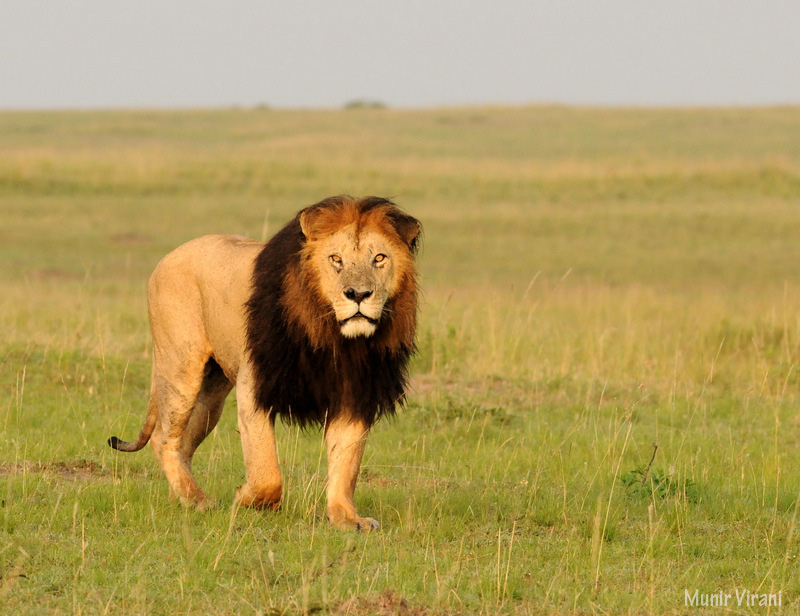
King of Beast – the famous black maned lion of the Mara – courtesy of camp

You will be collected from the airstrip and driven to the glam canvas camp with a short game drive en route. After check-in, relax and enjoy an exquisite lunch.

The spotted sphinx in the Mara with wildebeest in the background – image courtesy of camp

3.30 p.m.  Leave for the afternoon game drive at to return at sunset to the camp.

Take a few minutes to refresh before dinner will be under the stars with lots of lively exchanges on your first night in the Mara, dubbed one of the seven natural wonders of the modern world.

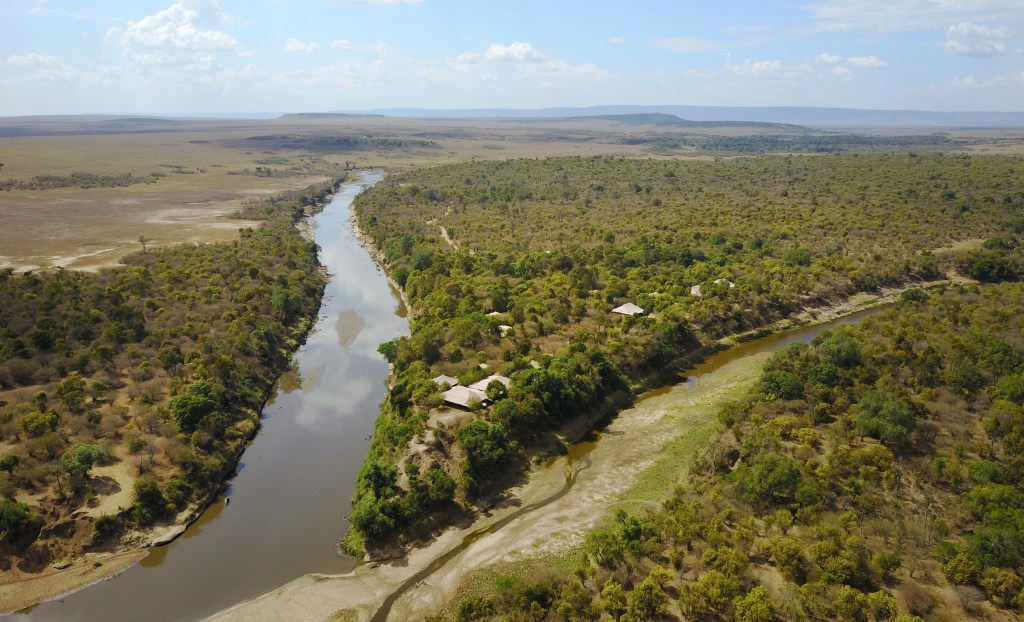
Mara Ngench Tented Camp aerial view on the banks of the mighty Mara River – image courtesy

Finally it’s lala salama, ‘a peaceful sleep’ in Kiswahili.

Hotel: Masai Mara Ngenche Safari Camp

Day 7 Sunday November 22

5 a.m. – After a cuppa tea/coffee, OPTIONAL AT EXTRA COST depart for a thrilling balloon safari (Please wear long pants and warm jacket, a hat and shoes) at sunrise with a champagne breakfast on landing. It’s a novel way of game watching catching an eagle’s eye view of the land and life below.

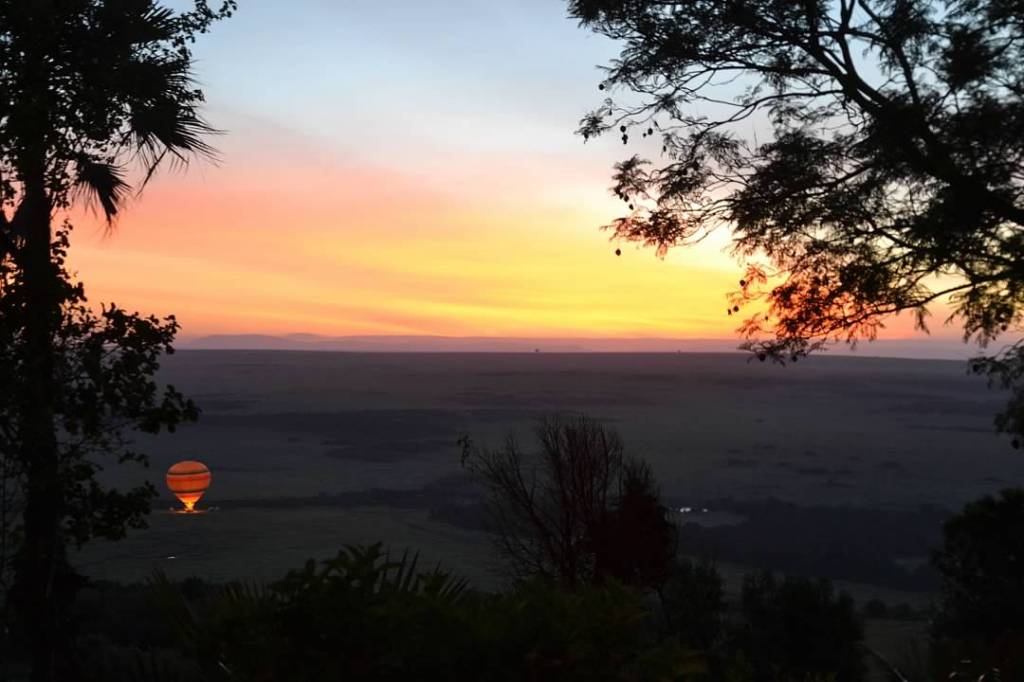
Sunrise over Africa with a balloon safari in Maasai Mara. Image by Inderjit Singh Mangat

6.30 a.m. OR enjoy a morning game drive followed by breakfast.

The morning is at leisure.

1 p.m. – lunch by the river.

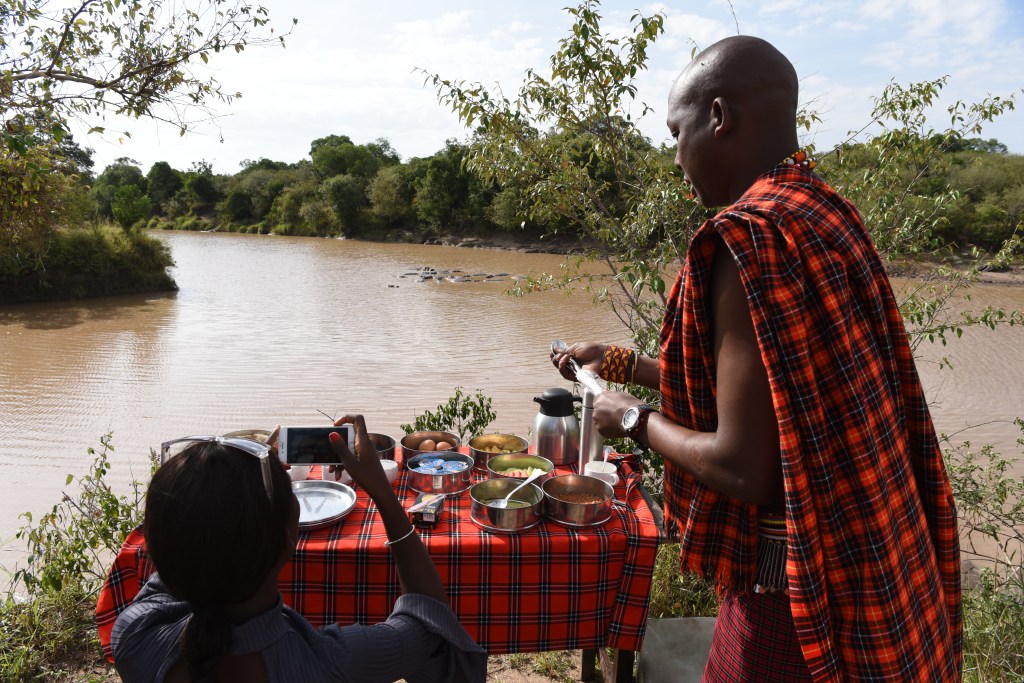
Lunch by the Mara River with hippos in the river – courtesy

4 p.m. – Depart for a game drive in search of the spotted cat whose global population in the wild is less than 10,000 today compared to 100,000 a century ago. Kenya is a stronghold for these cheetahs.

7.30 p.m. – It’s your last night in the African bush with dinner under the stars before we wish you ‘lala salaama’.

Mara Ngenche

OVERNIGHT: Masai Mara Ngenche Safari Camp

Day 8 Monday November 23

Nairobi

After a sumtuous breakfast in the Mara, fly back to Nairobi to arrive by midday and head to the Jomo Kenyatta International Airport for your flights the next day or that night.

As Karen Blixen, the author of ‘Out of Africa’ said: “If there were one more thing I could do, it would be to go on safari once again.”

NOTE: Ms. Mangat reserves the right to alter the itinerary based on weather,  availability as well as exciting opportunities that might crop up!

*You have an option at the Four Points at Sheraton at Jomo Kenyatta International Airport hotel. Because you might be flying back that evening you can book your room as a day room or for the whole night depending on when your flights are. For this reason we didn’t include this night in our overall price. The hotel will transfer you to the airport terminal.

Prices range from $128 – $171 and include a transfer to the airport. Lunch or dinner at the buffet at the hotel is around $30.

Not to worry – Vegetarians will be well fed in all camps as well as those on wheat intolerant diet or others. Just let us know in advance.

What’s Included?

Everything stated in itinerary above including all meals. Meals on the first day in Nairobi are not included as people will be arriving at different times.

All entry fees and all transport including transfers to and from the airport on safari.

What’s Not Included?

Roundtrip airfare to Kenya. Any additional spa treatments desired beyond what is described. Last day accommodation at Nairobi Airport hotel. Any personal souvenirs or purchases. Wine, beer or spirits. Travel insurance (very highly recommended) and trip medical coverage (required for travelers over 50 years of age).

Tips for the driver-guides and lodging staff.

Next steps?

I’m interested so what do I do next?

Whatsapp on an agreed time with Rupi on +254 791 401 490 to ask any questions or voice any concerns you may have. This will give you a better understanding of your African safari.

Or email: rupi.mangat@yahoo.com

Quick reads:

Cheetahs in Meru and Maasai Mara – Action for Cheetahs in Kenya and The Mara-Meru Cheetah project with fascinating insights into the spotted cat whose global population in the wild is less than 10,000 today compared to 100,000 a century ago. Kenya is a stronghold for these cats.

SAFARI COST

  • USD 9,500 per person in single room
  • USD 8,900 per person sharing

The rate includes:

  • Everything stated in the safari itinerary
  • Game drives with professional driver-guides in safari cruisers with window seats
  • Flights: Nairobi –Samburu – Mara – Nairobi.
  • All park and conservancy fees are included.

Samburu from Saruni

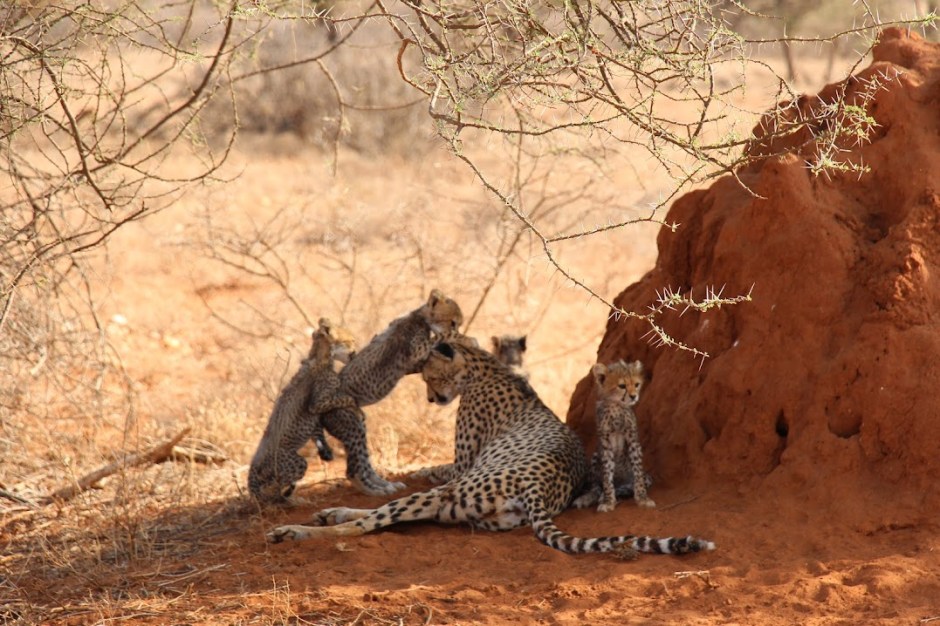
Main pictures:Cheetah mum and her four cubs in Samburr National Reserve. Courtesy Jill Cohen

Published: Satmag Nation newspaper 14 Jan 2023

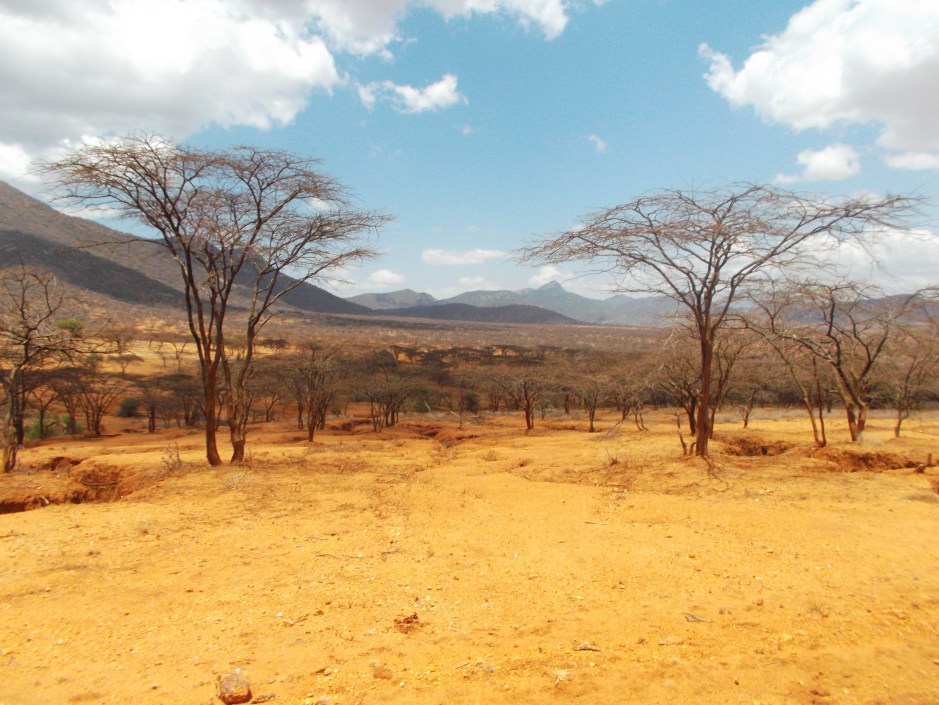
The drive through Kalama Conservancy bordering the more famous Samburu National Reserve shows the ravaging effects over the last five years in Kenya’s northern scape. Save for the vibrant pink of the desert rose the land is dry with the wildlife surviving on the morning dew, the little water in the Ewaso Nyiro river and other adaptations to the arid lands over millennia – like the Beisa oryx, Grevy’s zebra, Reticulated giraffe, gerenuk and Somali ostrich with the males showing off their purple necks and legs. We see them on the drive up to the spectacular Saruni lodge set amidst ravishing rocks and stunning views of the northern mountains like Mount Kenya, the Mathews Range and the sacred Samburu massif shaped like a bread loaf – the iconic Ol Lolokwe.

Continue reading “Samburu from Saruni”

Mathew’s Range: A little-known mountain range with one of the least disturbed forests in north Kenya makes for exciting long term research in forest dynamics

Above: Dry lower slopes of Mathews Range

From the archives: 6 September 2013

Published: in The East African Nation newspaper

Part 1 of 3

September 1887. Count Teleki and Captain Ludwig von Hoehnel left Ngong near what is today Nairobi to trek across northern Kenya in search of a huge lake. The local Samburu called it Empasso Narok (the black lake), Teleki renamed it Lake Rudolf in honour of his friend the Austrian prince and in independent Kenya, it became known as Lake Turkana after the people who live around it.

On Mathews Range between dry lower slope and the high forest- copyright rupi mangat
On Mathews Range between dry lower slope and the high forest- copyright Rupi Mangat.

Enroute, Teleki diverted to Lake Baringo while Hoehnel went in search of another lake called Lorian. He didn’t find the lake but instead came across a mountain range the local Samburu called Ol-doinyo Lenkiyieu. As for Lake Lorian he learned from the hunter-gathers called the Wadorobo, there was no lake but a swamp that the Uaso Nyiro River emptied its floodwaters during the rains.

Continue reading “Mathew’s Range: A little-known mountain range with one of the least disturbed forests in north Kenya makes for exciting long term research in forest dynamics”

Samburu Trails

From the archives in 2007

In memory of Rosalie Faull

Okay – here’s a brain teaser.  What do you get when you cross a donkey with a horse?  Answer:  You get a smart ass!  Actually, you get a mule.

“Mules are very tough animals,” explains Rosalie Faull who runs Samburu Trails, a trekking safari into the wilderness of the northern frontiers on donkeys and mules.  A handsome chestnut coloured mule runs across the garden to join the others grazing with the pack of donkeys.  “They are very sure-footed and with a western-style saddle, very comfortable to ride.  It’s like sitting in a big arm chair.”

Grevy's zebra in northern Kenya. Copyright Rup iMangat
Grevy’s zebra in northern Kenya. Copyright Rupi Mangat

We’ve just driven in from Maralal, which disappears into the valley below as we drive up the high glades of Leroghi Plateau, the air cool and crisp, the rains turning everything a magical lush green, with old man’s beard hanging from the branches of the ancient podo and cedar trees, showing how pure and clean the air is.  We reach Porro, a tiny Samburu hamlet that l’ve never heard of before.

Continue reading “Samburu Trails”