Women in a Venomous Field

Four amazing women make a career of working with snakes. Attending the tenth international snakebite seminar at Bio-Ken snake farm in Watamu recently, each narrates the path taken.

East African 7-13 Jan 2017

Handling live venomous snakes is an extra-ordinary noble but extremely dangerous profession.

One reason for handling venomous snakes is to milk them – which is the only way to obtain snake venom to produce supplies of anti-venom. Without anti-venom being readily available and administered, a bite from any venomous snake can be deadly. Ironically, anti-venom can only be produced from ample supplies of venom from live venomous snakes. And it takes some dexterity to do that.

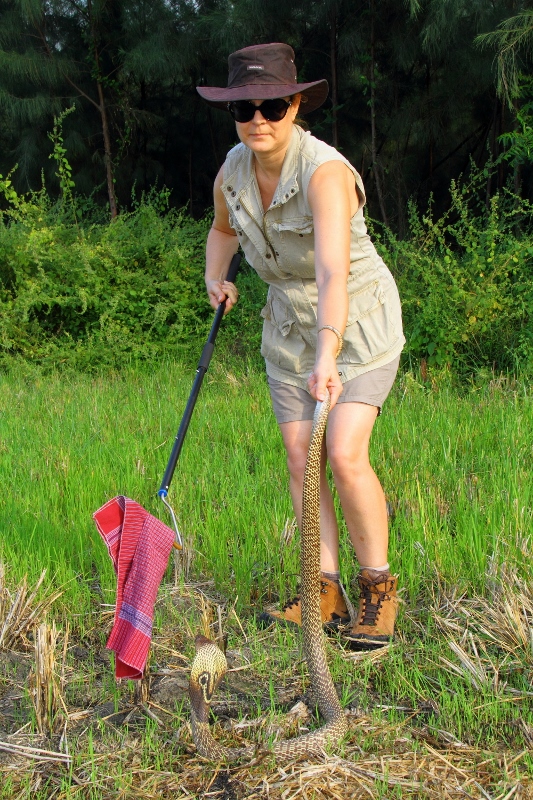
Diana Barr

Young and dynamic, Barr’s job as technical support officer at the Australian Venom Research Unit at the University of Melbourne and Global Snakebite Initiative, an Australian non-profit organisation working to reduce snakebite deaths and disability around the world, puts her in very close contact with the most venomous snakes in the world.

Continue reading “Women in a Venomous Field”

Bio-Ken Snake Farm in Watamu

Learning about the Reptilian World of Snakes and Scorpions

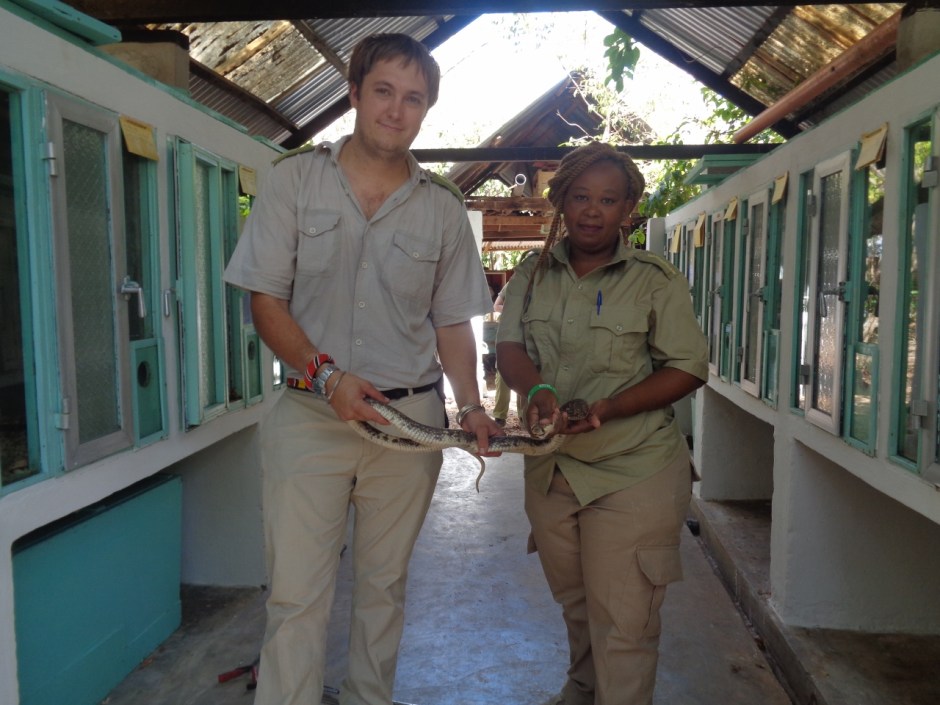
Main picture: Nancy Njeri and Kyle Ray – profesional snake handlers at Bio-Ken Snake Farm Watamu, Kenya

Copyright Rupi Mangat

A gorgeous tropical blue snake is twined around a twig. It’s a speckled bush snake and not venomous. Nancy Njeri, the professional snake handler is giving the grand tour of the snake farm that was started in 1980 by the late and very amazing James Ashe and his wife Sanda. Sanda still handles the snakes and other injured animals and return them to the wild. She has the reputation of being the finest snake-handler – especially the venomous green mamba.

Njeri on the other hand is working her way up to the gold-level –when she will be allowed to handle the really venomous snakes like black mambas – alone.

“Speckled bush snakes come indifferent colours,” tells the young woman and continues to take us around, giving tit-bits about the reptiles in residence. “This is the twig snake,” she points to another thin, long snake that really looks like the paler cousin of the speckled bush snake only that as Njeri tells us, it is a venomous snake that has no antivenom manufactured for its bite. I’d hate to be bitten by this one (or any other) as it means going to hospital for a blood transfusion.

“Anyway,” continues the young woman nonchalantly, “snakes don’t bite to kill. They bite to defend themselves.”

That’s so nice to know.

Winnie Bore - activist and founder of Snakebite-Kenya - http://www.snabirc-kenya.org/ to provide anti-venom in rural areas, help rehabilitate victims disabled or visually impaired by snakebites and develop a research programme simply because there is very little information on snakebites in Kenya.
Winnie Bore – activist and founder of Snakebite-Kenya – http://www.snabirc-kenya.org/ to provide anti-venom in rural areas, help rehabilitate victims disabled or visually impaired by snakebites and develop a research programme simply because there is very little information on snakebites in Kenya. Copyright picture Rupi Mangat

Continue reading “Bio-Ken Snake Farm in Watamu”

The Train and Tuskers of Tsavo

The impact of the SGR on the mega-herbivore in the last of its stronghold – the mighty Tsavo

Published The East African Nation media -31 Dec 2016-6Jan 2017

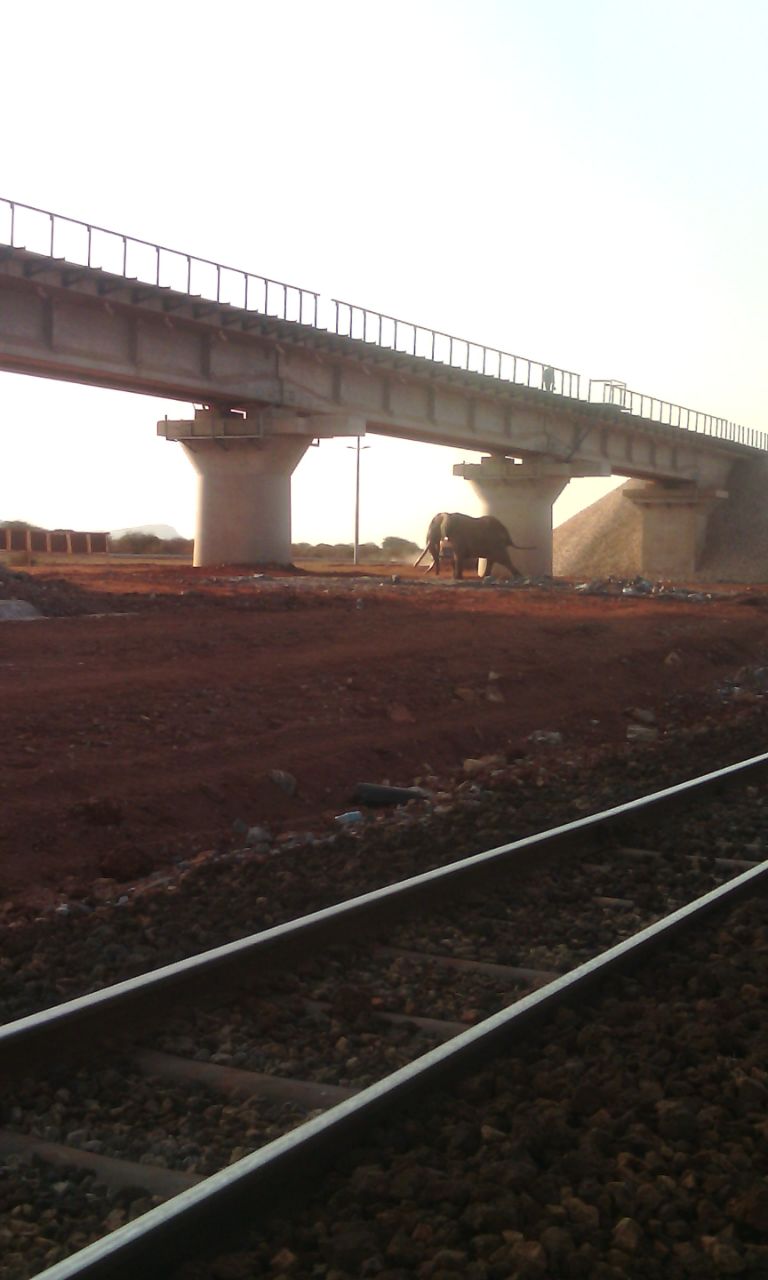
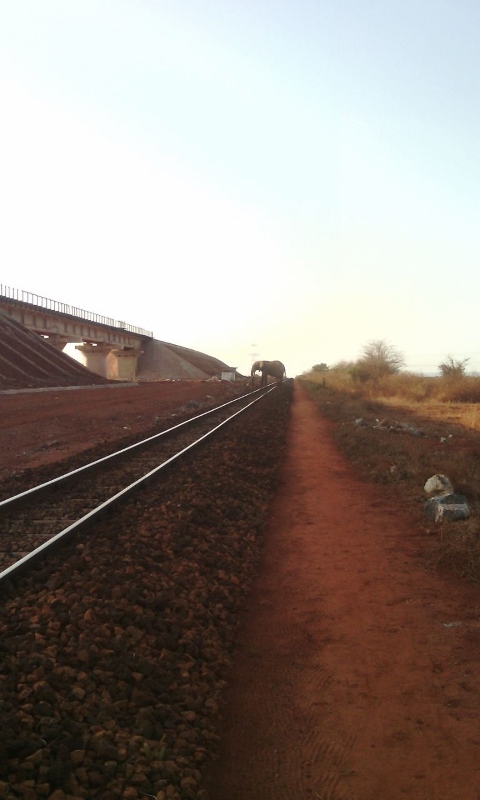
Caption above – Elephant crossing under the bridge of the new SGR crossing point.by Limo Elisha

Under the searing sun of the Tsavo East National Park, a herd of elephants as red as the soil browse near the newly constructed standard gauge railway cutting across the 13,747 square kilometres park.

This section of the railway line near the park’s Manyani Gate is raised on a steep embankment to attain the gradient for the high-speed trains for the SGR. A 70-meter-wide and five-meter-high underpass in the embankment allows the mega herbivore to move to and fro from the adjoining 9,065-square-kilometer Tsavo West National Park – making the two parks the largest protected elephant park.

Until this steep embankment of the SGR was built a year ago, the elephants of Tsavo crossed the Nairobi-Mombasa Highway and the century-old railway line from anywhere they wished along the 137-kilometer span of the highway and rail that ran through the two parks.

An elephant crossing the old Meter gauge railway
An elephant crossing the old Meter gauge railway Copyright Limo Elsiha

Continue reading “The Train and Tuskers of Tsavo”

Nairobi National Park

Celebrates 70 years

Publsihed Nation Saturday Magazine 31 December 2016

A saffron sunrise announces another dawn in a city that’s fast changing face into a vertical cosmo. Amidst this high-rise landscape, Nairobi’s iconic national park by the same name celebrates its 70th anniversary and we’re in this natural world that only Nairobi can boast of.

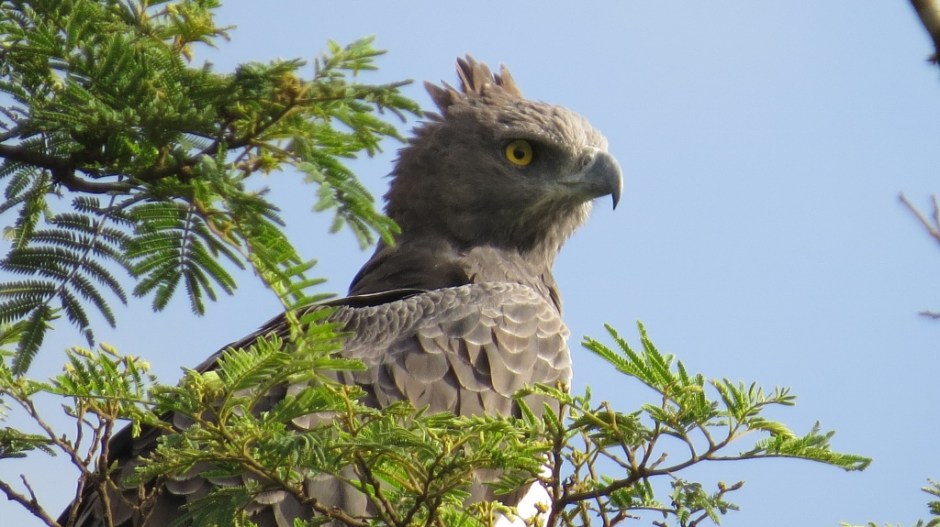
Past the dam with a lone hippo that shies in it, we continue to the forest where a Crowned eagle perches on a tall tree. Generations of this mighty raptor have nested in the park – by a tree on the edge of Langata Road. Whereas our Crowned eagle still holds its territory supreme, the Malagasy crowned eagle became extinct as humans wiped them out in Madagascar.

Continue reading “Nairobi National Park”

Combating illegal Trafficking in Cheetah Cubs

Above picture:Cheetah cubs confiscated from the illegal pet trade in the Somali region of Somaliland. The cub on the bottom had just died due to inadequate care. The other two cubs were eventually transferred to the Born Free Foundation sanctuary in Ethiopia.  © Günther Wirth.

The horrific illegal trade in cheetah cubs and other endangered wildlife fuelling the exotic pet trade

wild-cheetahs-cubs-with-their-mother-in-the-masai-mara-karl-andreas-wollert-1024x682
Wild Cheetah cubs with their mother in the Maasai Mara National Reserve, Kenya Picture copyright Karl-Andreas Wollert.

It was a phone call from a U.S. Marine in November 2005 that put the wheels in motion for Patricia Tricorache, assistant director for strategic communications of the Namibia-based Cheetah Conservation Fund (CCF) to add ‘illegal wildlife trade’ to her title.

“He was calling from Ethiopia about two cheetah cubs that were tied with ropes outside a restaurant in Gode, a remote village in eastern Ethiopia. He was a vet and said that the cubs would die soon; he was considering buying them.

“I begged him not to buy them because it would only encourage more poaching. We frantically began calling everyone we knew in Ethiopia, including the Environmental Protection Agency (EPA), the Ethiopian Wolf Conservation Program and the U.S. Embassy.

Scout and Patch, two 3-month old cubs reported to CCF by a US Marine soldier and confiscated from a restaurant in Gedo, Ethiopia in 2005 by the Ethiopian Environmental Protection Authority. Both cubs died a few months later. © Befekadu Tefera, 2005.

Continue reading “Combating illegal Trafficking in Cheetah Cubs”