By Mary Wykstra founder of Action for Cheetahs in Kenya
Can you explain briefly why we need to save cheetah
Kenya holds one of the last remaining cheetah strongholds. Not only are cheetahs a valuable part of the ecosystem, but also cheetahs are one of the most beautiful animals to see. Tourists come to Kenya to see unique sightings and parents in Kenya tell stories to their children about cheetahs. If cheetahs go extinct neither local people nor tourists will be able to see them. When a cheetah hunts, like most predators they seek out the weak or injured in the herd, thus contributing to the health of the herd. A cheetah makes a kill every 2-4 days, but loses about 50% of its kills to other scavengers. Thus, the cheetah plays a role in herd and other predator populations.
When did the big crash in numbers happen?
Two big crashes have already happened in history; cheetah numbers have dropped to near extinction during the ice age when many other animals became extinct and again in the time of the Czars and Moghuls when cheetahs were taken from the wild in mass numbers as pets.
Today the major threat to cheetahs is land use change. As the human footprint expands and develops land in ways that do not permit animals to move between parks, the wildlife numbers decline or become pocketed into small areas.
There is a new wave in wild pet trade making the illegal removal of live cubs a fast growing cause of cheetah decline. Right now, through all of Africa the cheetah numbers are dropping at a rate of 2.1% annually (IUCN). This means that the cheetah could go extinct in our lifetime.
What NOT to do when one sees or hears cheetah
In all of Africa, there is not case of a cheetah killing a person.
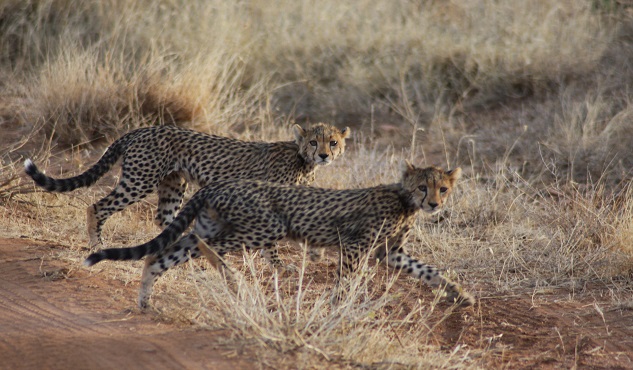
When someone is on foot and sees a cheetah it is highly likely that the cheetah is already running away. If someone sees cubs, they should NEVER pick up the cubs. A mother cheetah can leave its young for several hours while she goes away to hunt. If someone thinks that cubs are abandoned they should call authorities immediately, but they should leave the cubs where they are.
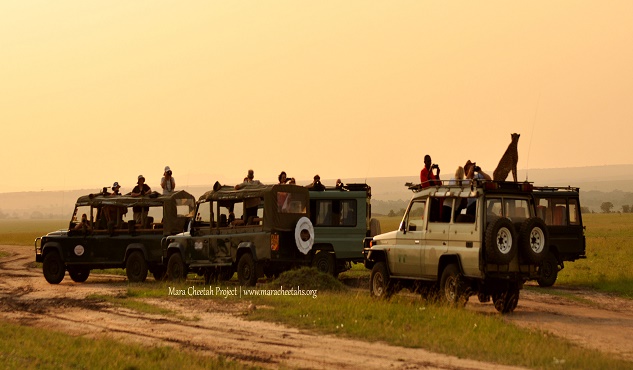
If you are visiting one of Kenya’s parks or sanctuaries, you should never drive off road and you should not allow cheetah to climb on your vehicle. Cheetahs on vehicles can be injured, drivers can run over cubs if they are too close. A mother cheetah often runs away from her cubs, often trying to lure the threat, this also means that she can easily be separated from her cubs if tourists block her or scare her away.
How can readers help research?
People can contribute to research through reporting cheetah sightings.
Action for Cheetahs in Kenya is organizing a range-wide cheetah database, so if you see cheetahs in remote areas, please send details and photographs to info@actionforcheetahs.org or download the iNaturalist application and submit your photo to http://www.inaturalist.org/projects/cheetah-and-wild-dog-spotting.
You can also support the research through volunteering or donating funds to assist in our work.
If you are interested in a cheetah talk please contact one of the researchers who will be more than happy to visit your school or function to talk about cheetahs and their fight for survival.
 Moonlion Safaris