Bird chorus in quieter Corona days

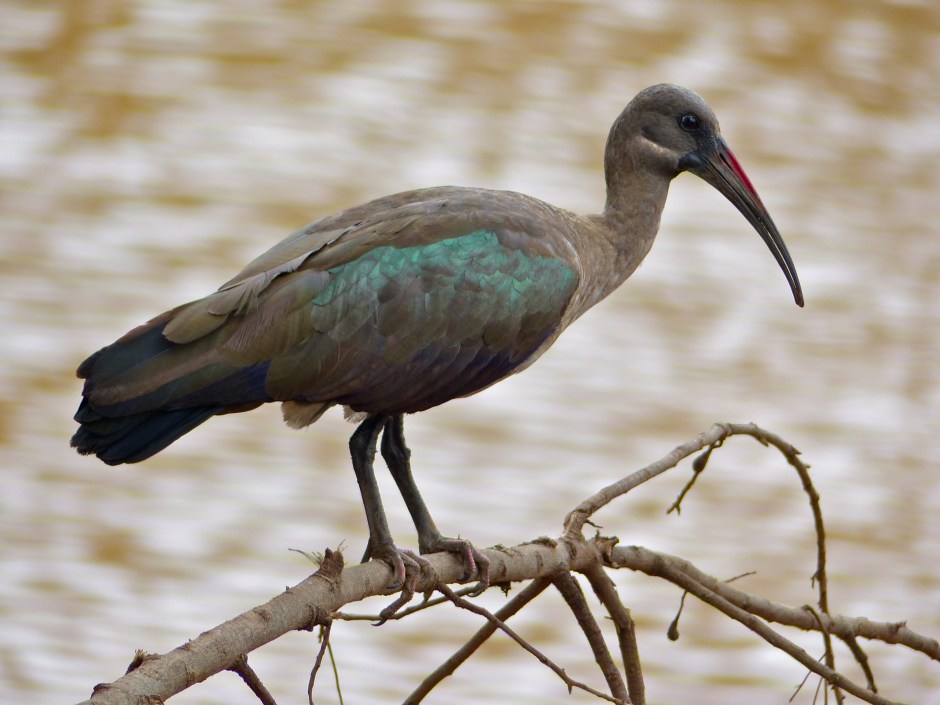
Above: Hadada ibis by Bernard DUPONT

Published: The East African Nation 9-15 May 2020

By Rupi Mangat

with unusual birdsong heard and massive flocks seen in cities

“The wake-up call of Hadada ibis in my estate (Buru Buru in Nairobi) was always 4.30 a.m.,” remarks Jennifer Oduori, a veteran birder and member of the birders’ group at Nature Kenya. “Now because it’s so quiet, they have changed the time to 6 a.m.”

The Hadada ibis, a common bird in Nairobi, has one of the loudest calls in the bird world and it’s enjoying the bliss of a quiet sleep during the current Corona-curfew days …just like many humans are.

What’s even more interesting is that Nairobi which is the birding capital of the world with more than a thousand species has new arrivals that Oduori is trying to identify from pictures sent to her by other birders.

More unusual reports are coming in from Kenyan birders, members of Nature Kenya, the country’s oldest natural history society established in 1909 by like-minded people interested in nature.

In late April afternoon, Abigail Church sent a video from Nairobi’s Giraffe sanctuary of 1,000 Great white pelicans flying over it, wave after wave for 15 minutes en route to Lake Magadi, a phenomena  never recorded before of such large numbers in the city. It made the video go viral amongst the birders.
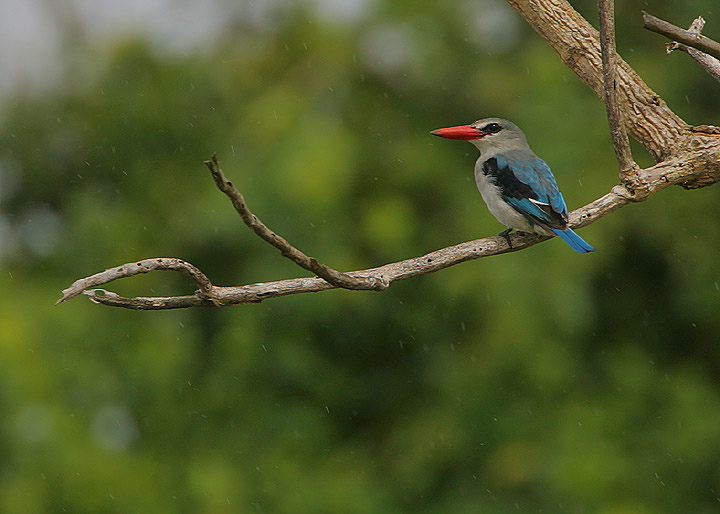
Mangrove kingfisher at Sabaki River mouth Kenya north coast by Steve Garvie from Dunfermline, Fife, Scotland (720x514)
Mangrove kingfisher at Sabaki River mouth Kenya north coast by Steve Garvie

Meanwhile in Mombasa the built-up island with few trees, another bird not recorded on the island before, has surprised Mustafa Adamjee. “ I heard Mangrove kingfishers call all night in the middle of Mombasa town where there are few trees , noisy and so built up..

Mangrove kingfishers are intra-African migrants seen around the island or along the beaches lined with mangroves and coastal bush but never in town.

The list is endless of the many unusual sighting around the world’s cities, but it’s in the far-away port of Mumbai, that is India’s largest city of some 20 million people, that’s currently stealing the show.

It’s turning pink…with tens of thousands of flamingos after the country’s nationwide lockdown that’s quietened down the city. According to the Bombay Natural History Society the flamingos are also spreading to wetlands where they were rarely seen before “because there is no human activity there now.”

In terms of birding, it’s getting exciting in the era of the Corona.
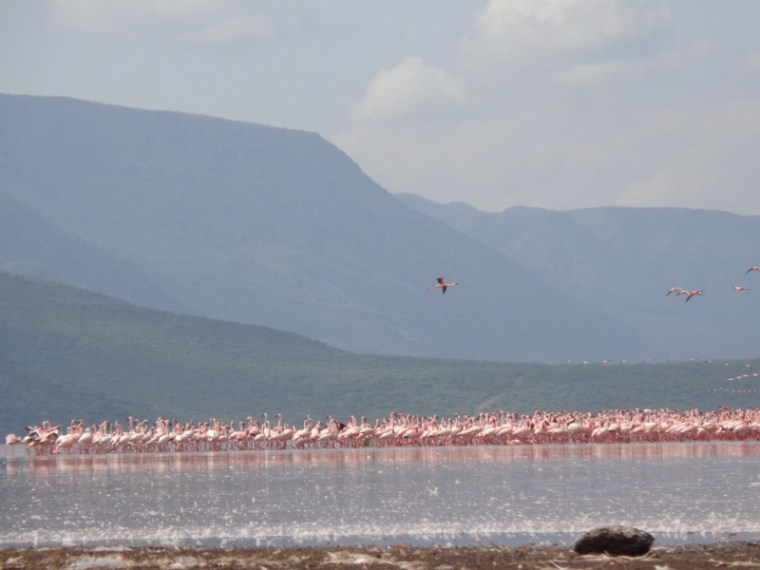
Greater flamingos at Lake Bogoria.Copyright Rupi Mangat (800x600)
Greater flamingos at Lake Bogoria. Copyright Rupi Mangat

Calling out Loud

According to the British Trust for Ornithology, just like Oduori, Adamjee and a thousand other Kenyan birders the daily chorus of birdsong is now more audible in the heart of the cities.

In the current quieter world, the feeling amongst birders is that it could be helping the birds to be heard by potential mates which increase their breeding success. However this has to be verified scientifically by continued survey even during these social distancing cash-strapped corona days. And that depends on volunteers who are keen birders.

Birding – a World of Volunteers
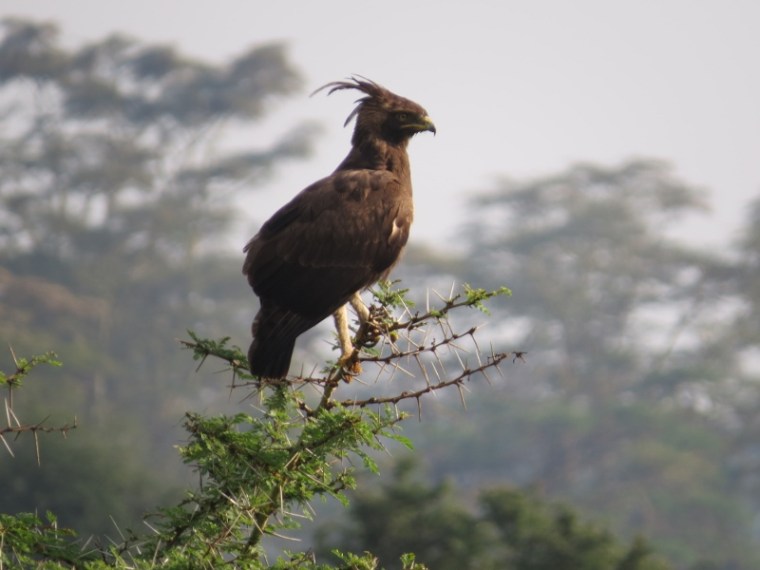
Long-crested eagle at Lake Nakuru. Copyright Rupi Mangat (800x600)
Long-crested eagle (logo of Nature Kenya) at Lake Nakuru. Copyright Rupi Mangat

Birds are everywhere – in air, water and land. Keeping track of the avian world depends largely on volunteers whose data can be used by research scientists and policy makers to safeguard their realm and in Environmental Impact Assessments when taking on any infrastructural project, for birds are indicators of the environment.

Birding in Kenya is largely thanks to Fleur Ng’weno of Nature Kenya who in February 1971, started the Wednesday Morning Birdwalks from the Nairobi National Museum. For the last 35 years the walks have taken place weekly, rain or shine led mostly by Ng’weno or someone if she’s not around. Nature Kenya has branches almost everywhere in the country.

Despite the walks being suspended for the first time in Kenya which to the birders’ chagrin is the March-April migration time, Ng’weno the octogenarian is still busy birding with a face mask in the Nairobi Arboretum, Karura Forest and Nairobi National Park as are others in the country, filling in their data diligently.
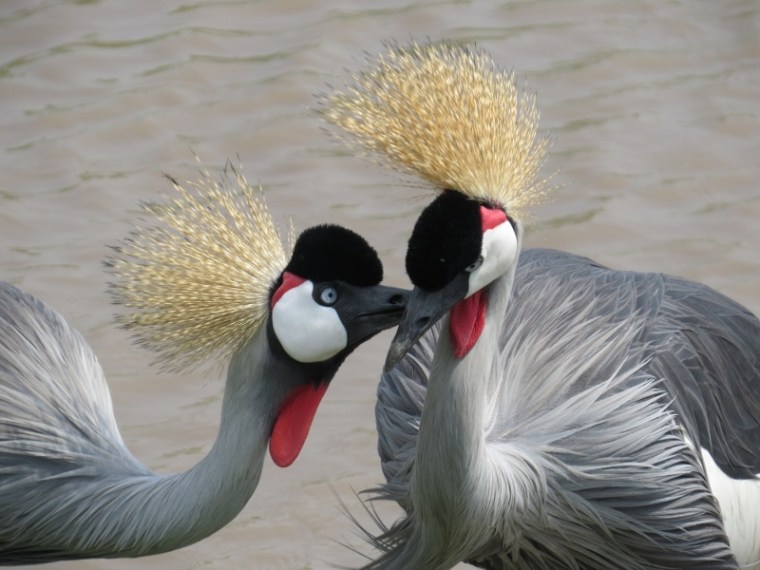
Grey crowned cranes in Lake Nakuru National Park. Copyright Rupi Mangat (800x600)
Grey crowned cranes in Lake Nakuru National Park. Copyright Rupi Mangat

‘Back to Normal’

The world-over, reports abound of wildlife stepping into cities and towns as nature rebounds during the pandemic. There’s less pollution and noise, the air is clearer with snow settling back on mountains such as Kenya and Kilimanjaro from where it had vanished to a point of a sliver. However, the big question is, will any short-term gains made by wildlife be reversed once the lockdown is over?

Or will shape policy for a healthier world with nature as the pandemic ebbs?

On the Flip Side

However, according to Darcy Ogada Assistant Director of Africa Programs for the Peregrine Fund the CV19 will probably have a large negative effect on all wildlife in rural areas because of the economic fallout. “People are hungry. Poaching of smaller species like antelope has most certainly increased and birds will be poached for food too. Protected areas aren’t excluded. As parks fees and tourism declines it has an immediate impact on security operations in these areas,” she comments.

A Stroll along Sabaki River Mouth: Kenya’s biggest estuary and an Important Bird Area (IBA)

Above: Sabaki Estuary. Copyright Rupi Mangat

From the archives: May 2010

On the mudflats of the Sabaki, a strong sun beats down so fierce that it makes the water over the sand sparkle. On the bridge above, cars and matatus speed over the estuary – Kenya’s biggest – unaware of the stunning vistas below and of its importance as an IBA or an Important Bird Area.

Sabaki River Mouth. Credit Cisticola Tour Ltd (800x302)
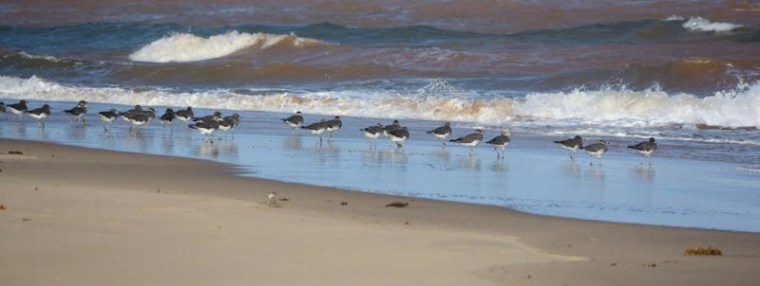
Flocks of waders at Sabaki River Mouth. Credit Cisticola Tours Ltd

Continue reading “A Stroll along Sabaki River Mouth: Kenya’s biggest estuary and an Important Bird Area (IBA)”

Sailing Up Tana Delta

Above: Bajuni fishing boat at Kipini. Copyright Rupi Mangat

From the archives: January 2014

It’s 7 a.m. and we’re at the mooring bay in Kipini where the fishermen take a break from the deep sea and for their dhows and mashuas to be repaired. Their lives are centred around their fishing vessels with makeka’s spread on the sand covered with mosquito nets where they have spent the night. Local Pokomo women prepare breakfast for the men on the other side of the boats. We’re waiting for the boat to arrive from Ozi to sail us up the delta and it’s blazing hot.

Leisurely life - dhow transport sailing by villages along the river - rupi mangat - one time use only (800x600)
Leisurely life – dhow transport sailing by villages along the Tana Delta. Copyright Rupi Mangat

Continue reading “Sailing Up Tana Delta”

Launch of Kenya Women Birders

A regional entry into the world of birding

Published: The East African Nation magazine 20 April 2019

The fastest growing sector in tourism now is birding. With an estimated eight million American bird watchers looking for new vistas to fly to in search of the feathered kind, East Africa is a top destination. Then there is the rest of the world with a few more million birders.

The Rwandans and Ugandans have tapped into this figure and are investing in training guides including women guides. Both countries have their respective chapters: launched Rwanda Women Birders and Uganda Women Birders in 2013 to draw in the other half of the population.

Following hot on the heels is Kenya with the launch of the Kenya Women Birders on 29 March 2019.

“The reason for launching a chapter for women is because despite having really top-rated women birders in Kenya, when it comes to bird guiding, there are very few,” explained Washington Wachira of Cisticola Tours who joined hands with the Uganda Safari Guides Association (USAGA) to kick-start the Kenyan women birders.

“Cisticola Tours will host the Kenya program to train professional bird guides. The plan is to have an East African group of women birders who can lead birding tour groups and research groups.”

DSC09365 (800x600)
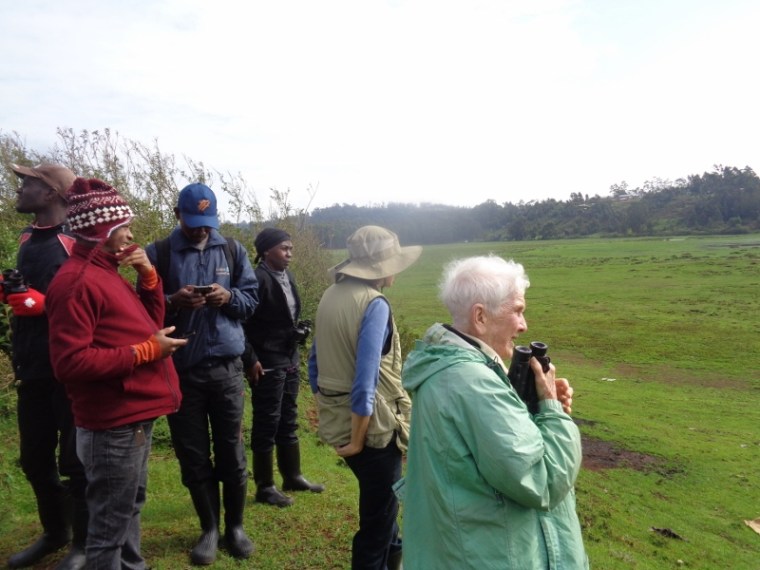
Fleur Ng’weno in green jacket who has started bird walks in Nairobi in February 1971 and still at it – Manguo Swamp March 2018 Copyright Rupi Mangat

Fleur Ng’weno the widely acclaimed top Kenyan woman birder was at the launch and honoured for her work in birding. At 80 she stills leads the bird walks every third Sunday of the month and the weekly Wednesday morning walks she has done since 1971 – 48 years ago. Almost every bird guide in the country has passed through Fleur’s ‘school of birding’.

Opportunities

“There are many opportunities that arise through birding,” quipped Fleur at the launch. “In Kenya, we now have Site Support Groups in many parts of the country.”

Site Support Groups under the umbrella of Nature Kenya (East African Natural History Society) are a spin-off from the bird walks in Nairobi. The local groups guide visitors and monitor the birds, rare and endemic like the Clarke’s weaver in Kilifi, Papyrus Gonolek along Lake Victoria’s shores and Grey crowned cranes at Lake Ol Bolossat.

“Birders come for many days in search of the birds they want to see,” remarked Herbert Byaruhanga of USAGA. Rare and endemic birds means patience and a stay of more than a night.

In Uganda, women birders now own tour companies, hotels and support community projects. “When you empower a woman, you empower the whole community,” remarked Lilian Kamusiime owner of Kigezi Biota Tours Ltd based in Kabale town which she started in 2013 and is a driver-guide herself. She was once a teacher.

“As a female tourist driver, yes I have encountered difficult moments like when I went to pick up seven clients from Kigali (Rwanda),” continued Kamusiime. “They were not expecting a lady guide – and they were all women from overseas.

“Anyway, it was the best trip ever for the clients. When they flew back, the leader wrote on her facebook for the 2018 International Women’s Day that I was among the best women to celebrate because I did my job as well as any other best male guide.”

Challenges

Ground Hornbill rarely seen on a tree at Lake Naivasha KWS ground Copyright Rupi Mangat (800x450)
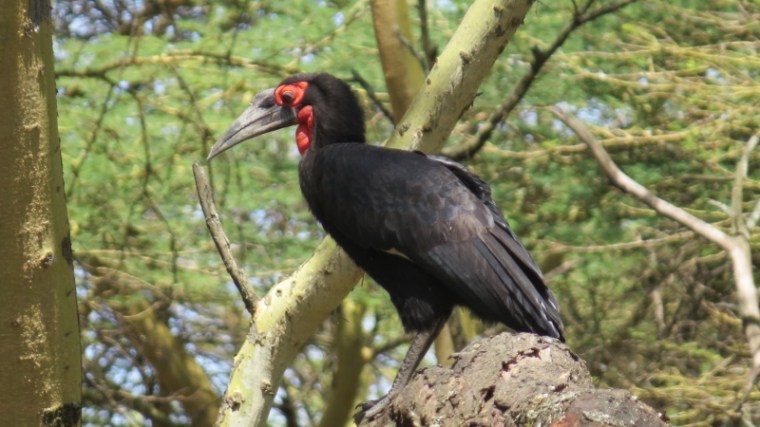
Ground Hornbill rarely seen on a tree at Lake Naivasha KWS ground Copyright Rupi Mangat

But the challenges are there for women. “I’ve had to deal with safari drivers who don’t take women guides seriously,” stated Jennifer Oduori, a protégé of Fleur and amongst the top rated bird guides in Kenya. “But you have to take a stand and show that you know what you are talking about.

“It’s the same in Uganda,” added Kamusiime. “Like most African countries, Uganda is also a male-dominated country and that was a factor why we as women had to unite to form the birders group for professional bird guides.

Research and Policy

As an invited speaker – despite being really bad at identifying the feathered kinds – l love birding. And as a writer passionate about conservation and the environment, birds are indicators of the state of the environment. Policy makers must partner with researchers and use their data to inform the way forward on sustainable development. For when the last vulture vanishes, the crane crashes and the song bird silences, we know we’ve lost our swamps, forests, grasslands and rivers – the very ecosystems that we humans depend on.

The Happy Herons of Manguo Swamp

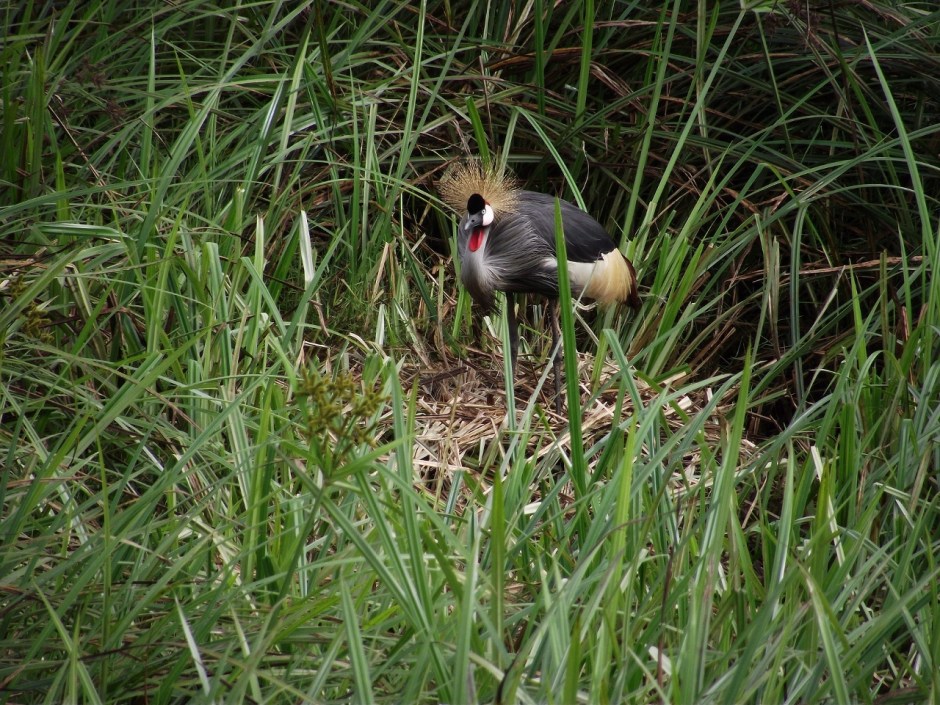
Above: Grey Crowned Crane on its nest (not in Manguo Swamp because they don’t nest there)
Copyright: International Crane Foundation / Endangered Wildlife Trust Partnership

Published: Saturday magazine, Nation newspaper 31 March 2018

DSC09365 (800x600)
Fleur Ng’weno in green jacket who has started bird walks in Nairobi in February 1971 and still at it – Manguo Swamp March 2018 Copyright Rupi Mangat

It’s a cold and rainy March morning but some of us need to escape the dull city skies. So meeting the Nature Kenya friends for the regular third Sunday of the month (including Wednesday mornings) that have gone on uninterrupted since the eminent Fleur Ng’weno started them in February 1971, we settle on Manguo Swamp.

There are two reasons for this.

Continue reading “The Happy Herons of Manguo Swamp”