Towering Beauties

February 2016

Samburu’s Reticulated giraffes charm all
dsc04010
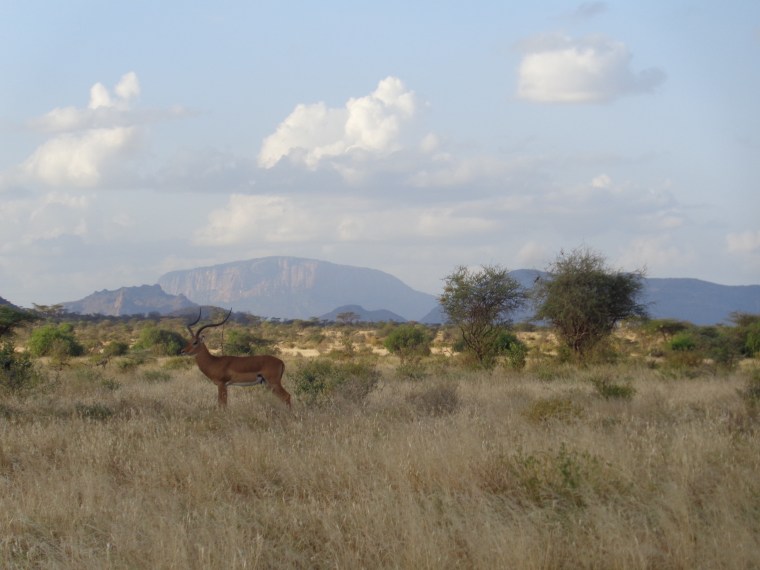
Male impala in Samburu National Reserve with the iconic bread basket – Ololokwe in the background

A trio of giraffe browses on the thorn trees on a plain of sun-burnished grass in the dry season. The sand-bottom luggas run dry except for the Ewaso Nyiro flowing its way through the reserve, providing the only water for the animals.

John Doherty of the Reticulated Giraffe Project knows the giraffes by sight. “Their names are written on their skins,” he says. “There’s Tailess, Finger and Mermaid’s Purse.”

We’re not even that close to see the details but Doherty knows almost all the 500 Reticulated giraffes that wander in and out of Samburu National Reserve by sight.

Born with an innate fascination for animals, Doherty started the Reticulated Giraffe Project while studying for his PhD in the reserve a decade ago.

“They are three bulls,” he continues as we drive closer. Looking through our binoculars, it’s easy to identify Tailess – he has no tail – probably bitten off by a big cat. Finger’s white markings on the neck don’t quite go all the way to the mane but look like fingers clasping his neck. It’s easy to see why Doherty says their names are written on their skins.

However these are just nick-names – including names given by the local tribes like the Gabbra and Samburu. “Many name a giraffe in memory of their ancestor,” tells Doherty.

All the Reticulated giraffes of the north-eastern territory that the project covers are identified by using a pattern-recognition software where both sides of the giraffe are photographed.

Once Common

Giraffes once covered the savannah grasslands of Africa. Nobody thought they would go out of fashion.

But in the last decade, some 30% may have been lost due to habitat loss and poaching. Kenya is the only country with the most giraffe species – the Rothschild, Maasai and Reticulated.

Reticulated giraffe numbers have crashed by more than 80% – from about 30,000 a decade ago to fewer than 5,000 today. Their stronghold is north-eastern Kenya and some isolated populations in Somalia.

“This year we plan to put GPS collars on six to understand their movement patterns,” continues Doherty. “It’s important because of the projects like LAPSSET (Lamu Port Sotuth Sudan Ethiopia Transport road). We need to have mitigation measures put in place.”

Already the new tarmac road from Isiolo to Moyale is claiming lives with fast-moving vehicles like the pregnant Reticulated giraffe crossing from Samburu into Shaba National Reserve. A vehicle smashed into her legs killing her instantly and her unborn baby.

Doherty has many tales to tell of the giraffes being monitored. A few weeks ago, a new born calf was splashing around in the Ewaso Nyiro with its mother. Then came the croc and snapped it – and this was happening as Doherty, his assistant and guests watched. For 30 minutes the foal struggled as the pair got washed down stream.

“We thought the foal was gone,” says Doherty. Then two hours later came a call from a Samburu ranger called Lesil who fought off the croc and saved the foal. Check it out on http://www.reticulatedgiraffeproject.net/RGP/TWIGA.html. Understandably, the foal’s been named Lucky.

In the cool of the day, we return to Samburu Intrepids Camp – for regulations demand no night-driving. We miss the leopard with her cub but spot elephants and a sandgrouse, a beautiful bird that soaks itself in water in this arid land and flies back to the chicks with drenched feathers. The chicks then suck on them.

Gerenuks stand on their hind legs to browse on the higher branches – the only antelope that does so. Nicknamed the giraffe-antelope (Swala-twiga in Kiswahili) this russet coloured antelope has a long neck and is found in the northern region.

We’ve had two days searching for the rare Grevy’s zebra and only seen one during the Great Grevy’s Zebra Rally 2016.

It’s Murphy’s law.

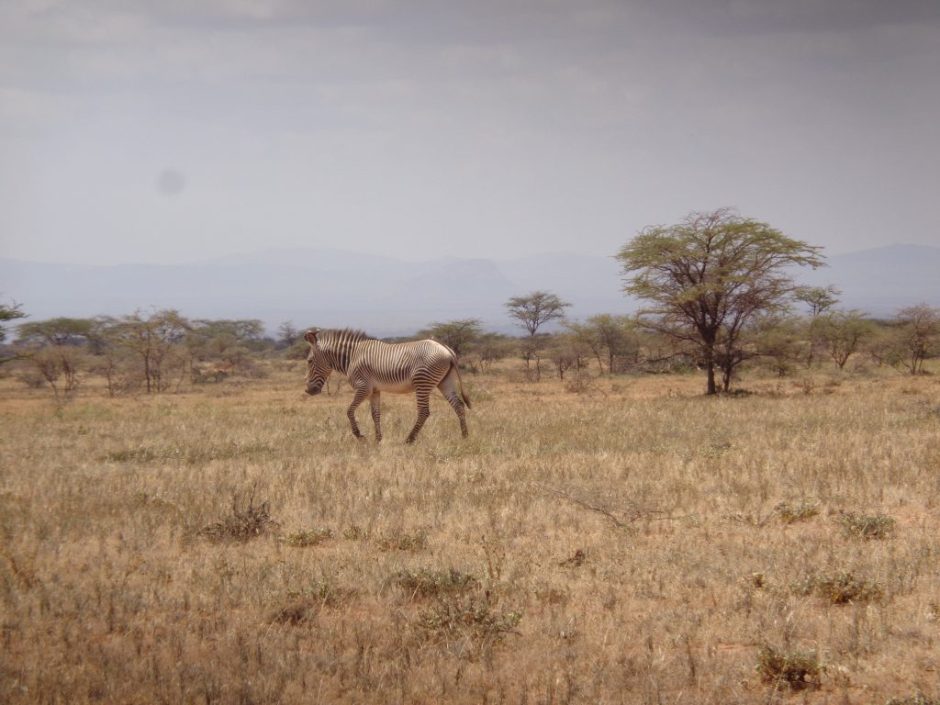
Just as we are leaving Samburu National Reserve, a herd of three females with four foals emerge. Females with foals need water every day – and the Ewaso Nyiro provides them with it.

Samburu National Reserve

It’s 350 north – the road is tarmac all the way to Archer’s Post near the gate. Please carry your ID cards. Check with tour agent for current entry rates.

Samburu Intrepids Camp www.heritage-eastafrica.com  is on the banks of the Ewaso Nyiro River. It’s got beautiful luxury tents including enormous family tents with lots for children to do.

For more on Grevy’s zebra: www.grevyszebratrust.org

Reticulated giraffe: www.reticulatedgiraffeproject.net

Remember to carry your national ID or passport for proof of identity
 

Searching for Stripes

February 2016

In Westgate Conservancy bordering Samburu National Reserve

Driving through Samburu National Reserve to get to the community-owned Westgate Conservancy, the first animal to bolt across the road in the mid-afternoon heat – is a Grevy’s zebra.

But we cannot at this point shoot it – that is shoot it with a camera and not a gun (a gun would mean a fine of up to Ksh 20 million or time spent behind bars under the new Wildlife Act 2015).

Continue reading “Searching for Stripes”

Celebrating Coffee in Kiambu

October 2016

I love coffee – the aroma, the taste and that verve that hits the spot. So when a day to celebrate coffee was announced l was already heady with excitement – and that a coffee farm in Kiambu had picked on this was perfect. In my mind’s eye, l had everything pictured with coffee – great conversation exchanged over cups of coffees – ice coffee, hot coffees, house coffee, coffee cocktails, coffee-infused foods, coffee ware, coffee, coffee, coffee. I was so heady with excitement. With a couple of coffee-drinking friends, we headed into Kiambu the celebrated home of the best coffee in Kenya. Continue reading “Celebrating Coffee in Kiambu”

Wandering through Laikipia

January 2016

A decision is made at Nanyuki Sportsman’s Arms Hotel to spend the night ‘somewhere’ in Laikipia. This band of land that’s a plateau, stretches from the snow-capped peaks of Mount Kenya to the rim of the Great Rift Valley overlooking Lake Bogoria. It’s by no means a small place.

dsc04274
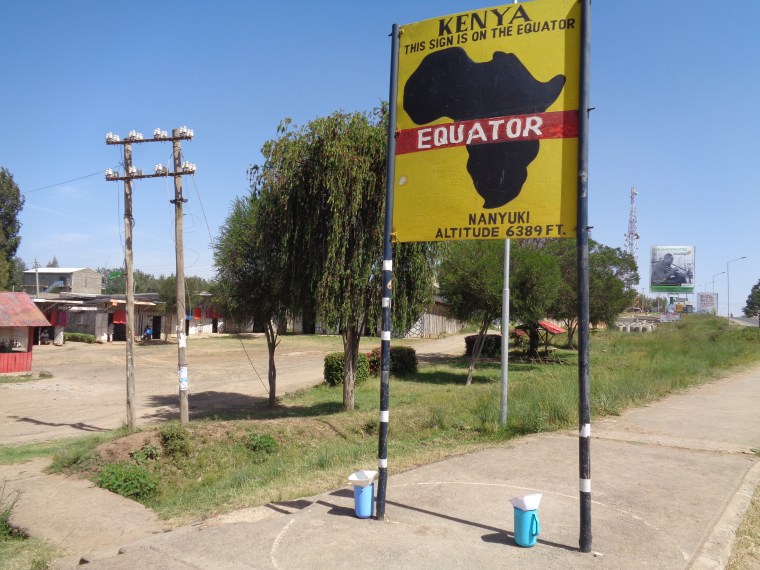
The Equator crossing at Nanyuki

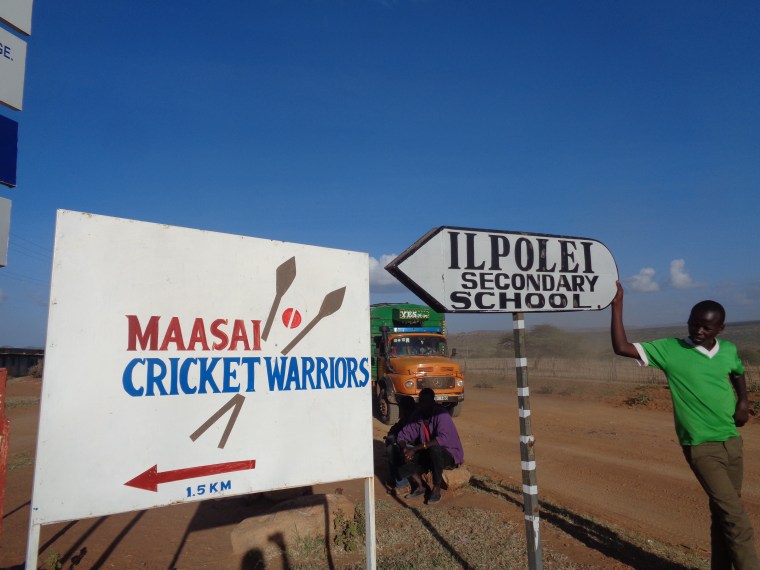
Armed with wanderlust, we take the route to Il Polei – the home of the amazing Maasai Cricket Warriors – an hour’s drive from Nanyuki with Mount Kenya’s snow-capped peaks in clear view, in a country of huge ranches and wildlife conservancies.

dsc04243
The home of the phenomenal Maasai Cricket Warriors the all-Maasai cricket team from Il Polei where we begain our escapade into the land of Laikipia

Continue reading “Wandering through Laikipia”

The Charm of Chemelil

January 2016

On the foothills of the Nandi Hills in western Kenya, the plains of Chemelil support an industry that sweetens many a cuppa tea

img_2354
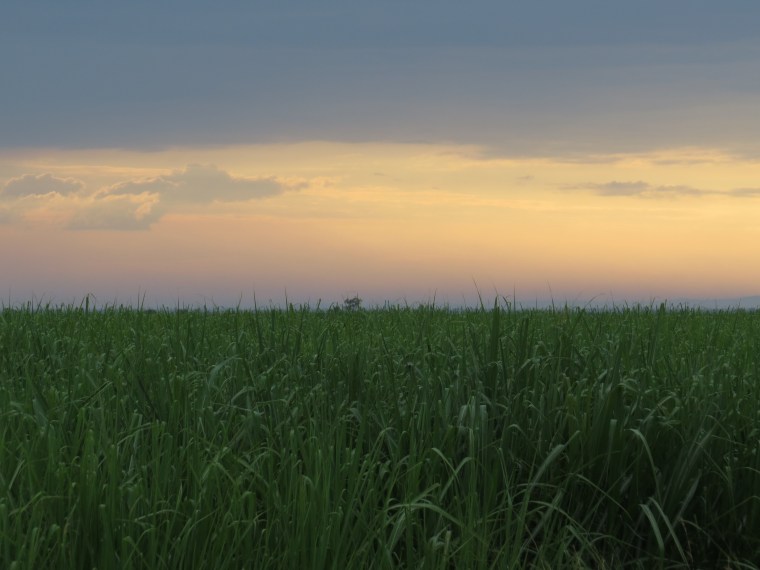
Sugar cane plantation in Chemelil

By Rupi Mangat

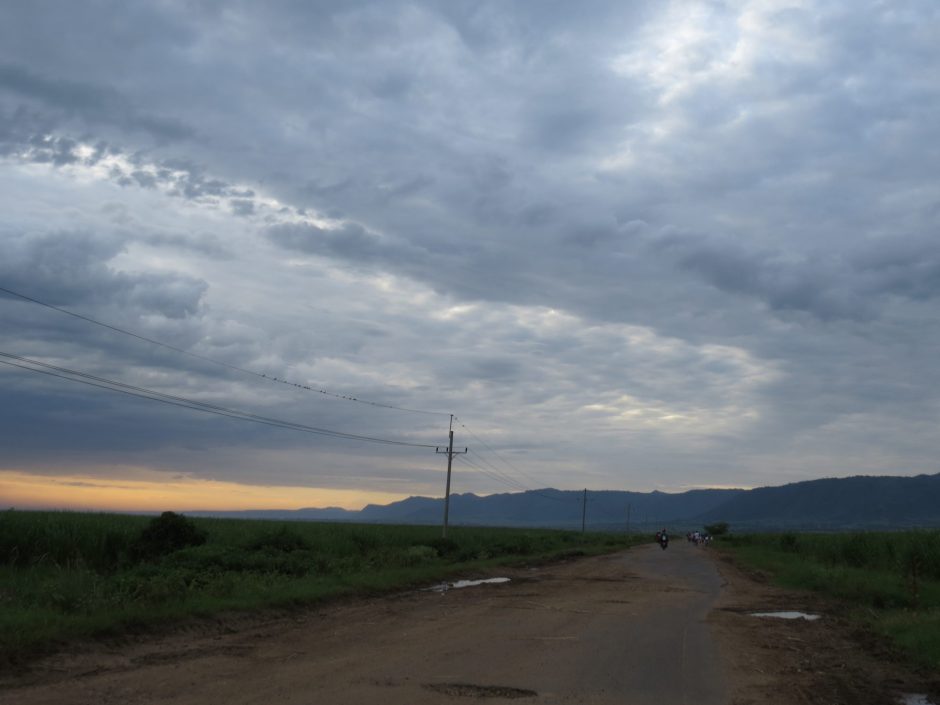
In the first light of dawn, the rays of the rising sun touch the green leaves of the sugar cane  fields that line the stretch of the Nandi Hills animating the day. Little black birds with a bright red-orange nape flit from stalk to stalk. Checking through the binoculars for a clearer view and then the bird book, it gets confusing – they look like Black bishops and the guide does say the geographical range is western Kenya but uncommon in moist grasslands and sugar cane fields. But these ones are a-flutter all over. Maybe l haven’t noticed something from afar that could make them something else. I wish one of my birding pals was with me.

The history of sugar cane plantations in western Kenya began in the early years of the 20th century – the first crop planted by Jagat Singh Pandhal who made the lakeshore town of Kisumu his home after the completion of the Uganda Railway. Having arrived in the 1890s from a tiny village in the Punjab to find work on the railway, he tried his hand at many crops on land that was virgin bush earmarked for farming by the colonial government. He made and lost his fortunes and died in Kibos in 1958.

img_2351
Sugar cane plantation in Chemelil In the foreground is an invasive weed from South America – it’s called parthenium.

In the early days, it was all hand labour with bull carts and tilling the land with jembes. My earliest memory of the family home is a mabati hut and us sitting at night clustered around a lantern for dinner while my aunt laboured over the jiko making chapatis.

The sugar industry in western Kenya today is the pillar of the economy. With the changing times came modernization and machinery. The sugar area began to extend and by 1948 there were large-scale sugar farms in Chemelil. Kibos is 30  kilometers from Chemelil along the same road filled with sugar cane plantations.

Then came the sugar factories – in 1968, the Germans built Chemelil Sugar Factory a year after Muhoroni Sugar Factory. I’m being given the spiel by Steven Kibet the assistant chief of Nyagor sub location that straddles River Nyando and the Nandi Hills.

“It takes 18 months for the sugar cane to mature,” continues John Saum Kado, the agronomist. “Nzoia produces the best quality sugar cane wth high sucrose. I all depends on the soil.”

It sounds a little like wine.

With the changing times there are new concerns. The fast spreading noxious weed parthenium is spreading fast with no policy directive on how to exterminate. Like the ubiquitous water hyacinth on Lake Victoria. The authorities were aware of it in the early stages when it could have been eradicated. Now it’s too late. The tragedy with parthenium is that it has the potential of turning Kenya’s fertile soils infertile while carpeting them with a green veneer – making it a veritable green desert.

Taking the Awasi road to Kisumu, we run over Nyando again which begins its journey from the Mau hills and drains into Victoria. The rains have filled the rice paddies of Ahero and water birds like egrets stalk the fields for tasty water morsels.

Back in Chemelil, dusk pulls the sun to the horizon and lights the sky an amazing kladeiscope of colours – red, orange and gold behind the hills of Homa Bay.

Driving out of Awasi, the road to Ruma stretches ahead. It’s the only park with the rare Roan antelope left in the wild. Once widespread from the shores of Victoria to the Maasai Mara, they may well be on their way to extinction with 50 left. Yet humanity continues to edge in onto the park leaving little space for the last of the wild to be free.

Fact File

Try the new murram road from Londiani to Muhuroni – it’s scenic and winding with stunning views of the hills and valleys.

Take a leisurely trip to the western – it’s rich in agriculture, plenty to do on Lake Victoria and great sites o visit.

Combine a trip with the islands of Rusinga and Mfangano, the sugar fields by Chemelil from where you can visit prehistoric sites of Songhor and Fort Ternan with permission from the National Museums of Kenya.

Kakamega Forest, South Nandi Forest and North Nandi forest, Bonjoge national park, Koru are within easy reach of Chemelil.