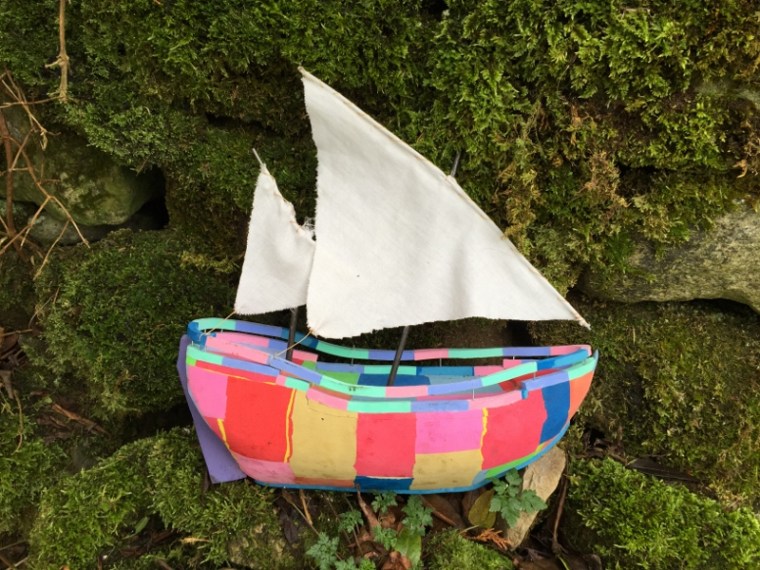
A model og the Plastic dhow that will sail from Lamu in Kenya to Cape Town, South Africa – the first journey of its kind – Picture courtesy: Dipesh Pabari
A chance meeting of two high school friends puts in motion something the world has never seen – a life-size plastic dhow to sail Lamu to Cape Town with a message – stop dumping plastic in the ocean.
Lamu Beach clean up. In one day 5 tonnes of plastic debris was removed from the beach. Picture courtesy Dipesh Pabari
Children picking plastic bottles is from the port of Lamu. Picture courtesy Dipesh Pabari
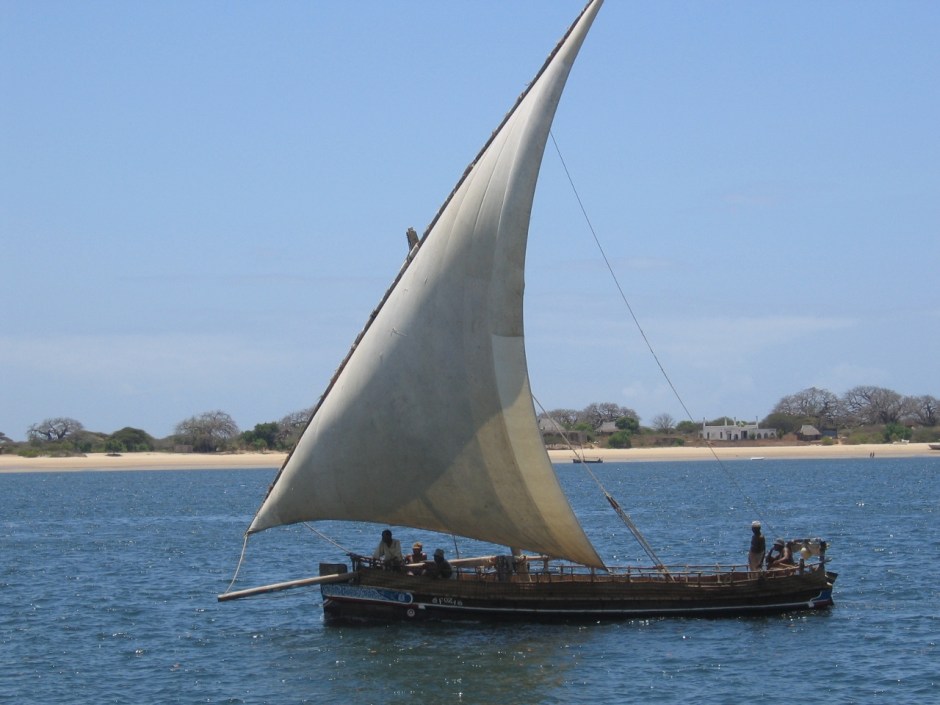
“There’s enough plastic trash in the ocean to make a flotilla,” states Ben Morrison who had an awakening two years ago walking a 10-meter stretch across the beach to the ocean. It was covered in plastic trash. Sailing past were ancient wooden dhows with their lateen sails billowing in the wind that have frequented the east African coast since antiquity.
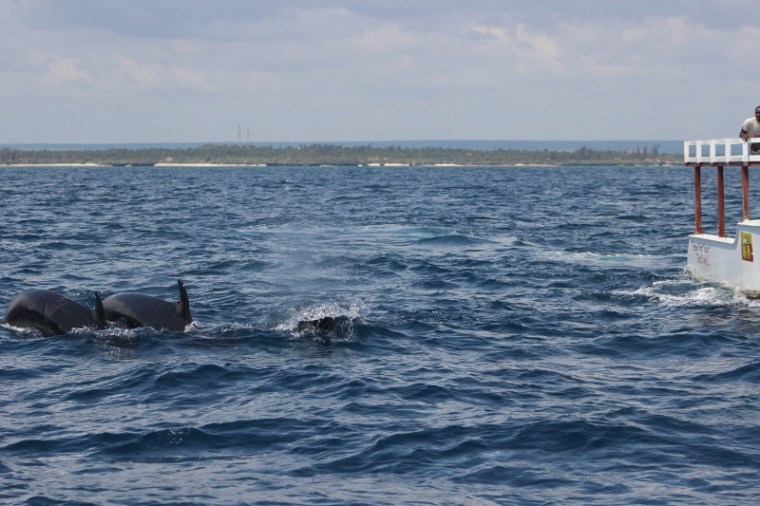
Watamu Marine Association and Kenya Wildlife Service report an amazing sigh for the first time ever.
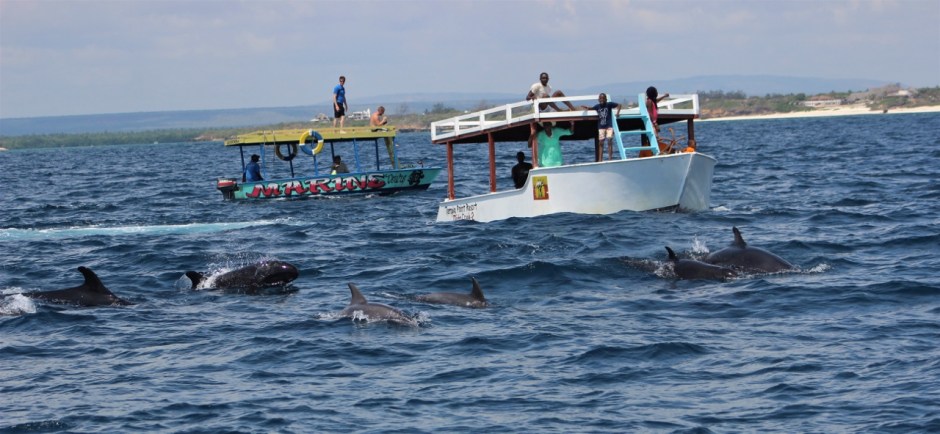
Picture above: False killer whales recorded first time in Kenya in December 2016.
They are witha pod of Indo-Pacific botlenose dolphins. Courtesy Jane Spilsbury/Watamu Marine Association
Published: Satmag Nation 14 Jan 2017
The gorgeous blue-ocean waters of Watamu reveal the first ever sighting in Kenya of False killer whales during a survey carried out by team from Kenya Wildlife Service and the Watamu Marine Association. The excitement is far-reaching.
“False killer whales are similar to Killer whales but smaller,” says a very excited Jane Spilsbury of WMA. “We were about two kilometres from shore when we saw these animals which are normally found in much deeper water.
False killer whales off Watamu, Kenya November 2016. Courtesy Jane Spilsbury/Watamu Marine Association
She continues. “These 13 to 19 feet long animals were hunting in a group of 50 – 100 and were accompanied by Indo Pacific Bottlenose dolphins. For an hour that we watched them the whales covered an area of over three square kilometers hunting sailfish.
“This shows that the Malindi Watamu Marine Protected Area has a rich biodiversity to attract such a rarely documented, data deficient species and also why it is an important conservation area for dolphins and whales. We’re so excited!”
Hoping off the boat after a morning sail in Mida Creek landing by the village of Dabasso, I stop to chat with Spilsbury at Eco-World. I had no idea that wine bottles had more than one use as she shows me around the newly built resource centre at Eco-World.
Thousand bottle Bottle-nose dolphin by Andrew McNaughton at EcoWorld, Watamu Picture copyright Rupi Mangat
Recycled wine bottle door by Andrew McNaughton at EcoWorld, Watamu Picture by Rupi Mangat
Seahorse from trashed waste from sea – rubber slippera into gifts – at EcoWorld, Watamu Copyright picture: Rupi Mangat
Four amazing women make a career of working with snakes. Attending the tenth international snakebite seminar at Bio-Ken snake farm in Watamu recently, each narrates the path taken.
Handling live venomous snakes is an extra-ordinary noble but extremely dangerous profession.
One reason for handling venomous snakes is to milk them – which is the only way to obtain snake venom to produce supplies of anti-venom. Without anti-venom being readily available and administered, a bite from any venomous snake can be deadly. Ironically, anti-venom can only be produced from ample supplies of venom from live venomous snakes. And it takes some dexterity to do that.
Diana Barr
Diana Barr keeping a keen eye on her students as they perform venom extraction from a Papuan taipan under her instruction at the Charles Campbell Toxinology Centre in Papua New Guinea. (Left: Owen Paiva, right Benjamin Wawagu Bande). The venom is sent to the Instituto Clodomiro Picado in Costa Rica where it is used to produce lifesaving antivenom. This highly venomous snake has a nervous temperament which coupled with its speed and agility make it an extremely dangerous snake to work with. It is responsible for around one thousand deaths per year in Papua New Guinea. Picture courtesy: Barr
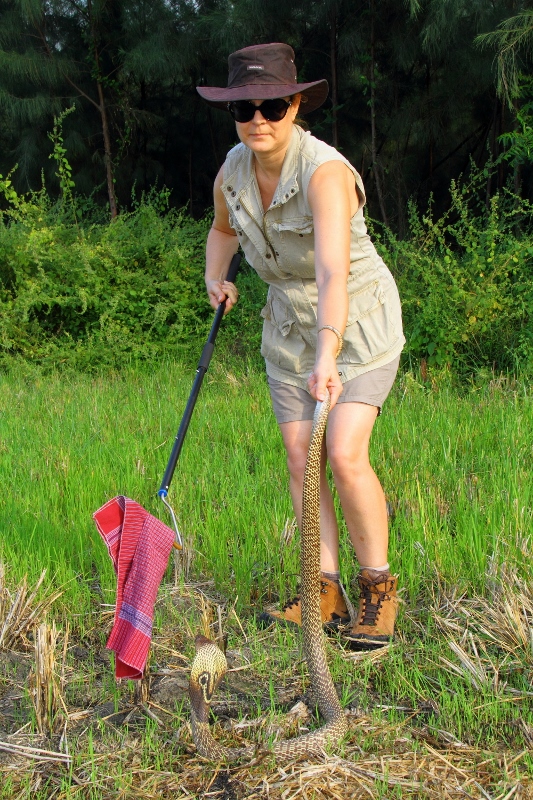
Diana Barr working with an Indian cobra. This beautiful snake is one of India’s ‘Big Four’ and is responsible for thousands of deaths every year in India. Picture courtesy: Barr
Young and dynamic, Barr’s job as technical support officer at the Australian Venom Research Unit at the University of Melbourne and Global Snakebite Initiative, an Australian non-profit organisation working to reduce snakebite deaths and disability around the world, puts her in very close contact with the most venomous snakes in the world.
Learning about the Reptilian World of Snakes and Scorpions
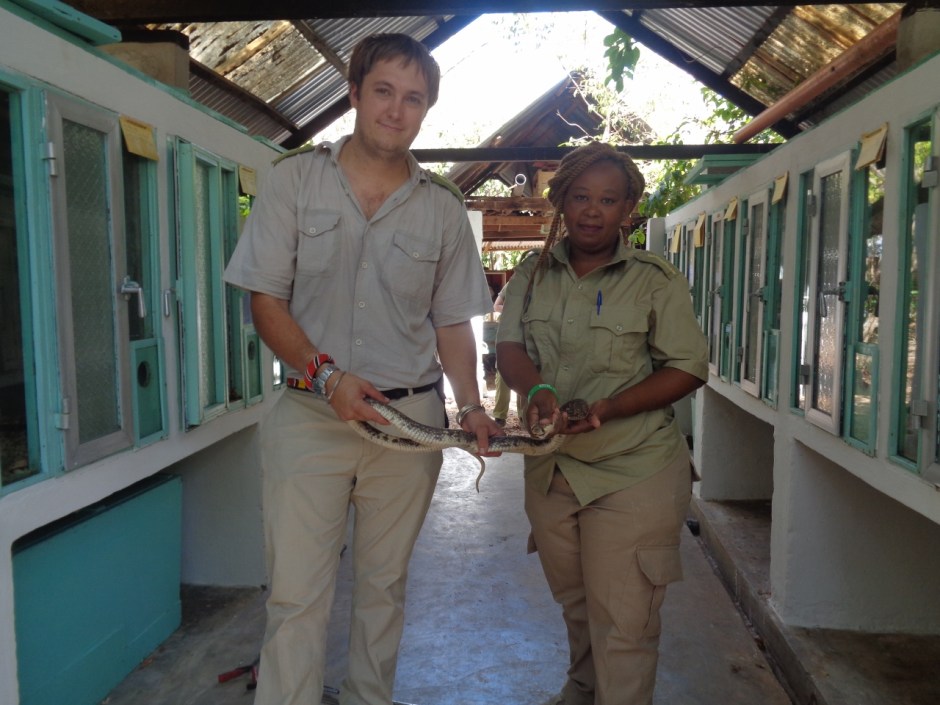
Main picture: Nancy Njeri and Kyle Ray – profesional snake handlers at Bio-Ken Snake Farm Watamu, Kenya
Copyright Rupi Mangat
A gorgeous tropical blue snake is twined around a twig. It’s a speckled bush snake and not venomous. Nancy Njeri, the professional snake handler is giving the grand tour of the snake farm that was started in 1980 by the late and very amazing James Ashe and his wife Sanda. Sanda still handles the snakes and other injured animals and return them to the wild. She has the reputation of being the finest snake-handler – especially the venomous green mamba.
Njeri on the other hand is working her way up to the gold-level –when she will be allowed to handle the really venomous snakes like black mambas – alone.
“Speckled bush snakes come indifferent colours,” tells the young woman and continues to take us around, giving tit-bits about the reptiles in residence. “This is the twig snake,” she points to another thin, long snake that really looks like the paler cousin of the speckled bush snake only that as Njeri tells us, it is a venomous snake that has no antivenom manufactured for its bite. I’d hate to be bitten by this one (or any other) as it means going to hospital for a blood transfusion.
“Anyway,” continues the young woman nonchalantly, “snakes don’t bite to kill. They bite to defend themselves.”
That’s so nice to know.
Winnie Bore – activist and founder of Snakebite-Kenya – http://www.snabirc-kenya.org/ to provide anti-venom in rural areas, help rehabilitate victims disabled or visually impaired by snakebites and develop a research programme simply because there is very little information on snakebites in Kenya. Copyright picture Rupi Mangat
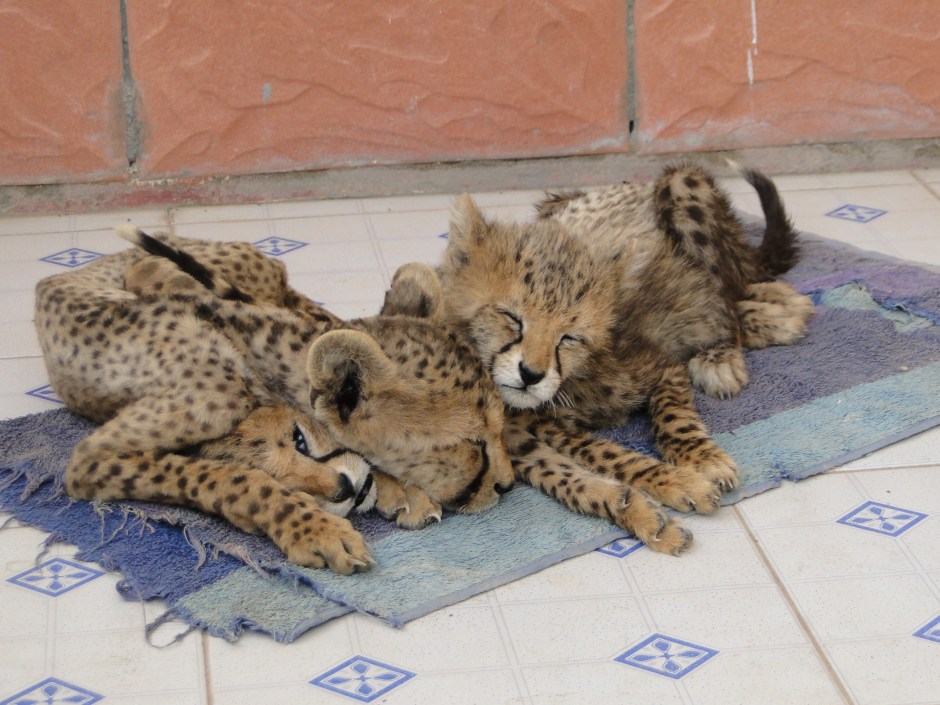
The horrific illegal trade in cheetah cubs and other endangered wildlife fuelling the exotic pet trade
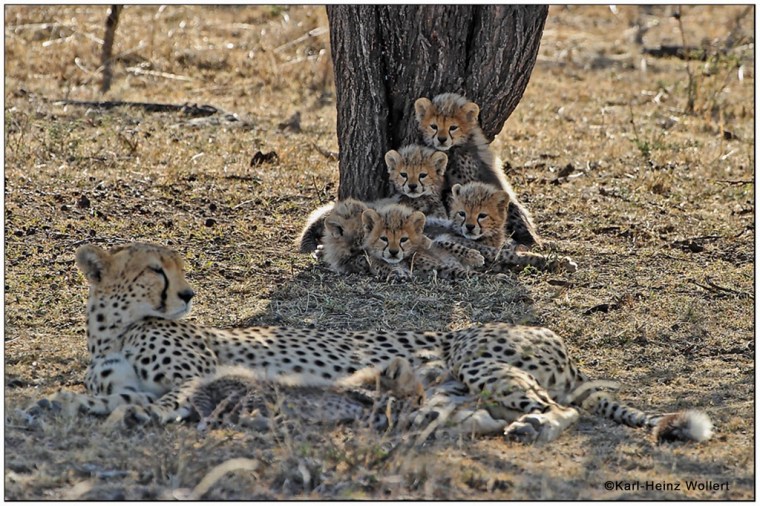
Wild Cheetah cubs with their mother in the Maasai Mara National Reserve, Kenya Picture copyright Karl-Andreas Wollert.
It was a phone call from a U.S. Marine in November 2005 that put the wheels in motion for Patricia Tricorache, assistant director for strategic communications of the Namibia-based Cheetah Conservation Fund (CCF) to add ‘illegal wildlife trade’ to her title.
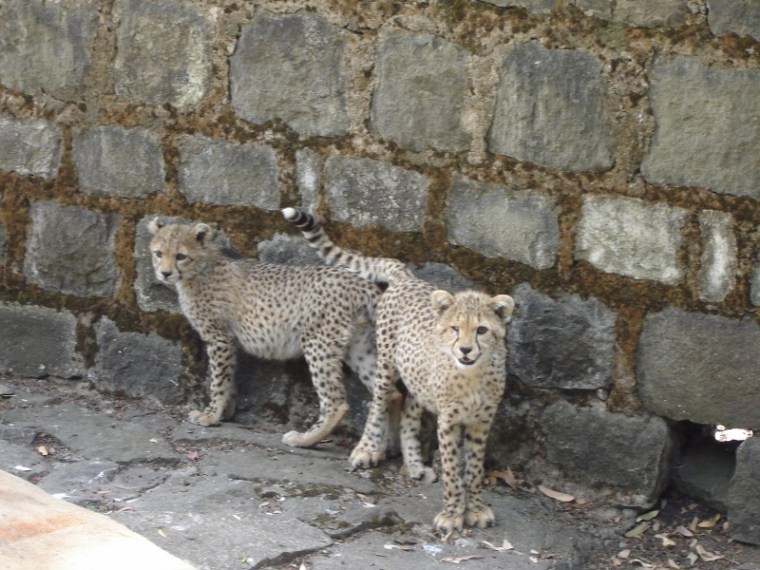
“He was calling from Ethiopia about two cheetah cubs that were tied with ropes outside a restaurant in Gode, a remote village in eastern Ethiopia. He was a vet and said that the cubs would die soon; he was considering buying them.
“I begged him not to buy them because it would only encourage more poaching. We frantically began calling everyone we knew in Ethiopia, including the Environmental Protection Agency (EPA), the Ethiopian Wolf Conservation Program and the U.S. Embassy.







 Moonlion Safaris