Safari Stories

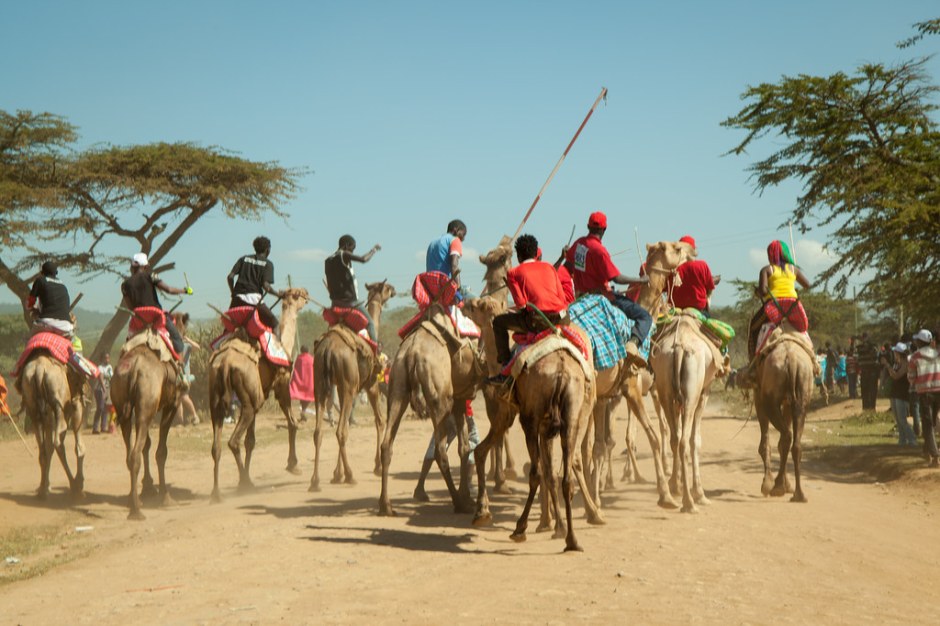
Camel Crazy in Maralal

Above: Maralal Camel Derby by Weldon Kennedy

Published: 2007 Saturday Magazine, Nation

Maralal’s one of those really interesting towns in the outback, a frontier perched in a valley near a great fault line that happens to be the Great Rift Valley with a stunning view of the deep gorge that on a windy day can sweep a skinny person off the edge and into the deep sink.  It’s also a town that’s the headquarters of the Samburu, cousins of the Maasai and in modern history, where Mzee Jomo Kenyatta was under restriction order after his compulsory confinement in Lodwar where he had been for two years short of elevan days.  Maralal became known as the half way house between Lodwar and Nairobi, where Kenyatta and his young family stayed from 4 April to August 14 1961 before they were flown to Nairobi.  The house is a museum, aptly called the Jomo Kenyatta House.
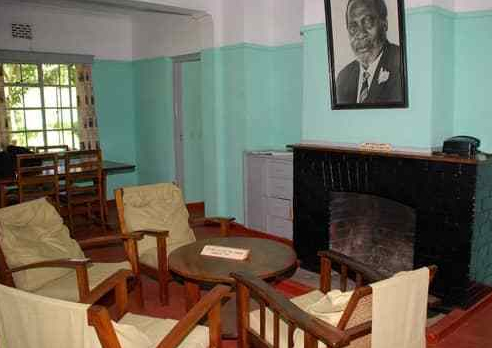
kenyatta_house_image_fM6MY
Kenyatta House in Maralal

Continue reading “Camel Crazy in Maralal”

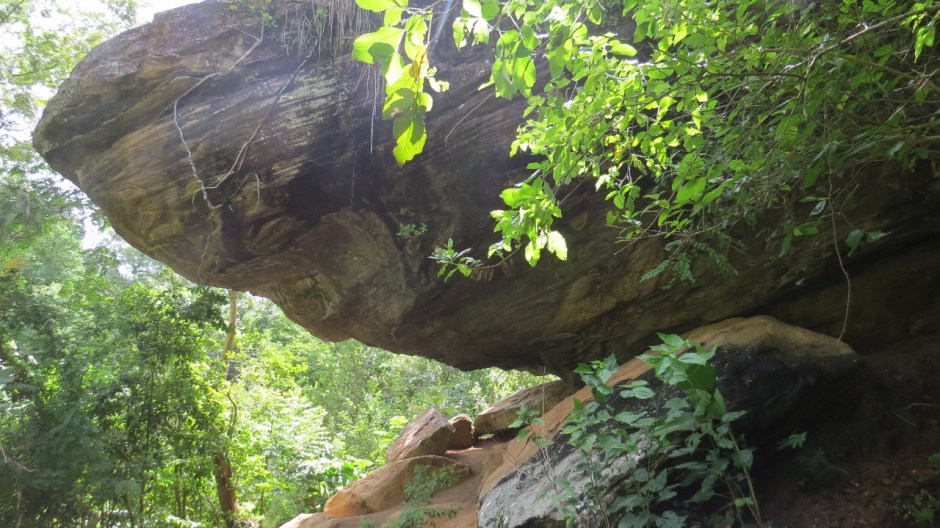
Kenyatta Caves in the magical Taita Hills

Part 1 of 2

Published: 1 June 2019

Above: Outside the Communist Cave on Charles Miekenyi Mwakio’s farm that houses Kenyatta Caves – in Taita Hills. Copyright Rupi Mangat

I’ve hired a piki-piki for the day in the Taita Hills, the ancient crystalline massifs that date before the age of the dinosaur – between 290 and 180 million years ago. The dinosaurs came in 252 million years ago and lasted until 60 million years ago.

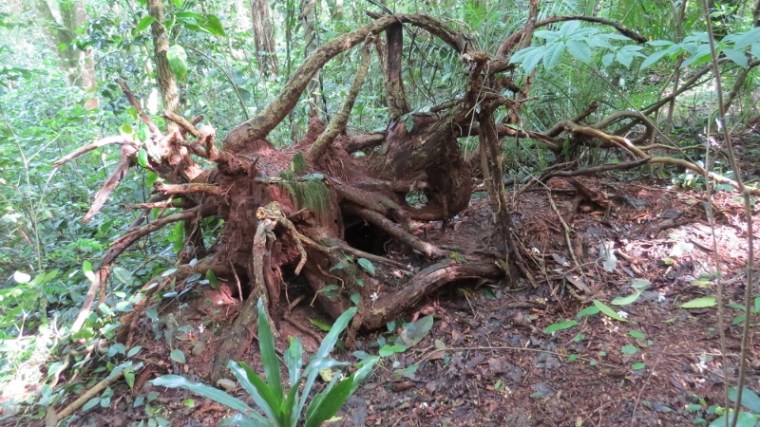
Ngangao forest in Taita Hills - copyright Rupi Mangat
Ngangao forest in Taita Hills – copyright Rupi Mangat

Starting out from Ngangao forest that is the largest patch of the indigenous forest on the Taita Hills measuring 1.9 square kilometres, the plan is to visit a cave l’ve been very curious about: Kenyatta’s.

Continue reading “Kenyatta Caves in the magical Taita Hills”

Let’s Go to Hell

Published: December 2007

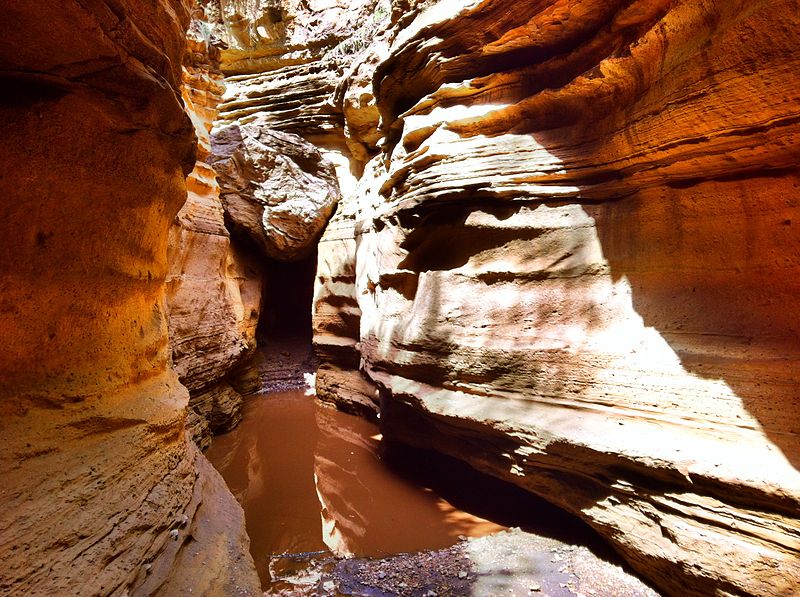
Above: A boulder blocks the slot canyon at Hells Gate National Park, Kenya. by Heyandrewhyde

Fiery mountains spitting out red-hot molten lava, earth-shattering forces from deep in the earth’s belly and floods have shaped what is a trip to ‘hell’.

‘Let’s go to hell,” says our local Maasai guide from the Olkaria Maasai clan living in and around Hell’s Gate National Park, an hour’s drive from Kenya’s capital city Nairobi.

The trip to hell sounds funny for we’re in a very picturesque setting with the scent of the leleshwa, a shrub of the dry lands used by the Maasai as a deodorant by sticking the leaves under their underarms.

“Okay, let’s go to hell,” replies the group of well-fed women.

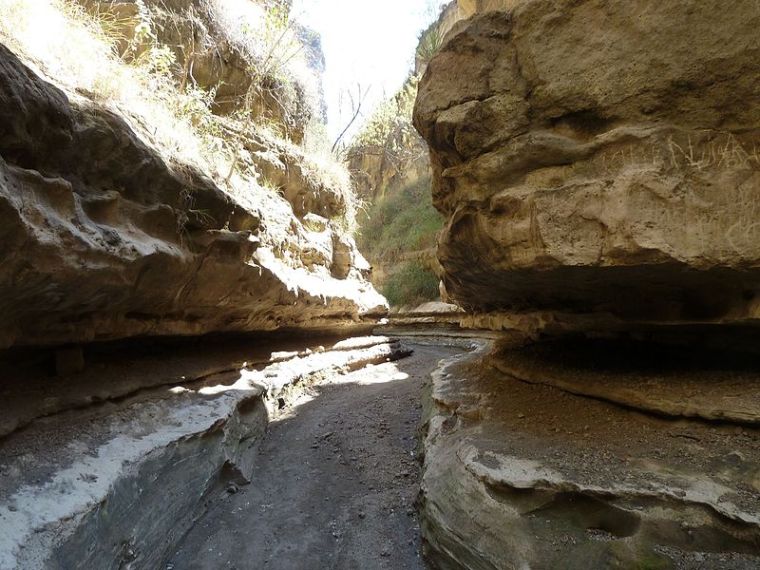
Gorge,Hell's Gate National Park by Toppazz (800x600)
Gorge,Hell’s Gate National Park by Toppazz

Continue reading “Let’s Go to Hell”

Footballers at Lake Ol Bolossat

Published: 18 May 2019

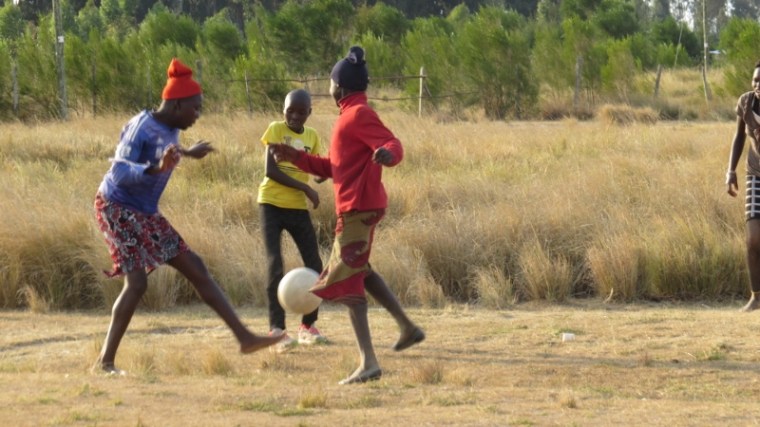
I have little fingers running through my hair sitting by Lake Ol Bolossat in central Kenya. First it’s the girls returning from school who are surprised to see me standing in the field near their village. A smile and a ‘hi’ gets them closer. After a few minutes of checking me out, they open up with questions like ‘what is your name?’, ‘where are you from?’ They find it strange when l  reply l’m Kenyan. “But you are not black,” says one.

Korongo girls' fotball team at Lake Ol Bolossat Copyright Rupi Mangat Feb 2019 (800x450)
Korongo girls’ fotball team at Lake Ol Bolossat Copyright Rupi Mangat

Continue reading “Footballers at Lake Ol Bolossat”

Earth – Healing The Rift: A Musical Performance For The Earth

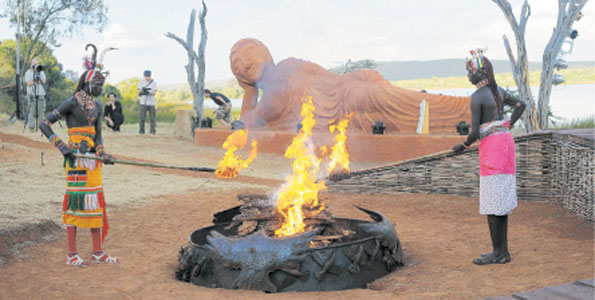
Above: Njemps tribesmen light a ceremonial fire in front of a statue of Buddha at Laikipia Nature Conservancy

From the archives 2007 March

Our Earth, the only living planet in the galaxy of millions has never received so much attention as it is now.  That it is in dire straits goes without saying.  Climate change and global warming are the topics of debate amongst the environmentalists, industrialists, scientists, artists and anyone concerned about our welfare on Earth.  It is after all, like l said, the only planet supporting life.

ngurunit 1 (800x450)

On the edge of the Great Rift Valley, the cradle of human kind, is Ol Ari Nyiro, Laikipia Nature Conservancy, a 100,000-acre of wild country full of gorges and canyons, bush and arid land, water filled dams to support the last of the wild.  The Conservancy has been described as ‘the most botaniocally diverse non-forested area in East Africa’ (TP Young 1989).  It is home to an indigenous population of black rhinos where Kuki Gallmann established the first rhino sanctuary in Kenya when poachers had almost wiped out more than 95% of the country’s black rhino population by the early 1990s.  It is also home to most of the African plethora of wildlife from lions and elephants to the tiny dung beetle and migratory birds like the Ethiopian swallows. Continue reading “Earth – Healing The Rift: A Musical Performance For The Earth”