Snakes and Blunders

The 10th Bio-Ken International Snakebite Seminar, Watamu

Published Daily Nation 29 November 2016

Useful Snake contacts in Kenya: 0718 290324 Bio-Ken Snake Farm www.bioken.com  www.antivenomtrust.com   www.snakebiteinitiative.org

13-year-old Menza Benjamin was picking up cashewnuts on the ground when he felt a burning hot bite on his leg followed by another. He started to vomit and broke out in a cold sweat. Close to his hut he fainted. He never saw the snake.

That was three years ago and he’s lucky to be alive, sitting at the snakebite seminar held in Watamu early November.
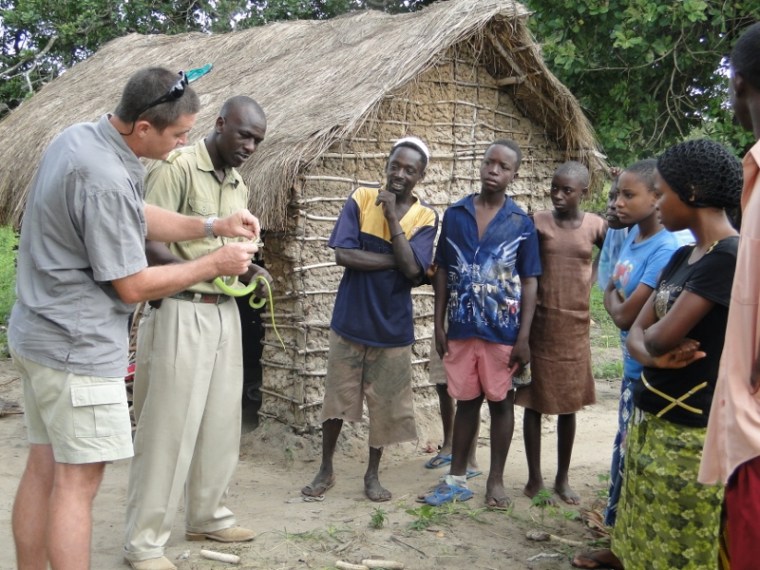
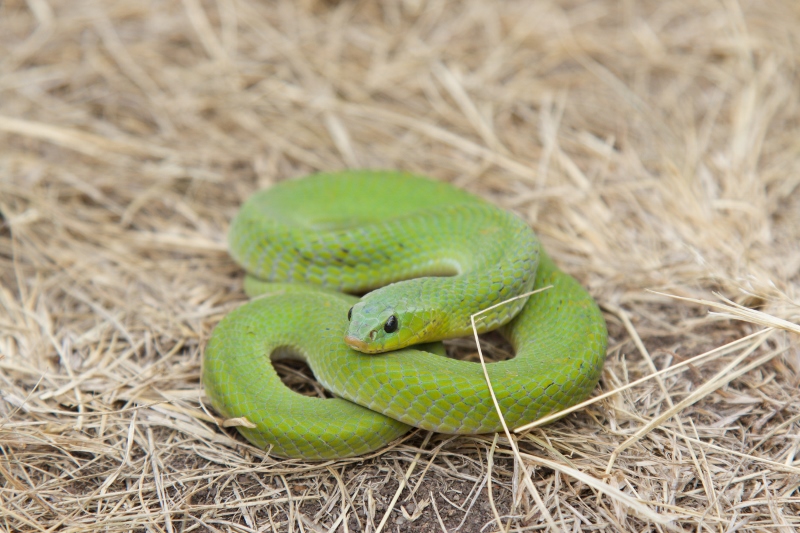
green mamba
Royjan and Boniface who had been called by these villagers to catch a snake in the roof of one of their huts. It was a green mamba. Royjan and Boniface took some time to talk to them and answer their questions. Picture copyright Royjan Taylor

What saved Menza was the speed with everything that followed. His uncle saw him and immediately put him on a pikipiki and took him 12 kilometers to the Bio-Ken Snake Farm.  By the time they reached the snake farm, the boy was already showing rapidly advancing symptoms of black mamba bite. He was rushed by car – along with a supply of suitable antivenom to the local private hospital where he was treated by the hospital’s founder, Dr. Erulu, also present at the seminar.

Black mambas are among the fastest and deadliest snakes in the world. A bite requires urgent urgent attention.

Continue reading “Snakes and Blunders”

No to flying over Flamingos at Natron

October 2016

From Marc Baker marc@carbontanzania. com

Subject: Flights over the Natron Basin

From late September to early January, Lesser Flamingo’s breed at Lake Natron.

The locations are relatively predictable (see map). Lesser Flamingo build cones out of mud as the water levels decline and lay a single egg on top of the cone. The young fledge and then form a creche and move towards fresh water on the fringes of the lake basin. From the time when the egg hatches until the juvenile bird is able to walk through the water, they are susceptible to disturbance.

I have developed a map below to give you some idea of where the breeding grounds are, you should avoid low flying over those areas between September and January. 

 Spread the word and if you have any questions please feel free to email me.


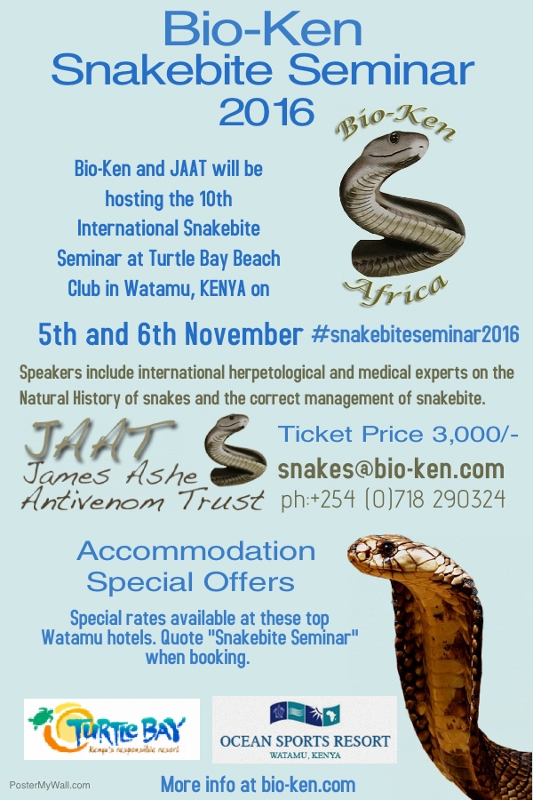
Snake bite Seminar in Watamu

Friday 4th to Sun 6th November 2016
snakebite-seminar-2016-1-533x800
Organized by Bio-Ken snake farm that milks snakes for medical research and for the preparation of anti-venom. It provides anti-venom to treat victims of poisonous snake-bite and, with the help of the James Ashe Antivenom Trust (JAAT), it provides it free of charge to those unable to afford it.

Be Clear about the Cheetah

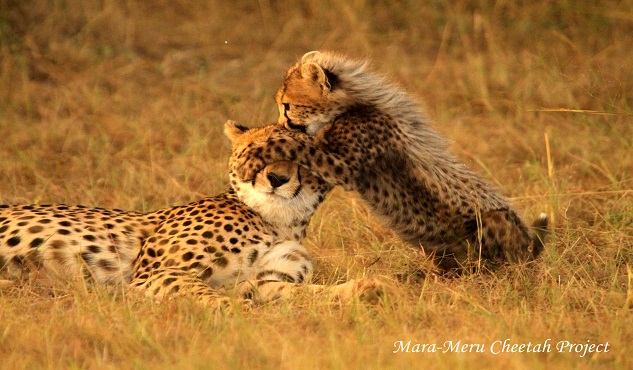
Dr. Elena V. Chelysheva (PhD) is Project Founder and Principal Investigator of Mara-Meru Cheetah Project

Q and A about why we MUST be clear about Cheetahs

Can you explain briefly why we need to save cheetah

Cheetah as a species survived a genetic bottleneck approximately 12,000 years ago, when only a few thousands individuals were left in the world. Cheetah recovered in numbers, and in the beginning of 20th Century there were around 100,000 animals in Africa and Asia. Growth of human population, its activities and expanding their territories led to the drastically declining of cheetahs in the wild. Today the known cheetah population is only 6,700 (IUCN Red List, 2015) and estimated to be not more than 10,000! Such a rate of declining could lead to the total extinction of the species in the next 50 years. Saving the cheetah for posterity – is protecting its environment by working with local communities, stakeholders and authorities, as well as with international organizations and people.

Continue reading “Be Clear about the Cheetah”

When you see a Cheetah…

By Femke Broekhuis, PhD

Project Director

Mara Cheetah Project

Kenya Wildlife Trust

Don’t:

–          Come too close to the cheetahs. Even if cheetahs are used to the presence of vehicles they are wild animals and we need to treat them with respect

–          Surround a cheetah on a kill. Kills often attract other predators such as lions and spotted hyaenas so make sure that they (cheetahs) can see approaching dangers

–          Come between a mother and her cubs as this will stress both the mother and cubs

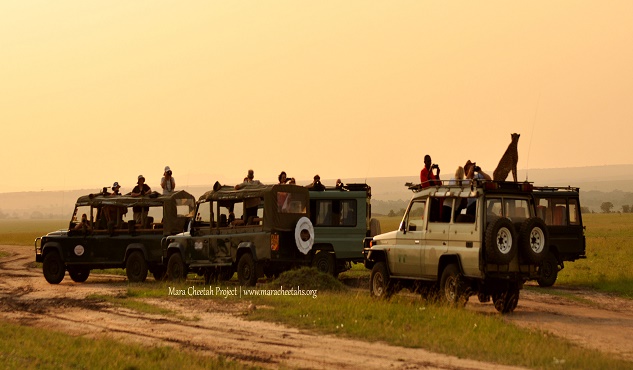
–          Overcrowd at a cheetah sighting. If there are too many vehicles then see if you can return to the sighting later

–          Let cheetahs climb on your vehicles! Some cheetahs are known to do so – if you see one of these cheetahs approaching, move away slowly

–          Try and get a cheetah’s attention by making unnecessary noise, for example hooting or banging on the car door, or throwing objects at a cheetah

Do:

–          Keep at distance of at least 25m

–          When a cheetah is hunting keep your distance so that you do not disturb the prey or cheetah. If the cheetah is successful do not immediately rush in to see the cheetah Give the cheetah some time and then slowly and quietly approach the cheetah.

–          Keep noise levels down to a minimum to minimize the stress on an individual

The Mara Cheetah Project is working to conserve cheetahs in the Maasai Mara landscape.

To donate or find out more about this project visit www.maracheetahs.org.