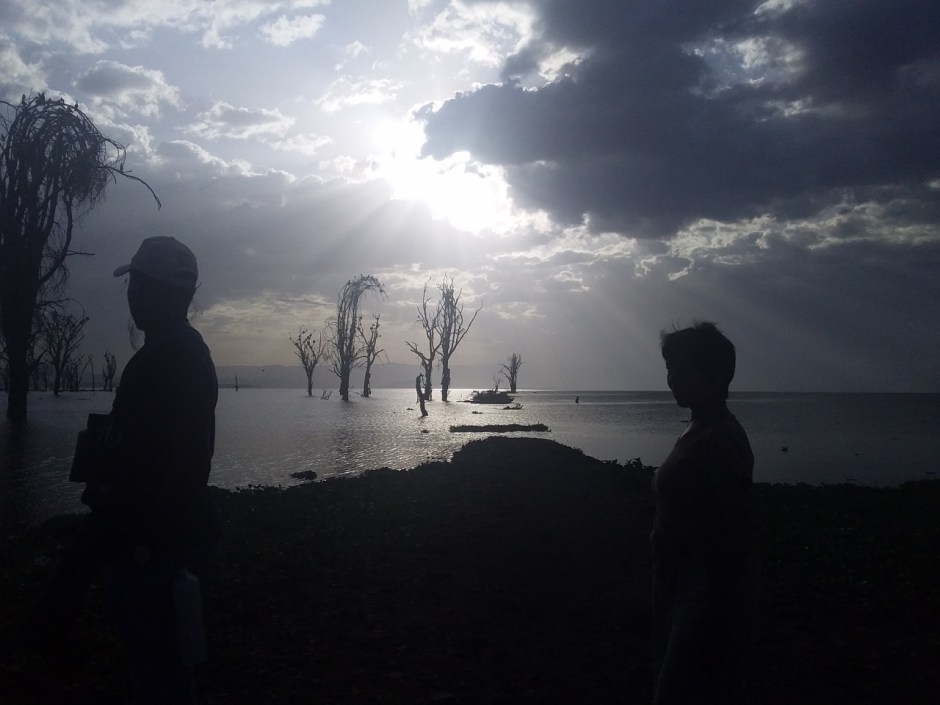
Above: Evening light on shores of Lake Naivasha. Copyright Desire James Wainaina
Published: 20 April 2019
Grey shafts of light stream from the clouds to the lake casting an ethereal glow in the late afternoon. Fishermen stride into the freshwater lake on the floor of the Great Rift Valley. In the cooling day, shy waterbuck emerge from the grove of yellow fever trees nibbling the soft grasses along the swampy shores as dainty jacanas on long skinny legs trod the floating mass of water hyacinth while the cormorants deck the trees ready to settle for the night.
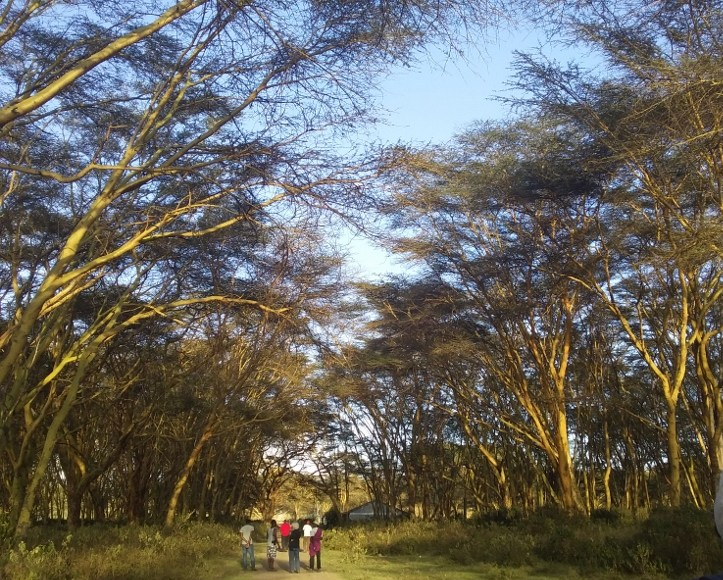
A walk in the yellow barked acacia forest at Lake Naivasha by the KWS ground. Copyright Desire James Wainaina
And you’ll discover the mountain shared by Kenya and Uganda, rare wildlife and wild plants plus a bit of history in the struggle for freedom
Above: Mount Elgon. Copyright Maya Mangat
Published: The East African magazine – Nation media 6 April 2019
Western Kenya’s most famous landmark is Victoria the great African lake shared by three countries – Kenya, Uganda and Tanzania. Huge like an inland sea, the world’s second largest freshwater lake was unknown to the outside world except for the Arab slave traders who kept the route a secret and told little of the lake. Then came the tide of change and European explorers smitten with the Nile’s origins coursed the land and in 1858 John Hanning Speke standing on the lake’s shores near modern day Jinja and took a guess to state it as the Nile’s source.
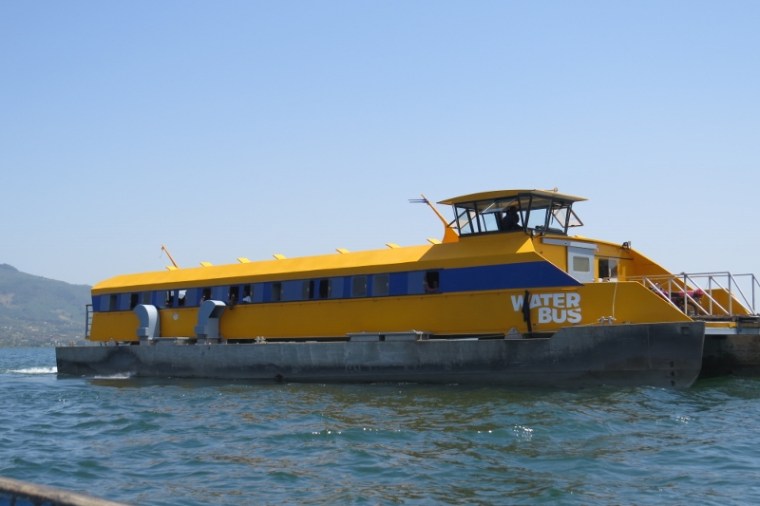
The waterbus, Lake Victoria. Copyright Rupi Mangat
But apart from this African great lake that the locals of the time called Nyanza, there’s interesting stuff up north. Like the great big mountain that straddles Uganda and Kenya. If you get to the caldera, you can have a foot in each country. Ancient and weathered – this extinct shield volcano is dated 24 million years (whereas Lake Victoria is only half a million years old) but stunningly chiselled by the winds of so many centuries.
Views from Elephant Platform – Mount Elgon. Copyright Maya Mangat
It’s a great mountain to explore if you’re into hiking, nature and all that. Or if you just want to see something new. The two famous landmarks on the mountains are the elephant-chiselled tunnel called Kitum. These amazing tuskers come to scratch out the salt in the walls of the tunnel. However a few years ago huge boulders tumbled down and blocked part of the entrance. When l first wandered into the pitch dark cave 20 years ago, it had a huge mouth. But there’s still some space left for you to walk in – better with a guide and a strong torch. A waterfall guards the entrance and you can wander down the nature trail.
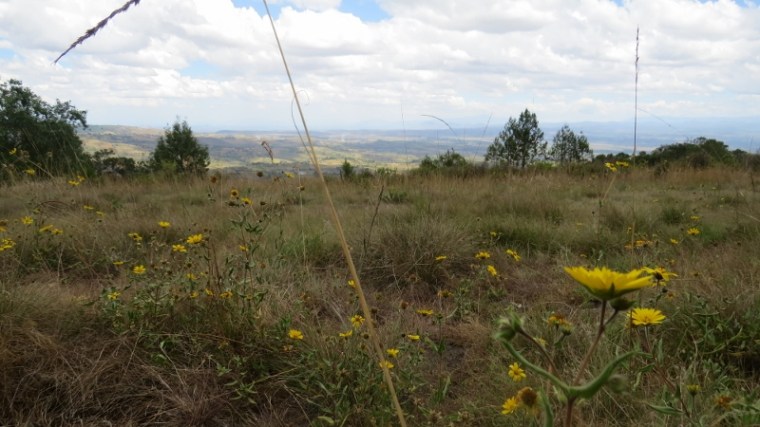
Wild flowers on Endebess cliff on Mount Elgon. Copyright Maya Mangat
Like l said don’t rush your trip to this mountain because if you’re really energetic you have to get to the caldera and Koitobos a flat-topped basalt column which is the highest peak on the Kenyan side at 13,852 feet. Any reasonably fit person can do this hike from last driveable spot – it’s six kilometres up along mountain plants like groundsels and lobelias including those with the ‘only found on Mount Elgon’ tag. Botanists will love this.
Saiwa Swamp National Park
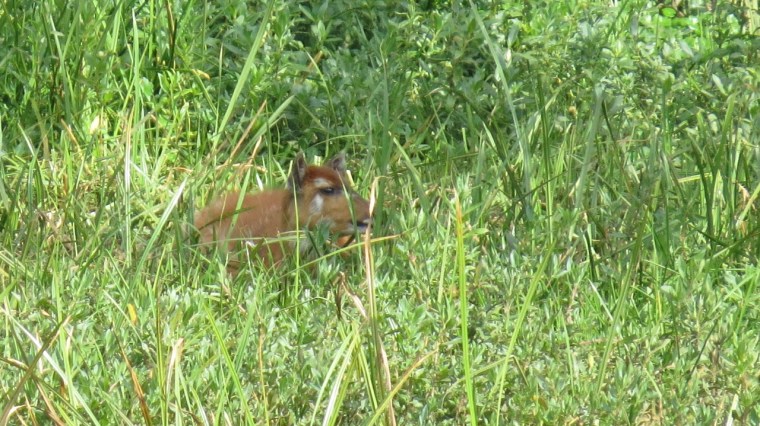
Sitatunga in Saiwa Swamp National Park. Copyright Maya Mangat
Once off the mountain, drive up north to Kenya’s smallest national park that’s just a swamp but not just any swamp. Measuring 2.9 square kilometres, it’s home to the very endangered swamp-loving antelope called the sitatunga. Some 70 years ago, it was found in the swamps lining Lake Victoria and the rivers that flowed in (Kagera from Rwanda and Nzoia) and out of it (i.e. the Nile). With its water-resistant coat and played out hooves, it lived a pretty comfortable life until swamps got cleared (and hunted for the pot) that it found itself without a home – save for Saiwa in Kenya and a few other glades. Spend a night in the park and you’ll be nicely rewarded with a sight of the swamp antelope. During the day, it hides in the thickets so you may not see any. And you can treat yourself with a night in the tree house above the swamp – increasing your chances of spotting the sitatunga.
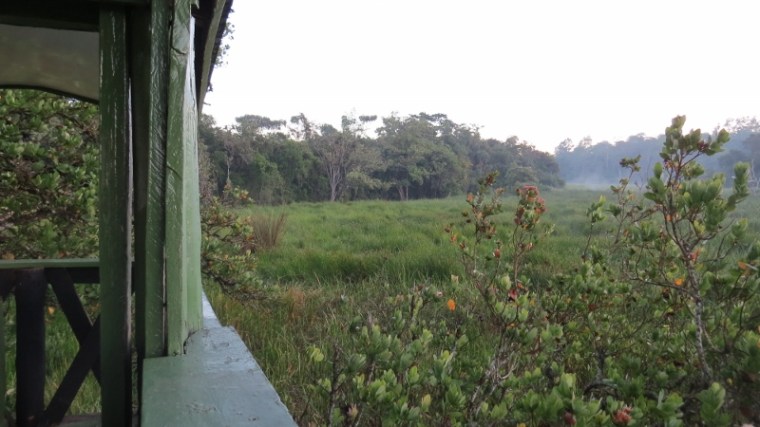
Sitatunga Tree House in Saiwa Swamp. Copyright Maya Mangat
Saiwa Swamp. Copyright Maya Mangat
Camp ground at Saiwa Swamp. Copyright Maya Mangat
Kapenguria
Done with the swamp, drive on north some 40 minutes on a good tarmac road to this once little-known tiny dot on the map which was perfect for the colonial government to send its wayward charges for trials far from the masses. It shot to fame for the trial of the Kapenguria Six – that is Jomo Kenyatta, Bildad Kaggia, Kungu Karumba, Fred Kubai, Paul Ngei and Ramogi Achieng Oneko who were held here and put on trial in 1952/3. The cells of the freedom fighters are part of the museum including documents of the trial. The galleries show the Pokot people’s culture – and forest snakes like the Gabon and rhinocerous vipers.
The shujaa (heros) cells with the names of each occupant on the door at Kapenguria Museum. Copyright Mayai Mangat.
Cell of the foundating father – President Mzee Jomo Kenyatta at Kapenguria Museum. Copyright mayai mangat
Rhinoceros viper, Kakamega Forest. Copyright Julia Fulcher
The shujaa (heros) cells with the names of each occupant on the door at Kapenguria Museum. Copyright Mayai Mangat.
Cell of the foundating father – President Mzee Jomo Kenyatta at Kapenguria Museum. Copyright mayai mangat
You have the option to drive back and get to Kakamega forest which is the only bit of an ancient rainforest left in Kenya and treat yourself to a few nights at Rondo Retreat and then continue to Kisumu on the shores of Lake Victoria.
On Cherangany hills road looking at Turkwel Dam in the distance. Copyright Mayai Mangat
Or drive further into the northern frontiers along the Cherangani Hills that winds its way along the Morunyi River and spend a couple of days at the Maarich Pass Field Study Centre. There’s tons to do from here like hiking up the hills and watching the Pokot pan for gold.
And if you’re really up to it, get to the world’s largest permanent lake in a desert – Lake Turkana. The thing is that it’s 250 kilometers long and the north east is totally different from the North West while the southern end is again different.
Words of Wisdom
For accommodation log on to the Kenya Wildlife Service. It has comfortable guest houses and campsites in the parks. Carry your food and camping gear. Campers will also enjoy Barnleys Guest House north of Saiwa. Drive a good four-wheel drive car, have your ID card on you otherwise you can’t enter the parks…and enjoy your road trip.
Nyati campsite – Mount Elgon Copyright Maya Mangat
Kapkuro cottage on Mount Elgon. Copyright Maya Mangat
The tallest tree – Antiaris toxicaris is where Africa’s mightiest raptor the African Crowned eagle nests at Rondo Retreat Kakamega Forest. Copyright Maya Mangat
Don’t limit yourself to this – it’s only a nudge to get you exploring.
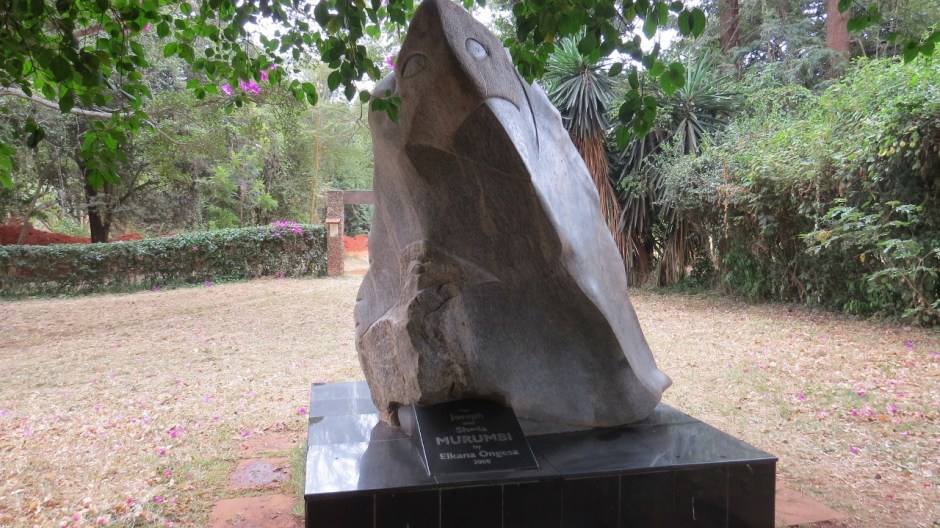
Above: Bird of Peace soapstone sculpture by maestro Elkana Ongesa at Murumbi Peace Memorial Garden Nairobi City Park. Copyright Rupi Mangat
Published 6 April 2019
I got Bruno Mars ringing in my ears…l don’t feel like doing anything today…It’s a Saturday morning and l’m in no mood to work or go to the gym. All l want to do is escape the city and the best escape from being in the city is actually within the city that is Nairobi. It’s the third Saturday of the month and there’s a guided forest walk in Nairobi City Park Forest.
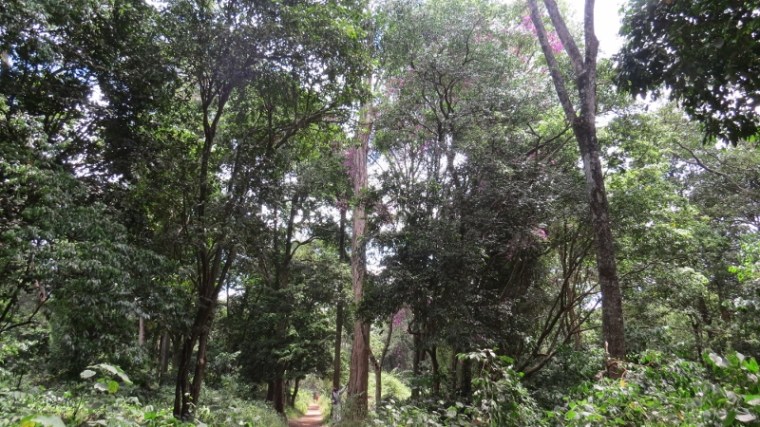
Nairobi City Park Forest path. Copyright Rupi Mangat
Here’s something l didn’t know about City Park. There’s free yoga on Sunday afternoons for anyone interested. Patrick Ngotho who is a member of just about every nature group in Kenya leads me to the patch of green space for yoga and shows off a couple of stretches.Continue reading “A Jaunt in a Forest: Nairobi City Park”→
Published: The East African (Nation media) 23 Marc 2019
For the first time (20 March 2019) Nairobians were treated to the sounds of the Sahel flowing with the Nile and as the full moon rose the crowd took to the floor.
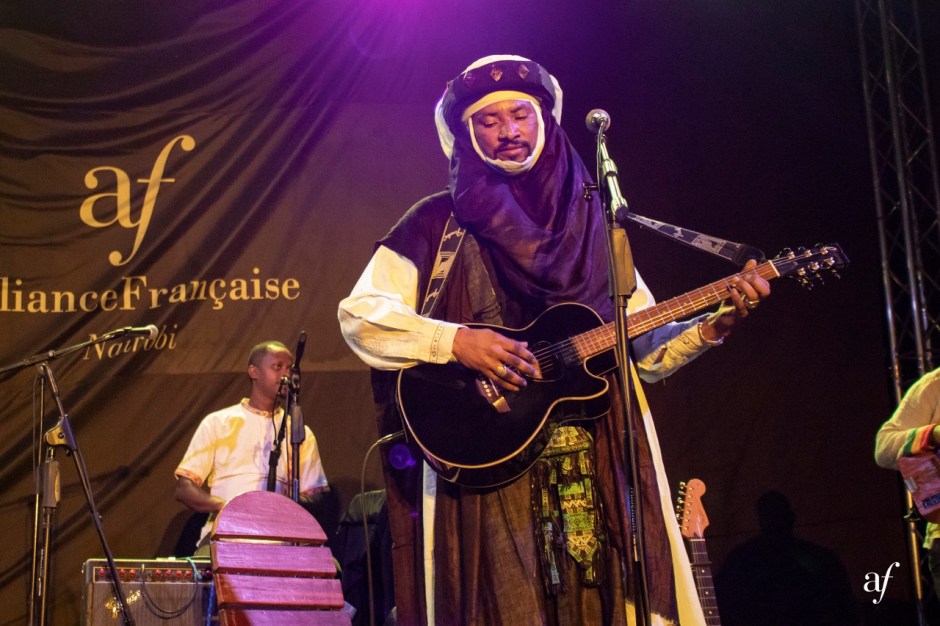
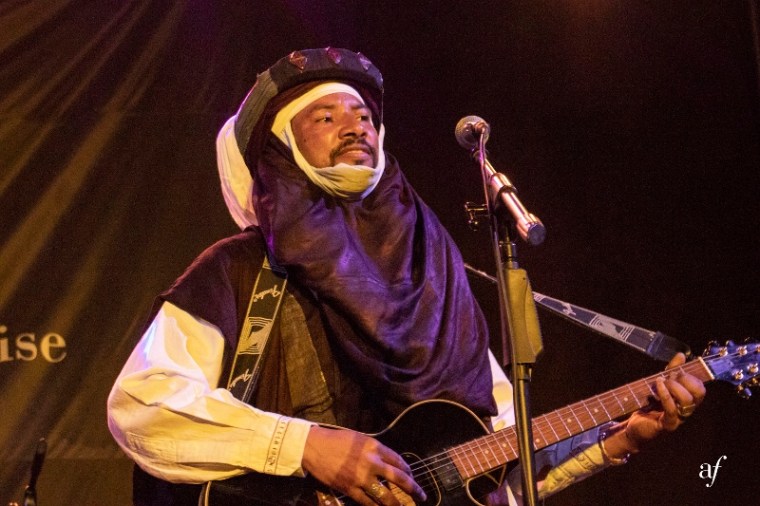
The minute Alhousseini Anivolla-Anewal stepped on stage at Nairobi’s Alliance Francaise he held the audience captive. For almost everyone it was the first time to see a Tuareg man dressed in his traditional long flowing robe, pantaloons, slippers and that turbaned head with a veil in the indigo colours that gives the nomadic people of the Sahel the name – the blue people.
Alhousseini Anivolla-Anewal from Niger – Credit Alliance Française
In 1997 ‘Watamu Turtle Watch’ was launched. It still operates under Local Ocean Conservation today.
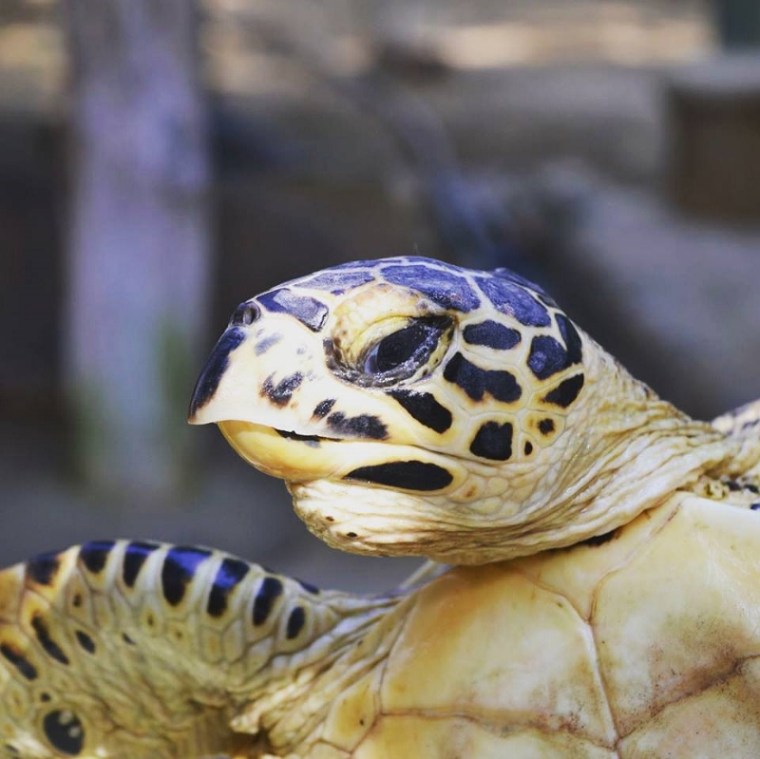
A whole load of journalists descend on this one little turtle happily snoozing under his shaded spot in the pool. All we can see of this star-to-be-soon turtle are his flippers sticking out from the slab of stone that he’s resting under.
Hawksbill Turtle: Facebook: Local Ocean Conservation



 Moonlion Safaris