Let’s Go to Hell

Published: December 2007

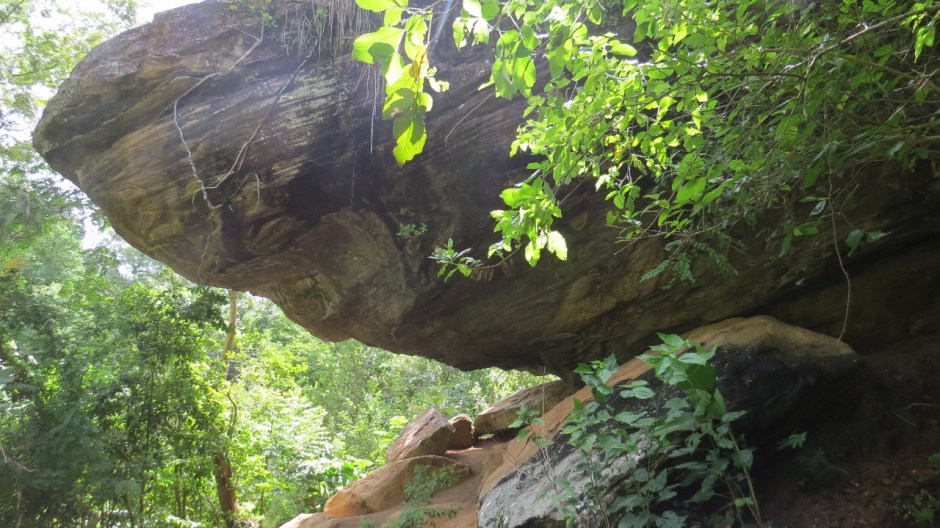
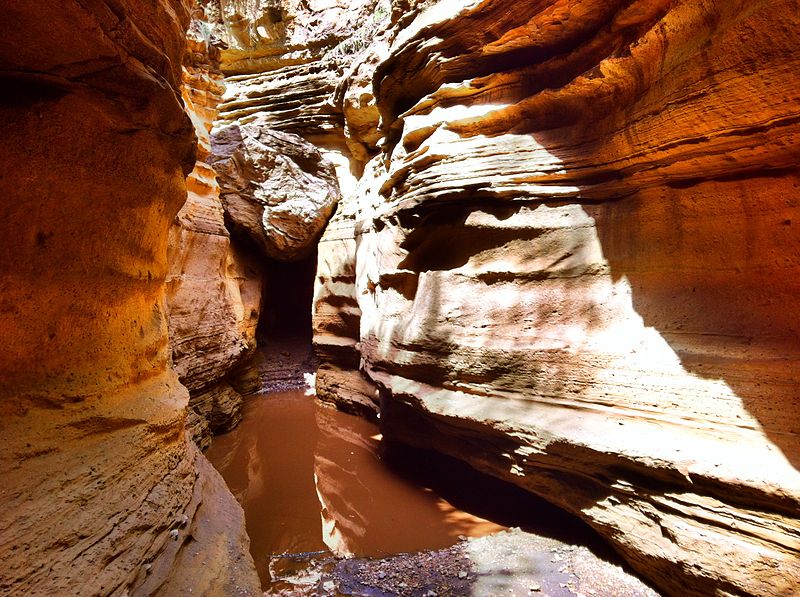
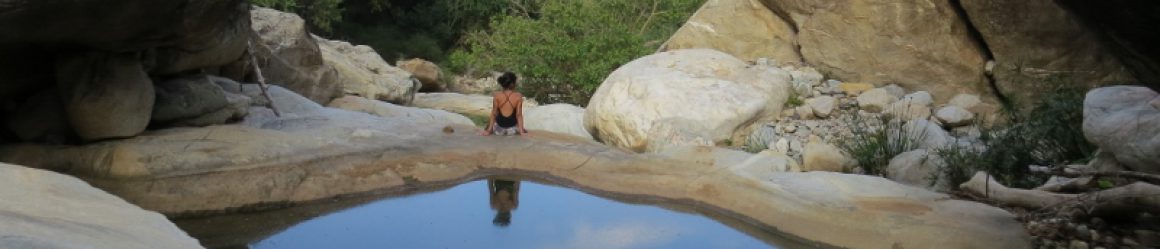
Above: A boulder blocks the slot canyon at Hells Gate National Park, Kenya. by Heyandrewhyde

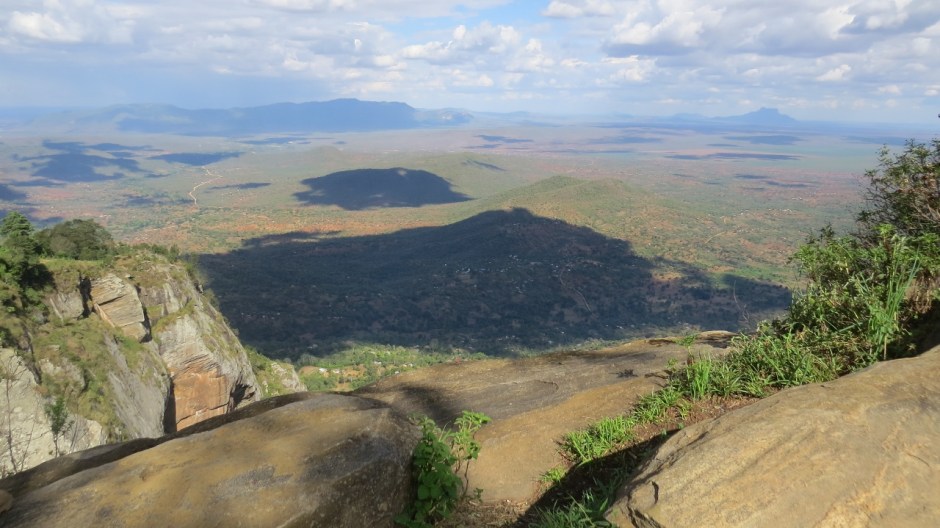
Fiery mountains spitting out red-hot molten lava, earth-shattering forces from deep in the earth’s belly and floods have shaped what is a trip to ‘hell’.

‘Let’s go to hell,” says our local Maasai guide from the Olkaria Maasai clan living in and around Hell’s Gate National Park, an hour’s drive from Kenya’s capital city Nairobi.

The trip to hell sounds funny for we’re in a very picturesque setting with the scent of the leleshwa, a shrub of the dry lands used by the Maasai as a deodorant by sticking the leaves under their underarms.

“Okay, let’s go to hell,” replies the group of well-fed women.

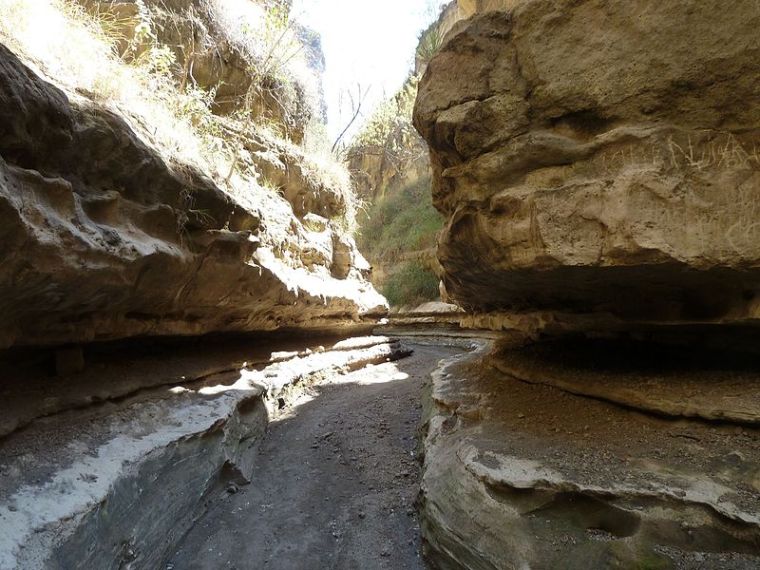
Gorge,Hell's Gate National Park by Toppazz (800x600)
Gorge,Hell’s Gate National Park by Toppazz

Continue reading “Let’s Go to Hell”

Footballers at Lake Ol Bolossat

Published: 18 May 2019

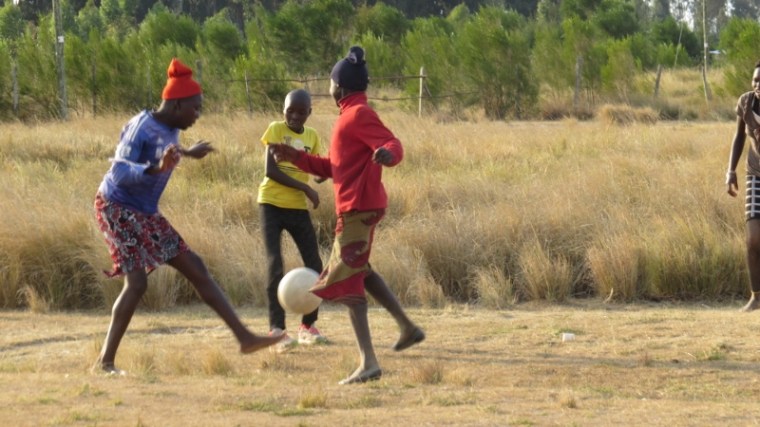
I have little fingers running through my hair sitting by Lake Ol Bolossat in central Kenya. First it’s the girls returning from school who are surprised to see me standing in the field near their village. A smile and a ‘hi’ gets them closer. After a few minutes of checking me out, they open up with questions like ‘what is your name?’, ‘where are you from?’ They find it strange when l  reply l’m Kenyan. “But you are not black,” says one.

Korongo girls' fotball team at Lake Ol Bolossat Copyright Rupi Mangat Feb 2019 (800x450)
Korongo girls’ fotball team at Lake Ol Bolossat Copyright Rupi Mangat

Continue reading “Footballers at Lake Ol Bolossat”

Earth – Healing The Rift: A Musical Performance For The Earth

Above: Njemps tribesmen light a ceremonial fire in front of a statue of Buddha at Laikipia Nature Conservancy

From the archives 2007 March

Our Earth, the only living planet in the galaxy of millions has never received so much attention as it is now.  That it is in dire straits goes without saying.  Climate change and global warming are the topics of debate amongst the environmentalists, industrialists, scientists, artists and anyone concerned about our welfare on Earth.  It is after all, like l said, the only planet supporting life.

ngurunit 1 (800x450)

On the edge of the Great Rift Valley, the cradle of human kind, is Ol Ari Nyiro, Laikipia Nature Conservancy, a 100,000-acre of wild country full of gorges and canyons, bush and arid land, water filled dams to support the last of the wild.  The Conservancy has been described as ‘the most botaniocally diverse non-forested area in East Africa’ (TP Young 1989).  It is home to an indigenous population of black rhinos where Kuki Gallmann established the first rhino sanctuary in Kenya when poachers had almost wiped out more than 95% of the country’s black rhino population by the early 1990s.  It is also home to most of the African plethora of wildlife from lions and elephants to the tiny dung beetle and migratory birds like the Ethiopian swallows. Continue reading “Earth – Healing The Rift: A Musical Performance For The Earth”

In Malindi, Zimbabwe’s Unique Stone Sculptures

Above: Stone Sculpture from Zimbabwe. Courtesy: Carola Rasmussen

Published: 4 May 2019

Tucked away near Malindi’s powdered white beaches and tropical  blue waters that are more famous for sun worshippers and ocean sports including all the sharks, whales and dolphins that swim by, l’m in a garden that’s an open art gallery of the most amazing sculptures from Zimbabwe.  Strolling around l learn more of the country and its art.

The most famous of Zimbabwe’s stone sculptures are the Zimbabwe stone birds that are the country’s emblem.

Soapstone birds on pedestals by James Theodore Bent

House of Stones

“Zimbabwe is the Shona word for ‘house of stones’,” tells Carola Rasmussen, a former journalist turned art collector where her garden gallery in Malindi is called Ndoro showcasing more than 300 stone sculptures.

Ndoro (in Shona language) is a spiral sea shell that washes up on the East coast of Africa. It’s grinded flat. Local women healers wore it on their forehead,” explains Rasmussen. It was also worn by chiefs, their wives and daughters as symbols of authority.

Carola Rasmussen at Ndoro in Malindi

“When the Portuguese came in the 16th century, they noticed the ndoro. They then made them in porcelain back home and returned with them to exchange them for gold, ivory and other items. Today they are collector’s items.”

Her collection of stone sculptures has many pieces from the first generation of 20th century Zimbabwean artists, none of who had any formal education in the arts which makes their work even more intriguing. They are based on local legends and the spirit work.

Legacy

Zimbabwe’s stone sculptures date from 500 years ago.

The most famous of these are the Zimbabwe birds found in the ruined city of Great Zimbabwe built in the 11th century and inhabited for the next 300 years. When first reported to the outside world in the 16th century by the Portuguese explorer Joao de Barros, it was one of the world’s most extraordinary finds that still baffles many.

The elaborate stone buildings were built using no cement.

The Zimbabwe birds were only seen in the city by a European hunter, Willi Posselt in 1899 and many taken away. They were positioned around an altar in the centre of an enclosure.

Post- Colonial Stone Sculptures        

zimb 4
Contemporary Zimbabwe stone sculptures: Carola Rasmussen at Ndoro in Malindi

In contemporary times, the sculpture movement also known as the Shona sculpture movement took the art world by storm because critics and art collectors could not understand how this art had emerged in an area that was seen as artistically barren unlike the great sculptural heritage of West Africa. The emergence of the Shona sculpture movement was coined an art renaissance and a phenomenon.

During Mugabe’s regime the art world suffered but now a younger generation of artists hopes that foreign gallery owners and tourists will return.

I never imagined l would learn so much about Zimbabwe in Malindi but art is universal. So enjoy your days exploring Malindi besides enjoying its tropical beaches and warm ocean waters, scuba diving, snorkelling and exploring historical sights.

A Dozen and more things to see in Malindi Town

IMG_046Mekatilili wa Menza, the fiery crusader against colonial rule. Statue in Malindi town square Copyright Rupi Mangat 0 (800x800)
Mekatilili wa Menza, the fiery crusader against colonial rule. Statue in Malindi town square Copyright Rupi Mangat

Statue of Mekatilili wa Menza, the fiery heroine who led the Giriama community in a rebellion against British colonial rule in 1913-1918. She died in 1924 and was buried in the Dakatcha woodlands outside Malindi. Dakatcha woodlands is home to Hell’s Kitchen, a series of eroded gulleys and home to rare birds like Clarke’s weaver and the Sokoke scops owl.

Henry the Navigator’s monument

hw1 (800x666)
Humpback whale in Watamu, Kenya coast, Indian Ocean, doing its back flip Copyright Jane Spilsbury/Watamu Marine Association

It’s on the grounds of Malindi National Museum. It was unveiled in October 1960 by the Portuguese consul in Mombasa to honour the prince 500 years after his death in 1460. The monument also honours the Sultan of Malindi and Ahmed Ibn Majid, the local Malindi marine pilot who navigated Portuguese explorer Vasco da Gama on the sea route to India.

Vasco d Gama pillar and the quaint makuti-thatched Portuguese Chapel commissioned by Vasco Da Gama the Portuguese explorer in 1498 on his epic voyage to India via Malindi. He was the first European to do the route.

The century-old House of Columns near the church that served as a palatial home, hospital and museum and now a library.

Malindi Sea Fishing Club – Malindi is the best place for deep sea fishing. The season runs from July till March. It’s one of the few spots in the world where anglers can try their hand at a Grand Slam (three different billfish a day), a Super Grand Slam (four different billfish in a day), and a Fantasy Slam (five different billfish species in one trip). The billfish are Black, Blue and Striped Marlin, Sailfish and Broadbill Swordfish.

Best Beach – stretching all the way to the Sabaki River and the towering sand dunes of Malindi.

Malindi Golf Club – a charming club by the seafront with a rare cycad and baobab by the fairways.

Great night life and superb restaurants.

Connect with Ndoro Sculpture Garden: https://www.facebook.com/ndorosculpturegarden/

The Kilwa Chronicle

From the archives: February 2009

Above: The prayers room inside the extension of the great mosque of Kilwa at Kilwa Kisiwani. It was build as part of the first arabic settlement and nowadays an UNESCO World Heritage Site. Credit Robin Chew

Lying idyllic on the magical blue waters of the Indian Ocean, the tiny island kingdom of Kilwa Kisiwani was once upon a time, rich and grandiose, sophisticated and stunning.  It was unrivalled – a tiny paradise sultanate off the African shore.  Walking through that great kingdom centuries later, it’s not hard to slip into the sultanate of yesteryears for what’s left of its stunning palaces and mosques, still has the power to sway the idyllic.

Great Mosque of Kilwa Kisiwani 11th to18th century Credit: Richard Mortel

I can see in my mind’s eye, as l stand under the arches of the Great Mosque, now so silent and empty, the great Sultan and his people entering the arched entrance for the Friday prayers.  The thick coral walls, high domes supported by the strong pillars and arches and the beautiful carved windows kept the mosque cool for the faithful as the sun blazed merciless outside.  The dome, under which l stand, reports the Kilwa Chronicle, is thought to be the first true dome on Africa’s east coast. Even the noted Moroccan scholar and sailor, Ibn Battuta who visited Kilwa in 1331, remarked on the splendor of the dome, which was, until the nineteenth century, the largest dome on the East African coast. With the extension in the 15th century, the Great Mosque of Kilwa, made its mark as the largest covered mosque on the east coast of Africa and taking departure from traditional mosques, it had no courtyard.

With the prayers done, the gentry of the time, robed in silks embroidered in gold, would have strolled out and continued with the trade that brought riches beyond imagination to this tiny jewel on the sea.

This was the Kilwa of yesteryears – rich and prosperous.  History dates it from early 4th century when the island was bought by a trader, Ali bin al-Hasan and it prospered as a trading center.  Art and architecture flourished, and literature with the Kilwa Chronicle written.  Only excerpts remain of the lost chronicle now.  By the 12th century, it had become the most powerful city on the East African coast, an island state that was the hub of trade between Africa as far as the south and Asia.  Slaves, ivory, iron, gold, and coconuts exchanged for fine silks and cloth from India and porcelain from China.

This was the Shirazi dynasty and lasted until the early 16th century.  It was so strong a port for international trade, that it minted its own gold coins for ease of exchange and accounting.  Historically, gold coins had been produced centuries earlier in the old dynasty of Aksum in today’s Ethiopia.

In the 14th century, the ruler Sultan al-Hasan ibn Sulaiman had started the construction of Husuni Kubwa, the grand palace and was extending the Great Mosque of Kilwa.  In 1502, when the Portuguese, Vasco da Gama who was set to ‘discover’ the sea route to India from Europe, anchored on its shores, he reported to his king about the stunning sultanate with its hundred-room palace.

Time of Decline

800px-Makutani Palace ruins, Kilwa Kisiwani, built by the Omanis in the 18th century
Makutani Palace ruins, Kilwa Kisiwani, built by the Omanis in the 18th century. Credit Richard Mortel

Slowly with the passage of time, the beautiful palaces and mosques fell apart and buried under the shifting sands.  These are the ‘gofuni’ as the local inhabitants call them now in Kiswahili, the national lingo of Tanzania.  It was not until the mid 1950s that excavation began to reveal the forgotten splendour of the past.  Climbing the ruined steps of Husuni Kubwa, the palace that would have housed the noble ladies of the royal house, a carved inlay in the wall catches my eye.  The finely sculpted décor on the coral walls speaks volumes of a grand past.  Through the windows, the royal women would have let their gaze wander through the green gardens stretching to the sea, shaded by the monumental baobab trees.

But with the traders sailing in from far and wide, including Europe, the islanders were struck by bubonic plague towards the end of the 14th century, and then by the Zimba tribe from the mainland who had cannibalistic tastes.  In its weakened state, they were no match for the Portuguese keen to create a stronghold on the East African coast in order to control the trade routes to the East. The Portuguese took control by force and ruled from 1505 to 1512, but were finally disposed off be an Arab.

But in 1598 tragedy struck again.

The cannibalistic Zimba from the mainland took a toll.  The Omani rulers of Zanzibar, having established their sultanate in Zanzibar, took control of Kilwa in 1784 but it never regained its splendour and by the 1840s, it was abandoned.  In the late 18th century, with the flourishing slave trade, it somewhat made a rebound but once the slave trade was abolished, all trade ceased.  With the Scramble for Africa, Kilwa became part of German East Africa from 1886 to 1918.

Ambling in Kilwa Kisiwani

Be prepared for a hot walk.  Take a nice wide brimmed hat or shuka.  Bottled water is available on the island.  If you’re into archaeology, you can spend hours.  If not, simply drift into the aura of the past as you walk in and out of the mosques and palaces like the

Small domed mosque, a few metres away from the Great Mosque.  Built in the mid 15th century, one of the great domes has toppled over.  It was modeled after the Great Mosque just like the Jangwani Mosque.  Both the 15th century mosques had nine domes.

Step into Husuni Kubwa and Husuni Ndogo, visit the royal tombs of the Sultans, and the imposing Guereza fort, which you see as you sail from mainland Kilwa Masoko.  You must buy the permit from Kilwa Masoko at the Antiquity office – but rates can change – however it’s the equivalent of about US$ 2 per person.  Guides are available from Kilwa Masoko.

There are local buses (from Ubongo bus station in Dar es Salaam and costs app Tsh 20000 per person) plying the route and clean inexpensive hotels and very up market ones to stay at Kilwa Masoko.  Local food is cheap and excellent quality.  Take mosquito repellent because of the mossies.

Kilwa Kisiwani and the nearby island of Songo Mnara (two hour sail if the winds are in your favour by a local dau) with their resplendent ruins are World Heritage Sites but also under threat of further destruction from the elements of nature.