2013 Ecotourism Journalist of the Year (Ecotourism Society of Kenya) | Editor, Komba Magazine (Wildlife Clubs of Kenya) | Contributor, The East African and Saturday Magazine (Nation)
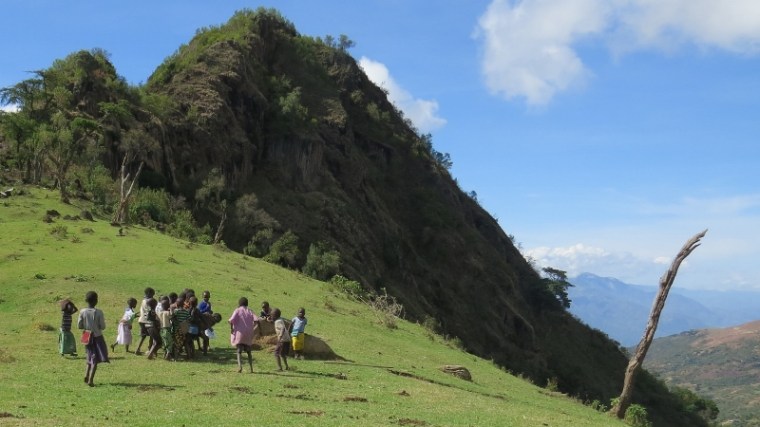
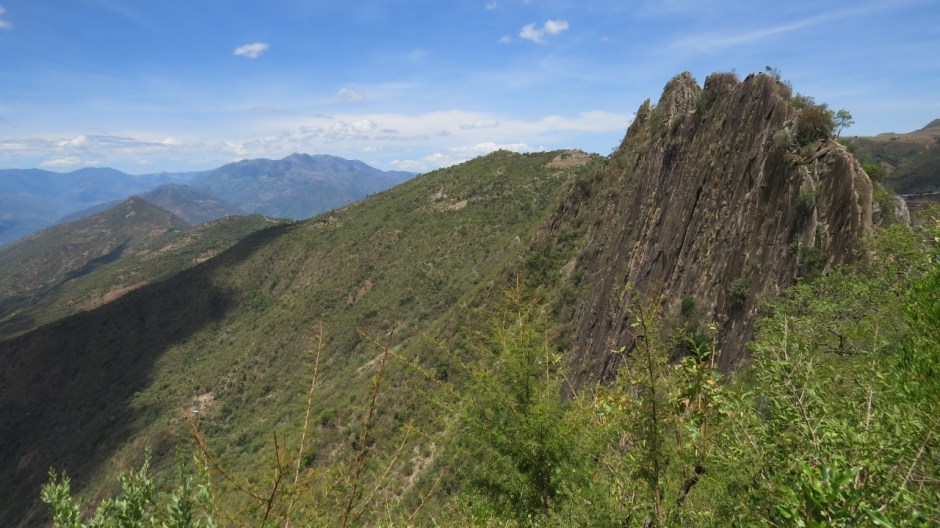
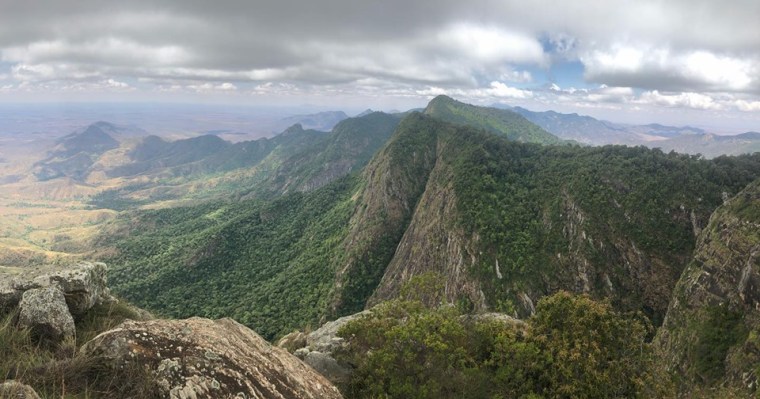
I’m sitting on the saddle of the Sekerr mountain range between the peaks of Katugh and the rest: Kaimut, Chaichai and the famous Mtelo that is the peak and the fifth highest point in Kenya at 10,944 feet. It is also the sacred mountain of the Pokot and all face the mountain when praying.
Pokot kids playing football on the ridge of Sekerr Hills between Kaitugh and Mtelo. Copyright Rupi Mangat
Above: Baboon parliament on Kaimot Hill in Sekerr Range. Copyright Rupi Mangat
Published 24 August 2019 saturday Nation magazine
Little known and shrouded in secrecy, the Sekerr range is a striking feature of the Pokot land in north-western Kenya. Reaching Kapenguria at dusk from South Nandi forest we’re unsure whether we should drive at night into unknown territory.
“It’s safe,” replies John Yoposiwa Ywalasiwa the highland Pokot and our host at Mt Mtelo Eco Lodge. “I’ll be waiting for you at Maarich Pass trading centre.”
It’s a downhill road following the curve of the Cheranganis – only we can’t see the massif blanketed in darkness. Ortum the town before Maarich Pass trading centre is lit with electricity and an hour later, we meet Ywalasiwa and follow him on his pikipiki up into the Sekerr Mountains. The darkness is absolute save for the stars sparkling like jewels flung in the sky.
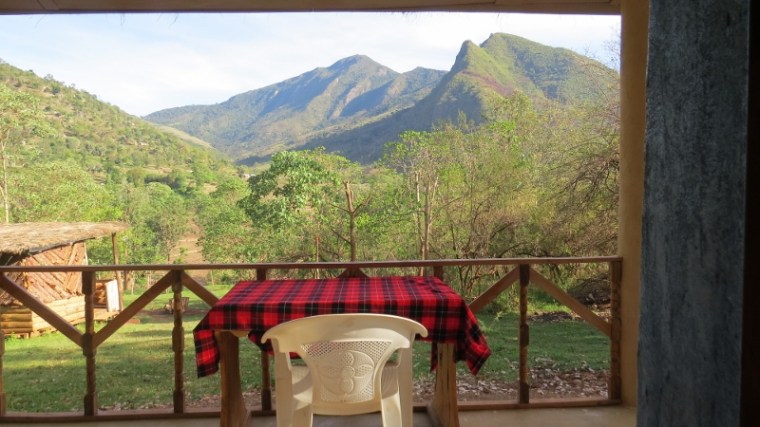
Mtelo View Eco Lodge. Accommodation in Mtelo Banda facing peak of Mt Mtelo. Copyright Rupi Mangat
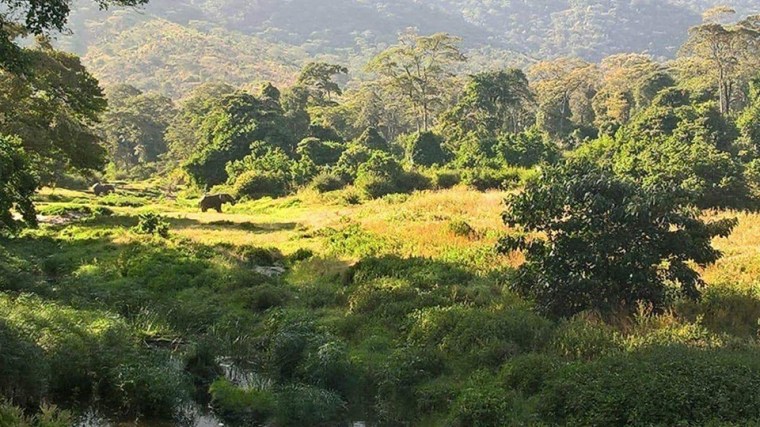
Above: Elephants on Mathews Range. Facebook: Kitich Forest Camp
Part 3 of 3
Protecting Forests
“If you want to protect the forest, you have to understand what you are protecting and how it works,” states Borghesio. Fencing off national parks and reserves is an over-simplification to protecting forests. “It’s not enough. Wildlife is driven by resources and move in and out of the forests or higher up or lower down.
Above: Island forests on Mathews Range in the drylands of northern Kenya. Copyright Luca Borghesio
Part 2 of 3
A little-known mountain range with one of the least disturbed forests in north Kenya makes for exciting long term research in forest dynamics
Dynamics of the Forest
“People tend to think of forests as never changing,” continues Borghesio. “But forests change a lot and quite fast.”
Elephants on Mathews Range. Facebook: Kitich Forest Camp
Sunlight pours through gaps created by ancient trees crashing at the end of their life span bringing down other trees with them. Voracious safari ants march through the litter of leaves and dead trees munching them into fine particles. Elephant dung shows a healthy population but the black rhino – the last known free ranging ones of the north died out in the late 1990s. Its calcium-white bones lie quietly in the forest glade. “A century ago, this was more open because the elephant and rhinos ate the bush. There are reports of 20 rhino seen in a day. With the demise of the herbivores, the land that was much more grassland is more bush now.” The cyclic change of forest reverting to bushland and opening into grassland for smaller herbivores and back to forest in tandem with the ancient movement of the elephant migrations is an ancient cycle.
Borghesio begins his narration of the forest with a time in the distant past, when the forest was much more open than now, stimulating the germination of light-demanding trees such as Cordia and Croton. More than a century later, these trees have grown to remarkable sizes. “Based upon this, we can speculate that the forest at that time was kept more open by higher densities of wildlife,” he says.
Soaring to the heavens, the towering croton trees seem healthy but for the scientist and his team of field assistants and Samburu aides, they recognize the signs of stress and the major die-back caused by the drought of 2009. “The trees survived the drought but in the following years we saw the death of large trees at a rate above the normal. The effect of drought can go on for many years,” continues Borghesio.
The stretch of Mathews range. Copyright Rupi Mangat
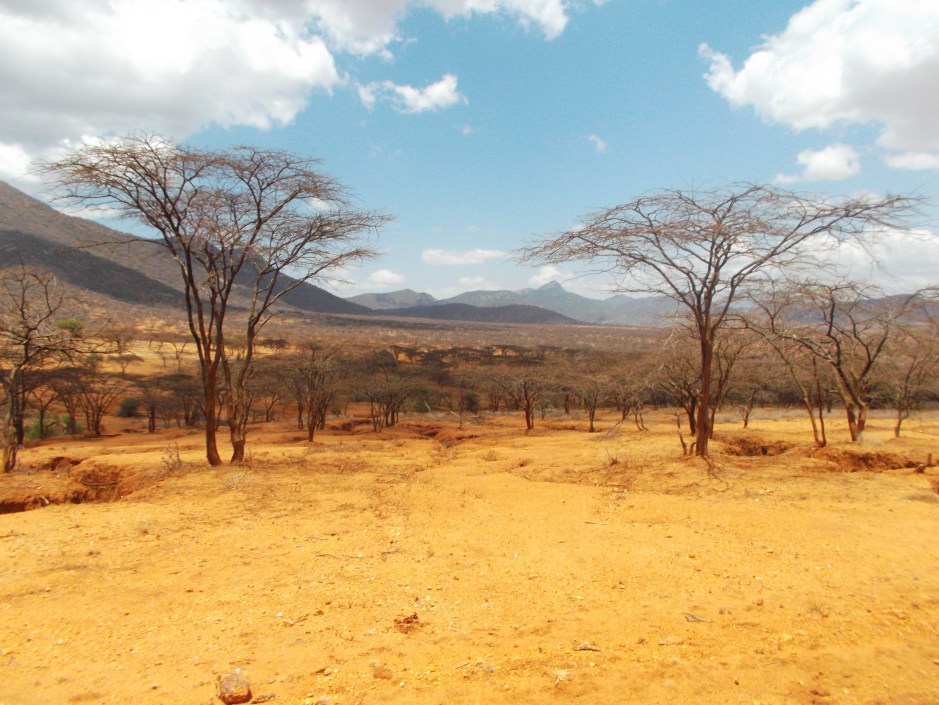
Drought is nothing new in this part of the world for northern Kenya is mostly arid with little rainfall. “There were droughts in 2004, 2009, 2010 and 2011. What we’re seeing is increasing droughts in the last ten years whereas prior to that the droughts occurred once every ten years.”
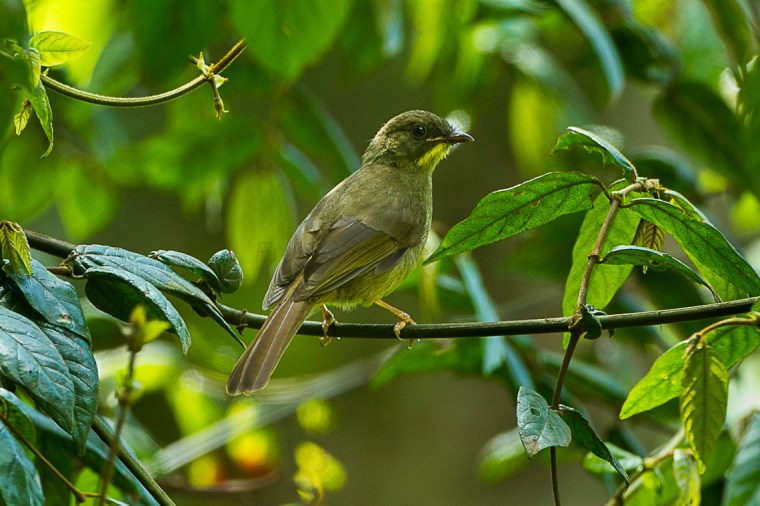
Lawrence Wagura the field assistant carefully untangles a Yellow-whiskered Greenbul from the mist nest to record the ring around its tarsus. From the data over the last six years, its numbers have been fluctuating. The data from the many species of birds give an interesting insight to the happenings in the forests.
Yellow-whiskered greenbull by Francesco Veronesi
“Frugivores like Yellow-whiskered Greenbuls numbers will fluctuate from year to year depending on the fruit availability,” explains Borghesio. “These are not new birds because we’re seeing them after two years which indicates that these birds don’t die but move through the forest. But for the Abyssinian ground-thrush that’s very territorial and moves little inside the forest, things are tough showing an 80 per cent decrease in eight years. On the other hand, the insectivorous Blue-mantled Crested Flycatcher is a strict forest bird which during the drought moves higher up the mountain to the forest. But what we’re seeing now are non-forest bird species increasing in numbers like the Grey-backed Camaroptera, a widespread bird outside the forest whose population has increased following a series of droughts.
“Some bird species will increase and others will decrease depending on the forest changes. A five-year frame gives us some perception of the changes while a one-year frame is a static picture of the forest,” reflects the scientist. “What we don’t know is if the demise of species and increase of others are long or short term changes. Will there be a demise of species with recurrent droughts?” he ponders.
The vastness of Mathews Range – Facebook Kitich Forest Camp
September 1887. Count Teleki and Captain Ludwig von Hoehnel left Ngong near what is today Nairobi to trek across northern Kenya in search of a huge lake. The local Samburu called it Empasso Narok (the black lake), Teleki renamed it Lake Rudolf in honour of his friend the Austrian prince and in independent Kenya, it became known as Lake Turkana after the people who live around it.
On Mathews Range between dry lower slope and the high forest- copyright Rupi Mangat.
Enroute, Teleki diverted to Lake Baringo while Hoehnel went in search of another lake called Lorian. He didn’t find the lake but instead came across a mountain range the local Samburu called Ol-doinyo Lenkiyieu. As for Lake Lorian he learned from the hunter-gathers called the Wadorobo, there was no lake but a swamp that the Uaso Nyiro River emptied its floodwaters during the rains.


 Moonlion Safaris