
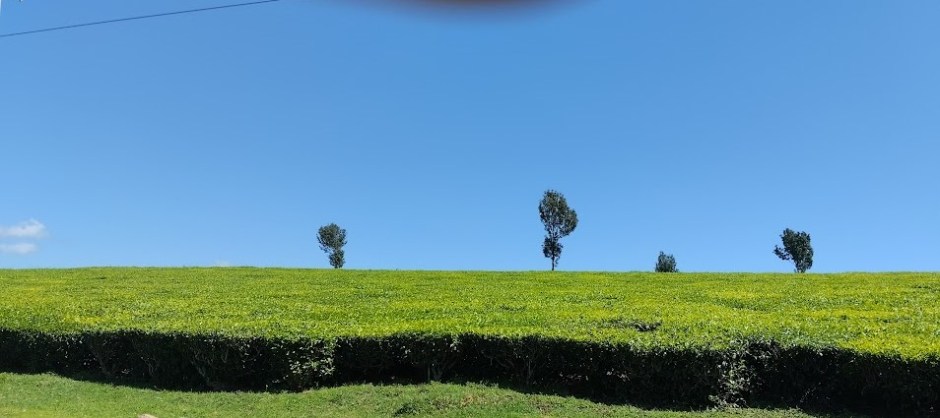
Kenya’s famous tea country
Above: Kericho famous tea fields
Published: Nation Saturday magazine 9 March 2024
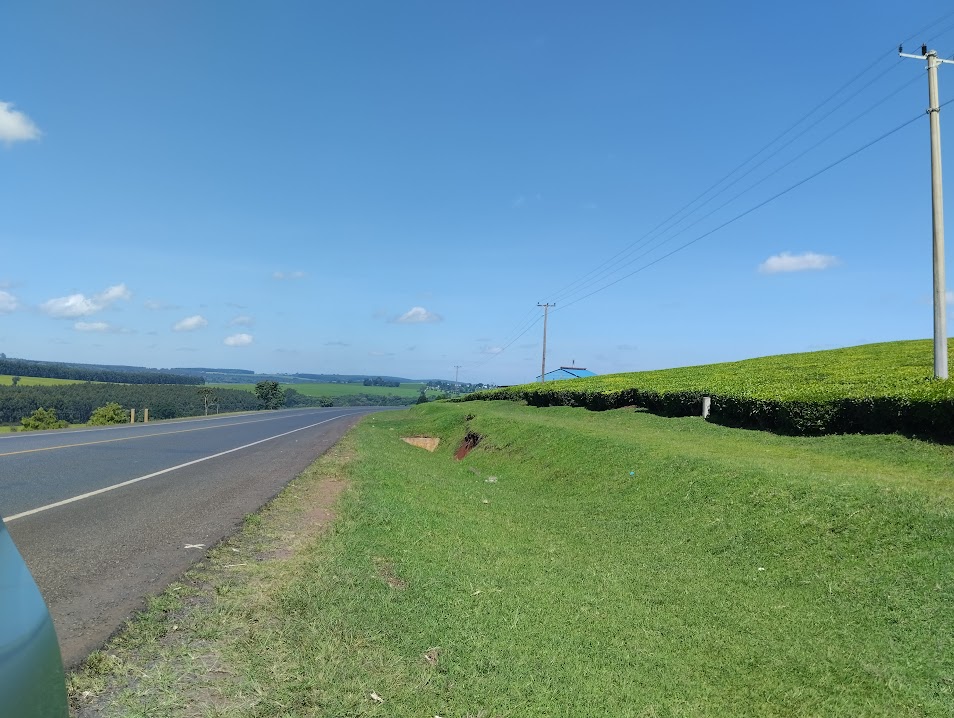
The black road cuts a narrow strip through the endless green fields of Kericho, the legendary home of Kenya’s best tea growing area. The green meets the blue of the sky in the horizon. On the southern scape, the Mau range fringes the green carpet with its ancient forest and on the western sky, it’s the massif of Tinderet that’s an extension of the Nandi Hills.
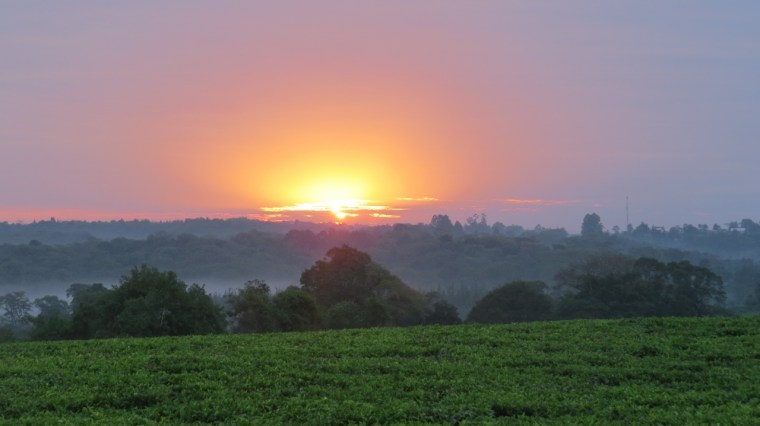
Set on high country, the air is crystalline fresh and until a few years ago, it rained almost every single afternoon casting a dreamlike aura on the highlands, watering the vast tea plantations that made Kenya the third highest ranking country in the world for tea exports after India and China.
We’re enjoying lunch in the midst of the green country with the Hunjan family who settled there in the 1950s. The senior, then a young man and newly married found a job as an engineer in the Brooke Bond Tea Factory between 1962 and 1978 and then went on to found Tealand Engineering and Construction Company to service the upcoming tea factories.
“Would you like to see how tea is made?” asks his son, Perminder. It seems like a trick question – tea, one of the world’s most loved beverages is also thankfully one of the simplest to brew. It just takes hot water – and add spices, sugar and milk to your taste – and there’s your cuppa.
But our tea man has a tour arranged at Kaisugu Tea Factory to give us the real story of how tea is made.
It’s a whole operation from when the tea leaves are plucked to packaging in a matter of 20 hours.
Driving into the factory sacks of tea leaves are being unloaded from the tea trucks into the factory. It’s busy inside.
Mathew Langat Assistant Factory Manager gives the brief on the factory floors, each turning the leaf ready for our cuppa.
“The tea bushes are pruned every four years,” tells Langat. Traditionally, Kenyan tea was famed for being all hand-picked, two leaves and a bud, picked with skill. “Now the tea is partly picked using machines because of the high cost of labour.” Without saying, the hand-picked tea is better because the tea-pickers are selective, though the machines are also designed to ensure good quality tea is harvested.
The Making of Tea
In a nutshell, after the leaf inspectors have checked the leaf quality, the leaves are put on the monorail and on to the withering beds where the fan blows between 16 and 20 hours to reduce moisture content from 80% to 66% when the leaf will be ready for the next processing stage.
It gets technical. The withered leaves are conveyed to the next processing stage in CTC i.e., crushing, tearing, and curling to produce a fine product referred to as dhool. The next stage is fermentation or oxidation achieved in a duration of 80 to 100 minutes depending on prevailing weather conditions to produce a coppery brown product. The next stage is drying achieved through fluidised bed driers in 30 minutes at temperature of 150 degrees centigrade and exhaust temperature of 90 degrees centigrade. The tea grains come out with a moisture content between 3 and 3.2 per cent.
The tea granules are then passed through the sorting machines which Ben Opany of Tealand Engineering proudly points to. The sorting machines were designed by Mr Hunjan to remove the fibres and dust before the tea is finally packed.
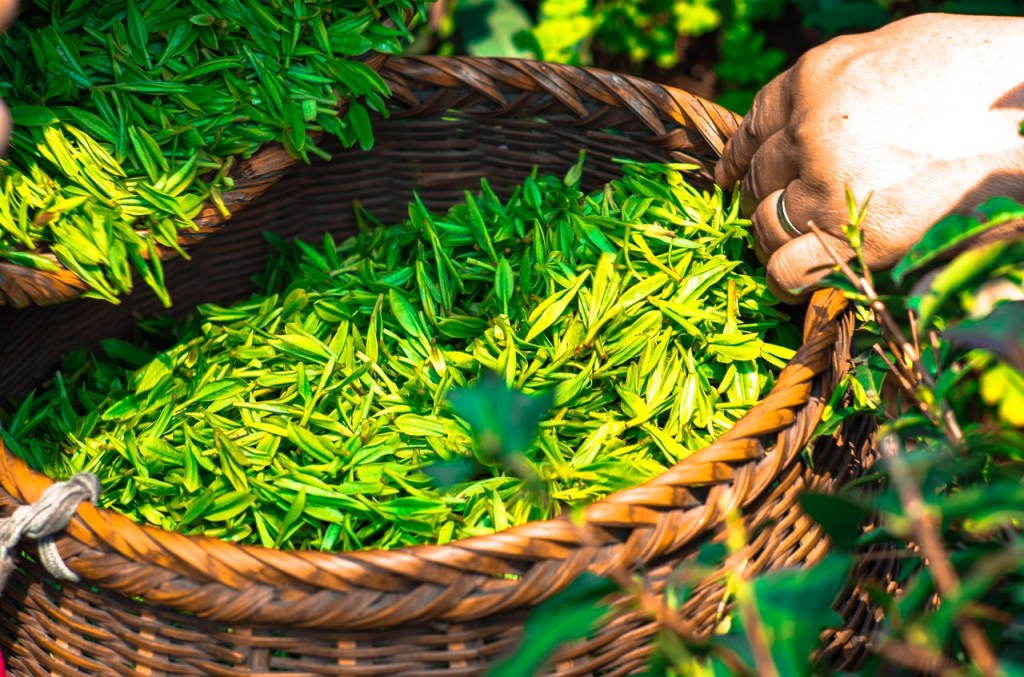
I sip my cuppa tea with renewed respect having watched the work that goes on behind the scene before it’s brewed. The factory is certified with Rainforest Alliance to ensure access to quality market destinations.
The history of tea in Kenya goes back to 1903 planted in Limuru by GWL Caine. The first commercial estates were started by Brooke Bond in 1924.
“We process 120,000 kilograms of green leaf per day to bring you the finest teas,” states Langat. Kaisugu’s tea farms extend over 330 hectares. In addition, it buys tea from local outgrowers, supporting local farmers. 120,000kg of tea is equal to some 30 million cups of tea a day!
“We export 80 per cent of our tea globally,” continues Langat. The remaining 20 is sold at home and we buy our blend of Classic Tea at the factory shop after the tour.
A short drive away and we’re at the Tea Hotel Kericho, built in the 1950s by Brooke Bond. Set in lush gardens with the tea fields stretching beyond, it played host to the late Kenyan presidents and the British monarch when Kenya was still a British colony. The hotel’s being renovated after years of closure, breathing life again in to one of Kericho’s legendary hotels.
A Perfect Cup of Tea
For a tour of Kaisugu Tea Factory, fill the form https://kaisugu.com/contact-us/ it’s accessible by appointment only. 275 kilometers from Nairobi, it takes an hour to walk through the factory.
A search on the internet shows that Kenya is the biggest African tea producer, with year-round harvesting due to its geographical position across the equator. In November 2023, the export value of tea in Kenya increased to some 17.8 billion Kenyan shillings (KSh), from 16.1 billion KSh in October.
Rainforest Alliance works to solve urgent environmental and social challenges from fighting deforestation and climate change to building economic opportunities and better working conditions for rural people.
Explore the west side of Kenya
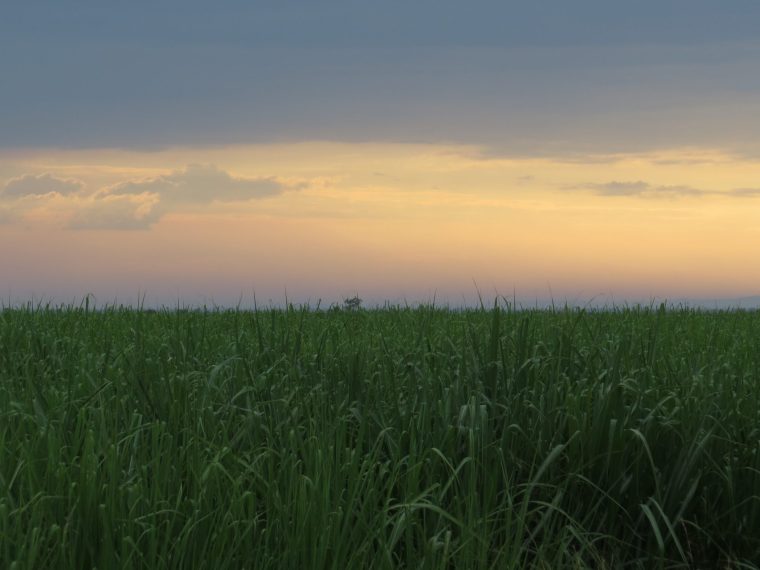
Rich with its farms of tea, coffee, sugar and milk. Drive on to Fort Ternan with its coffee farms and explore the Fort Ternan Prehistoric site and the longest railway steel bridge built in 1903 (there are longer ones now) and other sites; then on to Chemelil with its sugar cane fields and factory and Nandi Hills for milk. Or simply drive on to Kisumu to explore Victoria’s lake shore circuit.
Or turn left from Kericho towards the Maasai Mara. There are many options.
 Moonlion Safaris