By Rupi Mangat
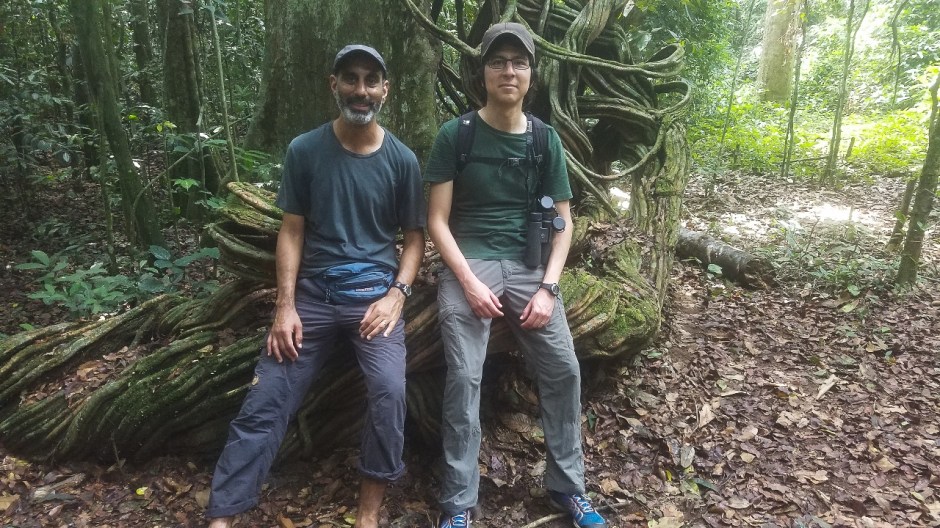
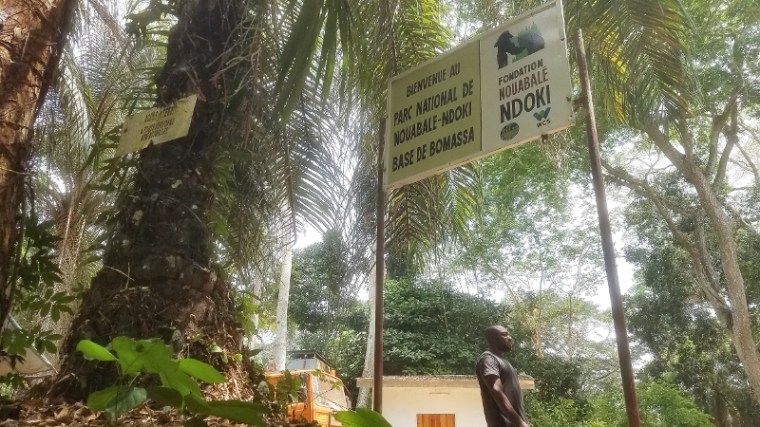
Above: Gautam (left) and Raff taking a break on the way to Goualougo Camp, Republic of Congo. Photo Credit David Morgan
Published: The East African Nation 30 May 2020
That there’s no time to lose to save our wildlife is a universal truth.
That the internet is the most powerful tool on Earth is another universal truth.
The two put together gave Gautam Shah, founder of Internet of Elephants his drive to enter the world of wildlife conservation in a novel way…via your mobile phone playing games to save wildlife.

So download for free on your mobile phone to play games like Wildeverse and run through the streets of Nairobi or New York trying to find a gorilla; or use Safari Central to snap a photograph with your favourite wild creature like a pangolin curled up in bed with you; or participate in Run Wild, a fitness campaign with Adidas to run with Uuliin the snow leopard in the mountains of Mongolia (extra bonus…you stay fit).
Earth and Extinction
Our planet, Earth is facing its sixth mass extinction.
The last one happened 66 million years ago when a comet crashed into Earth which wiped out the dinosaurs.
Now in the era of the anthropocene (age of humans) from 200,000 years ago when we became Homo sapiens, the Earth is losing species a 100 times faster than it would without our impact. It’s a sobering thought that since 1970 the human population has more than doubled while that of wildlife has more than halved.
Wildlife like elephants, giraffes, the great apes, tiny forest birds, whales and countless others are facing a dim future despite years of wildlife campaigns like newsletters, blogs and videos. Already in the 21st century, 17 species of wild animals are extinct in the wild that include the Northern white rhino, the Formosan clouded leopard, the Bermuda saw-whet owl, Cape Verde giant skink, Biaji dolphin and the Pyranean ibex.
And this is where Shah steps in.
An IT specialist, he plays with numbers. “Today,” he says “two billion people spend an average of six hours a week playing games on their mobile phones.
“Imagine if we can get even one per cent of two billion which is twenty million addicted to wildlife?” muses Shah.
It would make an impact.
“Markets will adjust their offerings to appeal to the value systems of their customers. Governments will see that the environment is a priority for their citizens. And donors and investors will bring more money into the sector. It’s going to take a long time to get there, but we have to start thinking this way, else things will just remain the same as they are now.”
And that is the genesis of Internet of Elephants.
Gautam Shah
Keen-eyed with an easy demeanour, Shah in his forties, was born and raised in Chicago, US. His first encounter with wildlife was in his backyard. That childhood fascination with the wild and wonderful has never left him. He gave up a perfectly well paid job working for an IT company for twenty years to set up his own, one where he could make a difference by using his skills in IT and producing interactive wildlife games to attract everyone.
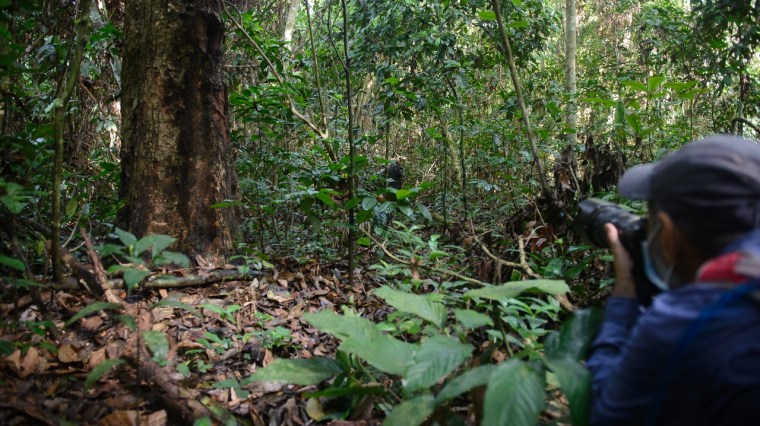
In 2016, Internet of Elephants was launched, a small team that includes the game geek, Jake Manion and Raff Mares, the conservation biologist.
“I was interested in the intersection of technology and conservation,” he describes the start of IoE. “If people can be connected to other people and things all over the world via the internet, then what would happen if they were also connected to animals and how would that change people’s relationship with nature?”
The beauty of IoE is that the games can be played by anyone, of any age.
Chatting with kids between the ages of six and 13 on a recent National Geogrpahic online class, Shah and his team answered their questions on everything from how to produce a video game using AR (Augmented Reality) to programming and what’s his favourite animal.

“It’s the gibbon,” he replies. Found in the forests of Borneo, this playful little ape is also threatened as the virgin forests come down for plantations. “I love their song, their playfulness and their agility through the trees. But tomorrow, my favourite animals may be the elephant or red panda or a leafy sea dragon,” he states.
Then he asked the kids what animals they would like to see featured, the answers were of wildlife that rarely make the headlines like the sloth, the extremely slow-moving creatures from the rainforests of south and central America.
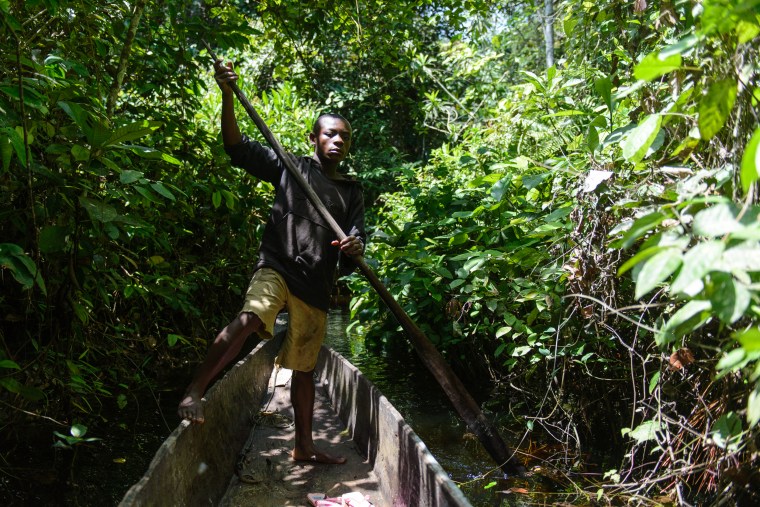
Shah has always travelled the world to watch animals in their natural habitats like trekking in the rain forests of central Africa for chimpanzees and gorillas and for orang-utans and gibbons in Asia.
“But l started feeling guilty about enjoying the experience while knowing that their numbers were decreasing.
“I didn’t want to spend another 20 years sitting behind a desk and taking these great vacations. So in 2014, l quit my job and get involved in wildlife conservation.”
At the time he was working in Nairobi, for Accenture a global IT company. He decided to stay on in Nairobi, because “you have the chance to see elephants within a three hour drive and also Kenya was an ideal place to build up his conservation network.
The first thing he learned was that wildlife conservation was based on traditional fundraising and ecotourism but with a limited audience.
“Conservationists are behind time and not catching up,” he states.
And that’s where he is assertive.
He believes that if we are to save anything, it means aggressively competing for people’s attention. People may not even be aware of all this wildlife, so caught up are they in their daily lives.
The onus was to find ways to have people want wildlife in their life and for wildlife conservation to have its rightful place at the table as one of the most important things in our world today.
And the channel is games. Everybody likes to play. On their mobile phones.
“Our number one goal is to engage people to become active, and give them a way to participate locally. We want to create more direct connections between people and conservation work that might be happening far away. We want to activate people’s curiosity but also nudge their behavior through the relationships with the animals or scientists that we feature.
“There is no time left to waste,” says Shah. “We need to find ways to create 20 million, 40 million or even a hundred million wildlife addicts.
“That way we can celebrate the life of these animals and not mourn their deaths.”
More on Gautam Shah
He is a National Geographic Fellow, featured in a one page article in the June 2020 issue.
Nat Geo Explorer takes applications four times a year. You propose a project under one of their themes, and if you are accepted, then you are a Nat Geo Explorer. The Nat Geo VP of Storytelling, then invited Gautam to apply for a Fellowship and he was accepted.
Gautam also applied for the TED Ideas Search event in Nairobi, and was accepted though nothing more involved than that.
“We have applied for many things and been declined, but I guess that is why you should always try because you never know,” he says.
Internet of Elephants was chosen as a Fast Company Most Innovative Company in 2017 (top 10 in Africa) and also won a European Design Awards Gold medal in 2017 for its Stories of the Wild data visualizations.
 Moonlion Safaris