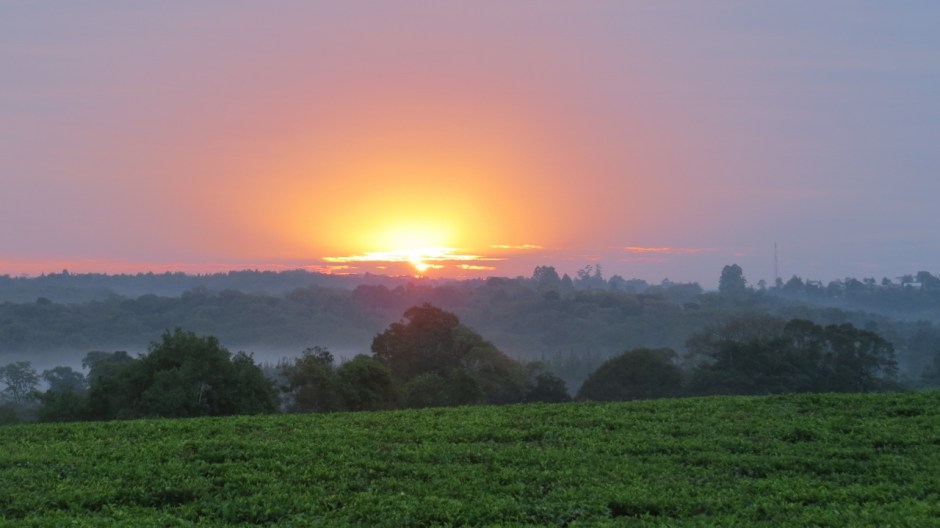
Above: Sunrise at South Nandi Forest surrounded by Nyayo Tea Zone at Kobujoi. May 2019. Copyright Rupi Mangat
It’s dawn. And magical.
In the first light, the rising sun illuminates the tea and forest-clad peaks of the South Nandi Forest as a white mist lifts languidly from the valleys. It’s so beautiful an image that we have to stop to take it all in. On the other side of the road that stretches from Kapsabet to Nandi Hills Town via Serem, the ancient rock-clad hills of Maragoli lines Lake Victoria that is Africa’s largest lake.
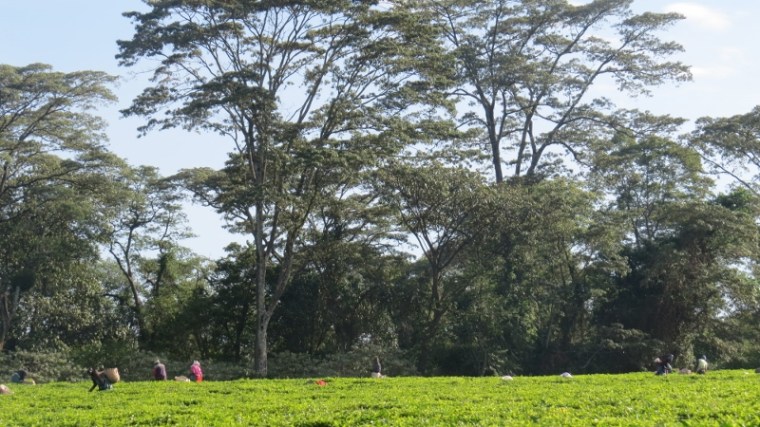
South Nandi Forest surrounded by Nyayo Tea Zone at Kobujoi. May 2019. Copyright Rupi Mangat.
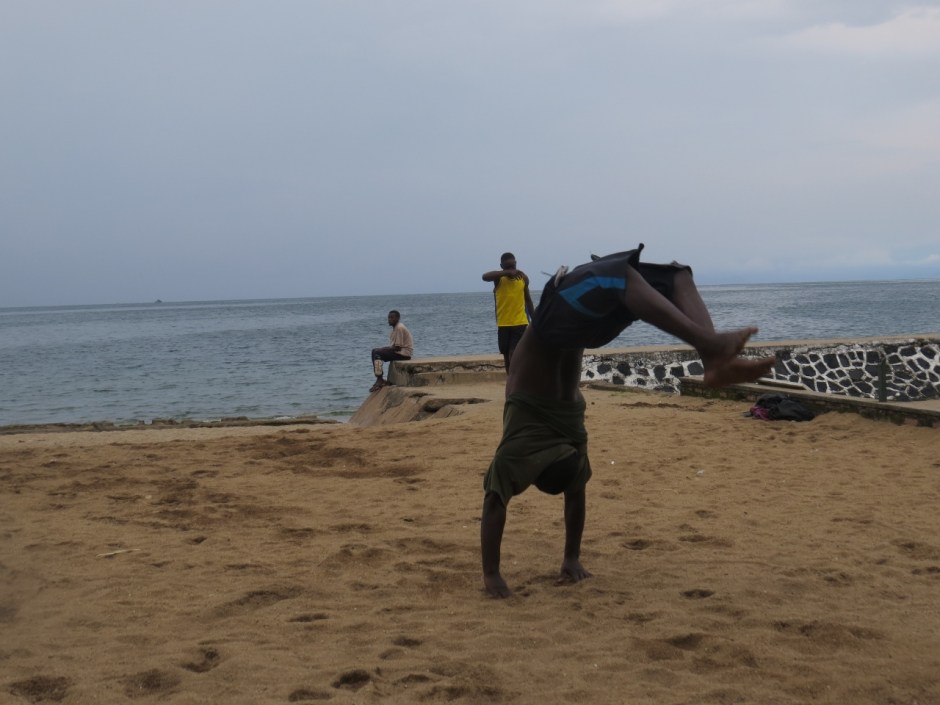
Above: Boy practising acrobatics by Lake Kivu in Gisenyi, Rwanda. Copyright Rupi Mangat
Published: The East African Nation Media 26 June 2019
Goma and Gisenyi echo Charles Dickens’s novel, A Tale of Two Cities, based on a peaceful London and a Paris dogged by unrest before and after the French Revolution.
Goma and Gisenyi share a horrific history — the Congo wars and the Rwandan Genocide Against Tutsi.
Recently I spent a few days in the two cities separated by an international border, Goma in DR Congo and Gisenyi in Rwanda. Gisenyi is genteel while Goma is a work in progress after being dogged by years of unrest — wars and a volcano eruption. Both cities straddle Lake Kivu in the Albertine Rift. The lake is a source of methane and carbon dioxide gases that have the potential of being hazardous.
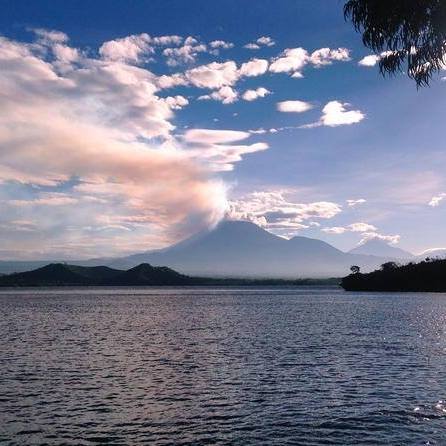
Mount Nyiragongo and Lake Kivu From Lake Kivu Serena Hotel in Gisenyi, Rwanda. Courtesy Lake Kivu Serena
Okay – here’s a brain teaser. What do you get when you cross a donkey with a horse? Answer: You get a smart ass! Actually, you get a mule.
“Mules are very tough animals,” explains Rosalie Faull who runs Samburu Trails, a trekking safari into the wilderness of the northern frontiers on donkeys and mules. A handsome chestnut coloured mule runs across the garden to join the others grazing with the pack of donkeys. “They are very sure-footed and with a western-style saddle, very comfortable to ride. It’s like sitting in a big arm chair.”
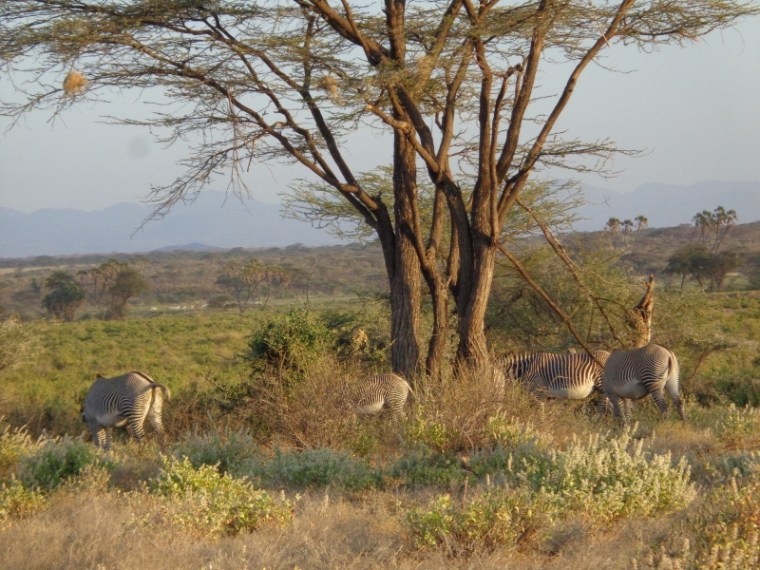
Grevy’s zebra in northern Kenya. Copyright Rupi Mangat
We’ve just driven in from Maralal, which disappears into the valley below as we drive up the high glades of Leroghi Plateau, the air cool and crisp, the rains turning everything a magical lush green, with old man’s beard hanging from the branches of the ancient podo and cedar trees, showing how pure and clean the air is. We reach Porro, a tiny Samburu hamlet that l’ve never heard of before.
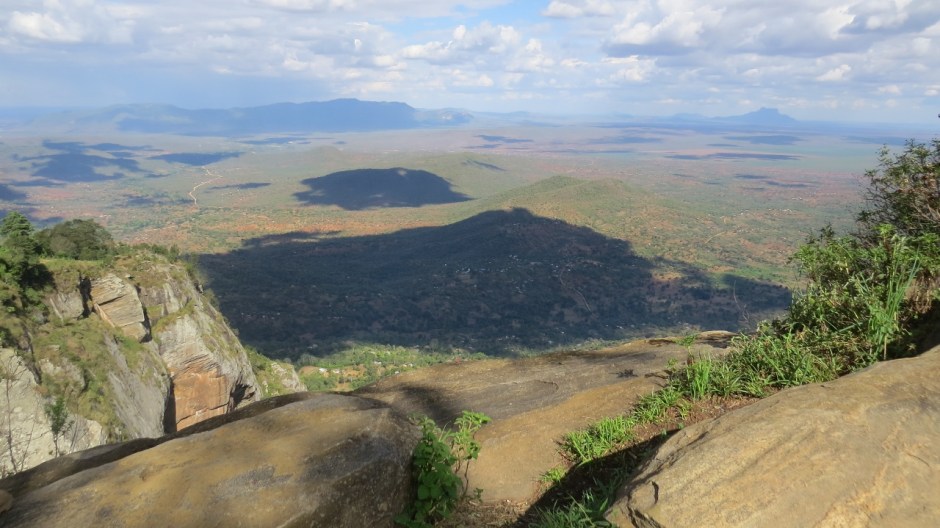
Above: Plains of Tsavo from the Mwachora Hill. Copyright Rupi Mangat
Published: 15 June 2019
The road from the peak of Ngangao that is part of the magical Taita Hills loops steep into the plains of Tsavo with amazing views of the solitary massifs of Sagalla and Kasigau. I’m taking a break from hiking to discovering the tastes and tales of Taita.
I’m full of respect for the pikipiki having reached Mwatate safely. It’s the town on the flat lands at the junction of the historical road that was action-packed during the WW1 fought between British East Africa (Kenya) and German East Africa (Tanzania).
Kasigau mountain from Mwachora Hill. The area was a battlefield during WW1. Copyright Rupi Mangat
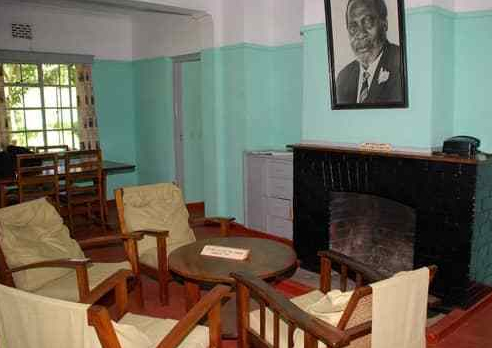
Maralal’s one of those really interesting towns in the outback, a frontier perched in a valley near a great fault line that happens to be the Great Rift Valley with a stunning view of the deep gorge that on a windy day can sweep a skinny person off the edge and into the deep sink. It’s also a town that’s the headquarters of the Samburu, cousins of the Maasai and in modern history, where Mzee Jomo Kenyatta was under restriction order after his compulsory confinement in Lodwar where he had been for two years short of elevan days. Maralal became known as the half way house between Lodwar and Nairobi, where Kenyatta and his young family stayed from 4 April to August 14 1961 before they were flown to Nairobi. The house is a museum, aptly called the Jomo Kenyatta House.

 Moonlion Safaris